Building Blocks
Sottocategorie di "Building Blocks"
- Acidi boronici e derivati dell'acido boronico(5.778 prodotti)
- Building Blocks Chirali(1.243 prodotti)
- Building Blocks Idrocarburici(6.098 prodotti)
- Building Blocks organici(61.042 prodotti)
Trovati 204339 prodotti di "Building Blocks"
1-(4-Iodobenzoyl)-4-methylpiperazine
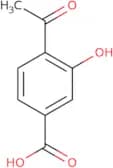
CAS:Versatile small molecule scaffoldFormula:C12H15IN2OPurezza:Min. 95%Peso molecolare:330.16 g/mol4-Acetyl-3-hydroxybenzoic acid
CAS:Versatile small molecule scaffold
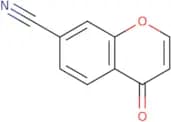
Formula:C9H8O4Purezza:Min. 95%Peso molecolare:180.15 g/mol4-Oxo-4H-chromene-7-carbonitrile
CAS:Versatile small molecule scaffold
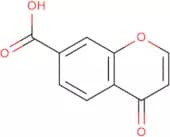
Formula:C10H5NO2Purezza:Min. 95%Peso molecolare:171.15 g/mol4-Oxo-4H-chromene-7-carboxylic acid
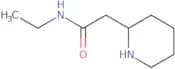
CAS:Versatile small molecule scaffoldFormula:C10H6O4Purezza:Min. 95%Peso molecolare:190.15 g/molN-Ethyl-2-(piperidin-2-yl)acetamide
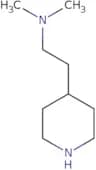
CAS:Versatile small molecule scaffoldFormula:C9H18N2OPurezza:Min. 95%Peso molecolare:170.25 g/molDimethyl-(2-piperidin-4-yl-ethyl)-amine
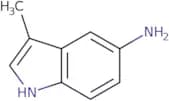
CAS:Versatile small molecule scaffoldFormula:C9H20N2Purezza:Min. 95%Peso molecolare:156.27 g/mol3-Methyl-1H-indol-5-amine
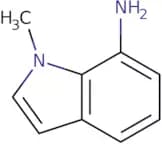
CAS:Versatile small molecule scaffoldFormula:C9H10N2Purezza:Min. 95%Peso molecolare:146.19 g/mol1-Methyl-1H-indol-7-amine
CAS:Versatile small molecule scaffoldFormula:C9H10N2Purezza:Min. 95%Peso molecolare:146.19 g/molN,8-Dimethyl-8-azabicyclo[3.2.1]octan-3-amine
CAS:Versatile small molecule scaffold
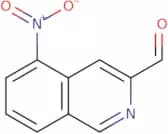
Formula:C9H18N2Purezza:Min. 95%Peso molecolare:154.25 g/mol5-Nitroisoquinoline-3-carbaldehyde
CAS:Versatile small molecule scaffoldFormula:C10H6N2O3Purezza:Min. 95%Peso molecolare:202.17 g/mol2-Amino-2-(4-chlorophenyl)acetamide
CAS:Versatile small molecule scaffold
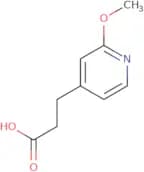
Formula:C8H9ClN2OPurezza:Min. 95%Peso molecolare:184.62 g/mol3-(2-Methoxypyridin-4-yl)propanoic acid
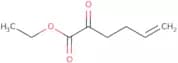
CAS:Versatile small molecule scaffoldFormula:C9H11NO3Purezza:Min. 95%Peso molecolare:181.19 g/molEthyl 2-oxohex-5-enoate
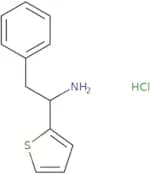
CAS:Versatile small molecule scaffoldFormula:C8H12O3Purezza:Min. 95%Peso molecolare:156.18 g/mol2-Phenyl-1-(thiophen-2-yl)ethan-1-amine hydrochloride
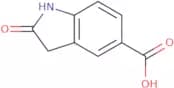
CAS:Versatile small molecule scaffoldFormula:C12H14ClNSPurezza:Min. 95%Peso molecolare:239.76 g/mol5-Carboxyoxindole
CAS:5-Carboxyoxindole is a synthetic compound that has been shown to be cytotoxic in vitro and in vivo. It has been found to bind to the DNA of cancer cells, preventing DNA synthesis and replication, resulting in cell death. The mechanism of 5-carboxyoxindole is not completely understood but it has been suggested that it inhibits the production of ATP, leading to cell death. Techniques used to synthesize this compound include multistep reactions with yields up to 69%. These reactions are typically carried out at room temperature, although they can also be performed under reflux or microwave conditions.
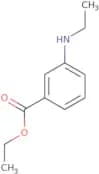
Formula:C9H7NO3Purezza:Min. 95%Peso molecolare:177.16 g/molEthyl 3-(ethylamino)benzoate
CAS:Versatile small molecule scaffold
Formula:C11H15NO2Purezza:Min. 95%Peso molecolare:193.24 g/mol(3,3-Dimethylcyclohexyl)methanol
CAS:Versatile small molecule scaffold
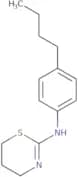
Formula:C9H18OPurezza:Min. 95%Peso molecolare:142.24 g/molN-(4-Butylphenyl)-5,6-dihydro-4H-1,3-thiazin-2-amine
CAS:Versatile small molecule scaffoldFormula:C14H20N2SPurezza:Min. 95%Peso molecolare:248.39 g/molN-[2-(Propan-2-yl)phenyl]-5,6-dihydro-4H-1,3-thiazin-2-amine
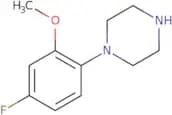
CAS:Versatile small molecule scaffoldFormula:C13H18N2SPurezza:Min. 95%Peso molecolare:234.36 g/mol1-(4-Fluoro-2-methoxyphenyl)piperazine
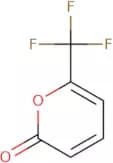
CAS:Prodotto controllatoVersatile small molecule scaffoldFormula:C11H15FN2OPurezza:Min. 95%Peso molecolare:210.25 g/mol6-(Trifluoromethyl)-2H-pyran-2-one
CAS:Versatile small molecule scaffold
Formula:C6H3F3O2Purezza:Min. 95%Peso molecolare:164.08 g/mol2,6-Dimethylimidazo[2,1-b][1,3]thiazole-5-carbaldehyde
CAS:Versatile small molecule scaffold
Formula:C8H8N2OSPurezza:Min. 95%Peso molecolare:180.23 g/molMethyl 2-(aminooxy)-4-methylpentanoate hydrochloride
CAS:Versatile small molecule scaffold
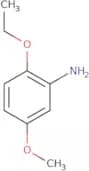
Formula:C7H16ClNO3Purezza:Min. 95%Peso molecolare:197.7 g/mol2-Ethoxy-5-methoxyaniline
CAS:Versatile small molecule scaffoldFormula:C9H13NO2Purezza:Min. 95%Peso molecolare:167.2 g/mol5-[(Propylsulfanyl)methyl]furan-2-carboxylic acid
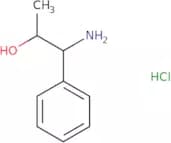
CAS:Versatile small molecule scaffoldFormula:C9H12O3SPurezza:Min. 95%Peso molecolare:200.26 g/mol1-Amino-1-phenylpropan-2-ol hydrochloride
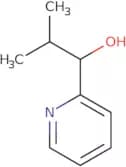
CAS:1-Amino-1-phenylpropan-2-ol hydrochloride is an enantioselective, chiral amino alcohol that is synthesized by the reaction of aldehydes or ketones with phenylmagnesium bromide. This reaction yields the corresponding amino alcohols in high yields and with excellent enantioselectivity. 1-Amino-1-phenylpropan-2-ol hydrochloride can be used to synthesize various functional groups such as halides, oxazoline, diselenides, sulfonamides and alkenes. It can also be used for catalytic transformations involving other functional groups such as alcohols and alkyl halides.Formula:C9H14ClNOPurezza:Min. 95%Peso molecolare:187.66 g/mol2-Methyl-1-(pyridin-2-yl)propan-1-ol
CAS:Versatile small molecule scaffold
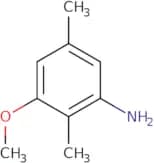
Formula:C9H13NOPurezza:Min. 95%Peso molecolare:151.21 g/mol3-Methoxy-2,5-dimethylaniline
CAS:Versatile small molecule scaffold
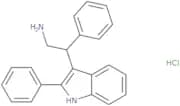
Formula:C9H13NOPurezza:Min. 95%Peso molecolare:151.21 g/mol2-Phenyl-2-(2-phenyl-1H-indol-3-yl)ethan-1-amine
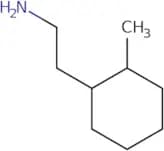
CAS:Versatile small molecule scaffoldFormula:C22H21ClN2Purezza:Min. 95%Peso molecolare:348.9 g/mol2-(2-Methylcyclohexyl)ethan-1-amine
CAS:Versatile small molecule scaffold
Formula:C9H19NPurezza:Min. 95%Peso molecolare:141.25 g/mol2-(4-Methylcyclohexyl)ethan-1-amine hydrochloride
CAS:Versatile small molecule scaffoldFormula:C9H20ClNPurezza:Min. 95%Peso molecolare:177.7 g/mol[(1-Ethylpiperidin-3-yl)methyl]amine
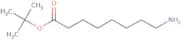
CAS:Versatile small molecule scaffoldFormula:C8H18N2Purezza:Min. 95%Peso molecolare:142.24 g/moltert-butyl 8-aminooctanoate
CAS:Versatile small molecule scaffold
Formula:C12H25NO2Purezza:Min. 95%Peso molecolare:215.3 g/mol4-Bromo-3-methyl-2,3-dihydro-1H-inden-1-one
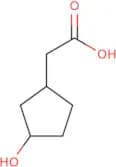
CAS:Versatile small molecule scaffoldFormula:C10H9BrOPurezza:Min. 95%Peso molecolare:225.08 g/mol2-(3-Hydroxycyclopentyl)acetic acid
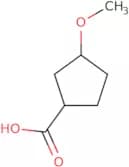
CAS:Versatile small molecule scaffoldFormula:C7H12O3Purezza:Min. 95%Peso molecolare:144.17 g/mol3-Methoxycyclopentane-1-carboxylic acid
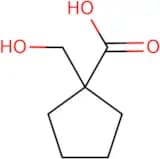
CAS:Versatile small molecule scaffoldFormula:C7H12O3Purezza:Min. 95%Peso molecolare:144.17 g/mol1-(Hydroxymethyl)cyclopentane-1-carboxylic acid
CAS:Versatile small molecule scaffoldFormula:C7H12O3Purezza:Min. 95%Peso molecolare:144.17 g/mol3,9-diazabicyclo[4.2.1]nonane, 9-methyl-
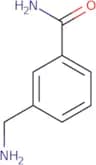
CAS:3,9-diazabicyclo[4.2.1]nonane, 9-methyl (DZB) is a spasmolytic drug that belongs to the group of aliphatic, aromatic acids, lactams and amides. It has been shown to have spasmolytic activity in animal experiments and has been used as an analgesic in humans. DZB is an analogue of 3,9-diazabicyclo[4.2.1]nonane (DZN) and is synthesized by reacting the corresponding sulfonyl chloride with a primary amine under acidic conditions followed by reduction with sodium borohydride or lithium aluminum hydride to yield the corresponding N-sulfonyl amide. This reaction can also be carried out using chlorosulfonic acid in place of sulfuric acid and an excess of primary amine over sulfonyl chloride.Formula:C8H16N2Purezza:Min. 95%Peso molecolare:140.23 g/mol3-(Aminomethyl)benzamide
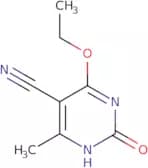
CAS:Versatile small molecule scaffoldFormula:C8H10N2OPurezza:Min. 95%Peso molecolare:150.18 g/mol4-Ethoxy-6-methyl-2-oxo-1,2-dihydropyrimidine-5-carbonitrile
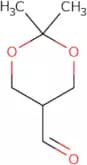
CAS:Versatile small molecule scaffoldFormula:C8H9N3O2Purezza:Min. 95%Peso molecolare:179.18 g/mol2,2-Dimethyl-1,3-dioxane-5-carbaldehyde
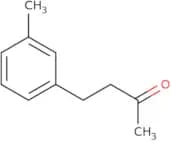
CAS:Versatile small molecule scaffoldFormula:C7H12O3Purezza:Min. 95%Peso molecolare:144.17 g/mol4-(3-Methylphenyl)butan-2-one
CAS:Versatile small molecule scaffold
Formula:C11H14OPurezza:Min. 95%Peso molecolare:162.23 g/mol1-Amino-1H-benzo[D]imidazol-2(3H)-one
CAS:1-Amino-1H-benzo[D]imidazol-2(3H)-one is a heterocyclic compound that belongs to the group of 4-azaindole, chromic acid, substituents, oxidized. It has been shown to be an effective inhibitor of thiosemicarbazones and pyrrole in vitro. Additionally, this compound inhibits bacterial growth by binding to DNA gyrase and topoisomerase IV enzymes. This drug is also being studied as a potential treatment for cancer.Formula:C7H7N3OPurezza:Min. 95%Peso molecolare:149.15 g/mol{2-Oxabicyclo[4.1.0]heptan-7-yl}methanols
CAS:Versatile small molecule scaffold
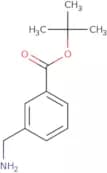
Formula:C7H12O2Purezza:Min. 95%Peso molecolare:128.2 g/moltert-butyl 3-(aminomethyl)benzoate
CAS:Versatile small molecule scaffold
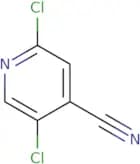
Formula:C12H17NO2Purezza:Min. 95%Peso molecolare:207.3 g/mol2,5-Dichloroisonicotinonitrile
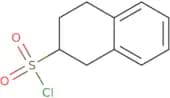
CAS:2,5-Dichloroisonicotinonitrile is a tyrosine kinase inhibitor that is used to treat autoimmune diseases. The compound inhibits the function of the enzyme tyrosine kinase by binding to its ATP binding site. 2,5-Dichloroisonicotinonitrile is also a potent antibacterial agent with activity against both Gram-positive and Gram-negative bacteria. It has been shown to be active against Mycobacterium tuberculosis, methicillin-resistant Staphylococcus aureus (MRSA), and Clostridium perfringens. The drug can cause adverse effects such as pulmonary fibrosis and thyroiditis in animal studies.Formula:C6H2Cl2N2Purezza:Min. 95%Peso molecolare:173 g/mol1,2,3,4-Tetrahydronaphthalene-2-sulfonyl chloride
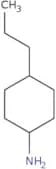
CAS:Versatile small molecule scaffoldFormula:C10H11ClO2SPurezza:Min. 95%Peso molecolare:230.71 g/mol4-Propylcyclohexylamine (cis- and trans- mixture)
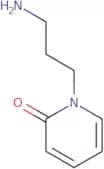
CAS:4-Propylcyclohexylamine is a versatile compound that finds applications in various industries. It is commonly used as a building block in the synthesis of copolymers, catalysts, and triazine derivatives. This compound exhibits excellent reactivity in organometallic reactions and can act as a pyridinium scavenger. With its high isolated yield and particulate nature, it is ideal for research purposes and as a reagent for the activation of cellulose.Formula:C9H19NPurezza:Min. 95%Peso molecolare:141.26 g/mol1-(3-Aminopropyl)-1,2-dihydropyridin-2-one
CAS:Versatile small molecule scaffoldFormula:C8H12N2OPurezza:Min. 95%Peso molecolare:152.19 g/molFadrozole
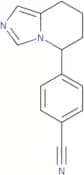
CAS:Fadrozole is an inhibitor of the enzyme aromatase, which converts androgens to estrogens. It is used in combination with other drugs to treat breast cancer in postmenopausal women and prostate cancer in men. The molecular basis for the inhibitory properties of fadrozole is its ability to bind to the dinucleotide phosphate-binding site of aromatase, thereby inhibiting its activity. Fadrozole inhibits the production of estrogens by competitively binding to the enzyme's active site. The inhibitory effect of fadrozole on aromatase activity has been demonstrated in experimental models and provides a possible explanation for its use in combination with other drugs for breast and prostate cancer treatment.Formula:C14H13N3Purezza:Min. 95%Peso molecolare:223.27 g/molMethyl 4-[(1S)-1-hydroxyethyl]benzoate
CAS:Versatile small molecule scaffold
Formula:C10H12O3Purezza:Min. 95%Peso molecolare:180.2 g/mol(3R)-3,6-Bis({[(tert-butoxy)carbonyl]amino})hexanoic acid
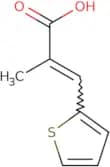
CAS:Versatile small molecule scaffoldFormula:C16H30N2O6Purezza:Min. 95%Peso molecolare:346.4 g/mol(2E)-2-Methyl-3-(thiophen-2-yl)prop-2-enoic acid
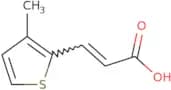
CAS:Versatile small molecule scaffoldFormula:C8H8O2SPurezza:Min. 95%Peso molecolare:168.21 g/mol(2E)-3-(3-Methylthiophen-2-yl)prop-2-enoic acid
CAS:(2E)-3-(3-Methylthiophen-2-yl)prop-2-enoic acid is a naturally occurring compound with two stereoisomers, the cis and trans isomers. The cis isomer has been found to have the same physiological properties as pyrantel, while the trans isomer has been shown to be resistant to alkaline hydrolysis. (2E)-3-(3-Methylthiophen-2-yl)prop-2-enoic acid can be isolated from plants by using chromatographic techniques that separate it from other compounds with similar structures. This compound also has a homolog, (4R)-4-(3,5,-dimethylphenyl)butanoic acid, which can be synthesized in the laboratory.Formula:C8H8O2SPurezza:Min. 95%Peso molecolare:168.21 g/mol5-Butylimidazolidine-2,4-dione
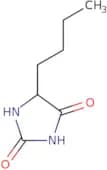
CAS:Versatile small molecule scaffold
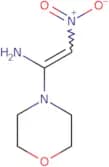
Formula:C7H12N2O2Purezza:Min. 95%Peso molecolare:156.18 g/mol1-(Morpholin-4-yl)-2-nitroethen-1-amine
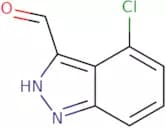
CAS:Versatile small molecule scaffoldFormula:C6H11N3O3Purezza:Min. 95%Peso molecolare:173.17 g/mol4-Chloro-3-(1H)indazole carboxaldehyde
CAS:Versatile small molecule scaffoldFormula:C8H5ClN2OPurezza:Min. 95%Peso molecolare:180.59 g/mol(1S,2S)-2-Phenylcyclopentan-1-amine hydrochloride
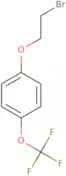
CAS:Versatile small molecule scaffoldFormula:C11H16ClNPurezza:Min. 95%Peso molecolare:197.7 g/mol1-(2-Bromoethoxy)-4-(trifluoromethoxy)benzene
CAS:Versatile small molecule scaffoldFormula:C9H8BrF3O2Purezza:Min. 95%Peso molecolare:285.06 g/molDispiro[3.0.3{5}.2{4}]decan-9-one
CAS:Versatile small molecule scaffold
Formula:C10H14OPurezza:Min. 95%Peso molecolare:150.2 g/mol3-Methyl-3,4-dihydro-2H-pyrrol-5-amine hydrochloride
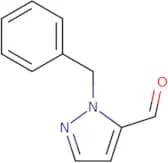
CAS:Versatile small molecule scaffoldFormula:C5H11ClN2Purezza:Min. 95%Peso molecolare:134.6 g/mol1-Benzyl-1H-pyrazole-5-carbaldehyde
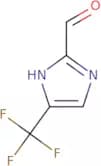
CAS:Versatile small molecule scaffoldFormula:C11H10N2OPurezza:Min. 95%Peso molecolare:186.21 g/mol-5(Trifluoromethyl)-1H-Imidazole-2-Carbaldehyde
CAS:Versatile small molecule scaffoldFormula:C5H3F3N2OPurezza:Min. 95%Peso molecolare:164.09 g/molN-Benzyl-2-carbamothioylacetamide
CAS:Versatile small molecule scaffold
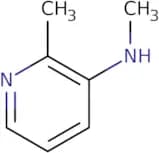
Formula:C10H12N2OSPurezza:Min. 95%Peso molecolare:208.28 g/molMethyl-(2-methyl-pyridin-3-yl)-amine
CAS:Versatile small molecule scaffold
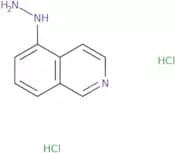
Formula:C7H10N2Purezza:Min. 95%Peso molecolare:122.17 g/mol5-Hydrazinylisoquinoline diHCl
CAS:Versatile small molecule scaffoldFormula:C9H11Cl2N3Purezza:Min. 95%Peso molecolare:232.11 g/mol2-(1H-Indazol-3-yl)ethanamine dihydrochloride
CAS:Versatile small molecule scaffold
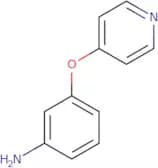
Formula:C9H13Cl2N3Purezza:Min. 95%Peso molecolare:234.12 g/mol3-(Pyridin-4-yloxy)aniline
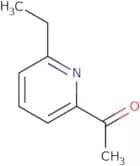
CAS:Versatile small molecule scaffoldFormula:C11H10N2OPurezza:Min. 95%Peso molecolare:186.21 g/mol1-(6-Ethylpyridin-2-yl)ethan-1-one
CAS:Versatile small molecule scaffoldFormula:C9H11NOPurezza:Min. 95%Peso molecolare:149.19 g/mol5-Methylnaphthalen-1-amine
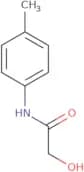
CAS:5-Methylnaphthalen-1-amine is a member of the naphthalene family. The compound is permeable to phospholipid membranes and can be used as a model for membrane penetration by drugs. It has been shown to form reactive carbocations with electron-deficient compounds, such as methoxy groups and nucleophilic compounds, which are useful in synthesizing new molecules. This molecule also has high thermal stability, making it an excellent candidate for techniques that require elevated temperatures, such as microwave-assisted synthesis.Formula:C11H11NPurezza:Min. 95%Peso molecolare:157.21 g/mol2-Hydroxy-N-(4-methylphenyl)acetamide
CAS:Versatile small molecule scaffold
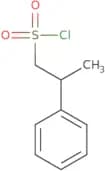
Formula:C9H11NO2Purezza:Min. 95%Peso molecolare:165.19 g/mol2-Phenylpropane-1-sulfonyl chloride
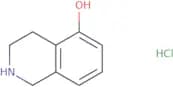
CAS:Versatile small molecule scaffoldFormula:C9H11ClO2SPurezza:Min. 95%Peso molecolare:218.7 g/mol1,2,3,4-Tetrahydroisoquinolin-5-ol hydrochloride
CAS:Versatile small molecule scaffold
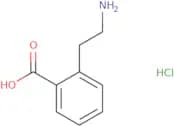
Formula:C9H12ClNOPurezza:Min. 95%Peso molecolare:185.65 g/mol2-(Aminoethyl)-benzoic acid hydrochloride
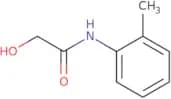
CAS:Versatile small molecule scaffoldFormula:C9H12ClNO2Purezza:Min. 95%Peso molecolare:201.65 g/mol2-Hydroxy-N-(2-methylphenyl)acetamide
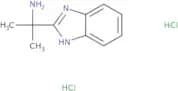
CAS:Versatile small molecule scaffoldFormula:C9H11NO2Purezza:Min. 95%Peso molecolare:165.19 g/mol2-(1H-1,3-Benzodiazol-2-yl)propan-2-amine dihydrochloride
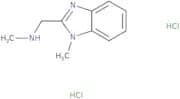
CAS:Versatile small molecule scaffoldFormula:C10H15Cl2N3Purezza:Min. 95%Peso molecolare:248.15 g/molN-Methyl-1-(1-methyl-1H-benzimidazol-2-yl)methanamine dihydrochloride
CAS:Prodotto controllatoVersatile small molecule scaffoldFormula:C10H15Cl2N3Purezza:Min. 95%Peso molecolare:248.15 g/mol1-(2-Methoxyphenyl)-1H-pyrazole
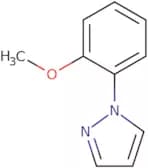
CAS:Versatile small molecule scaffold
Formula:C10H10N2OPurezza:Min. 95%Peso molecolare:174.2 g/mol[4-(Butan-2-yl)phenyl]methanol
CAS:Versatile small molecule scaffold
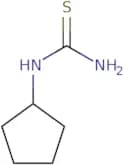
Formula:C11H16OPurezza:Min. 95%Peso molecolare:164.24 g/molN-Cyclopentylthiourea
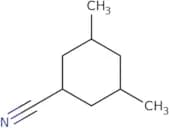
CAS:N-Cyclopentylthiourea is an inhibitor of the NS3 protease that is involved in hepatitis C virus (HCV) replication. It has been shown to inhibit the activity of NS3 protease in vitro and in cell-based assays. N-Cyclopentylthiourea inhibits the enzyme by binding to its active site and blocking access to the substrate. It has also been shown to be effective against hepatitis B virus (HBV) replication, although it is not active against HIV or influenza A. This drug also has anti-inflammatory properties, which may be due to its inhibition of cyclooxygenase and nitric oxide synthase enzymes.Formula:C6H12N2SPurezza:Min. 95%Peso molecolare:144.24 g/mol3,5-Dimethylcyclohexane-1-carbonitrile
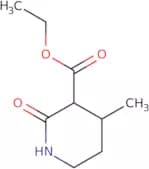
CAS:Versatile small molecule scaffoldFormula:C9H15NPurezza:Min. 95%Peso molecolare:137.22 g/molEthyl 4-methyl-2-oxopiperidine-3-carboxylate
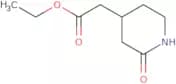
CAS:Versatile small molecule scaffoldFormula:C9H15NO3Purezza:Min. 95%Peso molecolare:185.22 g/molEthyl 2-(2-oxopiperidin-4-yl)acetate
CAS:Versatile small molecule scaffold
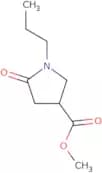
Formula:C9H15NO3Purezza:Min. 95%Peso molecolare:185.22 g/molMethyl 5-oxo-1-propylpyrrolidine-3-carboxylate
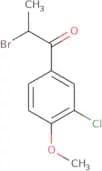
CAS:Versatile small molecule scaffoldFormula:C9H15NO3Purezza:Min. 95%Peso molecolare:185.22 g/mol2-Bromo-1-(3-chloro-4-methoxyphenyl)propan-1-one
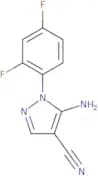
CAS:Versatile small molecule scaffoldFormula:C10H10BrClO2Purezza:Min. 95%Peso molecolare:277.54 g/mol5-Amino-1-(2,4-difluorophenyl)-1H-pyrazole-4-carbonitrile
CAS:Versatile small molecule scaffoldFormula:C10H6N4F2Purezza:Min. 95%Peso molecolare:220.18 g/mol2-Bromo-6-(chloromethyl)pyridine
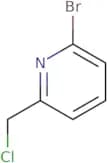
CAS:2-Bromo-6-(chloromethyl)pyridine is a ligand that binds to transition metal ions. It has been shown to have a high affinity for thionyl, which is an endogenous substrate. The ligand has also been used in the immobilization of biomolecules, such as proteins and DNA. The ligand has been synthesized by reacting cyanuric chloride with 2-bromopyridine. This method is different from the traditional synthetic pathway, which typically involves reacting chloroform with methyl bromide in the presence of a base or acid. The synthesis of this ligand can be done using two methods: (1) reaction of histidine with hydroxylamine hydrochloride and methyl bromide; or (2) reaction of methylamine with ethyl chlorocarbonate and 1,4-diazabicyclo[2.2.2]octane.Formula:C6H5BrClNPurezza:Min. 95%Peso molecolare:206.47 g/mol2-[2-(2-Chlorophenoxy)ethyl]-2,3-dihydro-1H-isoindole-1,3-dione
CAS:Versatile small molecule scaffold
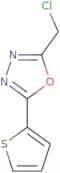
Formula:C16H12ClNO3Purezza:Min. 95%Peso molecolare:301.72 g/mol2-(Chloromethyl)-5-thien-2-yl-1,3,4-oxadiazole
CAS:Versatile small molecule scaffold
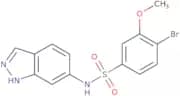
Formula:C7H5ClN2OSPurezza:Min. 95%Peso molecolare:200.65 g/mol4-Bromo-N-(2H-indazol-6-yl)-3-methoxybenzene-1-sulfonamide
CAS:Versatile small molecule scaffold
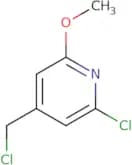
Formula:C14H12BrN3O3SPurezza:Min. 95%Peso molecolare:382.23 g/mol2-Chloro-4-(chloromethyl)-6-methoxypyridine
CAS:Versatile small molecule scaffoldFormula:C7H7NOCl2Purezza:Min. 95%Peso molecolare:192.05 g/mol6-Iodopyrimidine-2,4-diamine
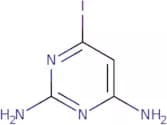
CAS:6-Iodopyrimidine-2,4-diamine is an alkynyl compound that can be synthesized efficiently via a cross-coupling reaction. It has cytostatic activity and can be used in the treatment of cancer cells. 6-Iodopyrimidine-2,4-diamine inhibits the growth of cells by binding to DNA and preventing synthesis of proteins. This chemical also reacts with DNA to form covalent bonds, which prevents the replication of cells.
Formula:C4H5IN4Purezza:Min. 95%Peso molecolare:236.01 g/mol2-(2,5-Dimethylphenyl)-6-fluoro-2,3-dihydro-1,2-benzothiazol-3-one
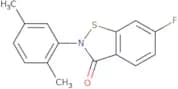
CAS:2-(2,5-Dimethylphenyl)-6-fluoro-2,3-dihydro-1,2-benzothiazol-3-one is an industrial and biochemical compound that has a wide range of applications. It is commonly used as an inhibitor in various assays and experiments. This compound has been found to have genotoxic properties, meaning it can cause damage to DNA. Additionally, it has been identified as a phytoalexin, a substance produced by plants as a defense mechanism against pathogens.Formula:C15H12FNOSPurezza:Min. 95%Peso molecolare:273.3 g/mol4-(([4-(3-Methylphenoxy)phenyl]sulfonyl)amino)benzoic acid
CAS:Versatile small molecule scaffoldFormula:C20H17NO5SPurezza:Min. 95%Peso molecolare:383.4 g/mol4-(((4-(2-Chlorophenoxy)phenyl)sulfonamido)methyl)benzoic Acid
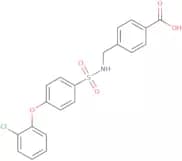
CAS:Versatile small molecule scaffold
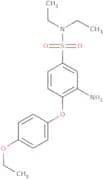
Formula:C20H16NO5SClPurezza:Min. 95%Peso molecolare:417.86 g/mol3-Amino-4-(4-ethoxyphenoxy)-N,N-diethylbenzene-1-sulfonamide
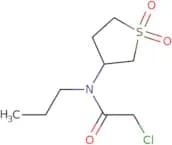
CAS:Versatile small molecule scaffoldFormula:C18H24N2O4SPurezza:Min. 95%Peso molecolare:364.5 g/molN-(1,1-Dioxothiolan-3-yl)-2-chloro-N-propylacetamide
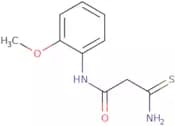
CAS:Versatile small molecule scaffoldFormula:C9H16ClNO3SPurezza:Min. 95%Peso molecolare:253.75 g/mol2-Carbamothioyl-N-(2-methoxyphenyl)acetamide
CAS:Versatile small molecule scaffoldFormula:C10H12N2O2SPurezza:Min. 95%Peso molecolare:224.28 g/molN-[4-(4-Bromophenyl)-1,3-thiazol-2-yl]-2-chloro-N-(3,5-dimethylphenyl)acetamide
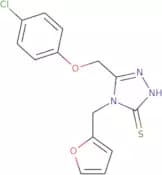
CAS:Versatile small molecule scaffoldFormula:C19H16BrClN2OSPurezza:Min. 95%Peso molecolare:435.8 g/mol5-(4-Chlorophenoxymethyl)-4-(furan-2-ylmethyl)-4H-1,2,4-triazole-3-thiol
CAS:Versatile small molecule scaffoldFormula:C14H12ClN3O2SPurezza:Min. 95%Peso molecolare:321.8 g/mol


![N,8-Dimethyl-8-azabicyclo[3.2.1]octan-3-amine](/_next/image/?url=https%3A%2Fstatic.cymitquimica.com%2Fproducts%2F3D%2Fthumb-webp%2FCEA31228.webp&w=3840&q=75)


![N-[2-(Propan-2-yl)phenyl]-5,6-dihydro-4H-1,3-thiazin-2-amine](/_next/image/?url=https%3A%2Fstatic.cymitquimica.com%2Fproducts%2F3D%2Fthumb-webp%2FCEA38918.webp&w=3840&q=75)
![2,6-Dimethylimidazo[2,1-b][1,3]thiazole-5-carbaldehyde](/_next/image/?url=https%3A%2Fstatic.cymitquimica.com%2Fproducts%2F3D%2Fthumb-webp%2FCEA41025.webp&w=3840&q=75)
![5-[(Propylsulfanyl)methyl]furan-2-carboxylic acid](/_next/image/?url=https%3A%2Fstatic.cymitquimica.com%2Fproducts%2F3D%2Fthumb-webp%2FCEA43945.webp&w=3840&q=75)
![[(1-Ethylpiperidin-3-yl)methyl]amine](/_next/image/?url=https%3A%2Fstatic.cymitquimica.com%2Fproducts%2F3D%2Fthumb-webp%2FCEA45902.webp&w=3840&q=75)

![3,9-diazabicyclo[4.2.1]nonane, 9-methyl-](/_next/image/?url=https%3A%2Fstatic.cymitquimica.com%2Fproducts%2F3D%2Fthumb-webp%2FCEA54784.webp&w=3840&q=75)
![1-Amino-1H-benzo[D]imidazol-2(3H)-one](/_next/image/?url=https%3A%2Fstatic.cymitquimica.com%2Fproducts%2F3D%2Fthumb-webp%2FCEA61691.webp&w=3840&q=75)
![{2-Oxabicyclo[4.1.0]heptan-7-yl}methanols](/_next/image/?url=https%3A%2Fstatic.cymitquimica.com%2Fproducts%2F3D%2Fthumb-webp%2FCEA62895.webp&w=3840&q=75)
![Methyl 4-[(1S)-1-hydroxyethyl]benzoate](/_next/image/?url=https%3A%2Fstatic.cymitquimica.com%2Fproducts%2F3D%2Fthumb-webp%2FCEA68171.webp&w=3840&q=75)
![(3R)-3,6-Bis({[(tert-butoxy)carbonyl]amino})hexanoic acid](/_next/image/?url=https%3A%2Fstatic.cymitquimica.com%2Fproducts%2F3D%2Fthumb-webp%2FCEA68648.webp&w=3840&q=75)
![Dispiro[3.0.3{5}.2{4}]decan-9-one](/_next/image/?url=https%3A%2Fstatic.cymitquimica.com%2Fproducts%2F3D%2Fthumb-webp%2FCEA79487.webp&w=3840&q=75)


![[4-(Butan-2-yl)phenyl]methanol](/_next/image/?url=https%3A%2Fstatic.cymitquimica.com%2Fproducts%2F3D%2Fthumb-webp%2FCEA93460.webp&w=3840&q=75)
![2-[2-(2-Chlorophenoxy)ethyl]-2,3-dihydro-1H-isoindole-1,3-dione](/_next/image/?url=https%3A%2Fstatic.cymitquimica.com%2Fproducts%2F3D%2Fthumb-webp%2FCEB36876.webp&w=3840&q=75)
![4-(([4-(3-Methylphenoxy)phenyl]sulfonyl)amino)benzoic acid](/_next/image/?url=https%3A%2Fstatic.cymitquimica.com%2Fproducts%2F3D%2Fthumb-webp%2FCEB68953.webp&w=3840&q=75)
![N-[4-(4-Bromophenyl)-1,3-thiazol-2-yl]-2-chloro-N-(3,5-dimethylphenyl)acetamide](/_next/image/?url=https%3A%2Fstatic.cymitquimica.com%2Fproducts%2F3D%2Fthumb-webp%2FCEB69608.webp&w=3840&q=75)