Building Blocks
Sottocategorie di "Building Blocks"
- Acidi boronici e derivati dell'acido boronico(5.778 prodotti)
- Building Blocks Chirali(1.243 prodotti)
- Building Blocks Idrocarburici(6.098 prodotti)
- Building Blocks organici(61.042 prodotti)
Trovati 204339 prodotti di "Building Blocks"
2-{4-[2-(Pyrrolidin-1-yl)ethoxy]phenyl}ethan-1-amine dihydrochloride
CAS:Versatile small molecule scaffold
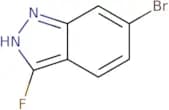
Formula:C14H24Cl2N2OPurezza:Min. 95%Peso molecolare:307.3 g/mol6-Bromo-3-fluoro-1H-indazole
CAS:Versatile small molecule scaffold
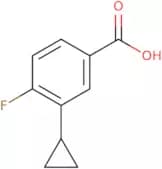
Formula:C7H4BrFN2Purezza:Min. 95%Peso molecolare:215.02 g/mol3-cyclopropyl-4-fluorobenzoic acid
CAS:Versatile small molecule scaffold
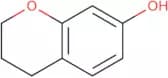
Formula:C10H9FO2Purezza:Min. 95%Peso molecolare:180.18 g/mol3,4-dihydro-2H-1-benzopyran-7-ol
CAS:3,4-Dihydro-2H-1-benzopyran-7-ol is a monomer that is used to synthesize medicines. It has the formula CH3COCH=CH(OH)CH3 and belongs to the group of flavonoids. 3,4-Dihydro-2H-1-benzopyran-7-ol has acidic properties, which are due to its isoflavones. It can be used as an acid catalyst in organic synthesis reactions and is a reaction product of chloropropane. 3,4-Dihydro-2H-1-benzopyran-7-ol also has high yield and can act as a bioisostere for other compounds such as chromene.
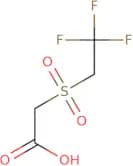
Formula:C9H10O2Purezza:Min. 95%Peso molecolare:150.18 g/mol2-(2,2,2-Trifluoroethanesulfonyl)acetic acid
CAS:Trifloxacin is a broad-spectrum antibacterial drug that belongs to the class of formyloxy compounds and the cephalosporin family. It has been shown to be active against both Gram-positive and Gram-negative bacteria, with activity against strains resistant to penicillin, ampicillin, erythromycin, and chloramphenicol. Trifloxacin binds to the bacterial ribosome by displacement of a pyridyl group in the ribosomal RNA, inhibiting protein synthesis. This binding inhibits cell growth by preventing the production of proteins that are vital for cell division.
br>
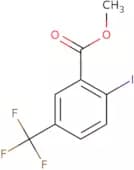
Trifloxacin has also been found to inhibit DNA gyrase and topoisomerase IV in vitro. Trifloxacin's mechanism of action is similar to that of other quinolones such as norfloxacin and ciprofloxacin.Formula:C4H5F3O4SPurezza:Min. 95%Peso molecolare:206.14 g/molMethyl 2-iodo-5-(trifluoromethyl)benzoate
CAS:Versatile small molecule scaffold
Formula:C9H6F3IO2Purezza:Min. 95%Peso molecolare:330.04 g/molN-[(Quinolin-8-yl)methyl]methanesulfonamide
CAS:Versatile small molecule scaffold
Formula:C11H12N2O2SPurezza:Min. 95%Peso molecolare:236.29 g/mol3,6-Dimethyl-1-{[(propan-2-yl)carbamoyl]methyl}-1H-pyrazolo[3,4-b]pyridine-4-carboxylic acid
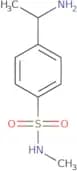
CAS:Versatile small molecule scaffoldFormula:C14H18N4O3Purezza:Min. 95%Peso molecolare:290.32 g/mol4-(1-Aminoethyl)-N-methylbenzene-1-sulfonamide
CAS:Versatile small molecule scaffold
Formula:C9H14N2O2SPurezza:Min. 95%Peso molecolare:214.29 g/mol(7S,8aS)-7-Fluoro-octahydropyrrolo[1,2-a]pyrazine dihydrochloride
CAS:Versatile small molecule scaffold
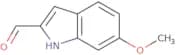
Formula:C7H15Cl2FN2Purezza:Min. 95%Peso molecolare:217.11 g/mol6-Methoxy-1H-indole-2-carbaldehyde
CAS:Versatile small molecule scaffold
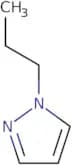
Formula:C10H9NO2Purezza:Min. 95%Peso molecolare:175.18 g/mol1-Propylpyrazole
CAS:1-Propylpyrazole is a non-classical inhibitor of aldehyde oxidase that has been shown to have an inhibitory effect on pentane. 1-Propylpyrazole has peroxidase-like activity, which means it can bind to lipid hydroperoxides in the presence of hydrogen peroxide or peroxidase. It has also been shown to be an effective inhibitor of dehydrogenase, which is an enzyme that catalyzes the oxidation of aldehydes and ketones to carboxylic acids. This drug is not active against classical aldehyde oxidases such as alcohol dehydrogenase, but it does inhibit polyunsaturated fatty acid synthesis by binding with cytochrome P450 enzymes.
Formula:C6H10N2Purezza:Min. 95%Peso molecolare:110.16 g/moltert-Butyl N-[1-(4-aminophenyl)ethyl]carbamate
CAS:Versatile small molecule scaffold
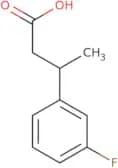
Formula:C13H20N2O2Purezza:Min. 95%Peso molecolare:236.31 g/mol3-(3-Fluorophenyl)butanoic acid
CAS:Versatile small molecule scaffold
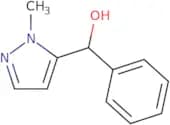
Formula:C10H11FO2Purezza:Min. 95%Peso molecolare:182.19 g/mol(1-Methyl-1H-pyrazol-5-yl)(phenyl)methanol
CAS:Versatile small molecule scaffold
Formula:C11H12N2OPurezza:Min. 95%Peso molecolare:188.23 g/moltert-Butyl N-{4-ethynylbicyclo[2.2.2]octan-1-yl}carbamate
CAS:Versatile small molecule scaffoldFormula:C15H23NO2Purezza:Min. 95%Peso molecolare:249.35 g/mol2-(Sulfanylmethyl)-4H-pyrido[1,2-a]pyrimidin-4-one
CAS:Versatile small molecule scaffold
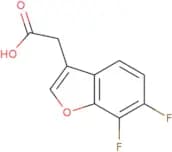
Formula:C9H8N2OSPurezza:Min. 95%Peso molecolare:192.24 g/mol2-(6,7-Difluoro-1-benzofuran-3-yl)acetic acid
CAS:Versatile small molecule scaffold
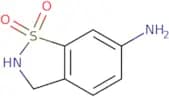
Formula:C10H6F2O3Purezza:Min. 95%Peso molecolare:212.15 g/mol1,1-Dioxo-2,3-dihydro-1,2-benzothiazol-6-amine
CAS:Versatile small molecule scaffold
Formula:C7H8N2O2SPurezza:Min. 95%Peso molecolare:184.22 g/mol2-[(tert-Butyldimethylsilyl)oxy]benzaldehyde
CAS:2-[(tert-Butyldimethylsilyl)oxy]benzaldehyde (BBSA) is a traceless synthetic reagent that is used for the termination of peptide synthesis. It can also be used in the synthesis of benzofurans, carbonyl compounds, and thioacetals. The high yield and chemoselectivity makes BBSA a competitive reagent for these types of reactions. BBSA can be prepared from hydrogen peroxide, esters, enol ethers, or peroxides. These latter reactants are more selective than hydrogen peroxide and do not lead to oxidation of substrates or side products. This product is also useful for the synthesis of thioketals.
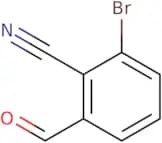
Formula:C13H20O2SiPurezza:Min. 95%Peso molecolare:236.38 g/mol2-Bromo-6-formylbenzonitrile
CAS:Versatile small molecule scaffold
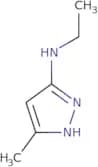
Formula:C8H4BrNOPurezza:Min. 95%Peso molecolare:210.03 g/molN-Ethyl-5-methyl-1H-pyrazol-3-amine
CAS:Versatile small molecule scaffold
Formula:C6H11N3Purezza:Min. 95%Peso molecolare:125.17 g/mol4-Methyl-1,1,3-trioxothieno[3,2-d][1,2]thiazole-5-carboxylic acid
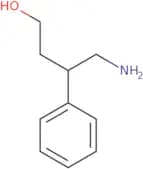
CAS:Versatile small molecule scaffoldFormula:C7H5NO5S2Purezza:Min. 95%Peso molecolare:247.3 g/mol4-Amino-3-phenylbutan-1-ol
CAS:Versatile small molecule scaffold
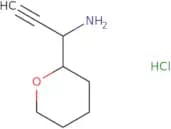
Formula:C10H15NOPurezza:Min. 95%Peso molecolare:165.23 g/mol1-(Oxan-2-yl)prop-2-yn-1-amine hydrochloride
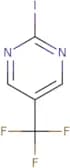
CAS:Versatile small molecule scaffoldFormula:C8H14ClNOPurezza:Min. 95%Peso molecolare:175.65 g/mol2-Iodo-5-(trifluoromethyl)pyrimidine
CAS:Versatile small molecule scaffold
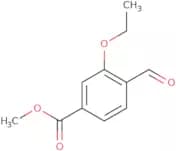
Formula:C5H2F3IN2Purezza:Min. 95%Peso molecolare:273.98 g/mol3-ethoxy-4-formyl-benzoic acid methyl ester
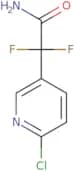
CAS:Versatile small molecule scaffoldFormula:C11H12O4Purezza:Min. 95%Peso molecolare:208.21 g/mol2-(6-Chloropyridin-3-yl)-2,2-difluoroacetamide
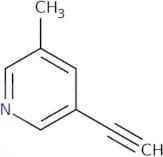
CAS:Versatile small molecule scaffoldFormula:C7H5ClF2N2OPurezza:Min. 95%Peso molecolare:206.58 g/mol3-Ethynyl-5-methylpyridine
CAS:Versatile small molecule scaffold
Formula:C8H7NPurezza:Min. 95%Peso molecolare:117.15 g/mol7-Bromo-[1,3]thiazolo[4,5-c]pyridin-2-amine
CAS:Versatile small molecule scaffold
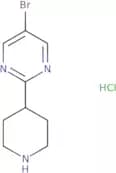
Formula:C6H4BrN3SPurezza:Min. 95%Peso molecolare:230.09 g/mol5-Bromo-2-(piperidin-4-yl)pyrimidine hydrochloride
CAS:Versatile small molecule scaffold
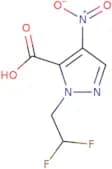
Formula:C9H13BrClN3Purezza:Min. 95%Peso molecolare:278.58 g/mol1-(2,2-Difluoroethyl)-4-nitro-1H-pyrazole-5-carboxylic acid
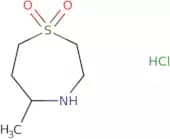
CAS:Versatile small molecule scaffoldFormula:C6H5F2N3O4Purezza:Min. 95%Peso molecolare:221.12 g/mol5-Methyl-1,4-thiazepane-1,1-dione hydrochloride
CAS:Versatile small molecule scaffold
Formula:C6H14ClNO2SPurezza:Min. 95%Peso molecolare:199.7 g/mol5-[(2,4-Difluorophenyl)methyl]-4-methyl-1,3-thiazol-2-amine hydrobromide
CAS:Versatile small molecule scaffold
Formula:C11H11BrF2N2SPurezza:Min. 95%Peso molecolare:321.19 g/mol1-Phenyl-2-(trifluoromethoxy)ethan-1-ol
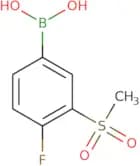
CAS:Versatile small molecule scaffoldFormula:C9H9F3O2Purezza:Min. 95%Peso molecolare:206.16 g/mol4-Fluoro-3-(methanesulfonyl)phenylboronic acid
CAS:Versatile small molecule scaffold
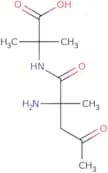
Formula:C7H8BFO4SPurezza:Min. 95%Peso molecolare:218.02 g/mol2-(2-acetamido-2-methylpropanamido)-2-methylpropanoic acid
CAS:Versatile small molecule scaffoldFormula:C10H18N2O4Purezza:Min. 95%Peso molecolare:230.26 g/mol2-Bromo-3,3,3-trifluoro-1-propene
CAS:Prodotto controllato2-Bromo-3,3,3-trifluoro-1-propene is a chemical compound that has been synthesized in an asymmetric reaction. The reactant is bromopropane and the product is 2,2,2-trifluoropropene. The methylene group on the propene molecule is activated by the nucleophilic attack of a fluoride ion from hydrogen fluoride to form a cavity with a highly strained bond. The kinetic study of this reaction revealed that the activation energy for the reaction is 42 kJ/mol. Palladium-catalyzed coupling reactions are catalyzed by palladium and require nonpolar solvents such as toluene or dichloromethane. This type of reaction has been shown to be exothermic with an isolated yield of 1%.
Formula:C3H2BrF3Purezza:Min. 95%Colore e forma:Colorless PowderPeso molecolare:174.95 g/molPiperyline
CAS:Piperyline is an alkanoic acid that has shown to be effective against skin cancer. It also has antimicrobial properties, which may be due to its ability to bind metal ions and form polymeric compounds. Piperyline inhibits microbial growth by inhibiting the synthesis of proteins and nucleic acids. The antimicrobial activity is related to its cationic polymerization with hydroxyl groups, which forms a structure that can inhibit microbial enzymes and disrupt microbial cell membranes. This compound also interacts with the skin's natural lipids, making it difficult for microorganisms to attach and grow on the skin. Piperyline is synthesized in organic chemistry laboratories as an amide precursor of other pharmaceuticals such as penicillin.
Formula:C16H17NO3Purezza:Min. 95%Peso molecolare:271.31 g/mol
![2-{4-[2-(Pyrrolidin-1-yl)ethoxy]phenyl}ethan-1-amine dihydrochloride](/_next/image/?url=https%3A%2Fstatic.cymitquimica.com%2Fproducts%2F3D%2Fthumb-webp%2FHHC68177.webp&w=3840&q=75)

![N-[(Quinolin-8-yl)methyl]methanesulfonamide](/_next/image/?url=https%3A%2Fstatic.cymitquimica.com%2Fproducts%2F3D%2Fthumb-webp%2FLJC51797.webp&w=3840&q=75)
![3,6-Dimethyl-1-{[(propan-2-yl)carbamoyl]methyl}-1H-pyrazolo[3,4-b]pyridine-4-carboxylic acid](/_next/image/?url=https%3A%2Fstatic.cymitquimica.com%2Fproducts%2F3D%2Fthumb-webp%2FLQB40013.webp&w=3840&q=75)
![(7S,8aS)-7-Fluoro-octahydropyrrolo[1,2-a]pyrazine dihydrochloride](/_next/image/?url=https%3A%2Fstatic.cymitquimica.com%2Fproducts%2F3D%2Fthumb-webp%2FHXC93968.webp&w=3840&q=75)
![tert-Butyl N-[1-(4-aminophenyl)ethyl]carbamate](/_next/image/?url=https%3A%2Fstatic.cymitquimica.com%2Fproducts%2F3D%2Fthumb-webp%2FTAB08668.webp&w=3840&q=75)
![tert-Butyl N-{4-ethynylbicyclo[2.2.2]octan-1-yl}carbamate](/_next/image/?url=https%3A%2Fstatic.cymitquimica.com%2Fproducts%2F3D%2Fthumb-webp%2FSGC55140.webp&w=3840&q=75)
![2-(Sulfanylmethyl)-4H-pyrido[1,2-a]pyrimidin-4-one](/_next/image/?url=https%3A%2Fstatic.cymitquimica.com%2Fproducts%2F3D%2Fthumb-webp%2FRQB69641.webp&w=3840&q=75)
![2-[(tert-Butyldimethylsilyl)oxy]benzaldehyde](/_next/image/?url=https%3A%2Fstatic.cymitquimica.com%2Fproducts%2F3D%2Fthumb-webp%2FREA58512.webp&w=3840&q=75)
![4-Methyl-1,1,3-trioxothieno[3,2-d][1,2]thiazole-5-carboxylic acid](/_next/image/?url=https%3A%2Fstatic.cymitquimica.com%2Fproducts%2F3D%2Fthumb-webp%2FGEB80217.webp&w=3840&q=75)
![7-Bromo-[1,3]thiazolo[4,5-c]pyridin-2-amine](/_next/image/?url=https%3A%2Fstatic.cymitquimica.com%2Fproducts%2F3D%2Fthumb-webp%2FTEA80175.webp&w=3840&q=75)
![5-[(2,4-Difluorophenyl)methyl]-4-methyl-1,3-thiazol-2-amine hydrobromide](/_next/image/?url=https%3A%2Fstatic.cymitquimica.com%2Fproducts%2F3D%2Fthumb-webp%2FVWC49324.webp&w=3840&q=75)