


Building Blocks
Questa sezione contiene prodotti fondamentali per la sintesi di composti organici e biologici. Building blocks sono i materiali di partenza essenziali utilizzati per costruire molecole complesse attraverso varie reazioni chimiche. Svolgono un ruolo critico nella scoperta di farmaci, nella scienza dei materiali e nella ricerca chimica. Presso CymitQuimica, offriamo una gamma diversificata di building blocks di alta qualità per supportare le tue ricerche innovative e progetti industriali, assicurandoti di avere i componenti essenziali per una sintesi di successo.
Sottocategorie di "Building Blocks"
- Acidi boronici e derivati dell'acido boronico(5.778 prodotti)
- Building Blocks Chirali(1.242 prodotti)
- Building Blocks Idrocarburici(6.098 prodotti)
- Building Blocks organici(61.098 prodotti)
Trovati 199594 prodotti di "Building Blocks"
Ordinare per
Purezza (%)
0
100
|
0
|
50
|
90
|
95
|
100
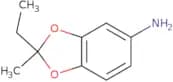
2-Ethyl-2-methyl-1,3-dioxaindan-5-amine
CAS:<p>Versatile small molecule scaffold</p>Formula:C10H13NO2Purezza:Min. 95%Peso molecolare:179.22 g/mol4-(3-Methoxypropyl)-4H-1,2,4-triazole-3-thiol
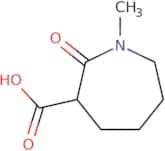
CAS:<p>4-(3-Methoxypropyl)-4H-1,2,4-triazole-3-thiol is a sulfuric acid derivative of 4H-1,2,4-triazole-3-thiol. It is an efficient and potentiodynamic polarizer that can be used to measure the concentration of copper ions in solution. This agent has been shown to have synergistic effects with copper ions and can be used as an analytical tool for cyclic voltammetry.</p>Formula:C6H11N3OSPurezza:Min. 95%Peso molecolare:173.24 g/mol1-Methyl-2-oxoazepane-3-carboxylic acid
CAS:<p>Versatile small molecule scaffold</p>Formula:C8H13NO3Purezza:Min. 95%Peso molecolare:171.19 g/mol2-[(3-Phenyl-1,2,4-oxadiazol-5-yl)methoxy]acetic acid
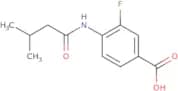
CAS:<p>Versatile small molecule scaffold</p>Formula:C11H10N2O4Purezza:Min. 95%Peso molecolare:234.21 g/mol3-Fluoro-4-(3-methylbutanamido)benzoic acid
CAS:<p>Versatile small molecule scaffold</p>Formula:C12H14FNO3Purezza:Min. 95%Peso molecolare:239.24 g/mol2-Cyclopropyl-5-fluorobenzoic acid
CAS:<p>Versatile small molecule scaffold</p>Formula:C10H9FO2Purezza:Min. 95%Peso molecolare:180.17 g/mol3-[(6-Chloropyrimidin-4-yl)amino]propanamide
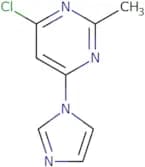
CAS:<p>Versatile small molecule scaffold</p>Formula:C7H9ClN4OPurezza:Min. 95%Peso molecolare:200.62 g/mol4-Chloro-6-(1H-imidazol-1-yl)-2-methylpyrimidine
CAS:<p>Versatile small molecule scaffold</p>Formula:C8H7ClN4Purezza:Min. 95%Peso molecolare:194.62 g/mol6-Fluorophthalazine-1,4-diol
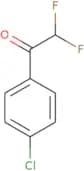
CAS:<p>Versatile small molecule scaffold</p>Formula:C8H5FN2O2Purezza:Min. 95%Peso molecolare:180.14 g/mol1-(4-Chloro-phenyl)-2,2-difluoro-ethanone
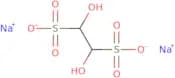
CAS:<p>Versatile small molecule scaffold</p>Formula:C8H5ClF2OPurezza:Min. 95%Peso molecolare:190.57 g/molGlyoxal bis(sodium hydrogen sulfite) adduct hydrate
CAS:<p>Glyoxal bis(sodium hydrogen sulfite) adduct hydrate is a reactive compound that has been shown to react with quinoxaline derivatives. The nitrogen atoms in the amide and nitrogen atoms in the quinoxaline derivative are oxidized by oxidation catalyst, such as sodium carbonate, to form an amide-quinone. This reaction leads to the formation of a polyvinyl polymer that can be used for sample preparation. In addition, this compound has been shown to have receptor activity and detergent compositions. Glyoxal bis(sodium hydrogen sulfite) adduct hydrate also has antimicrobial properties and can be used for plant physiology studies and pharmacokinetic properties.</p>Formula:OHCCHO·2NaHSO3Purezza:Min. 95%Peso molecolare:266.16 g/molN-(1-Carbamothioylcyclopentyl)benzamide
CAS:<p>Versatile small molecule scaffold</p>Formula:C13H16N2OSPurezza:Min. 95%Peso molecolare:248.35 g/molN-tert-Butyl 4-nitrophenylsulfonamide
CAS:<p>N-tert-Butyl 4-nitrophenylsulfonamide is a versatile compound with various applications. It can be used as a research chemical in scientific studies or as an ingredient in the synthesis of other compounds. This compound has been found to exhibit antinociceptive properties, making it potentially useful in pain management. Additionally, N-tert-Butyl 4-nitrophenylsulfonamide can act as an electrode material and has been studied for its electrochemical properties. It reacts with certain chemicals such as dioscin, 5-hydroxymethylfurfural (5-HMF), and nicl2, forming new compounds with unique characteristics. Its carbonyl group allows for the formation of N-substituted carbamic acid derivatives, which have shown potential in various fields such as medicinal chemistry and materials science. With its wide range of applications and diverse reactivity, N-tert-Butyl 4-nit</p>Formula:C10H14N2O4SPurezza:Min. 95%Peso molecolare:258.3 g/mol2-[(1-Phenyl-1H-pyrazol-4-yl)(2-phenylhydrazin-1-ylidene)methyl]phenol
CAS:<p>Versatile small molecule scaffold</p>Formula:C22H18N4OPurezza:Min. 95%Peso molecolare:354.4 g/moltert-Butyl 4-aminocyclohexane-1-carboxylate
CAS:<p>Versatile small molecule scaffold</p>Formula:C11H21NO2Purezza:Min. 95%Peso molecolare:199.29 g/molBenzenepropanoic acid, 3-[[(1,1-dimethylethoxy)carbonyl]amino]-
CAS:<p>Versatile small molecule scaffold</p>Formula:C14H19NO4Purezza:Min. 95%Peso molecolare:265.31 g/mol4-(5H,6H,7H,8H-Imidazo[1,2-a]pyridin-2-yl)aniline
CAS:<p>Versatile small molecule scaffold</p>Formula:C13H15N3Purezza:Min. 95%Peso molecolare:213.28 g/mol3-Bromo-6-fluoro-2-hydroxybenzaldehyde
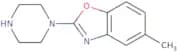
CAS:<p>Versatile small molecule scaffold</p>Formula:C7H4BrFO2Purezza:Min. 95%Peso molecolare:219.01 g/mol5-Methyl-2-(piperazin-1-yl)-1,3-benzoxazole
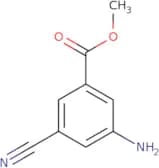
CAS:<p>Versatile small molecule scaffold</p>Formula:C12H15N3OPurezza:Min. 95%Peso molecolare:217.27 g/mol3-Amino-5-cyano-benzoic acid methyl ester
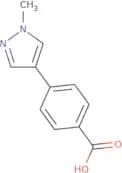
CAS:<p>Versatile small molecule scaffold</p>Formula:C9H8N2O2Purezza:Min. 95%Peso molecolare:176.17 g/mol4-(1-Methyl-1H-pyrazol-4-yl)benzoic acid
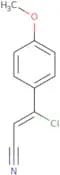
CAS:<p>Versatile small molecule scaffold</p>Formula:C11H10N2O2Purezza:Min. 95%Peso molecolare:202.21 g/mol(Z)-3-Chloro-3-(4-methoxyphenyl)acrylonitrile
CAS:<p>Versatile small molecule scaffold</p>Formula:C10H8ClNOPurezza:Min. 95%Peso molecolare:193.63 g/molRef: 3D-ZJB47916
Prodotto fuori produzionerac-tert-Butyl (3R,4R)-3-amino-4-benzylpyrrolidine-1-carboxylate
CAS:<p>Versatile small molecule scaffold</p>Formula:C16H24N2O2Purezza:Min. 95%Peso molecolare:276.4 g/mol8-[(tert-Butoxy)carbonyl]-2-oxa-8-azaspiro[4.5]decane-6-carboxylic acid
CAS:<p>Versatile small molecule scaffold</p>Formula:C14H23NO5Purezza:Min. 95%Peso molecolare:285.3 g/moltert-Butyl N-{8-azabicyclo[3.2.1]octan-3-yl}-N-methylcarbamate hydrochloride
CAS:<p>Versatile small molecule scaffold</p>Formula:C13H25ClN2O2Purezza:Min. 95%Peso molecolare:276.8 g/mol[1-(Aminomethyl)-2-oxabicyclo[2.2.2]octan-4-yl]methanol hydrochloride
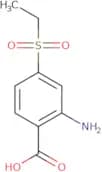
CAS:<p>Versatile small molecule scaffold</p>Formula:C9H18ClNO2Purezza:Min. 95%Peso molecolare:207.7 g/mol2-Amino-4-(ethanesulfonyl)benzoic acid
CAS:<p>Versatile small molecule scaffold</p>Formula:C9H11NO4SPurezza:Min. 95%Peso molecolare:229.26 g/molN-(2-Bromophenyl)-2-(methylamino)acetamide hydrochloride
CAS:<p>Versatile small molecule scaffold</p>Formula:C9H12BrClN2OPurezza:Min. 95%Peso molecolare:279.56 g/molMethyl 2-(chloromethyl)cyclohexane-1-carboxylate
CAS:<p>Versatile small molecule scaffold</p>Formula:C9H15ClO2Purezza:Min. 95%Peso molecolare:190.67 g/mol4-(bromomethyl)-1-methylpyrrolidin-2-one
CAS:<p>Versatile small molecule scaffold</p>Formula:C6H10BrNOPurezza:Min. 95%Peso molecolare:192.05 g/mol1-Methanesulfonylcyclopropane-1-carboxylic acid
CAS:<p>Versatile small molecule scaffold</p>Formula:C5H8O4SPurezza:Min. 95%Peso molecolare:164.18 g/mol1-[(Oxan-4-yl)methyl]-1H-pyrazole-4-carboxylic acid
CAS:<p>Versatile small molecule scaffold</p>Formula:C10H14N2O3Purezza:Min. 95%Peso molecolare:210.23 g/mol3-Fluoro-4-(5-methylthiophen-2-yl)aniline
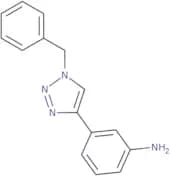
CAS:Versatile small molecule scaffoldFormula:C11H10FNSPurezza:Min. 95%Peso molecolare:207.27 g/mol3-(1-Benzyl-1H-1,2,3-triazol-4-yl)aniline
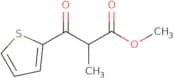
CAS:<p>Versatile small molecule scaffold</p>Formula:C15H14N4Purezza:Min. 95%Peso molecolare:250.3 g/molMethyl 2-methyl-3-oxo-3-(thiophen-2-yl)propanoate
CAS:<p>Versatile small molecule scaffold</p>Formula:C9H10O3SPurezza:Min. 95%Peso molecolare:198.24 g/mol2-[(1-Phenylethyl)amino]propanoic acid hydrochloride
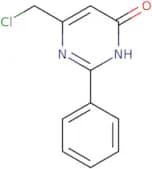
CAS:<p>Versatile small molecule scaffold</p>Formula:C11H16ClNO2Purezza:Min. 95%Peso molecolare:229.7 g/mol6-(Chloromethyl)-2-phenylpyrimidin-4-ol
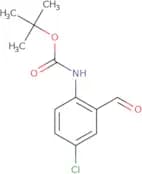
CAS:<p>Versatile small molecule scaffold</p>Formula:C11H9ClN2OPurezza:Min. 95%Peso molecolare:220.65 g/moltert-butyl N-(4-chloro-2-formylphenyl)carbamate
CAS:<p>Versatile small molecule scaffold</p>Formula:C12H14ClNO3Purezza:Min. 95%Peso molecolare:255.7 g/mol2,4-Dimethyl-5-[4-(trifluoromethyl)phenyl]pyrimidine
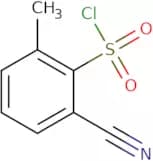
CAS:<p>Versatile small molecule scaffold</p>Formula:C13H11F3N2Purezza:Min. 95%Peso molecolare:252.23 g/mol2-Cyano-6-methylbenzene-1-sulfonyl chloride
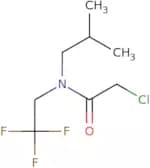
CAS:<p>Versatile small molecule scaffold</p>Formula:C8H6ClNO2SPurezza:Min. 95%Peso molecolare:215.66 g/mol2-Chloro-N-(2-methylpropyl)-N-(2,2,2-trifluoroethyl)acetamide
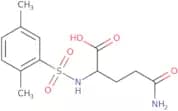
CAS:<p>Versatile small molecule scaffold</p>Formula:C8H13ClF3NOPurezza:Min. 95%Peso molecolare:231.64 g/mol4-Carbamoyl-2-(2,5-dimethylbenzenesulfonamido)butanoic acid
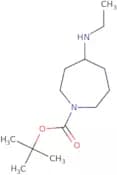
CAS:<p>Versatile small molecule scaffold</p>Formula:C13H18N2O5SPurezza:Min. 95%Peso molecolare:314.36 g/moltert-Butyl 4-(ethylamino)azepane-1-carboxylate
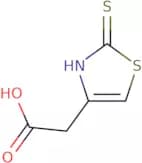
CAS:<p>Versatile small molecule scaffold</p>Formula:C13H26N2O2Purezza:Min. 95%Peso molecolare:242.36 g/mol2-(2-Sulfanyl-1,3-thiazol-4-yl)acetic acid
CAS:<p>Versatile small molecule scaffold</p>Formula:C5H5NO2S2Purezza:Min. 95%Peso molecolare:175.2 g/molrac-(1R,3S)-1-{[(tert-Butoxy)carbonyl]amino}-3-methylcyclohexane-1-carboxylic acid
CAS:<p>Versatile small molecule scaffold</p>Formula:C13H23NO4Purezza:Min. 95%Peso molecolare:257.3 g/mol1-{Bicyclo[2.2.1]heptan-2-yl}propan-1-amine
CAS:<p>Versatile small molecule scaffold</p>Formula:C10H19NPurezza:Min. 95%Peso molecolare:153.26 g/molMethyl(pent-4-en-1-yl)amine hydrochloride
CAS:<p>Versatile small molecule scaffold</p>Formula:C6H14ClNPurezza:Min. 95%Peso molecolare:135.63 g/mol[(1-Amino-2-methylpropan-2-yl)oxy]benzene hydrochloride
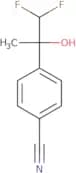
CAS:<p>Versatile small molecule scaffold</p>Formula:C10H16ClNOPurezza:Min. 95%Peso molecolare:201.69 g/mol4-(1,1-Difluoro-2-hydroxypropan-2-yl)benzonitrile
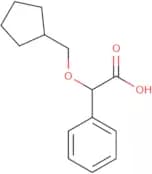
CAS:<p>Versatile small molecule scaffold</p>Formula:C10H9F2NOPurezza:Min. 95%Peso molecolare:197.18 g/mol2-(Cyclopentylmethoxy)-2-phenylacetic acid
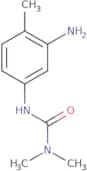
CAS:<p>Versatile small molecule scaffold</p>Formula:C14H18O3Purezza:Min. 95%Peso molecolare:234.29 g/mol1-(3-Amino-4-methylphenyl)-3,3-dimethylurea
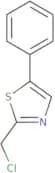
CAS:<p>Versatile small molecule scaffold</p>Formula:C10H15N3OPurezza:Min. 95%Peso molecolare:193.25 g/mol2-(Chloromethyl)-5-phenyl-1,3-thiazole
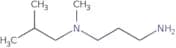
CAS:<p>Versatile small molecule scaffold</p>Formula:C10H8ClNSPurezza:Min. 95%Peso molecolare:209.7 g/mol(3-Aminopropyl)(methyl)(2-methylpropyl)amine
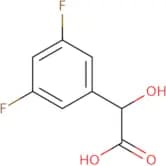
CAS:<p>Versatile small molecule scaffold</p>Formula:C8H20N2Purezza:Min. 95%Peso molecolare:144.26 g/molBenzeneacetic acid, 3,5-difluoro-hydroxy-, (S)-
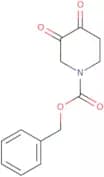
CAS:<p>Benzeneacetic acid, 3,5-difluoro-hydroxy-, (S)- is a ligand that can bind to transition metals such as copper or iron. It has been shown to be a good sensing ligand for the detection of mandelate and enantioselective for the synthesis of chiral molecules. The divalent bonding between the benzeneacetic acid and the metal may be due to coordination or dipyridyl. The stability of this molecule is also dependent on the type of metal it is bonded with.</p>Formula:C8H6F2O3Purezza:Min. 95%Peso molecolare:188.13 g/molBenzyl 3,4-dioxopiperidine-1-carboxylate
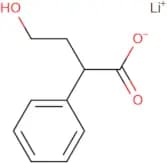
CAS:<p>Versatile small molecule scaffold</p>Formula:C13H13NO4Purezza:Min. 95%Peso molecolare:247.25 g/mol4-hydroxy-2-phenylbutanoate lithium
CAS:<p>Versatile small molecule scaffold</p>Formula:C10H11LiO3Purezza:Min. 95%Peso molecolare:186.2 g/mol5-Amino-6,7,8,9-tetrahydro-5H-benzo[7]annulene-5-carboxylic acid hydrochloride
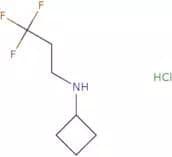
CAS:<p>Versatile small molecule scaffold</p>Formula:C12H16ClNO2Purezza:Min. 95%Peso molecolare:241.71 g/molN-(3,3,3-Trifluoropropyl)cyclobutanamine hydrochloride
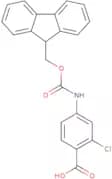
CAS:<p>Versatile small molecule scaffold</p>Formula:C7H13ClF3NPurezza:Min. 95%Peso molecolare:203.63 g/mol4-(Fmoc-amino)-2-chloro-benzoic acid
CAS:<p>Versatile small molecule scaffold</p>Formula:C22H16ClNO4Purezza:Min. 95%Peso molecolare:393.82 g/mol{3-Methyl-3H-imidazo[4,5-b]pyridin-2-yl}methanamine dihydrochloride
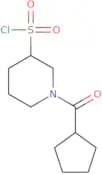
CAS:<p>Versatile small molecule scaffold</p>Formula:C8H12Cl2N4Purezza:Min. 95%Peso molecolare:235.11 g/mol1-Cyclopentanecarbonylpiperidine-3-sulfonyl chloride
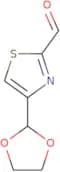
CAS:<p>Versatile small molecule scaffold</p>Formula:C11H18ClNO3SPurezza:Min. 95%Peso molecolare:279.78 g/mol4-(1,3-Dioxolan-2-yl)-1,3-thiazole-2-carbaldehyde
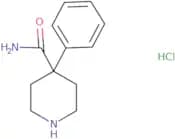
CAS:<p>Versatile small molecule scaffold</p>Formula:C7H7NO3SPurezza:Min. 95%Peso molecolare:185.2 g/mol4-Phenylpiperidine-4-carboxamide hydrochloride
CAS:<p>Versatile small molecule scaffold</p>Formula:C12H17ClN2OPurezza:Min. 95%Peso molecolare:240.73 g/mol5-Methyl-5H,6H,7H,8H-imidazo[1,2-a]pyridine-2-sulfonyl chloride
CAS:<p>Versatile small molecule scaffold</p>Formula:C8H11ClN2O2SPurezza:Min. 95%Peso molecolare:234.7 g/mol[1-(1-Amino-2-methylpropyl)cyclopent-3-en-1-yl]methanol hydrochloride
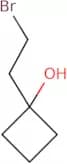
CAS:<p>Versatile small molecule scaffold</p>Formula:C10H20ClNOPurezza:Min. 95%Peso molecolare:205.72 g/mol1-(2-Bromoethyl)cyclobutan-1-ol
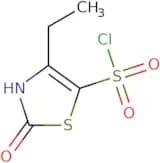
CAS:<p>Versatile small molecule scaffold</p>Formula:C6H11BrOPurezza:Min. 95%Peso molecolare:179.05 g/mol4-Ethyl-2-oxo-2,3-dihydro-1,3-thiazole-5-sulfonyl chloride
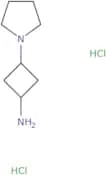
CAS:<p>Versatile small molecule scaffold</p>Formula:C5H6ClNO3S2Purezza:Min. 95%Peso molecolare:227.7 g/molrac-(1S,3S)-3-(Pyrrolidin-1-yl)cyclobutan-1-amine dihydrochloride
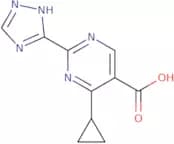
CAS:<p>Versatile small molecule scaffold</p>Formula:C8H18Cl2N2Purezza:Min. 95%Peso molecolare:213.15 g/mol4-Cyclopropyl-2-(4H-1,2,4-triazol-3-yl)pyrimidine-5-carboxylic acid
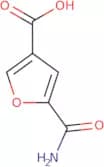
CAS:<p>Versatile small molecule scaffold</p>Formula:C10H9N5O2Purezza:Min. 95%Peso molecolare:231.21 g/mol5-Carbamoylfuran-3-carboxylic acid
CAS:<p>Versatile small molecule scaffold</p>Formula:C6H5NO4Purezza:Min. 95%Peso molecolare:155.11 g/mol2-Amino-4H,5H-naphtho[2,1-b]thiophene-1-carbonitrile
CAS:<p>2-Amino-4H,5H-naphtho[2,1-b]thiophene-1-carbonitrile is a dihydronaphthalene compound that has been shown to be active against influenza viruses. It inhibits the virus by binding to the pyrimidine ring of the virus's RNA polymerase. This inhibits viral replication and reduces plaque formation. 2-Amino-4H,5H-naphtho[2,1-b]thiophene-1-carbonitrile has antiviral activity against influenza A and is effective in inhibiting h5n1 virus replication.</p>Formula:C13H10N2SPurezza:Min. 95%Peso molecolare:226.3 g/mol2-Chloro-N-[2-(3-chlorophenyl)ethyl]acetamide
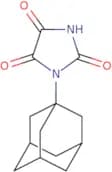
CAS:<p>Versatile small molecule scaffold</p>Formula:C10H11Cl2NOPurezza:Min. 95%Peso molecolare:232.1 g/mol1-(Adamantan-1-yl)imidazolidine-2,4,5-trione
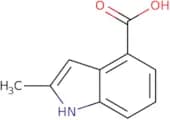
CAS:<p>Versatile small molecule scaffold</p>Formula:C13H16N2O3Purezza:Min. 95%Peso molecolare:248.28 g/mol2-Methyl-1H-indole-4-carboxylic acid
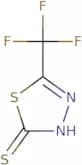
CAS:<p>2-Methyl-1H-indole-4-carboxylic acid (2MICA) is a cyclic compound that is used in the synthesis of other compounds. It is obtained by reacting 2,3-dibromo-nitrobenzoic acid with sodium ethoxide in an alkaline solution. The yield of 2MICA can be increased by using catalytic acid anhydrides such as dimethyl sulphoxide or lactam. In the presence of reductive agents, 2MICA can be synthesized from the corresponding lactam or cyclised carboxylic acid.<br>2MICA reacts with sodium ethoxide to form a lactam and reduces 2-bromo-3-nitrobenzoic acid to yield 2MICA.</p>Formula:C10H9NO2Purezza:Min. 95%Peso molecolare:175 g/mol5-(Trifluoromethyl)-1,3,4-thiadiazole-2-thiol
CAS:<p>Versatile small molecule scaffold</p>Formula:C3HF3N2S2Purezza:Min. 95%Peso molecolare:186.18 g/molN-(4-Aminophenyl)-3,3,3-trifluoropropanamide hydrochloride
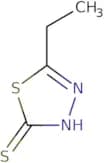
CAS:<p>Versatile small molecule scaffold</p>Formula:C9H10ClF3N2OPurezza:Min. 95%Peso molecolare:254.63 g/mol5-Ethyl-1,3,4-thiadiazole-2-thiol
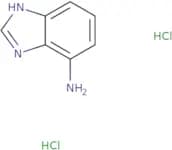
CAS:<p>Versatile small molecule scaffold</p>Formula:C4H6N2S2Purezza:Min. 95%Peso molecolare:146.2 g/mol1H-1,3-Benzodiazol-7-amine dihydrochloride
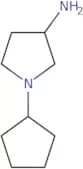
CAS:<p>Versatile small molecule scaffold</p>Formula:C7H9Cl2N3Purezza:Min. 95%Peso molecolare:206.07 g/mol1-cyclopentylpyrrolidin-3-amine
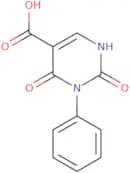
CAS:<p>Versatile small molecule scaffold</p>Formula:C9H18N2Purezza:Min. 95%Peso molecolare:154.25 g/mol2,4-Dioxo-3-phenyl-1,2,3,4-tetrahydropyrimidine-5-carboxylic acid
CAS:<p>Versatile small molecule scaffold</p>Formula:C11H8N2O4Purezza:Min. 95%Peso molecolare:232.19 g/mol{8,9-Dimethyl-1,7-dioxaspiro[4.4]nonan-2-yl}methanamine
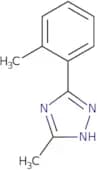
CAS:<p>Versatile small molecule scaffold</p>Formula:C10H19NO2Purezza:Min. 95%Peso molecolare:185.3 g/mol3-Methyl-5-(2-methylphenyl)-1H-1,2,4-triazole
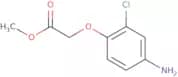
CAS:<p>Versatile small molecule scaffold</p>Formula:C10H11N3Purezza:Min. 95%Peso molecolare:173.21 g/molMethyl 2-(4-amino-2-chlorophenoxy)acetate
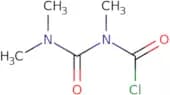
CAS:<p>Versatile small molecule scaffold</p>Formula:C9H10ClNO3Purezza:Min. 95%Peso molecolare:215.63 g/molN-(Dimethylcarbamoyl)-N-methylcarbamoyl chloride
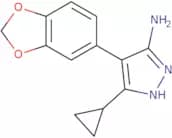
CAS:<p>Versatile small molecule scaffold</p>Formula:C5H9ClN2O2Purezza:Min. 95%Peso molecolare:164.59 g/mol4-(1,3-Dioxaindan-5-yl)-3-cyclopropyl-1H-pyrazol-5-amine
CAS:<p>Versatile small molecule scaffold</p>Formula:C13H13N3O2Purezza:Min. 95%Peso molecolare:243.26 g/mol5-Bromo-6-hydroxypyrimidine-4-carboxylic acid
CAS:<p>5-Bromo-6-hydroxypyrimidine-4-carboxylic acid is a homologous organic acid that is used as a pharmaceutical preservative. It is most commonly found in acidic pharmaceutical formulations. 5-Bromo-6-hydroxypyrimidine-4-carboxylic acid inhibits the growth of bacteria and fungi by acting as an enzyme inhibitor. The inhibition of enzymes such as lactamase, which breaks down the lactam ring in penicillin, prevents bacterial and fungal growth by preventing them from breaking down their natural cell walls. 5-Bromo-6-hydroxypyrimidine-4-carboxylic acid has also been shown to have potent anticancer activity in the lab setting, although the clinical significance of this has not yet been determined.</p>Formula:C5H3BrN2O3Purezza:Min. 95%Peso molecolare:218.99 g/mol3-(Methoxycarbonyl)pyridine-4-carboxylic acid
CAS:<p>Versatile small molecule scaffold</p>Formula:C8H7NO4Purezza:Min. 95%Peso molecolare:181.15 g/mol2-Bromo-3,3,3-trifluoro-1-propene
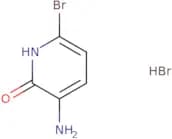
CAS:Prodotto controllato<p>2-Bromo-3,3,3-trifluoro-1-propene is a chemical compound that has been synthesized in an asymmetric reaction. The reactant is bromopropane and the product is 2,2,2-trifluoropropene. The methylene group on the propene molecule is activated by the nucleophilic attack of a fluoride ion from hydrogen fluoride to form a cavity with a highly strained bond. The kinetic study of this reaction revealed that the activation energy for the reaction is 42 kJ/mol. Palladium-catalyzed coupling reactions are catalyzed by palladium and require nonpolar solvents such as toluene or dichloromethane. This type of reaction has been shown to be exothermic with an isolated yield of 1%.</p>Formula:C3H2BrF3Purezza:Min. 95%Colore e forma:Colorless PowderPeso molecolare:174.95 g/mol3-amino-6-bromopyridin-2-ol hydrobromide
CAS:<p>Versatile small molecule scaffold</p>Formula:C5H6Br2N2OPurezza:Min. 95%Peso molecolare:269.9 g/mol3-Methylbenzo[b]thiophene-2-carboxylic acid
CAS:<p>3-Methylbenzo[b]thiophene-2-carboxylic acid (MBTCA) is a heterocyclic compound that is an intermediate in the synthesis of 3-methylthiophene-2-carboxylic acid, a precursor to other drugs. MBTCA is an aerobic, nonpolar compound that has shown antimicrobial activity against some bacteria and fungi. It also has been shown to have practicality as a biomolecular probe for methyl groups in organic solvents. MBTCA can be synthesized by nitration of benzene in the presence of sulfur and sulfoxides. This reaction produces nitrobenzene, which can then be oxidized by potassium permanganate or hydrogen peroxide to produce MBTCA. The most common isomer of MBTCA is 2-(3,5-dimethoxybenzylidene)tetrahydrofuran, with three methyl groups on the</p>Formula:C10H8O2SPurezza:Min. 95%Peso molecolare:192.23 g/mol2-Acetylbenzoic acid
CAS:<p>2-Acetylbenzoic acid is a functional molecule that contains an acetyl group. It can form hydrogen bonds with other molecules and has been shown to induce apoptosis in cells. The reaction products of 2-acetylbenzoic acid are malonic acid, acetylsalicylic acid, and 2-benzoylbenzoic acid. These three compounds are made by the addition of hydrogen or hydroxide to the molecule 2-acetylbenzoic acid. The molecule has two functional groups: a carbonyl group and an acetyl group. The chemical structure of this molecule can be seen in the figure below.<br>2-Acetylbenzoic Acid</p>Formula:C9H8O3Purezza:Min. 95%Colore e forma:PowderPeso molecolare:164.16 g/molRef: 3D-FA05086
Prodotto fuori produzione3-Boc-3-azabicyclo[3.2.1]octan-8-amine
CAS:<p>Versatile small molecule scaffold</p>Formula:C12H22N2O2Purezza:Min. 95%Peso molecolare:226.32 g/mol2-Bromo-4-(4-fluorophenyl)-1,3-thiazole
CAS:<p>Versatile small molecule scaffold</p>Formula:C9H5NFSBrPurezza:Min. 95%Peso molecolare:258.11 g/molGivinostat hydrochloride
CAS:<p>Givinostat hydrochloride is a research chemical that has shown potential in various fields. It is a molybdenum-based compound that has been studied for its effects on dopamine release and hydrogen evolution. Givinostat hydrochloride has also been investigated as an osteoclast inhibitor, which may be beneficial in the treatment of bone-related disorders such as osteoporosis. Additionally, it has shown promise as a retinoid and calpain inhibitor, suggesting its potential use in dermatological conditions and neurodegenerative diseases. The compound contains fluorine atoms, making it suitable for imaging studies using fluorine MRI techniques. Givinostat hydrochloride has been tested on MDA-MB-231 cells and has shown inhibitory effects on their growth, indicating its potential as an anticancer agent.</p>Formula:C24H27N3O4·HClPurezza:Min. 95%Peso molecolare:457.95 g/mol


![2-[(3-Phenyl-1,2,4-oxadiazol-5-yl)methoxy]acetic acid](/_next/image/?url=https%3A%2Fstatic.cymitquimica.com%2Fproducts%2F3D%2Fthumb-webp%2FABC54398.webp&w=3840&q=75)

![3-[(6-Chloropyrimidin-4-yl)amino]propanamide](/_next/image/?url=https%3A%2Fstatic.cymitquimica.com%2Fproducts%2F3D%2Fthumb-webp%2FAAC48959.webp&w=3840&q=75)

![2-[(1-Phenyl-1H-pyrazol-4-yl)(2-phenylhydrazin-1-ylidene)methyl]phenol](/_next/image/?url=https%3A%2Fstatic.cymitquimica.com%2Fproducts%2F3D%2Fthumb-webp%2FZCA99094.webp&w=3840&q=75)
![Benzenepropanoic acid, 3-[[(1,1-dimethylethoxy)carbonyl]amino]-](/_next/image/?url=https%3A%2Fstatic.cymitquimica.com%2Fproducts%2F3D%2Fthumb-webp%2FZFA50604.webp&w=3840&q=75)
![4-(5H,6H,7H,8H-Imidazo[1,2-a]pyridin-2-yl)aniline](/_next/image/?url=https%3A%2Fstatic.cymitquimica.com%2Fproducts%2F3D%2Fthumb-webp%2FZFB23852.webp&w=3840&q=75)
![8-[(tert-Butoxy)carbonyl]-2-oxa-8-azaspiro[4.5]decane-6-carboxylic acid](/_next/image/?url=https%3A%2Fstatic.cymitquimica.com%2Fproducts%2F3D%2Fthumb-webp%2FZLD00165.webp&w=3840&q=75)
![tert-Butyl N-{8-azabicyclo[3.2.1]octan-3-yl}-N-methylcarbamate hydrochloride](/_next/image/?url=https%3A%2Fstatic.cymitquimica.com%2Fproducts%2F3D%2Fthumb-webp%2FZLD00175.webp&w=3840&q=75)
![[1-(Aminomethyl)-2-oxabicyclo[2.2.2]octan-4-yl]methanol hydrochloride](/_next/image/?url=https%3A%2Fstatic.cymitquimica.com%2Fproducts%2F3D%2Fthumb-webp%2FZLD00801.webp&w=3840&q=75)


![1-[(Oxan-4-yl)methyl]-1H-pyrazole-4-carboxylic acid](/_next/image/?url=https%3A%2Fstatic.cymitquimica.com%2Fproducts%2F3D%2Fthumb-webp%2FZZB32393.webp&w=3840&q=75)
![2-[(1-Phenylethyl)amino]propanoic acid hydrochloride](/_next/image/?url=https%3A%2Fstatic.cymitquimica.com%2Fproducts%2F3D%2Fthumb-webp%2FKJC81808.webp&w=3840&q=75)
![2,4-Dimethyl-5-[4-(trifluoromethyl)phenyl]pyrimidine](/_next/image/?url=https%3A%2Fstatic.cymitquimica.com%2Fproducts%2F3D%2Fthumb-webp%2FLAC75867.webp&w=3840&q=75)
![rac-(1R,3S)-1-{[(tert-Butoxy)carbonyl]amino}-3-methylcyclohexane-1-carboxylic acid](/_next/image/?url=https%3A%2Fstatic.cymitquimica.com%2Fproducts%2F3D%2Fthumb-webp%2FJND07961.webp&w=3840&q=75)
![1-{Bicyclo[2.2.1]heptan-2-yl}propan-1-amine](/_next/image/?url=https%3A%2Fstatic.cymitquimica.com%2Fproducts%2F3D%2Fthumb-webp%2FJMC20030.webp&w=3840&q=75)

![[(1-Amino-2-methylpropan-2-yl)oxy]benzene hydrochloride](/_next/image/?url=https%3A%2Fstatic.cymitquimica.com%2Fproducts%2F3D%2Fthumb-webp%2FLCC31526.webp&w=3840&q=75)
![5-Amino-6,7,8,9-tetrahydro-5H-benzo[7]annulene-5-carboxylic acid hydrochloride](/_next/image/?url=https%3A%2Fstatic.cymitquimica.com%2Fproducts%2F3D%2Fthumb-webp%2FLCC31529.webp&w=3840&q=75)
![{3-Methyl-3H-imidazo[4,5-b]pyridin-2-yl}methanamine dihydrochloride](/_next/image/?url=https%3A%2Fstatic.cymitquimica.com%2Fproducts%2F3D%2Fthumb-webp%2FLIC70536.webp&w=3840&q=75)
![5-Methyl-5H,6H,7H,8H-imidazo[1,2-a]pyridine-2-sulfonyl chloride](/_next/image/?url=https%3A%2Fstatic.cymitquimica.com%2Fproducts%2F3D%2Fthumb-webp%2FJBD31873.webp&w=3840&q=75)
![[1-(1-Amino-2-methylpropyl)cyclopent-3-en-1-yl]methanol hydrochloride](/_next/image/?url=https%3A%2Fstatic.cymitquimica.com%2Fproducts%2F3D%2Fthumb-webp%2FJBD31750.webp&w=3840&q=75)
![2-Amino-4H,5H-naphtho[2,1-b]thiophene-1-carbonitrile](/_next/image/?url=https%3A%2Fstatic.cymitquimica.com%2Fproducts%2F3D%2Fthumb-webp%2FMBA07120.webp&w=3840&q=75)
![2-Chloro-N-[2-(3-chlorophenyl)ethyl]acetamide](/_next/image/?url=https%3A%2Fstatic.cymitquimica.com%2Fproducts%2F3D%2Fthumb-webp%2FJBA16215.webp&w=3840&q=75)
![{8,9-Dimethyl-1,7-dioxaspiro[4.4]nonan-2-yl}methanamine](/_next/image/?url=https%3A%2Fstatic.cymitquimica.com%2Fproducts%2F3D%2Fthumb-webp%2FIFD51928.webp&w=3840&q=75)


![3-Methylbenzo[b]thiophene-2-carboxylic acid](/_next/image/?url=https%3A%2Fstatic.cymitquimica.com%2Fproducts%2F3D%2Fthumb-webp%2FDAA13378.webp&w=3840&q=75)

![3-Boc-3-azabicyclo[3.2.1]octan-8-amine](/_next/image/?url=https%3A%2Fstatic.cymitquimica.com%2Fproducts%2F3D%2Fthumb-webp%2FFDC76351.webp&w=3840&q=75)

