Building Blocks
Sottocategorie di "Building Blocks"
- Acidi boronici e derivati dell'acido boronico(5.784 prodotti)
- Building Blocks Chirali(1.242 prodotti)
- Building Blocks Idrocarburici(6.105 prodotti)
- Building Blocks organici(61.061 prodotti)
Trovati 205399 prodotti di "Building Blocks"
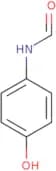
N-(4-Hydroxyphenyl)formamide
CAS:Versatile small molecule scaffold
Formula:C7H7NO2Purezza:Min. 95%Peso molecolare:137.14 g/mol10-Hydroxydecanoic acid
CAS:10-Hydroxydecanoic acid is a nonsteroidal anti-inflammatory drug that has the ability to inhibit prostaglandin synthesis. 10-Hydroxydecanoic acid has been shown to be effective in treating inflammatory diseases such as arthritis and psoriasis. It is also used to treat lacrimal gland inflammation, and caco-2 cells have been shown to have a maximal response to this drug. 10-Hydroxydecanoic acid is synthesized from trans-10-hydroxy-2-decenoic acid by an acylation reaction with silver ions in a nonpolar solvent, followed by heating. This compound can be separated from other fatty acids using an analytical technique called thin layer chromatography (TLC).
Formula:C10H20O3Purezza:Min. 95%Peso molecolare:188.26 g/molBenzenesulfonanilide
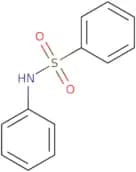
CAS:Benzenesulfonanilide is a compound that is soluble in water. It has potent antagonists against the chemokine receptor CXCR2 and the chemokine CCL5. The molecular weight of benzenesulfonanilide is 212.2 g/mol, and it has a fluorine atom at the 2-position on the benzene ring, a carbonyl group (-C=O) at the 2-position on the benzene ring, and a nitro group (-NO2) at the 3-position on the benzene ring. The structural formula for benzenesulfonanilide is shown below:
Formula:C12H11NO2SPurezza:Min. 95%Peso molecolare:233.29 g/mol1H-Indole-6-carboxamide
CAS:1H-Indole-6-carboxamide is a pharmaceutical compound that has been shown to bind to serotonin receptors. It has been studied for its potential use in the treatment of cancer, bowel disease, depression, and inflammatory bowel disease. 1H-Indole-6-carboxamide is a polymorphic chemical compound that exists as an equilibrium mixture of two isomers. The bound form of the drug is more potent than the free form and it binds with high affinity to serotonin receptors. 1H-Indole-6-carboxamide hydrochloride salts are more soluble in water than the free form, making them more efficient for use in humans.
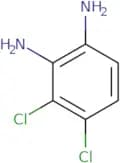
Formula:C9H8N2OPurezza:Min. 95%Peso molecolare:160.17 g/mol3,4-dichlorobenzene-1,2-diamine
CAS:3,4-dichlorobenzene-1,2-diamine is a high salt compound that binds to sulfatide and has a molecular weight of 3.2 kilodaltons. It is an agonist for the galactose receptor in muscle cells, which causes stimulation of biochemical properties in the cell. The compound has been shown to be synthetic and expressed in E. coli. 3,4-Dichlorobenzene-1,2-diamine is also used as an immunofluorescent probe for studying the function of galactose receptors in muscle cells. This compound can also be immobilized on polyacrylamide gels to study its interactions with sulfatide.
Formula:C6H6Cl2N2Purezza:Min. 95%Peso molecolare:177.03 g/mol4-[2-(Diethylamino)ethyl]aniline
CAS:Versatile small molecule scaffold
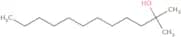
Formula:C12H20N2Purezza:Min. 95%Peso molecolare:192.3 g/mol2-Methyl-2-dodecanol
CAS:2-Methyl-2-dodecanol is a reactive chemical that can be used as an additive in metal halides. It has been found to be an effective catalyst for the production of ethylene glycol and other chemicals. The reaction is catalyzed by alkali metals, such as sodium and potassium. 2-Methyl-2-dodecanol can also function as a solvent and has viscosity comparable to water.
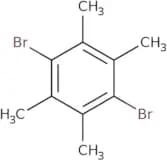
Formula:C13H28OPurezza:Min. 95%Peso molecolare:200.36 g/mol1,4-Dibromo-2,3,5,6-tetramethylbenzene
CAS:1,4-Dibromo-2,3,5,6-tetramethylbenzene is a five-membered ring molecule with the chemical formula C8H8Br6. It has been shown to react with dichlorocarbene to form a 1:1 adduct, which is stable at room temperature and can be isolated as a crystalline solid. This compound has been used in the synthesis of perfluorinated compounds. The reaction rate of 1,4-dibromo-2,3,5,6-tetramethylbenzene is affected by electron donating or withdrawing groups on the methyl group. The compound has also been found to have inflammatory effects on diseases such as asthma and arthritis.
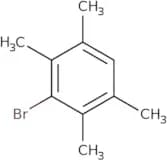
Formula:C10H12Br2Purezza:Min. 95%Peso molecolare:292.01 g/mol1-Bromo-2,3,5,6-tetramethylbenzene
CAS:1-Bromo-2,3,5,6-tetramethylbenzene (1-BTTB) is an organic compound that is used as a model system to study the reactivity of methyl groups. 1-BTTB reacts with potassium t-butoxide in a nonpolar solvent to form a cyclic ether product. The reaction is initiated by the addition of hydrogen peroxide. This reaction can be monitored using vibrational spectroscopy and yields nitro groups and imidazole derivatives when it is carried out in the presence of nitric acid or ammonium nitrate. 1-BTTB also has heat resistant properties that make it useful for use in chemical processes involving carbon tetrachloride or hydrogen fluoride.
Formula:C10H13BrPurezza:Min. 95%Peso molecolare:213.11 g/molMethyl benzo[b]furan-2-carboxylate
CAS:Methyl benzo[b]furan-2-carboxylate is a synthetic chemical compound that is not found in nature. It has been shown to have potent anticancer activity against a variety of cancer cell lines, including leukemia, prostate, colon, and breast cancer cells. Methyl benzo[b]furan-2-carboxylate inhibits the growth of these cells by inducing programmed cell death (apoptosis) through a mechanism that is different from other anticancer drugs. This chemical also has significant inhibitory activity against alkene and benzofuran derivatives, which are known to be resistant to chemotherapy. Methyl benzo[b]furan-2-carboxylate has not shown any neurotoxicity in animal models and has a good safety profile.
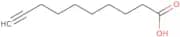
Formula:C10H8O3Purezza:Min. 95%Peso molecolare:176.17 g/molDec-9-ynoic acid
CAS:Dec-9-ynoic acid is a synthetic fatty acid that is a precursor to several biologically important substances. It is labile and easily oxidized by air, light, or heat. Dec-9-ynoic acid has been shown to be a central metabolic intermediate for the biosynthesis of polyunsaturated fatty acids. It can also be converted into linolenic acid, which is an essential fatty acid that cannot be synthesized by humans. Dec-9-ynoic acid exists in two geometric isomers: cis and trans. The cis form exhibits kinetic properties that are different from the trans form. Dec-9-ynoic acid has been studied as a potential treatment for human diseases such as diabetes mellitus type 2, Parkinson's disease, Alzheimer's disease, schizophrenia, and depression.
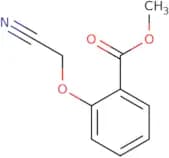
Formula:C10H16O2Purezza:Min. 95%Peso molecolare:168.23 g/molMethyl 2-(cyanomethoxy)benzoate
CAS:Versatile small molecule scaffold
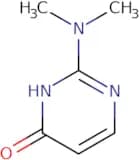
Formula:C10H9NO3Purezza:Min. 95%Peso molecolare:191.18 g/mol2-(Dimethylamino)pyrimidin-4-ol
CAS:Versatile small molecule scaffold
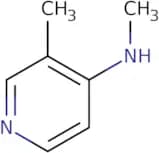
Formula:C6H9N3OPurezza:Min. 95%Peso molecolare:139.16 g/molN,3-Dimethylpyridin-4-amine
CAS:Versatile small molecule scaffold
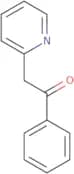
Formula:C7H10N2Purezza:Min. 95%Peso molecolare:122.17 g/mol1-Phenyl-2-(2-pyridinyl)-ethanone
CAS:1-Phenyl-2-(2-pyridinyl)-ethanone is a hydrogen bond donor and an enolate anion. It has tautomeric and zwitterionic properties. The protonation of the methyl ketones in 1-phenyl-2-(2-pyridinyl)ethanone will lead to the formation of the enolate anion, which can act as a proton acceptor. The intramolecular hydrogen bonding in 1-phenyl-2-(2-pyridinyl)-ethanone leads to its tautomeric properties, because it can exist as both the keto form or enol form. When 1-phenyl-2-(2-pyridinyl)ethanone is deprotonated, it forms a carbonyl group that acts as an acceptor for hydrogen bonding with other molecules.
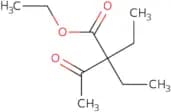
Formula:C13H11NOPurezza:Min. 95%Peso molecolare:197.23 g/molEthyl 2,2-diethylacetoacetate
CAS:Ethyl 2,2-diethylacetoacetate is an organic solvent that can be used for the production of electrophotographic toner. It is reactive and has a particle diameter of about 0.1 µm in the liquid state. The chemical formula for ethyl 2,2-diethylacetoacetate is CH3COCH2COOC2H5. Ethyl 2,2-diethylacetoacetate reacts with silicon and zirconium to form coatings that are useful in the manufacture of carboxyalkylated insulin analogues as well as acceptor materials for electron transfer layers in electrophotographic toners.
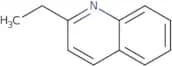
Formula:C10H18O3Purezza:Min. 95%Peso molecolare:186.25 g/mol2-Ethylquinoline
CAS:2-Ethylquinoline is a compound that belongs to the group of alkenes. It can be prepared by reacting acetaldehyde with an amine in the presence of acid catalysts such as sulfuric acid or acetic acid. 2-Ethylquinoline has been shown to react with allylamine, forming an ether linkage. This reaction is facilitated by ultrasonic extraction and heating at reflux temperature for 12 hours, and then cooling to room temperature. The product obtained is purified via column chromatography using acetonitrile as a solvent. The magnetic resonance spectroscopy of 2-ethylquinoline reveals that it possesses a C–H bond and cyclic structure.
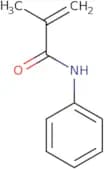
Formula:C11H11NPurezza:Min. 95%Peso molecolare:157.21 g/molN-Phenylmethacrylamide
CAS:N-Phenylmethacrylamide is a cross-linking agent that is used in the preparation of polymers. It reacts with amine groups to form amides, which are then reacted with sodium salts to form polyamides. The amide group can also be used for synthesizing polyurethanes and other polymers. N-Phenylmethacrylamide is soluble in organic solvents and has low toxicity. It can be activated by radiation or by reaction with a hydroxyl group and forms a bond by hydrogen bonding with other functional groups, such as hydroxyls, carbonyls, nitrogens, and sulphurs. This compound can be used as an effective chemotherapy drug because it binds to DNA strands and inhibits the synthesis of RNA and protein in cells.
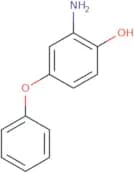
Formula:C10H11NOPurezza:Min. 95%Peso molecolare:161.2 g/mol2-Amino-4-phenoxyphenol
CAS:Versatile small molecule scaffold
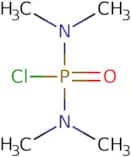
Formula:C12H11NO2Purezza:Min. 95%Peso molecolare:201.22 g/molBis(dimethylamino)phosphoryl chloride
CAS:Bis(dimethylamino)phosphoryl chloride is a monomer that can be used in the synthesis of polymers. It undergoes ring-opening polymerization with nucleophiles such as anilines to form polyamides. This compound also reacts with electrophilic chlorides to form phosphorochloridic esters, which are useful for organic syntheses. Bis(dimethylamino)phosphoryl chloride is synthesized by the reaction of hexamethylphosphoramide and aniline in the presence of a catalytic amount of hydrochloric acid. The resulting product has been shown to have electron deficiency in its structure, which may lead to its reactivity with other compounds.
Formula:C4H12ClN2OPPurezza:Min. 95%Colore e forma:Clear LiquidPeso molecolare:170.58 g/mol



![4-[2-(Diethylamino)ethyl]aniline](/_next/image/?url=https%3A%2Fstatic.cymitquimica.com%2Fproducts%2F3D%2Fthumb-webp%2FBAA66560.webp&w=3840&q=75)
![Methyl benzo[b]furan-2-carboxylate](/_next/image/?url=https%3A%2Fstatic.cymitquimica.com%2Fproducts%2F3D%2Fthumb-webp%2FBAA64627.webp&w=3840&q=75)