Building Blocks
Sottocategorie di "Building Blocks"
- Acidi boronici e derivati dell'acido boronico(5.784 prodotti)
- Building Blocks Chirali(1.242 prodotti)
- Building Blocks Idrocarburici(6.105 prodotti)
- Building Blocks organici(61.065 prodotti)
Trovati 205418 prodotti di "Building Blocks"
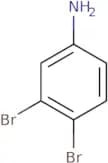
3,4-Dibromoaniline
CAS:3,4-Dibromoaniline is an organic compound that has been shown to be a potential anti-cancer drug. It inhibits the growth of cancer cells by interfering with their metabolism and DNA synthesis. 3,4-Dibromoaniline also inhibits the growth of bacteria in the environment, and can be recycled for use as a feedstock for chemical synthesis. This compound may have potential uses in other areas of biology as well, such as in testing mouse strains or biphenyls.
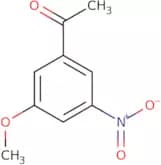
Formula:C6H5Br2NPurezza:Min. 95%Peso molecolare:250.92 g/mol1-(3-Methoxy-5-nitrophenyl)ethan-1-one
CAS:Versatile small molecule scaffold
Formula:C9H9NO4Purezza:Min. 95%Peso molecolare:195.17 g/mol3-(1-Methyl-1H-1,2,3,4-tetrazol-5-yl)benzene-1-sulfonyl chloride
CAS:Versatile small molecule scaffold
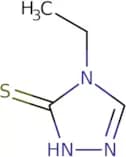
Formula:C8H7ClN4O2SPurezza:Min. 95%Peso molecolare:258.69 g/mol4-ethyl-4H-1,2,4-triazole-3-thiol
CAS:Phenoxymethyl is a hypoglycemic drug that is used to treat diabetes mellitus. It lowers the blood glucose level by increasing the release of insulin from the pancreas and by stimulating the uptake of glucose in skeletal muscles. Phenoxymethyl has been shown to have hypoglycemic activity in rats with induced diabetes, as well as in diabetic patients. This drug has not been shown to have any major side effects.
Formula:C4H7N3SPurezza:Min. 95%Peso molecolare:129.18 g/mol1-(Oxolan-3-yl)propan-2-one
CAS:Versatile small molecule scaffold
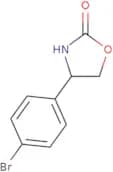
Formula:C7H12O2Purezza:Min. 95%Peso molecolare:128.17 g/mol4-(4-Bromophenyl)-1,3-oxazolidin-2-one
CAS:Versatile small molecule scaffold
Formula:C9H8BrNO2Purezza:Min. 95%Peso molecolare:242.07 g/molPyridine-2-carboxylic acid (2-amino-phenyl)-amide dihydrochloride
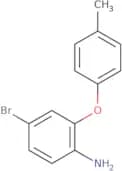
CAS:Pyridine-2-carboxylic acid (2-amino-phenyl)-amide dihydrochloride is a medicinal product that is an antidepressant. It has a methoxy group, which is adjacent to a methyl group, on the benzene ring. Pyridine-2-carboxylic acid (2-amino-phenyl)-amide dihydrochloride has been shown to have antihypertensive properties. It may also be used for the treatment of depression and other psychiatric disorders.Formula:C12H13Cl2N3OPurezza:Min. 95%Peso molecolare:286.15 g/mol4-Bromo-2-(4-methylphenoxy)aniline
CAS:Versatile small molecule scaffold
Formula:C13H12BrNOPurezza:Min. 95%Peso molecolare:278.14 g/mol1-Ethoxy-2-iodobenzene
CAS:1-Ethoxy-2-iodobenzene is a model complex that has been used to study the interactions between copper ions and chlorine atoms. The complexes are found in the chlorobenzene molecule, which is itself an organometallic compound. The covalent bonds in this complex are unsymmetrical, with a higher electron density on the carbon atom of the ethoxy group. 1-Ethoxy-2-iodobenzene has been shown to be carcinogenic, inducing mutations in ovary cells. This may be due to its interaction with DNA and interference with transcription.
Formula:C8H9IOPurezza:Min. 95%Peso molecolare:248.06 g/mol1-[(4-Bromophenyl)sulfanyl]cyclopropane-1-carboxylic acid
CAS:Versatile small molecule scaffold
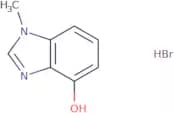
Formula:C10H9BrO2SPurezza:Min. 95%Peso molecolare:273.15 g/mol1-Methyl-1H-1,3-benzodiazol-4-ol hydrobromide
CAS:Versatile small molecule scaffold
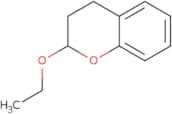
Formula:C8H9BrN2OPurezza:Min. 95%Peso molecolare:229.07 g/mol2-Ethoxy-3,4-dihydro-2H-1-benzopyran
CAS:2-Ethoxy-3,4-dihydro-2H-1-benzopyran is a reagent that can be used for the preparation of various compounds. It is often used as a source of hydride transfer in enzymatic assays. 2-Ethoxy-3,4-dihydro-2H-1-benzopyran reacts with alkyl halides and acetonitrile to form quaternary ammonium salts and vinyl ethers respectively. The reaction proceeds by hydration, amine addition, or irradiation. This compound can also be used to prepare reactive naphthalenes and amines through an alkylation reaction. The reaction can be carried out at temperatures ranging from -78°C to 100°C.
Formula:C11H14O2Purezza:Min. 95%Peso molecolare:178.23 g/mol5-(Aminomethyl)-2,3-dihydrobenzo[b]thiophene 1,1-dioxide hydrochloride
CAS:Versatile small molecule scaffold
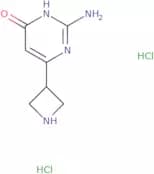
Formula:C9H12ClNO2SPurezza:Min. 95%Peso molecolare:233.72 g/mol2-Amino-6-(azetidin-3-yl)pyrimidin-4-ol dihydrochloride
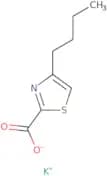
CAS:Versatile small molecule scaffoldFormula:C7H12Cl2N4OPurezza:Min. 95%Peso molecolare:239.1 g/molPotassium 4-butyl-1,3-thiazole-2-carboxylate
CAS:Versatile small molecule scaffold
Formula:C8H10KNO2SPurezza:Min. 95%Peso molecolare:223.34 g/mol2-{6,8-Dichloroimidazo[1,2-a]pyridin-2-yl}ethanethioamide
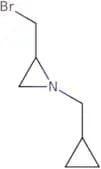
CAS:Versatile small molecule scaffoldFormula:C9H7Cl2N3SPurezza:Min. 95%Peso molecolare:260.14 g/mol2-(Bromomethyl)-1-(cyclopropylmethyl)aziridine
CAS:Versatile small molecule scaffoldFormula:C7H12BrNPurezza:Min. 95%Peso molecolare:190.08 g/mol2-Chloro-N-[5-(2,2,2-trifluoroethyl)-1,3,4-oxadiazol-2-yl]acetamide
CAS:Versatile small molecule scaffold
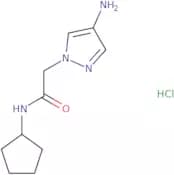
Formula:C6H5ClF3N3O2Purezza:Min. 95%Peso molecolare:243.57 g/mol2-(4-Aminopyrazol-1-yl)-N-cyclopentylacetamide hydrochloride
CAS:Versatile small molecule scaffold
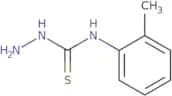
Formula:C10H17ClN4OPurezza:Min. 95%Peso molecolare:244.72 g/mol4-(2-Methylphenyl)-3-thiosemicarbazide
CAS:4-(2-Methylphenyl)-3-thiosemicarbazide is a crystalline solid that belongs to the group of benzoic acid derivatives. It has an orthorhombic crystal structure, with a yellow color. The crystals are measured at room temperature, and it has an atomic weight of 197.11 g/mol. 4-(2-Methylphenyl)-3-thiosemicarbazide is stable in air and in solution, but decomposes at temperatures above 250°C. This compound has been studied by using X-ray diffraction measurements and Bruker parameters. Its isotropic radiation is recorded at the following wavelength: 1.5418 Å (1).
Formula:C8H11N3SPurezza:Min. 95%Peso molecolare:181.26 g/mol




![1-[(4-Bromophenyl)sulfanyl]cyclopropane-1-carboxylic acid](/_next/image/?url=https%3A%2Fstatic.cymitquimica.com%2Fproducts%2F3D%2Fthumb-webp%2FDJC62732.webp&w=3840&q=75)
![5-(Aminomethyl)-2,3-dihydrobenzo[b]thiophene 1,1-dioxide hydrochloride](/_next/image/?url=https%3A%2Fstatic.cymitquimica.com%2Fproducts%2F3D%2Fthumb-webp%2FJFC42907.webp&w=3840&q=75)
![2-{6,8-Dichloroimidazo[1,2-a]pyridin-2-yl}ethanethioamide](/_next/image/?url=https%3A%2Fstatic.cymitquimica.com%2Fproducts%2F3D%2Fthumb-webp%2FQZB52655.webp&w=3840&q=75)
![2-Chloro-N-[5-(2,2,2-trifluoroethyl)-1,3,4-oxadiazol-2-yl]acetamide](/_next/image/?url=https%3A%2Fstatic.cymitquimica.com%2Fproducts%2F3D%2Fthumb-webp%2FQZB52619.webp&w=3840&q=75)