


Building Blocks
Sottocategorie di "Building Blocks"
- Acidi boronici e derivati dell'acido boronico(5.784 prodotti)
- Building Blocks Chirali(1.242 prodotti)
- Building Blocks Idrocarburici(6.105 prodotti)
- Building Blocks organici(61.061 prodotti)
Trovati 205399 prodotti di "Building Blocks"
2-{[(3-Methylphenyl)methyl]sulfanyl}acetic acid
CAS:Versatile small molecule scaffoldFormula:C10H12O2SPurezza:Min. 95%Peso molecolare:196.27 g/molPentamethylphenylacetonitrile
CAS:Pentamethylphenylacetonitrile (PMP) is an aldehyde that is used as a reagent in the synthesis of other chemical compounds. It is also used in the preparation of phase transfer catalysts. PMP is typically available as a white powder and can be dissolved in organic solvents such as acetone or benzene. The chemical properties of PMP are similar to those of other aldehydes, including its susceptibility to oxidation, which can lead to the formation of carboxylic acids.
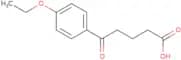
Formula:C13H17NPurezza:Min. 95%Peso molecolare:187.28 g/mol5-(4-Ethoxyphenyl)-5-oxopentanoic acid
CAS:Versatile small molecule scaffold
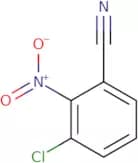
Formula:C13H16O4Purezza:Min. 95%Peso molecolare:236.26 g/mol3-Chloro-2-nitrobenzonitrile
CAS:3-Chloro-2-nitrobenzonitrile is a postulated intermediate in the synthesis of benzoic acid and isomers. It can be obtained by reacting phosphorus pentachloride with an aromatic compound containing a benzene ring with substituents that contain nitrile groups. The reaction of 3-chloro-2-nitrobenzonitrile with water produces benzoic acid. This transformation is attributed to the formation of an unstable intermediate, which then decomposes to form a more stable product.
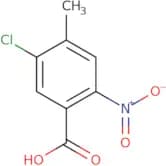
Formula:C7H3ClN2O2Purezza:Min. 95%Peso molecolare:182.56 g/mol5-Chloro-4-methyl-2-nitrobenzoic acid
CAS:Versatile small molecule scaffold
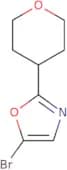
Formula:C8H6ClNO4Purezza:Min. 95%Peso molecolare:215.59 g/mol5-Bromo-2-(oxan-4-yl)-1,3-oxazole
CAS:Versatile small molecule scaffold
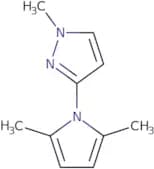
Formula:C8H10BrNO2Purezza:Min. 95%Peso molecolare:232.07 g/mol3-(2,5-Dimethyl-1H-pyrrol-1-yl)-1-methyl-1H-pyrazole
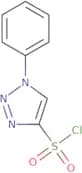
CAS:Versatile small molecule scaffoldFormula:C10H13N3Purezza:Min. 95%Peso molecolare:175.24 g/mol1-Phenyl-1H-1,2,3-triazole-4-sulfonyl chloride
CAS:Versatile small molecule scaffoldFormula:C8H6ClN3O2SPurezza:Min. 95%Peso molecolare:243.67 g/mol8-Oxaspiro[4.5]decan-2-one
CAS:Versatile small molecule scaffold
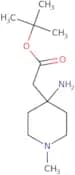
Formula:C9H14O2Purezza:Min. 95%Peso molecolare:154.2 g/moltert-Butyl 2-(4-amino-1-methylpiperidin-4-yl)acetate
CAS:Versatile small molecule scaffold
Formula:C12H24N2O2Purezza:Min. 95%Peso molecolare:228.33 g/mol7-Chlorobenzo[D]isoxazol-3-amine
CAS:Versatile small molecule scaffold
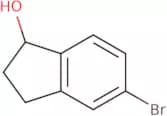
Formula:C7H5ClN2OPurezza:Min. 95%Peso molecolare:168.58 g/mol5-Bromoindan-1-ol
CAS:Versatile small molecule scaffold
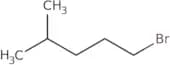
Formula:C9H9BrOPurezza:Min. 95%Peso molecolare:213.07 g/mol1-Bromo-4-methylpentane
CAS:1-Bromo-4-methylpentane is a long-chain, dehydrohalogenated pheromone that has been shown to inhibit the growth of Leishmania by binding to the topoisomerase enzyme. This compound is synthesized from heptadecane and chloroacetonitrile in the presence of cuprate and tetrahydrofuran. 1-Bromo-4-methylpentane has also been shown to be an alkylating agent. It reacts with chloride, converting it into chloroform. The bromine atom on the carbon adjacent to the double bond then attacks a fatty acid, adding it to the molecule. The resulting alkoxycarbonyl group then reacts with a second fatty acid molecule, yielding a new 1-bromoalkoxycarbonyl group.
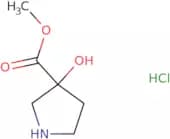
Formula:C6H13BrPurezza:Min. 95%Peso molecolare:165.07 g/molMethyl 3-hydroxypyrrolidine-3-carboxylate hydrochloride
CAS:Versatile small molecule scaffold
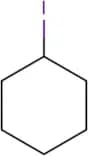
Formula:C6H12ClNO3Purezza:Min. 95%Peso molecolare:181.62 g/molIodocyclohexane
CAS:Iodocyclohexane is an antimicrobial agent that has the chemical formula CHClI. It is a colorless, volatile liquid which has been shown to have some antibacterial properties. Iodocyclohexane is not toxic when applied externally to the skin and has been used in medical devices such as eye drops, ointments, and ear drops. Iodocyclohexane is also used in agriculture as a fungicide. The chemical structure of iodocyclohexane includes a hydroxyl group (-OH) and a nitrogen atom (N). These two groups make it more resistant to degradation by bacteria or fungi. The presence of these two groups also provides iodocyclohexane with biological properties such as the ability to inhibit bacterial growth and prevent the formation of resistant mutant strains.
Formula:C6H11IPurezza:Min. 95%Peso molecolare:210.06 g/mol3-(Benzylamino)-1-phenylpropan-1-ol
CAS:Versatile small molecule scaffold
Formula:C16H19NOPurezza:Min. 95%Peso molecolare:241.33 g/mol3-[(2,4-Difluorophenyl)methoxy]benzaldehyde
CAS:Versatile small molecule scaffold
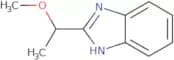
Formula:C14H10F2O2Purezza:Min. 95%Peso molecolare:248.22 g/mol2-(1-Methoxyethyl)-1H-benzimidazole
CAS:Versatile small molecule scaffold
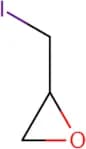
Formula:C10H12N2OPurezza:Min. 95%Peso molecolare:176.21 g/mol2-(Iodomethyl)oxirane
CAS:2-(Iodomethyl)oxirane is a chemical compound that contains a hydroxyl group, two nitrogen atoms, and a single hydrochloric acid molecule. It is not soluble in water and is only slightly soluble in organic solvents. 2-(Iodomethyl)oxirane can be used to remove pollutants from wastewater. This chemical reacts with the carboxylic acid groups on the pollutant molecules to form an ester. The ester can then be broken down by enzymes or by heating it to produce the original hydroxy group and carboxylic acid. 2-(Iodomethyl)oxirane has been shown to react with aliphatic hydrocarbons, naphthalene, fatty acids, alkynyl groups, alkanoic acids, and carbonyl groups.
Formula:C3H5IOPurezza:Min. 95%Peso molecolare:183.98 g/molChloromethyl 2-{[(tert-butoxy)carbonyl]amino}acetate
CAS:Versatile small molecule scaffoldFormula:C8H14ClNO4Purezza:Min. 95%Peso molecolare:223.65 g/mol
![2-{[(3-Methylphenyl)methyl]sulfanyl}acetic acid](/_next/image/?url=https%3A%2Fstatic.cymitquimica.com%2Fproducts%2F3D%2Fthumb-webp%2FJBA72235.webp&w=3840&q=75)


![8-Oxaspiro[4.5]decan-2-one](/_next/image/?url=https%3A%2Fstatic.cymitquimica.com%2Fproducts%2F3D%2Fthumb-webp%2FVAD19554.webp&w=3840&q=75)
![7-Chlorobenzo[D]isoxazol-3-amine](/_next/image/?url=https%3A%2Fstatic.cymitquimica.com%2Fproducts%2F3D%2Fthumb-webp%2FCMB41364.webp&w=3840&q=75)
![3-[(2,4-Difluorophenyl)methoxy]benzaldehyde](/_next/image/?url=https%3A%2Fstatic.cymitquimica.com%2Fproducts%2F3D%2Fthumb-webp%2FVAC98472.webp&w=3840&q=75)
![Chloromethyl 2-{[(tert-butoxy)carbonyl]amino}acetate](/_next/image/?url=https%3A%2Fstatic.cymitquimica.com%2Fproducts%2F3D%2Fthumb-webp%2FJBA57336.webp&w=3840&q=75)