Building Blocks
Sottocategorie di "Building Blocks"
- Acidi boronici e derivati dell'acido boronico(5.774 prodotti)
- Building Blocks Chirali(1.237 prodotti)
- Building Blocks Idrocarburici(6.098 prodotti)
- Building Blocks organici(60.970 prodotti)
Trovati 205134 prodotti di "Building Blocks"
3-Ethenylcyclohexan-1-one
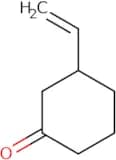
CAS:3-Ethenylcyclohexan-1-one is a palladium-catalyzed, tricyclic cyclization of diphosphine and decarboxylation. It is stereoselective and has been used in the synthesis of chiral, asymmetric lactones. 3-Ethenylcyclohexan-1-one has also been used to synthesize analogs with allylic substitution. 3-Ethenylcyclohexan-1-one is catalytic and can be used for intramolecular carbonate formation.
Formula:C8H12OPurezza:Min. 95%Peso molecolare:124.18 g/mol1,2,4,5-Tetramethylimidazole
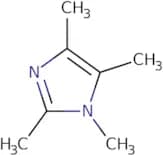
CAS:1,2,4,5-Tetramethylimidazole is a synthetic organic compound that has been used to synthesize polymers. It is chemically stable in the presence of primary amines and other compounds that can form hydrogen bonds. 1,2,4,5-Tetramethylimidazole has been shown to be useful as a matrix polymer because it can undergo free radical polymerization with various functional groups. It can also react with anions such as nitrate or chloride ion to form ionic complexes. Thermally, 1,2,4,5-tetramethylimidazole decomposes into ammonia and methanol at temperatures above 200°C.
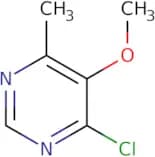
Formula:C7H12N2Purezza:Min. 95%Peso molecolare:124.19 g/mol4-Chloro-5-methoxy-6-methylpyrimidine
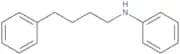
CAS:Versatile small molecule scaffoldFormula:C6H7ClN2OPurezza:Min. 95%Peso molecolare:158.58 g/molN-(4-Phenylbutyl)aniline
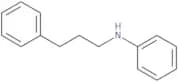
CAS:Versatile small molecule scaffoldFormula:C16H19NPurezza:Min. 95%Peso molecolare:225.33 g/molN-(3-Phenylpropyl)aniline
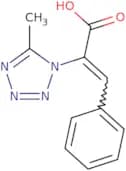
CAS:Versatile small molecule scaffoldFormula:C15H17NPurezza:Min. 95%Peso molecolare:211.3 g/mol2-(5-Methyl-1H-1,2,3,4-tetrazol-1-yl)-3-phenylprop-2-enoic acid
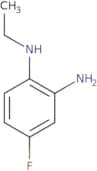
CAS:Versatile small molecule scaffoldFormula:C11H10N4O2Purezza:Min. 95%Peso molecolare:230.22 g/mol1-N-Ethyl-4-fluorobenzene-1,2-diamine
CAS:Versatile small molecule scaffold
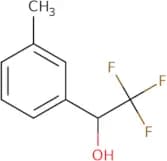
Formula:C8H11FN2Purezza:Min. 95%Peso molecolare:154.18 g/mol2,2,2-Trifluoro-1-(3-methylphenyl)ethan-1-ol
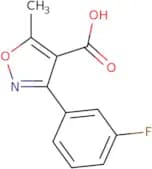
CAS:Versatile small molecule scaffoldFormula:C9H9F3OPurezza:Min. 95%Peso molecolare:190.16 g/mol3-(3-Fluorophenyl)-5-methyl-1,2-oxazole-4-carboxylic acid
CAS:Versatile small molecule scaffold
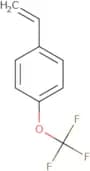
Formula:C11H8FNO3Purezza:Min. 95%Peso molecolare:221.18 g/mol4-(Trifluoromethoxy)styrene
CAS:Versatile small molecule scaffoldFormula:C9H7F3OPurezza:Min. 95%Peso molecolare:188.15 g/mol4-Methylbenzo[b]thiophene-2-carboxylic acid
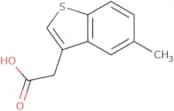
CAS:Versatile small molecule scaffoldFormula:C10H8O2SPurezza:Min. 95%Peso molecolare:192.23 g/mol2-(5-Methyl-1-benzothiophen-3-yl)acetic acid
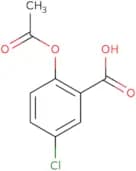
CAS:Versatile small molecule scaffoldFormula:C11H10O2SPurezza:Min. 95%Peso molecolare:206.26 g/mol2-(Acetyloxy)-5-chlorobenzoic acid
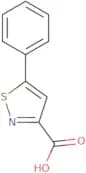
CAS:2-(Acetyloxy)-5-chlorobenzoic acid is a potent apoptotic agent that is being investigated for its potential use in the treatment of cancer. It has been shown to inhibit tumor growth and increase survival in animal models and has been assessed in human clinical trials. 2-(Acetyloxy)-5-chlorobenzoic acid induces apoptosis by inhibiting DNA synthesis, protein synthesis, or both. It also inhibits the activity of caspases, enzymes that are involved in tumor cell death. This compound may be used to treat Alzheimer's disease because it inhibits tau phosphorylation, which is an important marker for Alzheimer's disease pathology.Formula:C9H7ClO4Purezza:Min. 95%Peso molecolare:214.6 g/mol5-Phenyl-1,2-thiazole-3-carboxylic acid
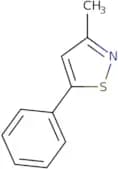
CAS:Versatile small molecule scaffoldFormula:C10H7NO2SPurezza:Min. 95%Peso molecolare:205.23 g/mol3-Methyl-5-phenyl-1,2-thiazole
CAS:3-Methyl-5-phenyl-1,2-thiazole is a heterocycle that is biologically active. It is an intramolecular nucleophilic addition to a carbonyl group. This reaction has been shown to be one of the most efficient methods for the synthesis of 5-substituted isothiazoles, which are bioactive substances with anticancer properties. The strategy of using 3-methyl-5-phenyl-1,2-thiazole as a substrate in cross coupling reactions has been used in cancer chemotherapy.Formula:C10H9NSPurezza:Min. 95%Peso molecolare:175.25 g/molDimethyl Dodecanedioate
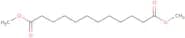
CAS:Dimethyl Dodecanedioate is a chemical compound that belongs to the group of glycol esters. It is a solid catalyst for the production of nitrogen-containing organic compounds. Dimethyl Dodecanedioate can be used as a starting material in the synthesis of various chemical structures, such as fatty acids, which are important in the chemical and pharmaceutical industries. This product also has catalytic properties, which make it useful for hydrogenation and oxidation reactions.Formula:C14H26O4Purezza:Min. 95%Peso molecolare:258.36 g/mol8-bromonaphthalene-1-carboxylic acid
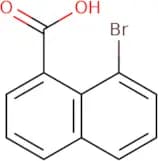
CAS:8-Bromonaphthalene-1-carboxylic acid is an organic compound with the chemical formula C6H4BrO2. It is a white solid that is soluble in water, methanol, and ethanol. 8-Bromonaphthalene-1-carboxylic acid can be synthesized by hydrolysis of ethyl esters of naphthalene with alkali or sulphonation. The yields are usually low (25%). The product can also be made via the diazotization of naphthalenes in the presence of sodium azide to form naphthamide, which then reacts with bromine to form 8-bromonaphthalene-1-carboxylic acid. 8-Bromonaphthalene carboxylic acid has been used as a nucleophile in organic synthesis for conjugate addition reactions.
Formula:C11H7BrO2Purezza:Min. 95%Peso molecolare:251.1 g/molrac-(1R,2S,4S)-7-Oxabicyclo[2.2.1]heptane-2-carbonitrile, endo
CAS:Versatile small molecule scaffold
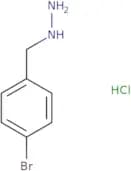
Formula:C7H9NOPurezza:Min. 95%Peso molecolare:123.15 g/mol4-bromobenzylhydrazine hcl
CAS:Versatile small molecule scaffoldFormula:C7H10BrClN2Purezza:Min. 95%Peso molecolare:237.53 g/mol3-Iodo-2-propynol
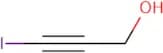
CAS:3-Iodo-2-propynol is a microbicidal agent, which belongs to the group of phenyl substituted alkylthio compounds. It is active against acarids and reactive with metal ions and organic solvents. 3-Iodo-2-propynol has been shown to have a high microbicidal activity against microorganisms such as Escherichia coli, Pseudomonas aeruginosa, and Staphylococcus aureus. The chemical structure of 3-iodo-2-propynol can be described as a chlorinated derivative of 2-propenal.
3-Iodo-2-propynol is an ester hydrochloride with the molecular formula CHClNO that was synthesized in 1885 by A. Wurtz and C. Perkin. The chemical properties of this compound are similar to those of phenylethyl alcohol (PEA).Formula:C3H3IOPurezza:Min. 95%Peso molecolare:181.96 g/mol

![4-Methylbenzo[b]thiophene-2-carboxylic acid](/_next/image/?url=https%3A%2Fstatic.cymitquimica.com%2Fproducts%2F3D%2Fthumb-webp%2FBAA73513.webp&w=3840&q=75)
![rac-(1R,2S,4S)-7-Oxabicyclo[2.2.1]heptane-2-carbonitrile, endo](/_next/image/?url=https%3A%2Fstatic.cymitquimica.com%2Fproducts%2F3D%2Fthumb-webp%2FBAA72796.webp&w=3840&q=75)