Building Blocks
Questa sezione contiene prodotti fondamentali per la sintesi di composti organici e biologici. Building blocks sono i materiali di partenza essenziali utilizzati per costruire molecole complesse attraverso varie reazioni chimiche. Svolgono un ruolo critico nella scoperta di farmaci, nella scienza dei materiali e nella ricerca chimica. Presso CymitQuimica, offriamo una gamma diversificata di building blocks di alta qualità per supportare le tue ricerche innovative e progetti industriali, assicurandoti di avere i componenti essenziali per una sintesi di successo.
Sottocategorie di "Building Blocks"
- Acidi boronici e derivati dell'acido boronico(5.778 prodotti)
- Building Blocks Chirali(1.243 prodotti)
- Building Blocks Idrocarburici(6.097 prodotti)
- Building Blocks organici(61.048 prodotti)
Trovati 203115 prodotti di "Building Blocks"
Ordinare per
Purezza (%)
0
100
|
0
|
50
|
90
|
95
|
100
(Ir[dF(CF3)ppy]2(dtbpy))PF6
CAS:Ir(dF(CF3)ppy)2 (dtbpy)PF6 is a photosensitizer that can be used in cycloaddition reactions. It is soluble in nonpolar solvents and can be used as a catalyst for cycloadditions involving uncharged substrates. Ir(dF(CF3)ppy)2 (dtbpy)PF6 has been shown to catalyze the transfer of an electron from a donor molecule to an acceptor molecule, which generates energy that can be transferred to the environment. This process is called "energy transfer."Formula:C42H34F16IrN4PPurezza:Min. 95%Peso molecolare:1,121.91 g/molCyclopent-2-en-1-ol
CAS:Cyclopent-2-en-1-ol is a reactive monomer that can react with chloride and hydroxyl groups. It can also undergo reaction with sodium carbonate to form a cyclic ester. Cyclopent-2-en-1-ol can be converted to an epoxide by the use of acid catalyst. This compound also has the ability to polymerize, forming polymers that are used in rayon production.Formula:C5H8OPurezza:Min. 95%Colore e forma:Clear LiquidPeso molecolare:84.12 g/molCucurbit[7]uril
CAS:Cucurbit[7]uril is a chemical compound that can be used as a fluorescent probe for protein target. It has been shown to produce significant cytotoxicity against cancer cell lines in vitro. Cucurbit[7]uril also exhibits hydrophobic effects, which bind to the cell nuclei of cancer cells and inhibits DNA replication. The photophysical properties of cucurbit[7]uril are stable under physiological conditions and it can be used in vivo as a styryl dye. This chemical compound is also able to form stable complexes with carbonyl oxygens, making it an interesting candidate for anti-cancer drug development.Formula:C42H42N28O14Purezza:Min. 95%Colore e forma:White To Yellow SolidPeso molecolare:1,162.96 g/molMethyltetrazine-NHS ester
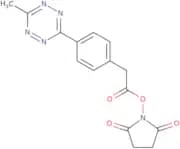
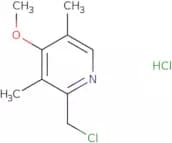
CAS:<p>Versatile small molecule scaffold</p>Formula:C15H13N5O4Purezza:Min. 95%Peso molecolare:327.29 g/mol2-(Chloromethyl)-4-methoxy-3,5-dimethylpyridine hydrochloride
CAS:<p>2-(Chloromethyl)-4-methoxy-3,5-dimethylpyridine hydrochloride is a benzimidazole derivative. It has a chemical stability and can be used for wastewater treatment. It is also a pump inhibitor and can be used for anhydrous sodium magnesium salts. This product is synthesized from the reaction of protonated 2-bromo-4-methoxyphenol with 2,6-dimethylpyridine in the presence of hydrochloric acid. The reaction was carried out in an asymmetric synthesis using a proton transport system. 2-(Chloromethyl)-4-methoxy-3,5-dimethylpyridine hydrochloride is soluble in water and has a pH of 1 to 3. It has been shown that this product can be used as an antioxidant and as a metal chelation agent.</p>Formula:C9H13Cl2NOPurezza:Min. 95%Colore e forma:PowderPeso molecolare:222.11 g/mol4-Chloro-1H-pyrazolo[3,4-b]pyridine-3-carboxylic acid
CAS:Versatile small molecule scaffoldFormula:C7H4ClN3O2Purezza:Min. 95%Peso molecolare:197.58 g/mol(-)-Corey lactone diol
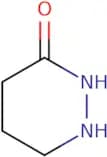
CAS:<p>(-)-Corey lactone diol is a synthetic compound that is soluble in organic solvents. It is used for the synthesis of carbocyclic nucleosides, which are analogs of pyrimidine nucleosides. (-)-Corey lactone diol has been shown to inhibit cholesterol synthesis and the synthesis of alkene. (-)-Corey lactone diol also shows anti-inflammatory properties, which may be due to its inhibition of prostaglandin synthesis.</p>Formula:C8H12O4Purezza:Min. 95%Peso molecolare:172.18 g/mol1,2-Diazinan-3-one
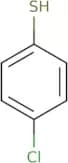
CAS:Please enquire for more information about 1,2-Diazinan-3-one including the price, delivery time and more detailed product information at the technical inquiry form on this pageFormula:C4H8N2OPurezza:Min. 95%Peso molecolare:100.12 g/mol4-Chlorobenzenethiol
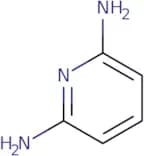
CAS:<p>4-Chlorobenzenethiol is a chemical compound that contains a fatty acid. It is an intramolecular hydrogen donor with the ability to form a disulfide bond. The compound also has high stability and can be used in organic synthesis reactions involving reactive sulfur groups. 4-Chlorobenzenethiol reacts with sodium carbonate to produce sodium thiocarbonate and chloroform, which are then reacted with phosphorus pentoxide for oxidation. The reaction mechanism is similar to that of the Diels-Alder reaction and the model system involves dinucleotide phosphate. 4-Chlorobenzenethiol can be reacted with hydrochloric acid or trifluoroacetic acid as an oxidizing agent.</p>Formula:C6H5ClSPurezza:Min. 95%Colore e forma:White PowderPeso molecolare:144.62 g/mol2,6-Diaminopyridine
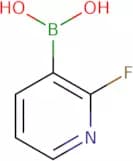
CAS:<p>2,6-Diaminopyridine is a heterocyclic compound that is used in analytical chemistry as an indicator for the presence of protonated amines. It is prepared by coupling 2,6-diamino-pyridine with 1,3-benzodioxole-5-carboxylic acid. The nitrogen atoms are electron withdrawing groups and form hydrogen bonding interactions with the protonated amine. This type of interaction leads to a phase transition temperature of about 115°C and a high value for electrochemical impedance spectroscopy (EIS) measurements. The reaction mechanism involves the formation of a protonated amine from 2,6-diaminopyridine and 1,3-benzodioxole-5-carboxylic acid followed by proton transfer to yield the corresponding pyridinium salt.</p>Formula:C5H7N3Purezza:Min. 95%Colore e forma:Beige To Brown SolidPeso molecolare:109.13 g/mol2-Fluoro-3-pyridineboronic acid
CAS:<p>2-Fluoro-3-pyridineboronic acid is an amide that can be used as a catalyst for transfer reactions. It forms a complex with copper chloride and isohexane, which is then heated to produce the desired product. 2-Fluoro-3-pyridineboronic acid has been used in analytical methods such as constant pressure and methyl ethyl method. This compound also has high resistance to water vapor, hexane, and organic solvents. 2-Fluoro-3-pyridineboronic acid has been shown to inhibit the MCL-1 protein, which plays a role in regulating apoptosis. It can be used as a potential therapeutic agent against infectious diseases such as tuberculosis and HIV/AIDS due to its ability to inhibit MCL-1 protein expression.</p>Formula:C5H5NO2BFPurezza:Min. 95%Colore e forma:White PowderPeso molecolare:140.91 g/mol2-Fluoropyridine-5-carboxaldehyde
CAS:2-Fluoropyridine-5-carboxaldehyde is a reactive chemical that can be used as an acceptor in organic synthesis. It has been shown to have antibacterial properties, and is also a synthon for the production of prosthetic groups. 2-Fluoropyridine-5-carboxaldehyde reacts with dopamine to form diphenyl ethers, which are used as labels for immunoassays. This chemical can be catalysed and has been shown to be resistant to catalysis. 2-Fluoropyridine-5-carboxaldehyde can also be used in the synthesis of cycloalkanes.Formula:C6H4FNOPurezza:Min. 95%Peso molecolare:125.1 g/mol2-(Chloromethyl)-4H,6H,7H-pyrano[4,3-d][1,3]thiazole
CAS:Versatile small molecule scaffoldFormula:C7H8ClNOSPurezza:Min. 95%Peso molecolare:189.66 g/mol1,3-Dioxo-2,3-dihydro-1H-isoindol-2-yl acetate
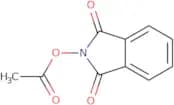
CAS:1,3-Dioxo-2,3-dihydro-1H-isoindol-2-yl acetate is a reactive intermediate that can be used as a starting material for the synthesis of other organic compounds. It is synthesized by the reaction of an acid with an aldehyde or ketone in the presence of a base. The rate of this reaction depends on the functional groups present in both reactants and their relative concentrations. This intermediate can be converted to another chemical compound through various reactions, including hydroxymethylation, decarboxylation and oxidation. This chemical has been used as a cocatalyst for the production of 5-hydroxymethylfurfural (HMF).Formula:C10H7NO4Purezza:Min. 95%Peso molecolare:205.17 g/mol6-Chloro-2-methyl-4-pyrimidinol
CAS:6-Chloro-2-methyl-4-pyrimidinol is an aldehyde that reacts with hydrazine to form a monoxide, which reacts with carbon monoxide to form a hydrazide.Formula:C5H5ClN2OPurezza:Min. 95%Peso molecolare:144.56 g/molFmoc-α-methyl-L-phenylalanine
CAS:Please enquire for more information about Fmoc-α-methyl-L-phenylalanine including the price, delivery time and more detailed product information at the technical inquiry form on this pageFormula:C25H23NO4Purezza:Min. 95%Colore e forma:PowderPeso molecolare:401.45 g/mol5-Fluoro-2-hydrazinopyridine
CAS:Please enquire for more information about 5-Fluoro-2-hydrazinopyridine including the price, delivery time and more detailed product information at the technical inquiry form on this pageFormula:C5H6FN3Purezza:Min. 95%Peso molecolare:127.12 g/molGly-Gly-OMe·HCl
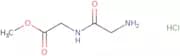
CAS:Gly-Gly-OMe·HCl is a diagnostic agent that can be used to diagnose atherosclerotic lesions. It is conjugated to an organic molecule and then radiolabeled. The conjugate can be detected by cyclopentadienyl, which emits gamma rays when it decays. This conjugate has been shown to selectively accumulate in atherosclerotic lesions of the coronary arteries, where it accumulates with a higher concentration than in the surrounding tissue. This product also has gastroprotective effects on the stomach and liver and can reduce lipid levels in hyperlipidaemic patients.Formula:C5H10N2O3•HClPurezza:Min. 95 Area-%Colore e forma:Slightly Rose PowderPeso molecolare:182.61 g/molH-D-ASN-L-ASP-OH
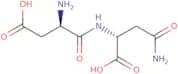
<p>Please enquire for more information about H-D-ASN-L-ASP-OH including the price, delivery time and more detailed product information at the technical inquiry form on this page</p>Purezza:Min. 95%Colore e forma:Powder2-Hydroxyethyl octacosanoate
CAS:<p>Please enquire for more information about 2-Hydroxyethyl octacosanoate including the price, delivery time and more detailed product information at the technical inquiry form on this page</p>Purezza:Min. 95%
![(Ir[dF(CF3)ppy]2(dtbpy))PF6](/_next/image/?url=https%3A%2Fstatic.cymitquimica.com%2Fproducts%2F3D%2Fthumb-webp%2FVJB98763.webp&w=3840&q=75)


![Cucurbit[7]uril](/_next/image/?url=https%3A%2Fstatic.cymitquimica.com%2Fproducts%2F3D%2Fthumb-webp%2FFC171865.webp&w=3840&q=75)
![4-Chloro-1H-pyrazolo[3,4-b]pyridine-3-carboxylic acid](/_next/image/?url=https%3A%2Fstatic.cymitquimica.com%2Fproducts%2F3D%2Fthumb-webp%2FULD13261.webp&w=3840&q=75)


![2-(Chloromethyl)-4H,6H,7H-pyrano[4,3-d][1,3]thiazole](/_next/image/?url=https%3A%2Fstatic.cymitquimica.com%2Fproducts%2F3D%2Fthumb-webp%2FSDC46081.webp&w=3840&q=75)