Building Blocks
Questa sezione contiene prodotti fondamentali per la sintesi di composti organici e biologici. Building blocks sono i materiali di partenza essenziali utilizzati per costruire molecole complesse attraverso varie reazioni chimiche. Svolgono un ruolo critico nella scoperta di farmaci, nella scienza dei materiali e nella ricerca chimica. Presso CymitQuimica, offriamo una gamma diversificata di building blocks di alta qualità per supportare le tue ricerche innovative e progetti industriali, assicurandoti di avere i componenti essenziali per una sintesi di successo.
Sottocategorie di "Building Blocks"
- Acidi boronici e derivati dell'acido boronico(5.778 prodotti)
- Building Blocks Chirali(1.243 prodotti)
- Building Blocks Idrocarburici(6.097 prodotti)
- Building Blocks organici(61.048 prodotti)
Trovati 203115 prodotti di "Building Blocks"
Ordinare per
Purezza (%)
0
100
|
0
|
50
|
90
|
95
|
100
2-Fluoro-N-methylpyridine-4-carboxamide
CAS:Versatile small molecule scaffoldFormula:C7H7FN2OPurezza:Min. 95%Peso molecolare:154.14 g/mol3,3²-Dithiobis(propionitrile)
CAS:<p>3,3²-Dithiobis(propionitrile) is a molecule that includes sodium hydroxide solution and acrylonitrile. It reacts with 3-mercaptopropionic acid to form sodium hydrogen ester compounds. This reaction takes place in a sealed container and is catalyzed by carbonic and hydrochloric acids. The product of this reaction is 3-thiocyanatoacrylic acid.</p>Formula:C6H8N2S2Purezza:Min. 95%Peso molecolare:172.27 g/mol4-(2-Bromoethyl)morpholine hydrobromide
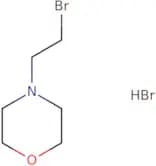
CAS:<p>4-(2-Bromoethyl)morpholine hydrobromide is a solvent that is used as an agent in the production of other chemicals. It is a colorless, crystalline solid with a constant melting point of 130 to 131 degrees Celsius. 4-(2-Bromoethyl)morpholine hydrobromide is soluble in acetone, ethanol, ether, and water. This chemical has been shown to be toxic and should be handled with care.</p>Formula:C6H13Br2NOPurezza:Min. 95%Peso molecolare:274.98 g/mol4-Bromo-2,5-dimethylpyridine
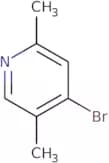
CAS:4-Bromo-2,5-dimethylpyridine is an organic compound that belongs to the group of amino compounds. It is a potential intermediate in the synthesis of other compounds. 4-Bromo-2,5-dimethylpyridine can react with potassium to form 4-bromopyridine and 3-bromo-4-methylpyridine. It may also be used as a reactant in aminations and as an intermediate in the preparation of n-oxides.Formula:C7H8BrNPurezza:Min. 95%Peso molecolare:186.05 g/molMethyl 2-cyano-5-fluorobenzoate
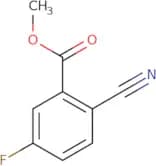
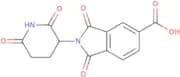
CAS:<p>Versatile small molecule scaffold</p>Formula:C9H6FNO2Purezza:Min. 95%Peso molecolare:179.15 g/mol2-(2,6-Dioxopiperidin-3-yl)-1,3-dioxoisoindoline-5-carboxylic acid
CAS:Please enquire for more information about 2-(2,6-Dioxopiperidin-3-yl)-1,3-dioxoisoindoline-5-carboxylic acid including the price, delivery time and more detailed product information at the technical inquiry form on this pageFormula:C14H10N2O6Purezza:Min. 95%Peso molecolare:302.24 g/molPotassium (cyclopropylmethyl)trifluoroborate
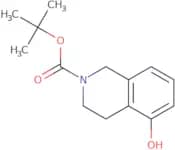
CAS:<p>Versatile small molecule scaffold</p>Formula:C4H7BF3KPurezza:Min. 95%Peso molecolare:162 g/moltert-Butyl 5-hydroxy-3,4-dihydroisoquinoline-2(1H)-carboxylate
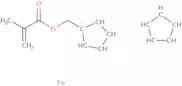
CAS:Versatile small molecule scaffoldFormula:C14H19NO3Purezza:Min. 95%Peso molecolare:249.31 g/molFerrocenylmethyl methacrylate
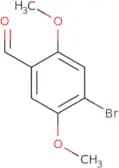
CAS:Ferrocenylmethyl methacrylate is a reactive, irreversible oxidation agent. It is used in the synthesis of hydroxylated polymers and redox-active biological sensors. Ferrocenylmethyl methacrylate has been used as a component in polymerization reactions to produce polymers with recording potential. It has also been used for the detection of cancer cells and for the diagnosis of prostate cancer.Formula:C15H16FeO2Purezza:Min. 95%Peso molecolare:284.13 g/mol4-Bromo-2,5-dimethoxybenzaldehyde
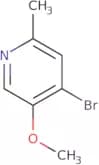
CAS:<p>4-Bromo-2,5-dimethoxybenzaldehyde is a nucleophilic compound that can act as an iminium. It is used in the synthesis of chalcones, which are aromatic compounds that have been found to have anticancer properties. 4-Bromo-2,5-dimethoxybenzaldehyde has two isomers: 2,4-dimethoxybenzaldehyde and 2,5-dimethoxybenzaldehyde. The separation of these compounds can be achieved using chromatography with a silica gel column. This process can be done on both the mixture of the two isomers or on one specific isomer. The synthetic pathway for this product begins with benzylpiperazine and piperazine. These two molecules react to form 3,4-dichlorobenzylpiperazine, which reacts with dimethoxybenzyl chloride to form 4-bromo-2,5-dim</p>Formula:C9H9BrO3Purezza:Min. 95%Peso molecolare:245.07 g/mol4-Bromo-5-methoxy-2-methylpyridine
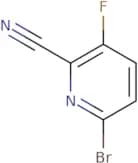
CAS:Versatile small molecule scaffoldFormula:C7H8BrNOPurezza:Min. 95%Peso molecolare:202.05 g/mol6-Bromo-3-fluoropyridine-2-carbonitrile
CAS:Versatile small molecule scaffoldFormula:C6H2N2FBrPurezza:Min. 95%Peso molecolare:200.99 g/mol3,3-Diethoxypropan-1-amine
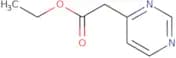
CAS:<p>3,3-Diethoxypropan-1-amine is a synthetic drug that reversibly inhibits the growth of bacteria. It has been shown to be effective against methicillin resistant strains of Staphylococcus aureus and Clostridium perfringens, with no detectable activity against acid-fast bacteria such as Mycobacterium tuberculosis or Mycobacterium avium complex. 3,3-Diethoxypropan-1-amine is a heterobifunctional compound that binds to epidermal growth factor with high affinity. 3,3-Diethoxypropan-1-amine can also bind to collagen and liposomal formulations, which may be useful for the treatment of wounds. This drug has been shown to inhibit δ opioid receptors in mice and rats, which is thought to contribute to its analgesic effects.</p>Formula:C7H17NO2Purezza:Min. 95%Peso molecolare:147.22 g/molEthyl 2-(pyrimidin-4-yl)acetate
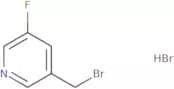
CAS:Versatile small molecule scaffoldFormula:C8H10N2O2Purezza:Min. 95%Peso molecolare:166.18 g/mol3-(bromomethyl)-5-fluoropyridine hbr
CAS:Versatile small molecule scaffoldFormula:C6H6Br2FNPurezza:Min. 95%Peso molecolare:270.93 g/molFlurbiprofen Related Compound A
CAS:Flurbiprofen Related Compound A is a compound that inhibits the activity of serine proteases. It binds to the active site of the enzyme, preventing it from breaking down proteins in the body. Flurbiprofen Related Compound A binds to metal surfaces and is also used as a fluorescent probe for biological research. It has been shown to have optical properties and fluorescence properties, which are amplified by an amplifier.Formula:C15H14O2Purezza:Min. 95%Peso molecolare:226.27 g/molSodium 4-hydroxybenzenesulfonate dihydrate
CAS:Sodium 4-hydroxybenzenesulfonate dihydrate is a hydrogenated compound with reactive properties. It is used in the production of optical materials and is used to produce hydrogen peroxide, which is a strong oxidizing agent. Sodium 4-hydroxybenzenesulfonate dihydrate has been shown to react with calcium ions to form calcium sulfinates. The luminescence property of this compound can be enhanced by mixing it with other compounds such as x-ray diffraction study, functional groups, or hydrogen peroxide. The reaction time for the formation of sodium 4-hydroxybenzenesulfonate dihydrate can be shortened by adding anions such as sulfamic acid.Formula:C6H5NaO4S·2H2OPurezza:Min. 95%Colore e forma:White To Off-White SolidPeso molecolare:232.19 g/molFipexide hydrochloride
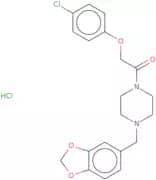
CAS:<p>Fipexide is a dopamine analog that is used as an anti-inflammatory drug. Fipexide has been shown to be effective against inflammatory bowel disease, autoimmune diseases and chronic oral toxicity in animal models. The symptoms of fipexide are similar to the symptoms of Parkinson's disease, which include tremors, muscle rigidity and slowness of movement. Fipexide also has a reactive nitrogen atom in its molecular structure, which may contribute to its toxicity. It has been shown to have no effect on locomotor activity in animals with bowel disease.</p>Formula:C20H21ClN2O4·HClPurezza:Min. 95%Peso molecolare:425.31 g/molMethyl 5-hydroxy-1-methyl-1H-pyrrole-2-carboxylate
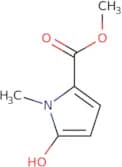
CAS:<p>Please enquire for more information about Methyl 5-hydroxy-1-methyl-1H-pyrrole-2-carboxylate including the price, delivery time and more detailed product information at the technical inquiry form on this page</p>Formula:C7H9NO3Purezza:Min. 95%Colore e forma:PowderPeso molecolare:155.2 g/molPoly(dioxanone)
CAS:<p>Poly(dioxanone) is a biocompatible polymer that has been shown to promote bone growth in animal models. It is a cross-linking agent and can be used as an alternative to copper chromite, which is the most common cross-linking agent used in tissue engineering. Poly(dioxanone) has been shown to promote bone growth by stimulating the production of growth factors and increasing the activity of osteoblasts, cells that produce new bone. The material also promotes matrix deposition and remodeling, leading to increased bone density.</p>Formula:(C4H6O3)nPurezza:Min. 95%Colore e forma:Powder