


Building Blocks
Sottocategorie di "Building Blocks"
- Acidi boronici e derivati dell'acido boronico(5.774 prodotti)
- Building Blocks Chirali(1.237 prodotti)
- Building Blocks Idrocarburici(6.098 prodotti)
- Building Blocks organici(60.970 prodotti)
Trovati 205135 prodotti di "Building Blocks"
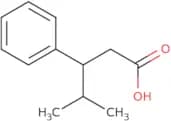
4-Methyl-3-phenylpentanoic acid
CAS:4-Methyl-3-phenylpentanoic acid is a chiral, enantioselective catalyst. It is catalyzed by rhodium and used in the asymmetric synthesis of β-unsaturated amides. This reaction is an example of an esterification that is catalyzed by a chiral, enantioselective reagent. 4-Methyl-3-phenylpentanoic acid has also been shown to be effective for the synthesis of chiral esters.
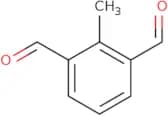
Formula:C12H16O2Purezza:Min. 95%Peso molecolare:192.25 g/mol2-Methylbenzene-1,3-dicarbaldehyde
CAS:2-Methylbenzene-1,3-dicarbaldehyde is a divalent hydrocarbon that has an oxidation catalyst. This compound is used as an intermediate in the production of drugs and pharmaceuticals. It has been shown to have cardiovascular disorders, such as vasodilatation and hypotension. The mechanism of action is not fully understood but may be related to its ability to act as a nitrovasodilator by increasing nitric oxide (NO) release. 2-Methylbenzene-1,3-dicarbaldehyde also produces psychotic disorders when long term exposure occurs. This compound has been shown to have neurotoxic effects in animal models with long term exposure.
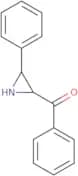
Formula:C9H8O2Purezza:Min. 95%Peso molecolare:148.16 g/mol2-Benzoyl-3-phenylaziridine
CAS:2-Benzoyl-3-phenylaziridine is a heterocyclic compound that is obtained by the condensation of benzoyl chloride and phenylamine. It is used in the synthesis of azomethine dyes, which are mainly used as textile dyes. The ammonium salt of 2-benzoyl-3-phenylaziridine can be obtained on refluxing the hydrate with thiocyanate and acetonitrile. This transformation has been shown to be dependent on pH with an optimum at pH 8.5.
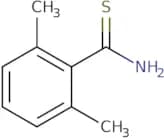
Formula:C15H13NOPurezza:Min. 95%Peso molecolare:223.27 g/mol2,6-Dimethyl-thiobenzamide
CAS:Versatile small molecule scaffold
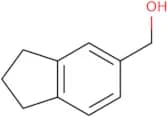
Formula:C9H11NSPurezza:Min. 95%Peso molecolare:165.26 g/mol5-Hydroxymethylindane
CAS:Versatile small molecule scaffold
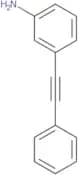
Formula:C10H12OPurezza:Min. 95%Peso molecolare:148.2 g/mol3-(phenylethynyl)aniline
CAS:3-(Phenylethynyl)aniline is a chemical compound that is insoluble in water and has a reactive crosslink. It is reactive with long-term exposure and has a gel permeation chromatography isolated yield. 3-(Phenylethynyl)aniline can be thermally decomposed to phenylethanethiol, which is an exothermic reaction. The technique of nmr spectroscopy can be used to study the reactivity of this compound. 3-(Phenylethynyl)aniline exhibits specific spectral features that can be used to identify it by nmr spectroscopy.
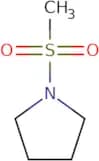
Formula:C14H11NPurezza:Min. 95%Peso molecolare:193.24 g/mol1-Methanesulfonylpyrrolidine
CAS:Versatile small molecule scaffold
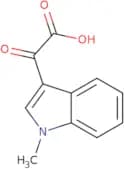
Formula:C5H11NO2SPurezza:Min. 95%Peso molecolare:149.21 g/molN-Methyl-3-indoleglyoxylic acid 97
CAS:Prodotto controllatoN-Methyl-3-indoleglyoxylic acid 97 is a potent and selective inhibitor of protein kinases, including the mitogen activated protein kinase (MAPK) family. It has been shown to inhibit proliferation of cells in vitro. In addition, N-Methyl-3-indoleglyoxylic acid 97 inhibits the activation of MAPK in response to stress or cytokine stimulation. This agent has been shown to be selective for different isotypes of protein kinases and displays good selectivity for inhibition of the enzyme activity.
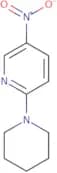
Formula:C11H9NO3Purezza:Min. 95%Peso molecolare:203.19 g/mol5-Nitro-2-(piperidine-1-yl)pyridine
CAS:5-Nitro-2-(piperidine-1-yl)pyridine is a product that is formed by the nucleophilic addition of nitric acid to 1,3-diketones. It has been used in the synthesis of phenyl and isoxazole derivatives. The reaction was rationalized using amines as nucleophiles, which attack the electrophilic carbon atom in the ketone. This product has also been shown to be an effective nucleophile for attacking other molecules, such as azides and nitrates. In the Australian outback, 5-Nitro-2-(piperidine-1-yl)pyridine can be found in soils and plants.
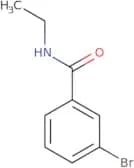
Formula:C10H13N3O2Purezza:Min. 95%Peso molecolare:207.23 g/mol3-Bromo-N-ethylbenzamide
CAS:Versatile small molecule scaffold
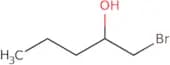
Formula:C9H10BrNOPurezza:Min. 95%Peso molecolare:228.09 g/mol1-Bromopentan-2-ol
CAS:1-Bromopentan-2-ol is an additive that is used in lubricating preparations, as well as a solvent in spectroscopy. It has been shown to have antimicrobial properties against fungi and bacteria. 1-Bromopentan-2-ol's antimicrobial effects are due to its ability to inhibit the growth of bacteria by binding to amine groups on proteins and preventing the formation of new cell walls. 1-Bromopentan-2-ol also has the ability to react with formaldehyde, generating formaldehyde gas which inhibits microbial growth.
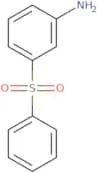
Formula:C5H11BrOPurezza:Min. 95%Peso molecolare:167.04 g/mol3-(Benzenesulfonyl)aniline
CAS:Versatile small molecule scaffold
Formula:C12H11NO2SPurezza:Min. 95%Peso molecolare:233.29 g/molethyl 3-hydroxybicyclo[3.1.0]hexane-6-carboxylate
CAS:Versatile small molecule scaffold
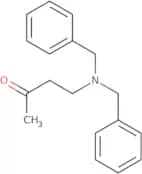
Formula:C9H14O3Purezza:Min. 95%Peso molecolare:170.21 g/mol4-(dibenzylamino)butan-2-one
CAS:Versatile small molecule scaffold
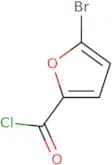
Formula:C18H21NOPurezza:Min. 95%Peso molecolare:267.37 g/mol5-Bromo-furan-2-carbonyl chloride
CAS:5-Bromo-furan-2-carbonyl chloride is a colorless liquid that is soluble in organic solvents. It has a thionyl, polymerized odor and can be used as a feedstock for the production of amines, cyclopentadienyl, and chloride. 5-Bromo-furan-2-carbonyl chloride also has radiation damage properties and can be used in radiochemical synthesis of pyrrole. This chemical has been used to produce glycosides by reacting with diluents such as methanol and ethanol.
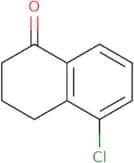
Formula:C5H2BrClO2Purezza:Min. 95%Peso molecolare:209.42 g/mol5-Chloro-1-tetralone
CAS:5-Chloro-1-tetralone is an oxime that is used as a topical agent for the treatment of staphylococcal infections. It acts by inhibiting bacterial cell wall synthesis, preventing the formation of cross-links between the peptidoglycan chains. 5-Chloro-1-tetralone has potent antibacterial activity against many bacteria and fungi. This compound has shown to be effective against escherichia coli, pneumoniae, and imidazole derivatives. The mechanism of action is not well understood, but it may involve inhibition of protein synthesis or DNA replication by binding to enzymes involved in these processes.
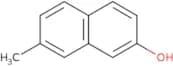
Formula:C10H9ClOPurezza:Min. 95%Peso molecolare:180.63 g/mol7-Methylnaphthalen-2-ol
CAS:Versatile small molecule scaffold
Formula:C11H10OPurezza:Min. 95%Peso molecolare:158.2 g/mol2-Phenylmalondialdehyde
CAS:2-Phenylmalondialdehyde is a chemical compound that is used in the synthesis of various drugs. It is synthesized by reacting phenylacetaldehyde with hydrochloric acid, hydrogen chloride, and ferric chloride. 2-Phenylmalondialdehyde has been shown to be an effective pain model for studying the effects of proton radiation. It also has been investigated as a potential treatment for neurological diseases such as Parkinson's disease and Alzheimer's disease. This molecule reacts with dopamine to form 2-phenylethylidenehydrazine, which may have therapeutic properties for treating these diseases. The presence of two phenyl groups and a chlorine atom in the molecule allow it to bind to fatty acids, which may increase its effectiveness against neurological diseases.
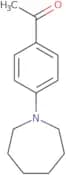
Formula:C9H8O2Purezza:Min. 95%Peso molecolare:148.16 g/mol1-(4-Azepan-1-ylphenyl)ethanone
CAS:Versatile small molecule scaffold
Formula:C14H19NOPurezza:Min. 95%Peso molecolare:217.31 g/mol2-[4-(Morpholin-4-yl)phenyl]acetic acid
CAS:Versatile small molecule scaffold
Formula:C12H15NO3Purezza:Min. 95%Peso molecolare:221.25 g/mol

![ethyl 3-hydroxybicyclo[3.1.0]hexane-6-carboxylate](/_next/image/?url=https%3A%2Fstatic.cymitquimica.com%2Fproducts%2F3D%2Fthumb-webp%2FBBA78636.webp&w=3840&q=75)

![2-[4-(Morpholin-4-yl)phenyl]acetic acid](/_next/image/?url=https%3A%2Fstatic.cymitquimica.com%2Fproducts%2F3D%2Fthumb-webp%2FBBA57757.webp&w=3840&q=75)