


Building Blocks
Questa sezione contiene prodotti fondamentali per la sintesi di composti organici e biologici. Building blocks sono i materiali di partenza essenziali utilizzati per costruire molecole complesse attraverso varie reazioni chimiche. Svolgono un ruolo critico nella scoperta di farmaci, nella scienza dei materiali e nella ricerca chimica. Presso CymitQuimica, offriamo una gamma diversificata di building blocks di alta qualità per supportare le tue ricerche innovative e progetti industriali, assicurandoti di avere i componenti essenziali per una sintesi di successo.
Sottocategorie di "Building Blocks"
- Acidi boronici e derivati dell'acido boronico(5.778 prodotti)
- Building Blocks Chirali(1.243 prodotti)
- Building Blocks Idrocarburici(6.098 prodotti)
- Building Blocks organici(61.046 prodotti)
Trovati 203857 prodotti di "Building Blocks"
Ordinare per
Purezza (%)
0
100
|
0
|
50
|
90
|
95
|
100
3-Amino-1-(4-chlorophenyl)propan-1-ol
CAS:<p>Versatile small molecule scaffold</p>Formula:C9H12ClNOPurezza:Min. 95%Peso molecolare:185.65 g/mol2-(3-Nitro-1H-pyrazol-1-yl)pyridine-4-carboxylic acid
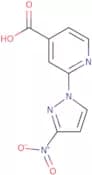
CAS:<p>Versatile small molecule scaffold</p>Formula:C9H6N4O4Purezza:Min. 95%Peso molecolare:234.17 g/molN-(4-Chlorophenyl)-2-hydroxyacetamide
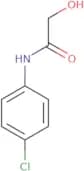
CAS:<p>4-Chloro-N-(2-hydroxyacetyl)aniline (NHA) is a metabolite of the anti-cancer drug piperonyl butoxide. It has been shown to inhibit the growth of tumor xenografts in mice, and may be an effective cancer treatment. The mechanism of NHA's inhibition of tumor growth is through its oxidative metabolites that induce DNA damage, leading to apoptosis. The production of these compounds is increased when it is incubated with α-tocopherol or rhesus monkeys, which suggests that they are conjugates with glucuronic acid. In humans, 4-chloro-NHA undergoes oxidation by dehydrogenases to form 4-chloroaniline and 2-(4-chlorophenoxy)-N-(2-hydroxyacetyl)acetic acid (4CPHAA). This last compound can be conjugated with either glutathione or glucuronic acid to form</p>Formula:C8H8ClNO2Purezza:Min. 95%Peso molecolare:185.61 g/mol3-(4-Chlorophenyl)butan-2-one
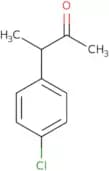
CAS:<p>Versatile small molecule scaffold</p>Formula:C10H11ClOPurezza:Min. 95%Peso molecolare:182.64 g/mol3-[2-(Trifluoromethyl)phenyl]butan-2-amine
CAS:Prodotto controllato<p>Versatile small molecule scaffold</p>Formula:C11H14F3NPurezza:Min. 95%Peso molecolare:217.23 g/mol2-(Quinolin-3-yl)acetonitrile
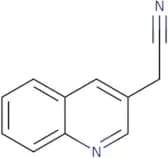
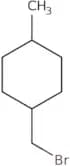
CAS:<p>Versatile small molecule scaffold</p>Formula:C11H8N2Purezza:Min. 95%Peso molecolare:168.19 g/mol1-(Bromomethyl)-4-methylcyclohexane
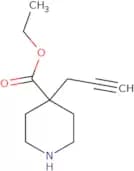
CAS:<p>1-(Bromomethyl)-4-methylcyclohexane is a chemical compound that has two stereoisomers. The equilibrium between the two conformers is influenced by temperature and pressure, but no experimental data are available to determine the rate constant of this process. The conformation of the molecule is determined by both steric and electronic effects. There are two conformers of 1-(bromomethyl)-4-methylcyclohexane, which are both axial, but have different degrees of planarity. This compound can be used as a reagent in spectroscopy experiments because it has two distinct absorption bands in the infrared spectrum. One conformer has a radical character while the other does not.</p>Formula:C8H15BrPurezza:Min. 95%Peso molecolare:191.11 g/molEthyl 4-(prop-2-yn-1-yl)piperidine-4-carboxylate
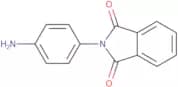
CAS:<p>Versatile small molecule scaffold</p>Formula:C11H17NO2Purezza:Min. 95%Peso molecolare:195.26 g/mol2-(4-Aminophenyl)-2,3-dihydro-1H-isoindole-1,3-dione
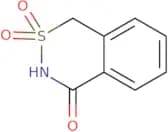
CAS:<p>Versatile small molecule scaffold</p>Formula:C14H10N2O2Purezza:Min. 95%Peso molecolare:238.24 g/mol3,4-Dihydro-1H-2,3-benzothiazine-2,2,4-trione
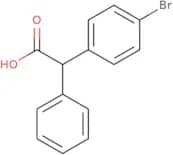
CAS:<p>Versatile small molecule scaffold</p>Formula:C8H7NO3SPurezza:Min. 95%Peso molecolare:197.21 g/mol2-(4-Bromophenyl)-2-phenylacetic acid
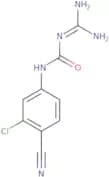
CAS:<p>Versatile small molecule scaffold</p>Formula:C14H11BrO2Purezza:Min. 95%Peso molecolare:291.14 g/mol3-Carbamimidoyl-1-(3-chloro-4-cyanophenyl)urea
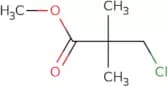
CAS:<p>3-Carbamimidoyl-1-(3-chloro-4-cyanophenyl)urea is a drug that has been shown to have an inhibitory effect on the growth of malaria parasites in vitro. It has also been shown to be effective against other organisms such as bacteria and fungi, including methicillin resistant Staphylococcus aureus (MRSA). 3-Carbamimidoyl-1-(3-chloro-4-cyanophenyl)urea is typically used with a diluent, which can be either water or ethanol. The drug is insoluble in water but soluble in ethanol, so it must be reconstituted before injection. This drug is targeted to the circumferential region of the parasite by an alkyl substituent that attaches to the erythrocyte membrane surface. 3-Carbamimidoyl-1-(3-chloro-4-</p>Formula:C9H8ClN5OPurezza:Min. 95%Peso molecolare:237.64 g/molMethyl 3-chloro-2,2-dimethylpropanoate
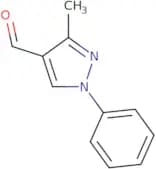
CAS:<p>Methyl 3-chloro-2,2-dimethylpropanoate is a drug that inhibits the sodium-dependent glucose cotransporter. It is used as a pharmaceutical to treat diabetes mellitus type 2. Methyl 3-chloro-2,2-dimethylpropanoate binds to the cotransporter and prevents it from transporting glucose into cells. The stereoisomers of this drug are enantiomers and have opposite effects on the cotransporter.<br>Methyl 3-chloro-2,2-dimethylpropanoate is also used for other medical purposes such as to prevent kidney damage in children with renal failure and to treat seizures in children with epilepsy.</p>Formula:C6H11ClO2Purezza:Min. 95%Peso molecolare:150.6 g/mol3-Methyl-1-phenyl-1H-pyrazole-4-carboxaldehyde
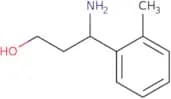
CAS:<p>3-Methyl-1-phenyl-1H-pyrazole-4-carboxaldehyde is a reactant that can be used in the synthesis of salicylaldehyde and phenyl isocyanate. It reacts with a variety of reagents, including salicylic acid, phenyl isocyanate, and isocyanates to produce high yields. This product also reacts with transaminases to produce pyrazole derivatives.</p>Formula:C11H10N2OPurezza:Min. 95%Peso molecolare:186.21 g/mol3-Amino-3-(2-methylphenyl)propan-1-ol
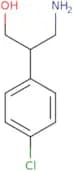
CAS:<p>Versatile small molecule scaffold</p>Formula:C10H15NOPurezza:Min. 95%Peso molecolare:165.23 g/mol3-Amino-2-(4-chlorophenyl)propan-1-ol
CAS:<p>Versatile small molecule scaffold</p>Formula:C9H12ClNOPurezza:Min. 95%Peso molecolare:185.65 g/molThieno[2,3-b]pyridine-5-carbonitrile
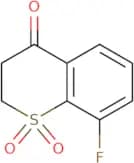
CAS:<p>Thienopyridine analogs are a class of chemical compounds that function as agonists of the receptor α. These compounds have been shown to inhibit fatty acid oxidation and ATP production in rat liver cells, which may be due to their ability to activate AMP-activated protein kinase (AMPK). Thienopyridine analogs are being investigated for use as anti-inflammatory agents and cancer treatments.</p>Formula:C8H4N2SPurezza:Min. 95%Peso molecolare:160.2 g/mol8-Fluoro-2,3-dihydro-4H-1-benzothiopyran-4-one 1,1-dioxide
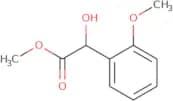
CAS:<p>Versatile small molecule scaffold</p>Formula:C9H7FO3SPurezza:Min. 95%Peso molecolare:214.22 g/molMethyl 2-hydroxy-2-(2-methoxyphenyl)acetate
CAS:<p>Versatile small molecule scaffold</p>Formula:C10H12O4Purezza:Min. 95%Peso molecolare:196.2 g/mol3-[(4-Methoxyphenyl)amino]propanamide
CAS:<p>Versatile small molecule scaffold</p>Formula:C10H14N2O2Purezza:Min. 95%Peso molecolare:194.23 g/mol


![3-[2-(Trifluoromethyl)phenyl]butan-2-amine](/_next/image/?url=https%3A%2Fstatic.cymitquimica.com%2Fproducts%2F3D%2Fthumb-webp%2FWAA89466.webp&w=3840&q=75)
![Thieno[2,3-b]pyridine-5-carbonitrile](/_next/image/?url=https%3A%2Fstatic.cymitquimica.com%2Fproducts%2F3D%2Fthumb-webp%2FWAA34431.webp&w=3840&q=75)
![3-[(4-Methoxyphenyl)amino]propanamide](/_next/image/?url=https%3A%2Fstatic.cymitquimica.com%2Fproducts%2F3D%2Fthumb-webp%2FWAA01746.webp&w=3840&q=75)