Building Blocks
Sottocategorie di "Building Blocks"
- Acidi boronici e derivati dell'acido boronico(5.774 prodotti)
- Building Blocks Chirali(1.237 prodotti)
- Building Blocks Idrocarburici(6.098 prodotti)
- Building Blocks organici(60.970 prodotti)
Trovati 205135 prodotti di "Building Blocks"
4-Bromo-1-(propan-2-yl)-1H-pyrrole-2-carboxylic acid
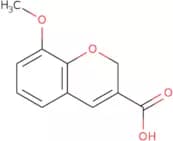
CAS:Versatile small molecule scaffoldFormula:C8H10BrNO2Purezza:Min. 95%Peso molecolare:232.07 g/mol8-Methoxy-2H-chromene-3-carboxylic acid
CAS:Versatile small molecule scaffold
Formula:C11H10O4Purezza:Min. 95%Peso molecolare:206.19 g/molImidazo[4,3-b][1,3]thiazole-3-carboxylic acid
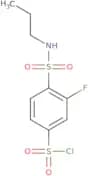
CAS:Versatile small molecule scaffoldFormula:C6H4N2O2SPurezza:Min. 95%Peso molecolare:168.18 g/mol3-Fluoro-4-(propylsulfamoyl)benzene-1-sulfonyl chloride
CAS:Versatile small molecule scaffold
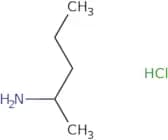
Formula:C9H11ClFNO4S2Purezza:Min. 95%Peso molecolare:315.8 g/mol(R)-Pentan-2-amine hydrochloride ee
CAS:Versatile small molecule scaffold
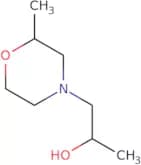
Formula:C5H14ClNPurezza:Min. 95%Peso molecolare:123.62 g/mol1-(2-Methylmorpholin-4-yl)propan-2-ol
CAS:Versatile small molecule scaffold
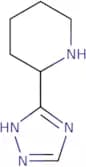
Formula:C8H17NO2Purezza:Min. 95%Peso molecolare:159.23 g/mol2-(1H-1,2,4-Triazol-3-yl)piperidine
CAS:Versatile small molecule scaffold
Formula:C7H12N4Purezza:Min. 95%Peso molecolare:152.2 g/mol2-[Benzyl(methyl)ao]propanoic acid
CAS:2-[Benzyl(methyl)ao]propanoic acid is a glycine analogue that has been synthesized and characterized. It is an α-amino acid with the chemical formula C5H11NO2. The molecule has a chiral carbon atom at the center of the propanoic acid group and contains two asymmetric carbon atoms on the benzene ring, which enable it to exist in two stereoisomers. The compound has been shown to exhibit interligand interactions with copper as well as stereoselectivity in its interactions with l-amino acids. 2-[Benzyl(methyl)ao]propanoic acid also exhibits dichroism spectra, which are unique to these types of molecules.
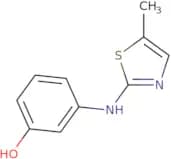
Formula:C11H15NO2Purezza:Min. 95%Peso molecolare:193.24 g/mol3-((5-Methylthiazol-2-yl)amino)phenol
CAS:Versatile small molecule scaffold
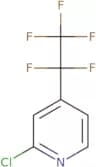
Formula:C10H10N2OSPurezza:Min. 95%Peso molecolare:206.27 g/mol2-Chloro-4-(pentafluoroethyl)pyridine
CAS:Versatile small molecule scaffold
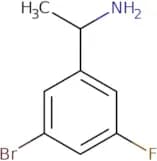
Formula:C7H3ClF5NPurezza:Min. 95%Peso molecolare:231.55 g/mol1-(3-Bromo-5-fluorophenyl)ethylamine
CAS:Versatile small molecule scaffold
Formula:C8H9BrFNPurezza:Min. 95%Peso molecolare:218.07 g/molN-[(2-Methyl-6-oxo-1,6-dihydropyrimidin-5-yl)methyl]formamide
CAS:Versatile small molecule scaffold
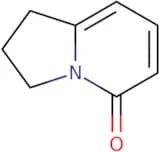
Formula:C7H9N3O2Purezza:Min. 95%Peso molecolare:167.17 g/mol2,3-Dihydro-5(1H)-indolizinone
CAS:2,3-Dihydro-5(1H)-indolizinone (NU-120) is a quinoid compound that has been shown to have anti-oxidant and anti-inflammatory properties. The prodrug form of NU-120 is converted to the active n-oxide form in vivo by the enzyme cytochrome P450. This conversion takes place at an efficient rate with oral absorption between 0.2% and 2%. The drug has a crystalline structure and solvates readily in water.
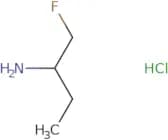
Formula:C8H9NOPurezza:Min. 95%Peso molecolare:135.16 g/mol(2S)-1-Fluorobutan-2-amine, hydrochloride
CAS:Versatile small molecule scaffold
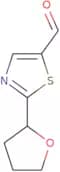
Formula:C4H11ClFNPurezza:Min. 95%Peso molecolare:127.59 g/mol2-(Oxolan-2-yl)-1,3-thiazole-5-carbaldehyde
CAS:Versatile small molecule scaffold
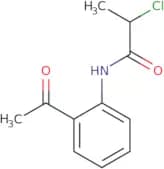
Formula:C8H9NO2SPurezza:Min. 95%Peso molecolare:183.23 g/molN-(2-Acetylphenyl)-2-chloropropanamide
CAS:Versatile small molecule scaffoldFormula:C11H12ClNO2Purezza:Min. 95%Peso molecolare:225.67 g/mol1-[3-(Hydroxymethyl)phenyl]ethan-1-one
CAS:Versatile small molecule scaffold
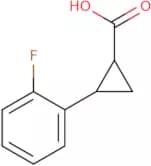
Formula:C9H10O2Purezza:Min. 95%Peso molecolare:150.17 g/mol2-(2-Fluorophenyl)cyclopropanecarboxylic acid
CAS:Versatile small molecule scaffold
Formula:C10H9FO2Purezza:Min. 95%Peso molecolare:180.18 g/mol2-[(2-Hydroxyethyl)(2,2,2-trifluoroethyl)amino]ethan-1-ol
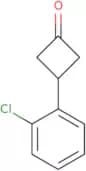
CAS:Versatile small molecule scaffoldFormula:C6H12F3NO2Purezza:Min. 95%Peso molecolare:187.16 g/mol3-(2-Chlorophenyl)cyclobutan-1-one
CAS:The mechanism of the cyclobutanone cleavage reaction is a sequential intramolecular process in which the first step is a cyclobutanol intermediate that undergoes an expansion to form a six-membered ring with two unsaturated bonds. The second step involves bond cleavage and is triggered by the presence of palladium. This sequence can be used to synthesize 3-(2-chlorophenyl)cyclobutan-1-one.
Formula:C10H9ClOPurezza:Min. 95%Peso molecolare:180.63 g/mol


![Imidazo[4,3-b][1,3]thiazole-3-carboxylic acid](/_next/image/?url=https%3A%2Fstatic.cymitquimica.com%2Fproducts%2F3D%2Fthumb-webp%2FGCC60502.webp&w=3840&q=75)
![2-[Benzyl(methyl)ao]propanoic acid](/_next/image/?url=https%3A%2Fstatic.cymitquimica.com%2Fproducts%2F3D%2Fthumb-webp%2FBEA69294.webp&w=3840&q=75)
![N-[(2-Methyl-6-oxo-1,6-dihydropyrimidin-5-yl)methyl]formamide](/_next/image/?url=https%3A%2Fstatic.cymitquimica.com%2Fproducts%2F3D%2Fthumb-webp%2FGFB53254.webp&w=3840&q=75)
![1-[3-(Hydroxymethyl)phenyl]ethan-1-one](/_next/image/?url=https%3A%2Fstatic.cymitquimica.com%2Fproducts%2F3D%2Fthumb-webp%2FAFA60406.webp&w=3840&q=75)
![2-[(2-Hydroxyethyl)(2,2,2-trifluoroethyl)amino]ethan-1-ol](/_next/image/?url=https%3A%2Fstatic.cymitquimica.com%2Fproducts%2F3D%2Fthumb-webp%2FGGA23980.webp&w=3840&q=75)