Building Blocks
Sottocategorie di "Building Blocks"
- Acidi boronici e derivati dell'acido boronico(5.780 prodotti)
- Building Blocks Chirali(1.239 prodotti)
- Building Blocks Idrocarburici(6.100 prodotti)
- Building Blocks organici(61.005 prodotti)
Trovati 205234 prodotti di "Building Blocks"
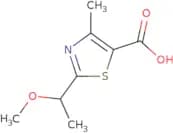
2-(1-Methoxyethyl)-4-methyl-1,3-thiazole-5-carboxylic acid
CAS:Versatile small molecule scaffold
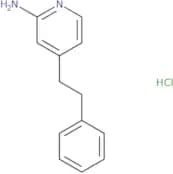
Formula:C8H11NO3SPurezza:Min. 95%Peso molecolare:201.25 g/mol4-(2-Phenylethyl)pyridin-2-amine hydrochloride
CAS:Versatile small molecule scaffold
Formula:C13H15ClN2Purezza:Min. 95%Peso molecolare:234.72 g/mol2-(Aminomethyl)-5-hydroxy-1-methyl-1,4-dihydropyridin-4-one dihydrobromide
CAS:Versatile small molecule scaffoldFormula:C7H12Br2N2O2Purezza:Min. 95%Peso molecolare:315.99 g/mol3-Bromobenzo[b]thiophen-5-ol
CAS:Versatile small molecule scaffold
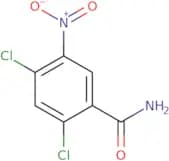
Formula:C8H5BrOSPurezza:Min. 95%Peso molecolare:229.1 g/mol2,4-Dichloro-5-nitrobenzamide
CAS:Versatile small molecule scaffold
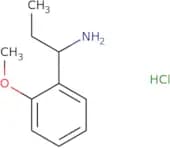
Formula:C7H4Cl2N2O3Purezza:Min. 95%Peso molecolare:235.02 g/mol1-(2-Methoxyphenyl)propan-1-amine
CAS:Versatile small molecule scaffold
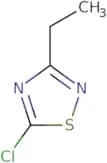
Formula:C10H16ClNOPurezza:Min. 95%Peso molecolare:201.69 g/mol5-Chloro-3-ethyl-1,2,4-thiadiazole
CAS:Versatile small molecule scaffold
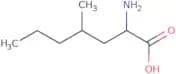
Formula:C4H5ClN2SPurezza:Min. 95%Peso molecolare:148.61 g/mol2-Amino-4-methylheptanoic acid
CAS:Versatile small molecule scaffold
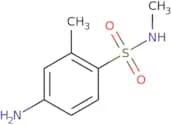
Formula:C8H17NO2Purezza:Min. 95%Peso molecolare:159.23 g/mol4-Amino-N,2-dimethylbenzene-1-sulfonamide
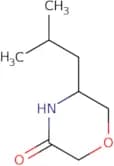
CAS:Versatile small molecule scaffoldFormula:C8H12N2O2SPurezza:Min. 95%Peso molecolare:200.26 g/mol(5S)-5-(2-Methylpropyl)morpholin-3-one
CAS:Versatile small molecule scaffold
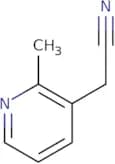
Formula:C8H15NO2Purezza:Min. 95%Peso molecolare:157.21 g/mol2-(2-Methylpyridin-3-yl)acetonitrile
CAS:Versatile small molecule scaffold
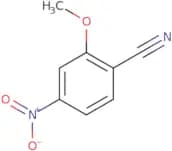
Formula:C8H8N2Purezza:Min. 95%Peso molecolare:132.16 g/mol2-Methoxy-4-nitrobenzonitrile
CAS:2-Methoxy-4-nitrobenzonitrile is an acylsulfonamide that has been shown to inhibit the production of inflammatory cytokines and chemokines in a lung injury model. The compound has shown activity against cxcr2, which is a receptor for monocyte chemotactic protein 1 (MCP1) and macrophage inflammatory protein 1 alpha (MIP1α). 2-Methoxy-4-nitrobenzonitrile also inhibits carboxylic acid production and is orally bioavailable.
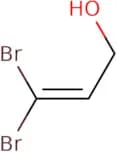
Formula:C8H6N2O3Purezza:Min. 95%Peso molecolare:178.14 g/mol3,3-Dibromoprop-2-en-1-ol
CAS:Versatile small molecule scaffold
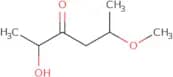
Formula:C3H4Br2OPurezza:Min. 95%Peso molecolare:215.87 g/mol2-Hydroxy-5-methoxyhexan-3-one
CAS:Versatile small molecule scaffold
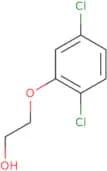
Formula:C7H14O3Purezza:Min. 95%Peso molecolare:146.18 g/mol2-(2,5-Dichlorophenoxy)ethan-1-ol
CAS:Versatile small molecule scaffold
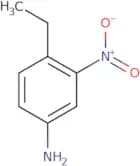
Formula:C8H8Cl2O2Purezza:Min. 95%Peso molecolare:207.05 g/mol4-Ethyl-3-nitroaniline
CAS:Versatile small molecule scaffold
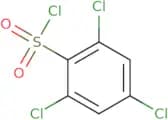
Formula:C8H10N2O2Purezza:Min. 95%Peso molecolare:166.18 g/mol2,4,6-Trichlorobenzenesulfonyl chloride
CAS:2,4,6-Trichlorobenzenesulfonyl chloride is a sulfonylating agent that is used to treat metabolic disorders and iron metabolism. It is also used as an x-ray contrast agent for the detection of certain types of cancers. In addition, 2,4,6-trichlorobenzenesulfonyl chloride has been shown to have anti-inflammatory properties in chronic inflammatory diseases. This drug can be used to inhibit the synthesis of hepcidin by blocking the catalytic activity of ferrochelatase. 2,4,6-trichlorobenzenesulfonyl chloride may also be able to reduce inflammation by its ability to form reactive chlorides that react with alcohols and aldehydes. This can lead to deficiency symptoms such as chronic inflammatory disease or alcohol intolerance.
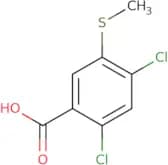
Formula:Cl3C6H2SO2ClPurezza:Min. 95%Peso molecolare:279.96 g/mol2,4-Dichloro-5-(methylsulfanyl)benzoic acid
CAS:Versatile small molecule scaffoldFormula:C8H6Cl2O2SPurezza:Min. 95%Peso molecolare:237.1 g/mol5-(4-Hydroxyphenyl) tetrazole
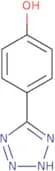
CAS:5-(4-Hydroxyphenyl) tetrazole is a hydrophobic ligand that has been shown to bind to cisplatin and therefore may have potential use in cancer therapy. It has also been used as an anti-inflammatory agent with the potential to inhibit prostaglandin synthesis. 5-(4-Hydroxyphenyl) tetrazole binds to hydrogen peroxide, which is a strong oxidizing agent and produces reactive oxygen species (ROS). ROS can cause DNA damage and lead to cell death by apoptosis or necrosis. 5-(4-Hydroxyphenyl) tetrazole reacts with cisplatin, which is a chemotherapeutic agent that is used in the treatment of various types of cancer. Cisplatin binds to DNA and prevents replication, leading to cell death. Hydrophobic ligands such as 5-(4-Hydroxyphenyl) tetrazole are able to bind more tightly than other ligands because
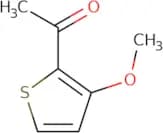
Formula:C7H6N4OPurezza:Min. 95%Peso molecolare:162.15 g/mol1-(3-Methoxythiophen-2-yl)ethan-1-one
CAS:Versatile small molecule scaffold
Formula:C7H8O2SPurezza:Min. 95%Peso molecolare:156.2 g/mol


![3-Bromobenzo[b]thiophen-5-ol](/_next/image/?url=https%3A%2Fstatic.cymitquimica.com%2Fproducts%2F3D%2Fthumb-webp%2FBEA49483.webp&w=3840&q=75)