Building Blocks
Sottocategorie di "Building Blocks"
- Acidi boronici e derivati dell'acido boronico(5.774 prodotti)
- Building Blocks Chirali(1.237 prodotti)
- Building Blocks Idrocarburici(6.098 prodotti)
- Building Blocks organici(60.980 prodotti)
Trovati 205158 prodotti di "Building Blocks"
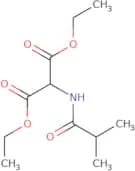
1,3-Diethyl 2-(2-methylpropanamido)propanedioate
CAS:Versatile small molecule scaffold
Formula:C11H19NO5Purezza:Min. 95%Peso molecolare:245.27 g/mol(2-Ethoxyethyl)urea
CAS:Versatile small molecule scaffold
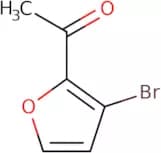
Formula:C5H12N2O2Purezza:Min. 95%Peso molecolare:132.16 g/mol1-(3-Bromofuran-2-yl)ethan-1-one
CAS:1-(3-Bromofuran-2-yl)ethan-1-one is a monoterpenoid that belongs to the family of indole alkaloids. It has been isolated from natural sources and can be synthesized in the laboratory. Indole alkaloids are biologically active compounds with a variety of uses. 1-(3-Bromofuran-2-yl)ethan-1-one has shown biological activities, including antiinflammatory and antimicrobial properties.
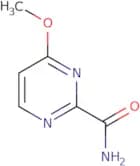
Formula:C6H5BrO2Purezza:Min. 95%Peso molecolare:189.01 g/mol4-Methoxypyrimidine-2-carboxamide
CAS:Versatile small molecule scaffold
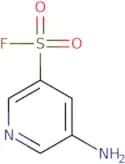
Formula:C6H7N3O2Purezza:Min. 95%Peso molecolare:153.14 g/mol5-Aminopyridine-3-sulfonyl fluoride
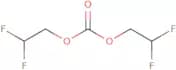
CAS:Versatile small molecule scaffoldFormula:C5H5FN2O2SPurezza:Min. 95%Peso molecolare:176.17 g/molBis(2,2-difluoroethyl) carbonate
CAS:Versatile small molecule scaffold
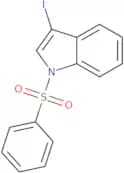
Formula:C5H6F4O3Purezza:Min. 95%Peso molecolare:190.09 g/mol3-Iodo-1-(phenylsulfonyl)indole
CAS:3-Iodo-1-(phenylsulfonyl)indole (3-ISI) is a ligand that is used to crystallize metal ions. 3-ISI binds to metal ions through interactions with the halide ion. The 3-ISI molecule has two phenylsulfonyl groups and one iodine atom, which are the sites of coordination to metal ions. Friedel-Crafts acylation reactions use 3-ISI as a ligand because it does not react with the catalyst or acid, but can be easily replaced by other ligands during the reaction. Parameters for determining its structure include X-ray crystallography, NMR spectroscopy, IR spectroscopy, and elemental analysis. The chloride anion in 3-ISI is able to form hydrogen bonds with other chloride anions in order to stabilize its structure.
3-ISI can be synthesized by reacting iodides with benzyl bromide and phosphorous pentFormula:C14H10INO2SPurezza:Min. 95%Peso molecolare:383.21 g/molN-([4-(2-Chlorophenoxy)phenyl]sulfonyl)leucine
CAS:Versatile small molecule scaffold
Formula:C18H20ClNO5SPurezza:Min. 95%Peso molecolare:397.9 g/molPent-1-yn-3-ol
CAS:Pent-1-yn-3-ol is a low molecular weight compound that is classified as an amide. It is an intermediate in the biosynthesis of fatty acids and primary alcohols from acetyl-CoA. Pent-1-yn-3-ol also alkylates amides in proteins, and can be used for the synthesis of magnetic nanoparticles. In order to determine the effects of mononuclear alkali metal ions on organisms, methyl ethyl was added to a mixture of 10 mM potassium hydroxide (KOH) and water. The pH was then adjusted to 4 with hydrochloric acid (HCl). A magnetic stir bar was placed in the flask, and the solution was mixed magnetically at room temperature. The growth rate of Drosophila melanogaster was monitored over time by measuring its wet weight.
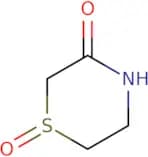
Formula:C5H8OPurezza:Min. 95%Peso molecolare:84.12 g/mol1λ⁴-Thiomorpholine-1,3-dione
CAS:Versatile small molecule scaffold
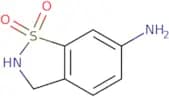
Formula:C4H7NO2SPurezza:Min. 95%Peso molecolare:133.17 g/mol1,1-Dioxo-2,3-dihydro-1,2-benzothiazol-6-amine
CAS:Versatile small molecule scaffold
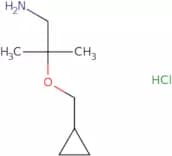
Formula:C7H8N2O2SPurezza:Min. 95%Peso molecolare:184.22 g/mol2-(Cyclopropylmethoxy)-2-methylpropan-1-amine hydrochloride
CAS:Versatile small molecule scaffold
Formula:C8H18ClNOPurezza:Min. 95%Peso molecolare:179.69 g/molSodium 1-[(4-chlorophenyl)methyl]-1H-pyrazolo[3,4-b]pyridine-5-carboxylate
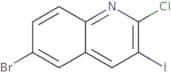
CAS:Versatile small molecule scaffoldFormula:C14H9ClN3NaO2Purezza:Min. 95%Peso molecolare:309.68 g/mol6-Bromo-2-chloro-3-iodoquinoline
CAS:Versatile small molecule scaffold
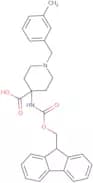
Formula:C9H4BrClINPurezza:Min. 95%Peso molecolare:368.39 g/mol4-(Fmoc-amino)-1-(3-Me-benzyl)-4-carboxypiperidine
CAS:Versatile small molecule scaffold
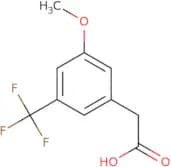
Formula:C29H30N2O4Purezza:Min. 95%Peso molecolare:470.6 g/mol3-Methoxy-5-(trifluoromethyl)phenylacetic acid
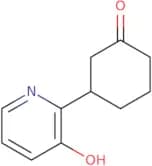
CAS:Versatile small molecule scaffoldFormula:C10H9F3O3Purezza:Min. 95%Peso molecolare:234.17 g/mol3-(3-Hydroxypyridin-2-yl)cyclohexan-1-one
CAS:Versatile small molecule scaffold
Formula:C11H13NO2Purezza:Min. 95%Peso molecolare:191.23 g/mol(2S)-3-(Boc-amino)-2-amino-1-propanol
CAS:Versatile small molecule scaffold
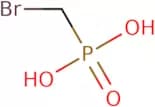
Formula:C8H18N2O3Purezza:Min. 95%Peso molecolare:190.24 g/mol(Bromomethyl)phosphonic acid
CAS:Bromomethylphosphonic acid is a molecule that contains a carbonyl group, aliphatic hydrocarbon and an aromatic hydrocarbon. When reacted with humans, the molecule can be found in the reaction solution. Bromomethylphosphonic acid has been shown to have chemical stability and is not affected by alcohol residue or nitro groups. It has also been observed to inhibit fatty acid synthesis and to inhibit the activity of animal enzymes such as carboxylesterases in animals. This compound has optical properties that are acidic and are used in pharmaceutical preparations.
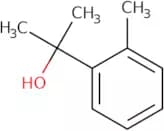
Formula:CH4BrO3PPurezza:Min. 95%Peso molecolare:174.92 g/mol2-(2-Methylphenyl)propan-2-ol
CAS:2-(2-Methylphenyl)propan-2-ol is an abiotic chemical that is used as a solvent for ethanol. It has been shown to be toxic to microalgae and fatty acids, by inhibiting the conversion of nitrate into nitrogen gas. 2-(2-Methylphenyl)propan-2-ol has also been shown to inhibit denitrification in the presence of nitrate and carbon sources. The mechanism of inhibition is unknown, but it may be due to the formation of an unidentified aromatic hydrocarbon that prevents nitrite reduction.
Formula:C10H14OPurezza:Min. 95%Peso molecolare:150.22 g/mol


![N-([4-(2-Chlorophenoxy)phenyl]sulfonyl)leucine](/_next/image/?url=https%3A%2Fstatic.cymitquimica.com%2Fproducts%2F3D%2Fthumb-webp%2FAKB90135.webp&w=3840&q=75)
![Sodium 1-[(4-chlorophenyl)methyl]-1H-pyrazolo[3,4-b]pyridine-5-carboxylate](/_next/image/?url=https%3A%2Fstatic.cymitquimica.com%2Fproducts%2F3D%2Fthumb-webp%2FJBD32709.webp&w=3840&q=75)