Building Blocks
Sottocategorie di "Building Blocks"
- Acidi boronici e derivati dell'acido boronico(5.784 prodotti)
- Building Blocks Chirali(1.244 prodotti)
- Building Blocks Idrocarburici(6.105 prodotti)
- Building Blocks organici(61.076 prodotti)
Trovati 205454 prodotti di "Building Blocks"
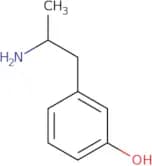
3-(2-Aminopropyl)phenol
CAS:Prodotto controllato3-(2-Aminopropyl)phenol is a water-soluble drug that has been used as a pharmaceutical dosage to treat symptoms of autoimmune diseases and heart tissue damage. 3-(2-Aminopropyl)phenol is commonly found in the form of its salt, 3-(2-aminopropyl)benzene sulfonic acid, which is used to treat congestive heart failure. The chemical ionization of 3-(2-aminopropyl)phenol has been used to identify protein genes that encode for enzymes involved in the production of inflammatory substances. 3-(2-Aminopropyl)phenol also has anti-inflammatory properties.
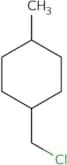
Formula:C9H13NOPurezza:Min. 95%Peso molecolare:151.21 g/mol1-(Chloromethyl)-4-methylcyclohexane
CAS:Versatile small molecule scaffold
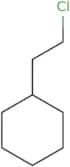
Formula:C8H15ClPurezza:Min. 95%Peso molecolare:146.66 g/mol(2-Chloroethyl)cyclohexane
CAS:Versatile small molecule scaffold
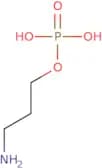
Formula:C8H15ClPurezza:Min. 95%Peso molecolare:146.66 g/molCyclophosphamide Related Compound C
CAS:Cyclophosphamide Related Compound C is a potent retinoic acid agonist. It is a white to yellowish crystalline compound, soluble in ether, acetone and chloroform. Cyclophosphamide Related Compound C has been shown to have skin care effects by reducing the production of sebum and regulating the production of melanin. It also has an anti-inflammatory effect on the skin by inhibiting prostaglandin synthesis. Cyclophosphamide Related Compound C also regulates the activity of retinoic acid receptors, which may be useful for treatment of acne or psoriasis.
Formula:C3H10NO4PPurezza:Min. 95%Peso molecolare:155.09 g/molMonoethyl Glutarate
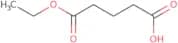
CAS:Monoethyl glutarate is a chemical compound that is used as an antimicrobial agent. It is soluble in water and has shown to have a broad spectrum of activity against bacteria, fungi, and algae. Monoethyl glutarate is also used as a pharmaceutical preparation in dry weight preparations and ionotropic gelation. The mechanism of action of this compound is not fully understood, but it has been shown to bind with naphthalene with the formation of a bicyclic heterocycle. This binding leads to the inhibition of enzymes such as fatty acid synthase, which are involved in the production of prostaglandins. Monoethyl glutarate may also act by forming an unsaturated alkyl group or by blocking the synthesis of fatty acids or phospholipids on the cell membrane surface.
Formula:C7H12O4Purezza:Min. 95%Peso molecolare:160.17 g/molIsobutyl 2-cyanoacrylate
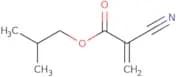
CAS:Isobutyl 2-cyanoacrylate is a monomer that has been used in the clinical setting for the repair of tissue defects. It is an alkyl ester of acrylic acid, which reacts with water to form an acrylate polymer. Isobutyl 2-cyanoacrylate can also be used as a tissue growth factor because it stimulates the growth and proliferation of cells. Isobutyl 2-cyanoacrylate has antimicrobial activity against Gram-positive bacteria and fungi. It has also shown anti-inflammatory properties and may be useful for embolization or angiography procedures.
Formula:C8H11NO2Purezza:Min. 95%Colore e forma:Clear LiquidPeso molecolare:153.18 g/molDiethyl (prop-1-yn-1-yl)phosphonate
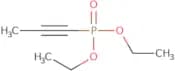
CAS:Diethyl (prop-1-yn-1-yl)phosphonate is an organic compound that belongs to the class of propargylic compounds. It is a colorless liquid with a boiling point of 56°C. Diethyl (prop-1-yn-1-yl)phosphonate can be used as a reagent for hydrozirconation and as an adduct in organic chemistry. This compound can be hydrolyzed to form diethyl phosphite, which has been shown to react with alcohols, amines, and thiols.
Formula:C7H13O3PPurezza:Min. 95%Peso molecolare:176.15 g/molethyl 1-benzyl-4-oxo-pyrrolidine-3-carboxylate
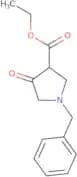
CAS:Versatile small molecule scaffold
Formula:C14H17NO3Purezza:Min. 95%Peso molecolare:247.29 g/mol1-Benzyl-2-phenylpyrrolidine
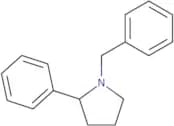
CAS:Versatile small molecule scaffold
Formula:C17H19NPurezza:Min. 95%Peso molecolare:237.34 g/mol2-Phenyl-1-(pyridin-4-yl)ethan-1-one
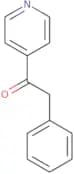
CAS:Versatile small molecule scaffold
Formula:C13H11NOPurezza:Min. 95%Peso molecolare:197.23 g/mol3-Chloro-6-cyclohexylaminopyridazine
CAS:Versatile small molecule scaffold
Formula:C10H14ClN3Purezza:Min. 95%Peso molecolare:211.7 g/mol2-Phenylpyrimidine-4-carbaldehyde
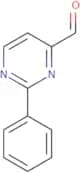
CAS:Versatile small molecule scaffold
Formula:C11H8N2OPurezza:Min. 95%Peso molecolare:184.19 g/moltrans-2-Nitrocinnamic Acid
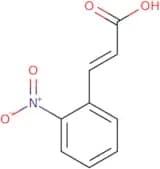
CAS:Trans-2-nitrocinnamic acid is an organic compound that belongs to the ester compounds group. It is a precursor to cinnamic acid derivatives, which are used in analytical chemistry and as reagents in synthetic chemistry. Trans-2-nitrocinnamic Acid can be obtained from the reaction of nitrobenzene with acetic anhydride and hydrochloric acid. The spectra of trans-2-nitrocinnamic acid are characterized by a single peak at δ 3.4 ppm for the protonated molecule, and two peaks at δ 4.0 and δ 5.3 ppm for the deprotonated molecule. Trans-2-Nitrocinnamic Acid has been shown to have genotoxic activity in human lymphocytes in vitro, although this activity was not observed in mice or hamster cells.
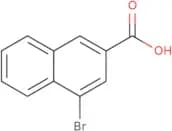
Formula:C9H7NO4Purezza:Min. 95%Peso molecolare:193.16 g/mol4-bromonaphthalene-2-carboxylic acid
CAS:4-Bromonaphthalene-2-carboxylic acid (4-BNCA) is a naphthalene derivative that is used as a starting material for the synthesis of binaphthyls and benzyne. 4-BNCA is a methyl ester that can be obtained from the reaction of 4-bromoaniline with formaldehyde and sodium hydroxide in ethanol. It has been shown to react with benzene, forming an adduct which is destabilized by acid methylation. This product has been used in the chemistry of cycloaddition reactions and aromaticity.
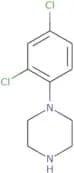
Formula:C11H7BrO2Purezza:Min. 95%Peso molecolare:251.1 g/mol1-(2,4-Dichlorophenyl)piperazine
CAS:Prodotto controllatoVersatile small molecule scaffold
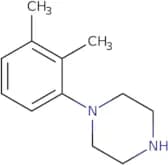
Formula:C10H12Cl2N2Purezza:Min. 95%Peso molecolare:231.12 g/mol1-(2,3-Dimethylphenyl)piperazine
CAS:Prodotto controllato1-(2,3-Dimethylphenyl)piperazine is a piperidine derivative that has been shown to have antidepressant activity in both in vitro and in vivo studies. It acts as an antagonist at the 5-HT1A receptor and as an agonist at the 5-HT2A receptor. 1-(2,3-Dimethylphenyl)piperazine has been shown to inhibit the production of dopamine, serotonin, and citric acid by inhibiting the enzyme citrate synthase. This drug also increases the concentration of chloride ions in cells. 1-(2,3-Dimethylphenyl)piperazine is used to treat depression, anxiety disorders, and other conditions that may be related to chemical imbalances of serotonin.
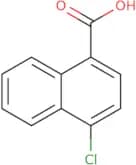
Formula:C12H18N2Purezza:Min. 95%Peso molecolare:190.29 g/mol4-Chloro-1-napthalenecarboxylic Acid
CAS:4-Chloro-1-naphthalenecarboxylic acid (4CNA) is a naphthalene derivative that can be used as a chlorinating agent. The optical rotation of 4CNA is -8 degrees in water and +10 degrees in acetonitrile. This compound has been shown to react with alkali metals to form metal salts, which are useful for the bioluminescent detection of DNA. 4CNA yields are increased by substituent effects, such as the introduction of an electron-withdrawing group on the ring, and decreased by electron donating groups on the ring. It also has been shown to have antirheumatic properties like salicylic acid, which is known to inhibit prostaglandin synthesis.
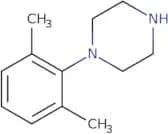
Formula:C11H7ClO2Purezza:Min. 95%Peso molecolare:206.63 g/mol1-(2,6-Dimethylphenyl)piperazine
CAS:Prodotto controllatoVersatile small molecule scaffold
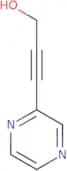
Formula:C12H18N2Purezza:Min. 95%Peso molecolare:190.28 g/mol3-(Pyrazin-2-yl)prop-2-yn-1-ol
CAS:Versatile small molecule scaffold
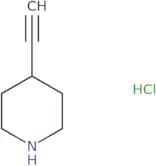
Formula:C7H6N2OPurezza:Min. 95%Peso molecolare:134.14 g/mol4-ethynylpiperidine hydrochloride
CAS:Versatile small molecule scaffold
Formula:C7H12ClNPurezza:Min. 95%Peso molecolare:145.6 g/mol