Building Blocks
Sottocategorie di "Building Blocks"
- Acidi boronici e derivati dell'acido boronico(5.774 prodotti)
- Building Blocks Chirali(1.237 prodotti)
- Building Blocks Idrocarburici(6.098 prodotti)
- Building Blocks organici(60.970 prodotti)
Trovati 205135 prodotti di "Building Blocks"
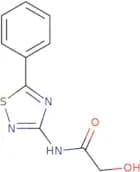
2-Hydroxy-N-(5-phenyl-1,2,4-thiadiazol-3-yl)acetamide
CAS:Versatile small molecule scaffoldFormula:C10H9N3O2SPurezza:Min. 95%Peso molecolare:235.26 g/mol1-[(3-Methyl-1,2,4-oxadiazol-5-yl)methyl]-1H-pyrazole-4-carboxylic acid
CAS:Versatile small molecule scaffold
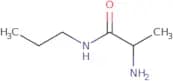
Formula:C8H8N4O3Purezza:Min. 95%Peso molecolare:208.17 g/mol2-Amino-N-propyl-DL-propanamide
CAS:Versatile small molecule scaffold
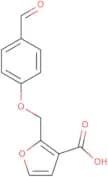
Formula:C6H14N2OPurezza:Min. 95%Peso molecolare:130.19 g/mol2-(4-Formylphenoxymethyl)furan-3-carboxylic acid
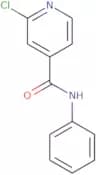
CAS:Versatile small molecule scaffoldFormula:C13H10O5Purezza:Min. 95%Peso molecolare:246.21 g/mol2-Chloro-N-phenylisonicotinamide
CAS:Versatile small molecule scaffold
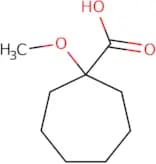
Formula:C12H9ClN2OPurezza:Min. 95%Peso molecolare:232.67 g/mol1-Methoxycycloheptane-1-carboxylic acid
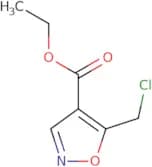
CAS:Versatile small molecule scaffoldFormula:C9H16O3Purezza:Min. 95%Peso molecolare:172.22 g/molEthyl 5-(chloromethyl)-1,2-oxazole-4-carboxylate
CAS:Versatile small molecule scaffoldFormula:C7H8ClNO3Purezza:Min. 95%Peso molecolare:189.59 g/mol4-Ethoxy-5H,6H,7H,8H-pyrido[4,3-d]pyrimidine
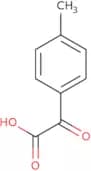
CAS:Versatile small molecule scaffoldFormula:C9H13N3OPurezza:Min. 95%Peso molecolare:179.22 g/mol(4-Methylphenyl)(oxo)acetic acid
CAS:(4-Methylphenyl)(oxo)acetic acid is a chlorinated compound that has a reactive functional group. This chemical is used as a reagent in organic synthesis and has been shown to be a useful additive in organic reactions involving chloride compounds. The reaction mechanism of this compound is that it reacts with the oxidant, dehydrogenative or surrogates such as acetonitrile and hydrogen peroxide, to produce the desired product. In addition, (4-methylphenyl)(oxo)acetic acid can also be used as an acylation agent in the synthesis of disulfides.
Formula:C9H8O3Purezza:Min. 95%Peso molecolare:164.16 g/mol2-{[(2-Chlorophenyl)amino]methyl}phenol
CAS:Versatile small molecule scaffold
Formula:C13H12ClNOPurezza:Min. 95%Peso molecolare:233.69 g/molEthyl (2E)-3-(2,6-difluorophenyl)prop-2-enoate
CAS:Versatile small molecule scaffoldFormula:C11H10F2O2Purezza:Min. 95%Peso molecolare:212.19 g/mol1-(4-bromo-2-methylphenyl)propan-1-one
CAS:Versatile small molecule scaffold
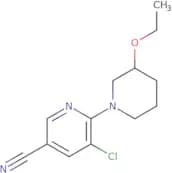
Formula:C10H11BrOPurezza:Min. 95%Peso molecolare:227.1 g/mol5-Chloro-6-(3-ethoxypiperidin-1-yl)pyridine-3-carbonitrile
CAS:Versatile small molecule scaffold
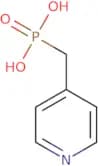
Formula:C13H16ClN3OPurezza:Min. 95%Peso molecolare:265.74 g/mol4-Pyridylmethylphosphonic acid
CAS:4-Pyridylmethylphosphonic acid is an inorganic compound that is a ligand for the metal Ruthenium. It is used in organic synthesis as a photosensitizer and a potentiometric titrant. The ligand binds to the metal through one or more of its oxygen atoms, forming a coordination complex. The bond cleavage reaction occurs when the molecule absorbs light of sufficient energy, causing it to break into two parts. 4-Pyridylmethylphosphonic acid is not very soluble in water and is therefore used as an electrolyte in potentiometric titrations. The pH of the solution will change depending on the concentration of the acid. 4-Pyridylmethylphosphonic acid can also be used as a catalyst for certain organic reactions such as esterification and transesterification reactions.
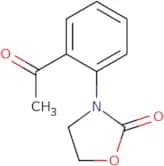
Formula:C6H8NO3PPurezza:Min. 95%Peso molecolare:173.11 g/mol3-(2-Acetylphenyl)-1,3-oxazolidin-2-one
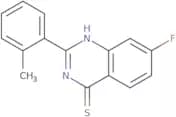
CAS:Versatile small molecule scaffoldFormula:C11H11NO3Purezza:Min. 95%Peso molecolare:205.21 g/mol7-Fluoro-2-(2-methylphenyl)quinazoline-4-thiol
CAS:Versatile small molecule scaffold
Formula:C15H11FN2SPurezza:Min. 95%Peso molecolare:270.3 g/mol4-(4-Chlorobutoxy)butan-1-ol
CAS:Prodotto controllatoVersatile small molecule scaffold
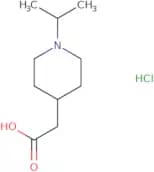
Formula:C8H17ClO2Purezza:Min. 95%Peso molecolare:180.67 g/mol2-(1-Isopropylpiperidin-4-yl)acetic acid hydrochloride
CAS:Versatile small molecule scaffoldFormula:C10H20ClNO2Purezza:Min. 95%Peso molecolare:221.72 g/mol6,8-Dimethoxyquinoline
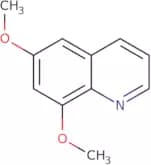
CAS:6,8-Dimethoxyquinoline is a quinoline derivative that has been used to synthesize a number of other drugs. It has shown activity against cancer cells in vitro and in vivo and has been shown to have an anticholinergic effect on the central nervous system. 6,8-Dimethoxyquinoline also inhibits bacterial growth and is active against Gram-positive bacteria such as Enterococcus faecalis, Staphylococcus aureus, Streptococcus pyogenes, and Bacillus subtilis. This compound binds to the enzyme carbonic anhydrase II with high affinity. The binding of 6,8-dimethoxyquinoline with carbonic anhydrase II prevents the conversion of CO2 into carbonic acid, which may lead to cell death by inhibiting respiration.
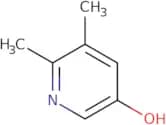
Formula:C11H11NO2Purezza:Min. 95%Peso molecolare:189.21 g/mol5,6-dimethylpyridin-3-ol
CAS:Versatile small molecule scaffold
Formula:C7H9NOPurezza:Min. 95%Peso molecolare:123.16 g/mol

![1-[(3-Methyl-1,2,4-oxadiazol-5-yl)methyl]-1H-pyrazole-4-carboxylic acid](/_next/image/?url=https%3A%2Fstatic.cymitquimica.com%2Fproducts%2F3D%2Fthumb-webp%2FFWB06495.webp&w=3840&q=75)
![4-Ethoxy-5H,6H,7H,8H-pyrido[4,3-d]pyrimidine](/_next/image/?url=https%3A%2Fstatic.cymitquimica.com%2Fproducts%2F3D%2Fthumb-webp%2FIAC65232.webp&w=3840&q=75)
![2-{[(2-Chlorophenyl)amino]methyl}phenol](/_next/image/?url=https%3A%2Fstatic.cymitquimica.com%2Fproducts%2F3D%2Fthumb-webp%2FHAA16637.webp&w=3840&q=75)