Building Blocks
Sottocategorie di "Building Blocks"
- Acidi boronici e derivati dell'acido boronico(5.778 prodotti)
- Building Blocks Chirali(1.243 prodotti)
- Building Blocks Idrocarburici(6.098 prodotti)
- Building Blocks organici(61.042 prodotti)
Trovati 204339 prodotti di "Building Blocks"
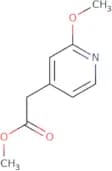
Methyl 2-(2-methoxypyridin-4-yl)acetate
CAS:Versatile small molecule scaffold
Formula:C9H11NO3Purezza:Min. 95%Peso molecolare:181.19 g/molN-Ethylcyclobutanamine hydrochloride
CAS:Versatile small molecule scaffoldFormula:C6H13NPurezza:Min. 95%Peso molecolare:99.17 g/mol5-Bromo-2,4-dimethoxypyridine
CAS:Versatile small molecule scaffold
Formula:C7H8BrNO2Purezza:Min. 95%Peso molecolare:218.05 g/mol2,4-Dichloro-6-(propan-2-yl)pyrimidine
CAS:Versatile small molecule scaffold
Formula:C7H8Cl2N2Purezza:Min. 95%Peso molecolare:191.05 g/molMethyl Pyridin-3-ylacetate
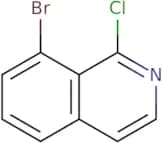
CAS:Methyl Pyridin-3-ylacetate is an organic compound that is the methyl ester of pyridine-3-carboxylic acid. It has a melting point of 197°C, with an ionization potential of 1.78 eV and a lactam. Methyl Pyridin-3-ylacetate has been shown to react with hydrochloric acid to form picric acid and methyl 3-(hydroxymethyl)pyridine-2,5-dicarboxylate. Methyl Pyridin-3-ylacetate can be used in the preparation of picrates, which are used in the synthesis of dyes and explosives such as picric acid and TNT. Methyl Pyridin-3-ylacetate can also be demethylated by heating with sodium methoxide to give methyl pyridine carboxylate.Formula:C8H9NO2Purezza:Min. 95%Peso molecolare:151.16 g/mol8-Bromo-1-chloroisoquinoline
CAS:Versatile small molecule scaffold
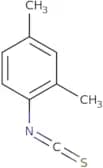
Formula:C9H5BrClNPurezza:Min. 95%Peso molecolare:242.5 g/mol2,4-Dimethylphenyl isothiocyanate
CAS:2,4-Dimethylphenyl isothiocyanate (DMIT) is a dipole molecule that has been used as a preservative and antimicrobial agent. DMIT has been shown to be an effective anti-microbial agent against Gram-positive bacteria such as Staphylococcus aureus, Enterococcus faecalis, and Streptococcus pyogenes. It also inhibits the growth of Gram-negative bacteria such as Escherichia coli, Pseudomonas aeruginosa, and Klebsiella pneumoniae. DMIT has been shown to be non-toxic to animals at high concentrations. It is also safe for use in food products because it does not react with polyunsaturated compounds.
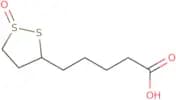
Formula:C9H9NSPurezza:Min. 95%Peso molecolare:163.24 g/mol5-(1-Oxodithiolan-3-yl)pentanoic acid
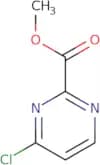
CAS:Please enquire for more information about 5-(1-Oxodithiolan-3-yl)pentanoic acid including the price, delivery time and more detailed product information at the technical inquiry form on this pageFormula:C8H14O3S2Purezza:Min. 95%Peso molecolare:222.3 g/molMethyl 4-chloropyrimidine-2-carboxylate
CAS:Versatile small molecule scaffoldFormula:C6H5ClN2O2Purezza:Min. 95%Peso molecolare:172.57 g/mol10-Oxooctadecanoic acid
CAS:Please enquire for more information about 10-Oxooctadecanoic acid including the price, delivery time and more detailed product information at the technical inquiry form on this pageFormula:C18H34O3Purezza:Min. 95%Peso molecolare:298.5 g/mol4-bromo-1H-imidazole-2-carbaldehyde
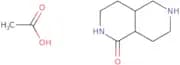
CAS:Versatile small molecule scaffoldFormula:C4H3BrN2OPurezza:Min. 95%Peso molecolare:175 g/molOctahydro-2,6-naphthyridin-1(2H)-one acetate
CAS:Prodotto controllatoPlease enquire for more information about Octahydro-2,6-naphthyridin-1(2H)-one acetate including the price, delivery time and more detailed product information at the technical inquiry form on this page
Formula:C8H14N2O•C2H4O2Purezza:Min. 95%Peso molecolare:214.26 g/mol3-Pyridineboronic acid
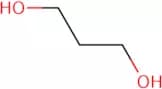
CAS:3-Pyridineboronic acid is an antimicrobial agent that is used to treat bacterial and fungal infections. 3-Pyridineboronic acid is a prodrug that is metabolized to its active form, pyridinium boronate. This drug has been shown to be effective in the treatment of hypoxic tumors in mice, which are resistant to other anticancer drugs. 3-Pyridineboronic acid also has acidic properties and can be used as an antiseptic for the treatment of skin and eye infections. It can also be used as a hydrogen bonding partner when combined with halides, such as chloride or bromide ions. The drug binds to human serum proteins and forms an acidic complex that prevents bacterial growth by inhibiting protein synthesis. 3-Pyridineboronic acid also inhibits prostate cancer cells by competitively inhibiting the enzyme 4-pyridinylboronic acid reductase (4PBAR).Formula:C5H6BNO2Purezza:Min. 95%Peso molecolare:122.92 g/mol1,3-Propanediol
CAS:aliphatic diol. It has been shown to have an inhibitory effect on bacterial growth
Formula:C3H8O2Purezza:Min. 95%Colore e forma:Colorless Clear LiquidPeso molecolare:76.09 g/mol4-{[(tert-butoxy)carbonyl]amino}bicyclo[2.2.2]octane-1-carboxylic acid
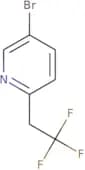
CAS:Versatile small molecule scaffoldFormula:C14H23NO4Purezza:Min. 95%Peso molecolare:269.3 g/mol5-Bromo-2-(2,2,2-trifluoroethyl)pyridine
CAS:Versatile small molecule scaffold
Formula:C7H5BrF3NPurezza:Min. 95%Peso molecolare:240.02 g/mol4-Phenyl-piperidine
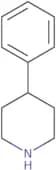
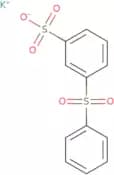
CAS:4-Phenyl-piperidine is a nitro compound that has been shown to be toxic for the kidneys and nervous system. 4-Phenyl-piperidine has been shown to inhibit dopamine uptake in the striatum and locomotor activity in rats. It also inhibits the hydrolysis of hydrochloric acid, which produces hydrogen ion (H+) ions, resulting in an acidic environment. The chemical structures of 4-phenyl-piperidine are similar to those of tricyclic antidepressants drugs, such as amitriptyline and imipramine, with a phenyl ring attached to an amine group. This drug is used as a pharmaceutical preparation for treating depression by inhibiting the reuptake of serotonin and norepinephrine, which are neurotransmitters that affect mood.Formula:C11H15NPurezza:Min. 95%Peso molecolare:161.24 g/molPotassium 3-(phenylsulfonyl)benzenesulfonate
CAS:Potassium 3-(phenylsulfonyl)benzenesulfonate is a chemical compound that is used as an anti-aging agent. It has been shown to reduce the viscosity of acrylonitrile, and is most effective when it is at a concentration of 1%. Potassium 3-(phenylsulfonyl)benzenesulfonate also reduces the strain on polymer fibers, which can be caused by temperatures or deionized water. The optimum temperature for this compound is about 50°C. Potassium 3-(phenylsulfonyl)benzenesulfonate does not have any adverse effects with other chemicals in the production process, and does not react with hexamethylenetetramine or aminopropyl naphthenate. This chemical also has a low cost and high tolerance for additives such as styrene or additives such as resistant
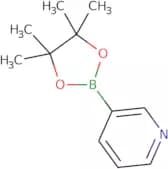
Formula:C12H9KO5S2Purezza:Min. 95%Colore e forma:PowderPeso molecolare:336.43 g/mol3-Pyridylboronic acid pinacol ester
CAS:3-Pyridylboronic acid pinacol ester is a versatile reagent that can be used in the synthesis of polymers with reactive functionalities. This compound is a crosslinker, which means that it reacts with two or more other molecules to form a covalent bond. 3-Pyridylboronic acid pinacol ester has been shown to react with ring-opening methacrylate monomers and expand their polymer backbone, which leads to an increase in the number of reactive groups on the chain. The introduction of 3-pyridylboronic acid pinacol ester can also introduce fluorescent units into polymers for use as probes for biological systems. There are many possible applications for this versatile reagent, including its use in the synthesis of imidazopyridine ligands.
Formula:C11H16BNO2Purezza:Min. 95%Colore e forma:PowderPeso molecolare:205.06 g/molRC-3095 trifluoroacetate
CAS:Please enquire for more information about RC-3095 trifluoroacetate including the price, delivery time and more detailed product information at the technical inquiry form on this pageFormula:C56H79N15O9•C2HF3O2Purezza:Min. 95%Peso molecolare:1,220.35 g/mol





![4-{[(tert-butoxy)carbonyl]amino}bicyclo[2.2.2]octane-1-carboxylic acid](/_next/image/?url=https%3A%2Fstatic.cymitquimica.com%2Fproducts%2F3D%2Fthumb-webp%2FNJB30476.webp&w=3840&q=75)