Building Blocks
Sottocategorie di "Building Blocks"
- Acidi boronici e derivati dell'acido boronico(5.780 prodotti)
- Building Blocks Chirali(1.241 prodotti)
- Building Blocks Idrocarburici(6.100 prodotti)
- Building Blocks organici(61.010 prodotti)
Trovati 205258 prodotti di "Building Blocks"
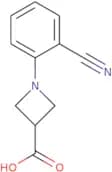
1-(2-Cyanophenyl)azetidine-3-carboxylic acid
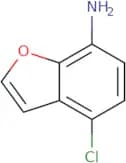
CAS:Versatile small molecule scaffoldFormula:C11H10N2O2Purezza:Min. 95%Peso molecolare:202.21 g/mol4-Chloro-1-benzofuran-7-amine
CAS:Versatile small molecule scaffold
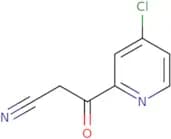
Formula:C8H6ClNOPurezza:Min. 95%Peso molecolare:167.59 g/mol3-(4-Chloropyridin-2-yl)-3-oxopropanenitrile
CAS:Versatile small molecule scaffold
Formula:C8H5ClN2OPurezza:Min. 95%Peso molecolare:180.59 g/mol3-(4-Ethylphenyl)piperidine
CAS:Versatile small molecule scaffold
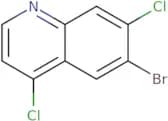
Formula:C13H19NPurezza:Min. 95%Peso molecolare:189.3 g/mol6-Bromo-4,7-dichloroquinoline
CAS:Versatile small molecule scaffold
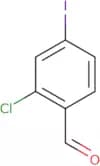
Formula:C9H4BrCl2NPurezza:Min. 95%Peso molecolare:276.94 g/mol2-Chloro-4-iodobenzaldehyde
CAS:Versatile small molecule scaffold
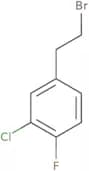
Formula:C7H4ClIOPurezza:Min. 95%Peso molecolare:266.46 g/mol4-(2-Bromoethyl)-2-chloro-1-fluorobenzene
CAS:Versatile small molecule scaffold
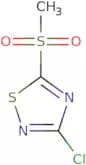
Formula:C8H7BrClFPurezza:Min. 95%Peso molecolare:237.5 g/mol3-Chloro-5-methanesulfonyl-1,2,4-thiadiazole
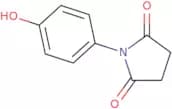
CAS:Versatile small molecule scaffoldFormula:C3H3ClN2O2S2Purezza:Min. 95%Peso molecolare:198.7 g/mol1-(4-Hydroxyphenyl)pyrrolidine-2,5-dione
CAS:Versatile small molecule scaffold
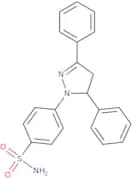
Formula:C10H9NO3Purezza:Min. 95%Peso molecolare:191.18 g/mol4-(3,5-Diphenyl-4,5-dihydro-1H-pyrazol-1-yl)benzenesulfonamide
CAS:Versatile small molecule scaffold
Formula:C21H19N3O2SPurezza:Min. 95%Peso molecolare:377.5 g/molRef: 3D-KAA17957
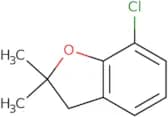
Prodotto fuori produzione7-Chloro-2,2-dimethyl-2,3-dihydro-1-benzofuran
CAS:Versatile small molecule scaffold
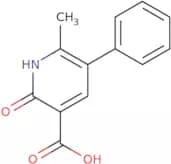
Formula:C10H11ClOPurezza:Min. 95%Peso molecolare:182.64 g/mol6-Methyl-2-oxo-5-phenyl-1,2-dihydropyridine-3-carboxylic acid
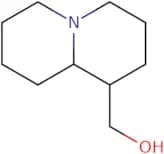
CAS:Versatile small molecule scaffoldFormula:C13H11NO3Purezza:Min. 95%Peso molecolare:229.23 g/mol(Octahydro-1H-quinolizin-1-yl)methanol
CAS:Versatile small molecule scaffold
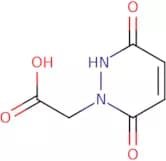
Formula:C10H19NOPurezza:Min. 95%Peso molecolare:169.26 g/mol(3-Hydroxy-6-oxo-6H-pyridazin-1-yl)-acetic acid
CAS:Versatile small molecule scaffold
Formula:C6H6N2O4Purezza:Min. 95%Peso molecolare:170.12 g/mol3-(4-Aminophenyl)-1-phenylurea
CAS:Versatile small molecule scaffold
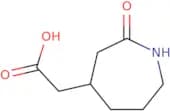
Formula:C13H13N3OPurezza:Min. 95%Peso molecolare:227.26 g/mol2-(2-Oxoazepan-4-yl)acetic acid
CAS:Versatile small molecule scaffold
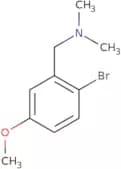
Formula:C8H13NO3Purezza:Min. 95%Peso molecolare:171.19 g/mol2-Bromo-5-methoxy-N,N-dimethylbenzylamine
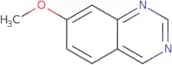
CAS:Versatile small molecule scaffoldFormula:C10H14BrNOPurezza:Min. 95%Peso molecolare:244.13 g/mol7-Methoxyquinazoline
CAS:7-Methoxyquinazoline is a heterocycle that is used as a medicine. It has been shown to inhibit the growth of epidermal cells, which may be due to its ability to inhibit the epidermal growth factor and epidermal growth receptor. 7-Methoxyquinazoline also inhibits tyrosine kinase, hexamethylenetetramine, and factor receptors. This drug selectively inhibits the enzyme activity of anilines, which are compounds that are involved in the synthesis of epidermal growth factor. The selectivity for this enzyme activity may be due to its hydration properties.
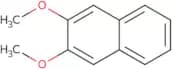
Formula:C9H8N2OPurezza:Min. 95%Peso molecolare:160.17 g/mol2,3-Dimethoxynaphthalene
CAS:2,3-Dimethoxynaphthalene is a crystalline solid with a molecular weight of 170.24 g/mol. It has a melting point of 150 °C and a boiling point of 313 °C, and it is soluble in organic solvents such as chloroform and ether. 2,3-Dimethoxynaphthalene is an electron donor that can coordinate to metals through sulfur atoms in sulfonated form. The crystal structure consists of alternating double bonds and single bonds, forming a hexagonal closed packed structure. 2,3-Dimethoxynaphthalene has been shown to be luminescent in the visible region of the electromagnetic spectrum due to its ability to emit light when excited by an external source.
Formula:C12H12O2Purezza:Min. 95%Peso molecolare:188.22 g/mol6-Hydroxyhexyl prop-2-enoate
CAS:6-Hydroxyhexyl prop-2-enoate is a fatty acid that is used as a biomarker for oxidative injury. It is also known to induce growth factor and reactive oxygen species (ROS) production in human serum, which can lead to inflammatory diseases. 6-Hydroxyhexyl prop-2-enoate has been shown to react with Toll-like receptors (TLRs), causing mitochondrial membrane potential changes and the release of proinflammatory cytokines. This compound has been used as a diagnostic marker for choroidal neovascularization, which is characterized by light exposure and an increase in growth factors such as vascular endothelial growth factor (VEGF).
Formula:C9H16O3Purezza:Min. 95%Peso molecolare:172.22 g/mol