Building Blocks
Sottocategorie di "Building Blocks"
- Acidi boronici e derivati dell'acido boronico(5.780 prodotti)
- Building Blocks Chirali(1.241 prodotti)
- Building Blocks Idrocarburici(6.100 prodotti)
- Building Blocks organici(61.010 prodotti)
Trovati 205258 prodotti di "Building Blocks"
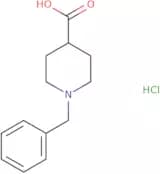
1-Benzylpiperidine-4-carboxylic acid hydrochloride
CAS:Versatile small molecule scaffoldFormula:C13H18ClNO2Purezza:Min. 95%Peso molecolare:255.74 g/mol5-Phenylpyridin-3-ol
CAS:5-Phenylpyridin-3-ol is an organic compound with the formula C8H6O. It is a white solid that is stable in air. 5-Phenylpyridin-3-ol reacts with bromoacetate to give formate, the reaction being catalyzed by base. The synthetic method involves the use of ethyl bromoacetate and ammonium formate in aqueous solution at room temperature.
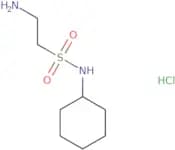
Formula:C11H9NOPurezza:Min. 95%Peso molecolare:171.19 g/mol2-Amino-N-cyclohexylethane-1-sulfonamide hydrochloride
CAS:Versatile small molecule scaffoldFormula:C8H19ClN2O2SPurezza:Min. 95%Peso molecolare:242.77 g/molMethyl N,N-bis(propan-2-yl)carbamate
CAS:Methyl N,N-bis(propan-2-yl)carbamate is a drug that can be used to treat reperfusion injury. It has been shown to protect the heart from reperfusion injury. Methyl N,N-bis(propan-2-yl)carbamate is an anticancer compound with physicochemical properties that make it suitable for intravenous administration. It inhibits the activity of formyl and other reactive oxygen species and attenuates the release of mitochondrial DNA into the cytosol. It also induces mitochondrial biogenesis by inhibiting the expression of p53 and caspase 9, which are apoptotic proteins in mitochondria.
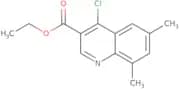
Methyl N,N-bis(propan-2-yl)carbamate can be used as a drug candidate for treating reperfusion injury due to its pharmacokinetic properties and ability to attenuate infarct size following reperfusion.Formula:C8H17NO2Purezza:Min. 95%Peso molecolare:159.23 g/molEthyl 4-chloro-6,8-dimethylquinoline-3-carboxylate
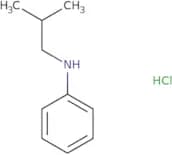
CAS:Versatile small molecule scaffoldFormula:C14H14ClNO2Purezza:Min. 95%Peso molecolare:263.72 g/molN-(2-Methylpropyl)aniline hydrochloride
CAS:Versatile small molecule scaffold
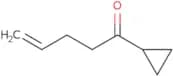
Formula:C10H16ClNPurezza:Min. 95%Peso molecolare:185.69 g/mol1-Cyclopropylpent-4-en-1-one
CAS:Versatile small molecule scaffold
Formula:C8H12OPurezza:Min. 95%Peso molecolare:124.18 g/mol1H,7H-[1,2,4]Triazolo[1,5-a]pyrimidin-7-one
CAS:Fluconazole is an oral antifungal drug that is used to treat a variety of fungal infections such as candida, cryptococcus, and histoplasmosis. It binds to the 14-alpha-demethylase enzyme in the fungal cell membrane and inhibits the synthesis of ergosterol, which is an essential component of the cell membrane. This prevents the formation of ergosterol crystals that are necessary for maintaining cell shape and function. Fluconazole has been shown to be effective against influenza virus and other viruses that use subunits similar to those found in fluconazole. Fluconazole also has antibacterial properties against bacteria such as Staphylococcus aureus and Streptococcus pneumonia. The pharmacokinetic properties of fluconazole have been studied using ethyl bromoacetate and carboxylate derivatives. Fluconazole has also been shown to inhibit methicillin-resistant Staphylococcus
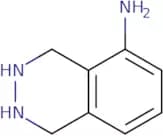
Formula:C5H4N4OPurezza:Min. 95%Peso molecolare:136.11 g/mol1,2,3,4-Tetrahydrophthalazin-5-amine
CAS:Versatile small molecule scaffold
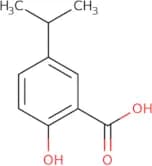
Formula:C8H11N3Purezza:Min. 95%Peso molecolare:149.19 g/mol2-Hydroxy-5-(propan-2-yl)benzoic acid
CAS:Versatile small molecule scaffold
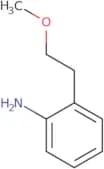
Formula:C10H12O3Purezza:Min. 95%Peso molecolare:180.2 g/mol2-(2-Methoxyethyl)aniline
CAS:2-(2-Methoxyethyl)aniline is a chemical compound with the chemical formula CH3OCH2NHCH2CH2SCl. It is a colorless, water-soluble liquid and has a pungent odor. 2-(2-Methoxyethyl)aniline reacts with trimethylamine to form trimethylammonium chloride. It also reacts with dimethyl sulfate to form dimethyl sulfate and methylamine. The reaction with hydrazine yields anilinohydrazide and methylated aniline, which can then be converted into borohydride or chlorotrimethylsilane by reacting it with lithium borohydride or chlorotrimethylsilane respectively.
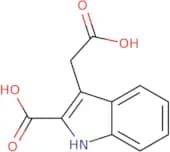
2-(2-Methoxyethyl)aniline is used in the synthesis of various organic compounds such as pharmaceuticals, dyes, pesticides, and perfumes.Formula:C9H13NOPurezza:Min. 95%Peso molecolare:151.21 g/mol3-(Carboxymethyl)-1H-indole-2-carboxylic acid
CAS:3-(Carboxymethyl)-1H-indole-2-carboxylic acid is an intramolecular cyclization reaction that involves the amination of a propanoic acid and a ring system. This reaction is analogous to the synthesis of 2,5-diaminopentane, which is also a cyclization of an amine to form a five-membered ring. The nmda receptor complex has been shown to be efficient in binding 3-(carboxymethyl)-1H-indole-2-carboxylic acid and other analogues of this compound. In addition, 3-(carboxymethyl)-1H-indole-2-carboxylic acid has shown affinity for the glycine site on the nmda receptor complex. The chemistry behind this drug is not well understood due to its complexity.
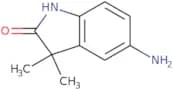
Formula:C11H9NO4Purezza:Min. 95%Peso molecolare:219.19 g/mol5-Amino-3,3-dimethyl-indolin-2-one
CAS:Versatile small molecule scaffold
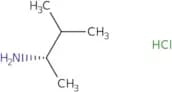
Formula:C10H12N2OPurezza:Min. 95%Peso molecolare:176.21 g/mol(S)-3-Methyl-2-butylamine Hydrochloride ee
CAS:Versatile small molecule scaffold
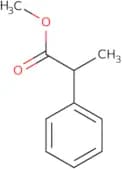
Formula:C5H14ClNPurezza:Min. 95%Peso molecolare:123.62 g/molMethyl 2-phenylpropanoate
CAS:Methyl 2-phenylpropanoate is the product of a lipase-catalyzed reaction between methanol and phenylacetic acid. The hydrolysis of the ester bond releases methanol, which can then react with another molecule of phenylacetic acid to form methyl 2-phenylpropanoate. Methyl 2-phenylpropanoate is a key intermediate in the synthesis of beta blockers, such as propranolol. It can also be used as an alternative to cyclopentane for synthesizing stereoisomers of cyclohexane. The reaction mechanism involves an activation energy that is kinetically favorable and has an asymmetric synthesis. The stereoselectivity of this reaction is due to the use of an acid catalyst and a chiral ligand.
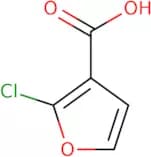
Formula:C10H12O2Purezza:Min. 95%Peso molecolare:164.2 g/mol2-chlorofuran-3-carboxylic acid
CAS:2-Chloro-3-carboxylic acid is a broad spectrum inhibitor of human herpesvirus 1 (HSV-1) and human herpesvirus 2 (HSV-2). It is a non-nucleoside inhibitor of DNA polymerases. The compound binds to the active site of the enzyme, preventing the formation of an active complex with the template strand. 2-Chloro-3-carboxylic acid inhibits both DNA polymerases and RNA polymerases. This antiviral drug has been shown to inhibit HSV replication in culture by 95%. 2C3CA has been shown to have high specificity for HSV type 1 and type 2, as well as for all other human DNA viruses, including adenoviruses and cytomegalovirus.
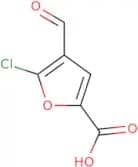
2C3CA is not active against other animal DNA viruses or bacterial DNA viruses.Formula:C5H3ClO3Purezza:Min. 95%Peso molecolare:146.53 g/mol5-Chloro-4-formylfuran-2-carboxylic acid
CAS:Versatile small molecule scaffoldFormula:C6H3ClO4Purezza:Min. 95%Peso molecolare:174.54 g/mol1,3-Diethyl-1,3-dimethylurea
CAS:Versatile small molecule scaffold
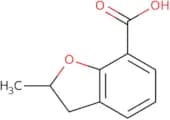
Formula:C7H16N2OPurezza:Min. 95%Peso molecolare:144.21 g/mol2-Methyl-2,3-dihydro-1-benzofuran-7-carboxylic acid
CAS:Versatile small molecule scaffold
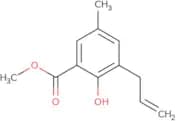
Formula:C10H10O3Purezza:Min. 95%Peso molecolare:178.18 g/molMethyl 2-hydroxy-5-methyl-3-(prop-2-en-1-yl)benzoate
CAS:Versatile small molecule scaffoldFormula:C12H14O3Purezza:Min. 95%Peso molecolare:206.24 g/mol



![1H,7H-[1,2,4]Triazolo[1,5-a]pyrimidin-7-one](/_next/image/?url=https%3A%2Fstatic.cymitquimica.com%2Fproducts%2F3D%2Fthumb-webp%2FGBA59208.webp&w=3840&q=75)