Building Blocks
Sottocategorie di "Building Blocks"
- Acidi boronici e derivati dell'acido boronico(5.780 prodotti)
- Building Blocks Chirali(1.239 prodotti)
- Building Blocks Idrocarburici(6.100 prodotti)
- Building Blocks organici(61.005 prodotti)
Trovati 205234 prodotti di "Building Blocks"
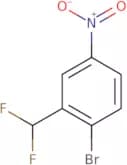
1-Bromo-2-(difluoromethyl)-4-nitrobenzene
CAS:Versatile small molecule scaffold
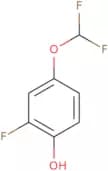
Formula:C7H4BrF2NO2Purezza:Min. 95%Peso molecolare:252.01 g/mol4-(Difluoromethoxy)-2-fluorophenol
CAS:Versatile small molecule scaffold
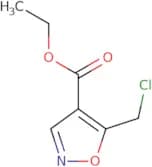
Formula:C7H5F3O2Purezza:Min. 95%Peso molecolare:178.11 g/molEthyl 5-(chloromethyl)-1,2-oxazole-4-carboxylate
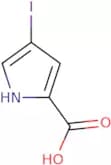
CAS:Versatile small molecule scaffoldFormula:C7H8ClNO3Purezza:Min. 95%Peso molecolare:189.59 g/mol4-Iodo-1H-pyrrole-2-carboxylic acid
CAS:4-Iodo-1H-pyrrole-2-carboxylic acid is a pyrrole derivative that has been shown to have cancer cell growth inhibition properties. It inhibits the production of RNA and DNA in lung cancer cells, which may be due to its ability to inhibit the activity of polymerase II. 4-Iodo-1H-pyrrole-2-carboxylic acid also inhibits the growth of human leukemia and breast cancer cells, as well as fungal cells. This compound has been synthesized by incubating a solution containing 4I with rumbrin, an extract from the bark of Rhus verniciflua, for two hours at room temperature.
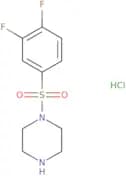
Formula:C5H4INO2Purezza:Min. 95%Peso molecolare:237 g/mol1-(3,4-Difluorobenzenesulfonyl)piperazine hydrochloride
CAS:Versatile small molecule scaffold
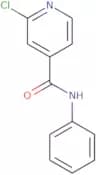
Formula:C10H13ClF2N2O2SPurezza:Min. 95%Peso molecolare:298.74 g/mol2-Chloro-N-phenylisonicotinamide
CAS:Versatile small molecule scaffold
Formula:C12H9ClN2OPurezza:Min. 95%Peso molecolare:232.67 g/mol1-Cyclopropyl-2-(2-nitrophenyl)ethan-1-one
CAS:Versatile small molecule scaffold
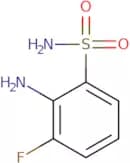
Formula:C11H11NO3Purezza:Min. 95%Peso molecolare:205.21 g/mol2-Amino-3-fluorobenzene-1-sulfonamide
CAS:Versatile small molecule scaffold
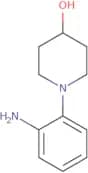
Formula:C6H7FN2O2SPurezza:Min. 95%Peso molecolare:190.2 g/mol1-(2-Aminophenyl)-4-piperidinol
CAS:Versatile small molecule scaffold
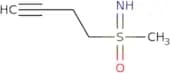
Formula:C11H16N2OPurezza:Min. 95%Peso molecolare:192.26 g/mol4-(S-Methylsulfonimidoyl)but-1-yne
CAS:Versatile small molecule scaffold
Formula:C5H9NOSPurezza:Min. 95%Peso molecolare:131.2 g/mol2-{[(9H-Fluoren-9-ylmethoxy)carbonyl]amino}-2-[3-(trifluoromethyl)phenyl]acetic acid
CAS:Versatile small molecule scaffold
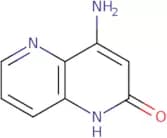
Formula:C24H18F3NO4Purezza:Min. 95%Peso molecolare:441.4 g/mol4-Amino-1,5-naphthyridin-2-ol
CAS:Versatile small molecule scaffold
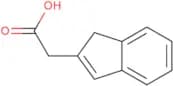
Formula:C8H7N3OPurezza:Min. 95%Peso molecolare:161.16 g/mol2-(1H-Inden-2-yl)acetic acid
CAS:Versatile small molecule scaffold
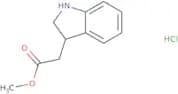
Formula:C11H10O2Purezza:Min. 95%Peso molecolare:174.2 g/molMethyl 2-(2,3-dihydro-1H-indol-3-yl)acetate hydrochloride
CAS:Versatile small molecule scaffold
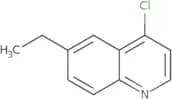
Formula:C11H14ClNO2Purezza:Min. 95%Peso molecolare:227.7 g/mol4-Chloro-6-ethylquinoline
CAS:4-Chloro-6-ethylquinoline is a potential anticancer drug that inhibits the function of lysosomal enzymes and causes tumor cells to undergo necrosis. This drug has been shown to inhibit the growth of tumor cells in cell cultures, as well as in hypoxic tumor models. 4-Chloro-6-ethylquinoline inhibits the activity of lysosomal enzymes, which are necessary for the degradation and recycling of macromolecules and other substances within cells. It also binds to proteins on the surface of tumor cells, which prevents these proteins from functioning properly. The uptake of this drug is greater in extravascular tumor tissues than in blood vessels or normal tissue. In addition, it is taken up by tumor cells more readily than by normal cells. 4-Chloro-6-ethylquinoline binds with cytotoxins, causing them to become more cytotoxic and effective against cancerous cells. This compound has been shown to have medicinal
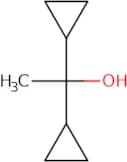
Formula:C11H10ClNPurezza:Min. 95%Peso molecolare:191.65 g/mol1,1-Dicyclopropylethan-1-ol
CAS:Versatile small molecule scaffold
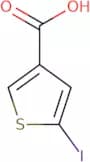
Formula:C8H14OPurezza:Min. 95%Peso molecolare:126.2 g/mol5-Iodothiophene-3-carboxylic acid
CAS:Versatile small molecule scaffold
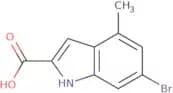
Formula:C5H3IO2SPurezza:Min. 95%Peso molecolare:254.05 g/mol6-Bromo-4-methyl-1H-indole-2-carboxylic acid
CAS:Versatile small molecule scaffold
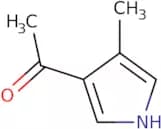
Formula:C10H8BrNO2Purezza:Min. 95%Peso molecolare:254.08 g/mol1-(4-Methyl-1H-pyrrol-3-yl)ethanone
CAS:1-(4-Methyl-1H-pyrrol-3-yl)ethanone is a metabolite of eupenicillium, which is found in the bark of several species of conifer trees. This natural product has been shown to be biogenetically related to the biosynthesis of nitrogenous compounds and has been identified in various plant tissues as a secondary metabolite. 1-(4-Methyl-1H-pyrrol-3-yl)ethanone has also been shown to have antibiotic activity against gram positive bacteria such as Bacillus subtilis, Staphylococcus aureus, and Streptococcus pyogenes.
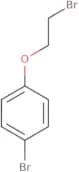
Formula:C7H9NOPurezza:Min. 95%Peso molecolare:123.15 g/mol1-Bromo-4-(2-bromoethoxy)benzene
CAS:1-Bromo-4-(2-bromoethoxy)benzene is a benzoic acid derivative that is used as a building block for the synthesis of combinatorial libraries. It is soluble in water, alcohols and ethers, and it can be dissolved in chloroform. This compound was synthesized by the hydroxy group of an amino acid to provide a non-peptide molecule. 1-Bromo-4-(2-bromoethoxy)benzene has shown to inhibit the growth of methicillin resistant Staphylococcus aureus (MRSA), which may be due to its ability to inhibit protein synthesis.
Formula:C8H8Br2OPurezza:Min. 95%Peso molecolare:279.96 g/mol


![2-{[(9H-Fluoren-9-ylmethoxy)carbonyl]amino}-2-[3-(trifluoromethyl)phenyl]acetic acid](/_next/image/?url=https%3A%2Fstatic.cymitquimica.com%2Fproducts%2F3D%2Fthumb-webp%2FDCB99114.webp&w=3840&q=75)