Building Blocks
Sottocategorie di "Building Blocks"
- Acidi boronici e derivati dell'acido boronico(5.784 prodotti)
- Building Blocks Chirali(1.242 prodotti)
- Building Blocks Idrocarburici(6.105 prodotti)
- Building Blocks organici(61.065 prodotti)
Trovati 205418 prodotti di "Building Blocks"
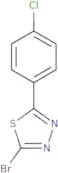
2-Bromo-5-(4-chlorophenyl)-1,3,4-thiadiazole
CAS:Versatile small molecule scaffoldFormula:C8H4BrClN2SPurezza:Min. 95%Peso molecolare:275.55 g/mol5-(Butan-2-yl)cyclohexane-1,3-dione
CAS:Versatile small molecule scaffold
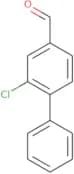
Formula:C10H16O2Purezza:Min. 95%Peso molecolare:168.23 g/mol3-Chloro-4-phenylbenzaldehyde
CAS:Versatile small molecule scaffold
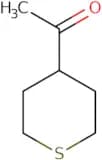
Formula:C13H9ClOPurezza:Min. 95%Peso molecolare:216.66 g/mol1-(Thian-4-yl)ethan-1-one
CAS:Versatile small molecule scaffold
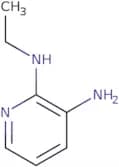
Formula:C7H12OSPurezza:Min. 95%Peso molecolare:144.24 g/mol2-N-Ethylpyridine-2,3-diamine
CAS:2-N-Ethylpyridine-2,3-diamine is a small molecule inhibitor that binds to the ATP binding site of HIV reverse transcriptase and inhibits its activity. It has been shown to inhibit the proliferation of human tumor cells in culture. This compound also prevents the formation of new virus particles and leads to a decrease in viral load. 2-N-Ethylpyridine-2,3-diamine does not bind to the same site as nevirapine, but instead binds to a different amino acid residue on the reverse transcriptase enzyme called Y181C. Residues at this location are found in all HIV strains resistant to nevirapine.
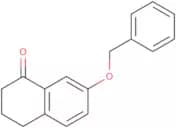
Formula:C7H11N3Purezza:Min. 95%Peso molecolare:137.18 g/mol7-(Benzyloxy)-3,4-dihydronaphthalen-1(2H)-one
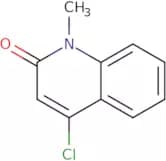
CAS:7-(Benzyloxy)-3,4-dihydronaphthalen-1(2H)-one is a tricyclic carboxamide that belongs to the carboxylic acid group. It has a constant boiling point and an acidic pH. 7-(Benzyloxy)-3,4-dihydronaphthalen-1(2H)-one is soluble in water and dilute acids. It has been shown that the melting point of 7-(Benzyloxy)-3,4-dihydronaphthalen-1(2H)-one is not affected by dilution or experiments. The chemical compounds are made up of benzoic acid and carboxylic acid groups that form a six-membered ring with two heterocycles on either side of the molecule.Formula:C17H16O2Purezza:Min. 95%Peso molecolare:252.31 g/mol4-Chloro-1-methylquinolin-2(1H)-one
CAS:4-Chloro-1-methylquinolin-2(1H)-one is a molecule with analgesic activity. It has been shown to produce analgesia in the rat tail flick and hot plate tests, as well as anti-nociceptive effects in the mouse formalin test. The analgesic effect of 4-chloro-1-methylquinolin-2(1H)-one is thought to be due to its ability to inhibit the release of excitatory neurotransmitters from peripheral sensory neurons. This molecule has also been shown to have anti-inflammatory properties and is an intermediate for the synthesis of other drugs, such as diclofenac sodium.
Formula:C10H8ClNOPurezza:Min. 95%Peso molecolare:193.63 g/mol6-Chloro-2,3,4,9-tetrahydro-1H-carbazol-3-ol
CAS:Versatile small molecule scaffold
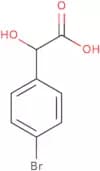
Formula:C12H12ClNOPurezza:Min. 95%Peso molecolare:221.68 g/mol(R)-4-Bromomandelic acid
CAS:Versatile small molecule scaffold
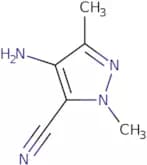
Formula:C8H7BrO3Purezza:Min. 95%Peso molecolare:231.04 g/mol4-Amino-1,3-dimethyl-1H-pyrazole-5-carbonitrile
CAS:Versatile small molecule scaffold
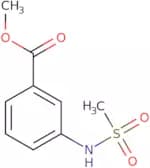
Formula:C6H8N4Purezza:Min. 95%Peso molecolare:136.15 g/molMethyl 3-methanesulfonamidobenzoate
CAS:Methyl 3-methanesulfonamidobenzoate is an organic compound that is used as a reagent in organic synthesis. It has the chemical formula CH3O2C(CH2)2SO2CH=NOH. Methyl 3-methanesulfonamidobenzoate is a methyl ester of benzoic acid, which is also known as methyl benzoate. This compound has been shown to react with DNA, forming adducts with guanine and cytosine bases.
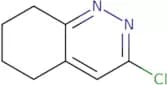
Formula:C9H11NO4SPurezza:Min. 95%Peso molecolare:229.26 g/mol3-Chloro-5,6,7,8-tetrahydrocinnoline
CAS:Versatile small molecule scaffold
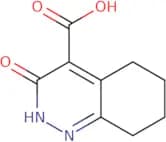
Formula:C8H9ClN2Purezza:Min. 95%Peso molecolare:168.62 g/mol3-Oxo-2,3,5,6,7,8-hexahydrocinnoline-4-carboxylic acid
CAS:Versatile small molecule scaffold
Formula:C9H10N2O3Purezza:Min. 95%Peso molecolare:194.2 g/mol2-Methyl-6-[(1,1,1-trifluoropropan-2-yl)oxy]pyridine-3-carbonitrile
CAS:Versatile small molecule scaffold
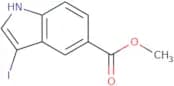
Formula:C10H9F3N2OPurezza:Min. 95%Peso molecolare:230.19 g/molMethyl 3-iodo-1H-indole-5-carboxylate
CAS:Versatile small molecule scaffoldFormula:C10H8INO2Purezza:Min. 95%Peso molecolare:301.08 g/mol3-Nitro-6,7,8,9-tetrahydro-5H-benzo[7]annulen-5-one
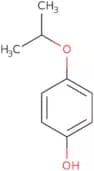
CAS:Versatile small molecule scaffoldFormula:C11H11NO3Purezza:Min. 95%Peso molecolare:205.21 g/mol4-Isopropoxyphenol
CAS:4-Isopropoxyphenol is a reactive molecule that can undergo nucleophilic attack. It is an intermediate in the reaction mechanism of phenolic antioxidants, such as salicylaldoxime and mequinol. 4-Isopropoxyphenol is synthesized by the condensation of anilines with phenols, followed by acid hydrolysis. The nature of 4-isopropoxyphenol is primarily nucleophilic, making it a potential candidate for optimization or predictive modelling.
Formula:C9H12O2Purezza:Min. 95%Peso molecolare:152.19 g/molN-[3-(Dimethylamino)phenyl]acetamide
CAS:Versatile small molecule scaffold
Formula:C10H14N2OPurezza:Min. 95%Peso molecolare:178.23 g/molDiaminophosphoryloxybenzene
CAS:Diaminophosphoryloxybenzene (DAPOB) is a chemical that can be used to measure the uptake of creatine kinase in human serum. It has been shown to form a complex with the enzyme, which is then transported into cells. The uptake of creatine kinase in the cells can be measured by measuring the amount of DAPOB that is released from the inside of the cells and into the surrounding medium. In order to use this technique, a collagen gel needs to be prepared and placed around the sample containing DAPOB. The kinetic properties of DAPOB are determined by observing how quickly it reacts with other chemicals in solution. DAPOB also forms intramolecular hydrogen bonds with itself, which may affect its ability to react with other compounds. X-ray crystal structures have revealed that DAPOB binds to protein synthesis enzymes such as polymerase chain reaction (PCR). These interactions are thought to be important for understanding how DAPOB affects protein
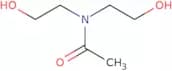
Formula:C6H9N2O2PPurezza:Min. 95%Colore e forma:PowderPeso molecolare:172.12 g/molN,N-Bis(2-hydroxyethyl)acetamide
CAS:N,N-Bis(2-hydroxyethyl)acetamide is a nonionic surfactant which is used as an emulsifier and dispersing agent. It is often used in detergents, textile processing, papermaking, and for the production of cosmetics. N,N-Bis(2-hydroxyethyl)acetamide has been shown to suppress the growth of Candida parapsilosis and other microbial strains. It also inhibits the production of fluconazole by wild-type Candida albicans. N,N-Bis(2-hydroxyethyl)acetamide may be used in conjunction with benzyl alcohol as an antifungal agent for topical application.br>br>NMR spectra have shown that this molecule has acetal groups that can copolymerize with other molecules. These acetal groups are resistant to degradation by enzymes such as beta-glucosidase and alpha-amylase.
Formula:C6H13NO3Purezza:Min. 95%Peso molecolare:147.17 g/mol



![2-Methyl-6-[(1,1,1-trifluoropropan-2-yl)oxy]pyridine-3-carbonitrile](/_next/image/?url=https%3A%2Fstatic.cymitquimica.com%2Fproducts%2F3D%2Fthumb-webp%2FHAD75990.webp&w=3840&q=75)
![3-Nitro-6,7,8,9-tetrahydro-5H-benzo[7]annulen-5-one](/_next/image/?url=https%3A%2Fstatic.cymitquimica.com%2Fproducts%2F3D%2Fthumb-webp%2FHAA50793.webp&w=3840&q=75)
![N-[3-(Dimethylamino)phenyl]acetamide](/_next/image/?url=https%3A%2Fstatic.cymitquimica.com%2Fproducts%2F3D%2Fthumb-webp%2FHAA47495.webp&w=3840&q=75)