Building Blocks
Sottocategorie di "Building Blocks"
- Acidi boronici e derivati dell'acido boronico(5.780 prodotti)
- Building Blocks Chirali(1.240 prodotti)
- Building Blocks Idrocarburici(6.100 prodotti)
- Building Blocks organici(61.009 prodotti)
Trovati 205248 prodotti di "Building Blocks"
2-[(2-Methylphenyl)amino]benzonitrile
CAS:Versatile small molecule scaffold
Formula:C14H12N2Purezza:Min. 95%Peso molecolare:208.26 g/mol3-Methylfuran-2-carbohydrazide
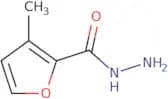
CAS:Versatile small molecule scaffold
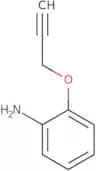
Formula:C6H8N2O2Purezza:Min. 95%Peso molecolare:140.14 g/mol2-(2-Propyn-1-yloxy)aniline
CAS:Versatile small molecule scaffold
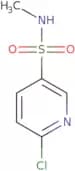
Formula:C9H9NOPurezza:Min. 95%Peso molecolare:147.17 g/mol6-Chloro-N-methylpyridine-3-sulfonamide
CAS:Versatile small molecule scaffold
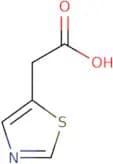
Formula:C6H7ClN2O2SPurezza:Min. 95%Peso molecolare:206.65 g/mol2-(Thiazol-5-yl)acetic acid
CAS:2-(Thiazol-5-yl)acetic acid is an antimicrobial that is used as a fungicide. It has been shown to inhibit the growth of Fusarium and Curvularia. 2-(Thiazol-5-yl)acetic acid also has fungicidal activity against Refluxing, butanoic acid, and Oxysporum. This compound has been found to be effective against fungi in a number of different studies. 2-(Thiazol-5-yl)acetic acid inhibits the synthesis of ribosomes by inhibiting mRNA translation, leading to cell death by inhibition of protein synthesis.
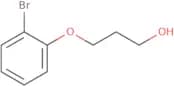
Formula:C5H5NO2SPurezza:Min. 95%Peso molecolare:143.16 g/mol3-(2-Bromophenoxy)propan-1-ol
CAS:Versatile small molecule scaffold
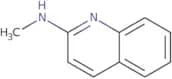
Formula:C9H11BrO2Purezza:Min. 95%Peso molecolare:231.09 g/molN-Methylquinolin-2-amine
CAS:N-Methylquinolin-2-amine is a quinoline derivative that binds to the fatty acid ester of amides, which are found on the surface of cells. It has high specificity for hydroxy groups and is operational in aqueous solutions. N-Methylquinolin-2-amine has been shown to have activity against Alzheimer's disease by binding to the fatty acid ester of amide and blocking the function of ligands. The reaction time can be reduced by adding hydroxy group and alkyl group to the molecule. A molecular orbital diagram shows how this compound reacts with an amide substrate. This drug can be used as a diagnostic or postoperative treatment for Alzheimer's disease.
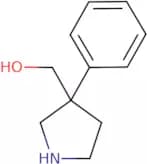
Formula:C10H10N2Purezza:Min. 95%Peso molecolare:158.2 g/mol(3-Phenylpyrrolidin-3-yl)methanol
CAS:Versatile small molecule scaffold
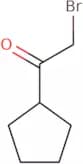
Formula:C11H15NOPurezza:Min. 95%Peso molecolare:177.24 g/mol2-bromo-1-cyclopentylethan-1-one
CAS:2-bromo-1-cyclopentylethan-1-one is a racemic mixture of two enantiomers, 2-bromo-1-(2-methylpropyl)ethanone and 1-(2-methylpropyl)-2-(phenyl)ethanone. The compound has been shown to inhibit cell proliferation in vitro and has been used in the treatment of allergies without any observed side effects. This drug may act by inhibition of the synthesis of L-amino acids or vitamin B6, which are required for cell division. It may also have an effect on alkylating DNA, leading to inhibition of protein synthesis.
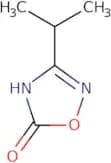
Formula:C7H11BrOPurezza:Min. 95%Peso molecolare:191.07 g/mol3-(Propan-2-yl)-1,2,4-oxadiazol-5-ol
CAS:Versatile small molecule scaffold
Formula:C5H8N2O2Purezza:Min. 95%Peso molecolare:128.13 g/mol7-Chloro-[1,2,4]triazolo[1,5-a]pyrimidine
CAS:Versatile small molecule scaffold
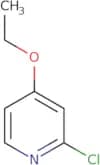
Formula:C5H3ClN4Purezza:Min. 95%Peso molecolare:154.56 g/mol2-chloro-4-ethoxypyridine
CAS:Versatile small molecule scaffold
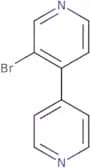
Formula:C7H8ClNOPurezza:Min. 95%Peso molecolare:157.6 g/mol3-Bromo-4-(pyridin-4-yl)pyridine
CAS:Versatile small molecule scaffold
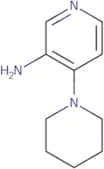
Formula:C10H7BrN2Purezza:Min. 95%Peso molecolare:235.08 g/mol4-(1-Piperidyl)pyridin-3-amine
CAS:Versatile small molecule scaffold
Formula:C10H15N3Purezza:Min. 95%Peso molecolare:177.24 g/molBenzyl Methyl Malnonate
CAS:Benzyl Methyl Malnonate (BMM) is a polycarboxylic acid that has an inhibitory effect on the receptor binding of inorganic acids. It is used as a solid catalyst for the oxidative carbonylation of olefins and dienes. BMM can also be used to prepare heterocycles by the reaction of an active methylene with malonic acid and fluorine. The hydroxyl group on the benzyl methyl malonate molecule can undergo thermally induced oxidative carbonylation, which produces benzoic acid and formaldehyde.
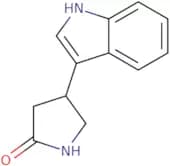
Formula:C11H12O4Purezza:Min. 95%Peso molecolare:208.21 g/mol4-(1H-Indol-3-yl)pyrrolidin-2-one
CAS:Versatile small molecule scaffold
Formula:C12H12N2OPurezza:Min. 95%Peso molecolare:200.24 g/mol1-{1,4-Dioxaspiro[4.5]decan-8-yl}-1H-imidazole
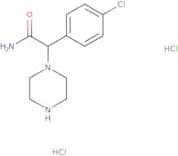
CAS:Versatile small molecule scaffoldFormula:C11H16N2O2Purezza:Min. 95%Peso molecolare:208.26 g/mol2-(4-Chlorophenyl)-2-(piperazin-1-yl)acetamide dihydrochloride
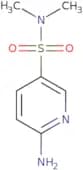
CAS:Versatile small molecule scaffoldFormula:C12H18Cl3N3OPurezza:Min. 95%Peso molecolare:326.6 g/mol6-Amino-N,N-dimethylpyridine-3-sulfonamide
CAS:Versatile small molecule scaffoldFormula:C7H11N3O2SPurezza:Min. 95%Peso molecolare:201.25 g/mol2-(Ethoxycarbonyl)butanoic acid
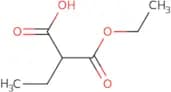
CAS:2-(Ethoxycarbonyl)butanoic acid is a solvate of ethoxycarbonyl butanoic acid. It is a weak antibiotic that inhibits bacterial growth by binding to the 50S ribosomal subunit. This active form is metabolized through a number of metabolic transformations, including hydrolysis by esterases or glucuronidases, oxidation by cytochrome P450 enzymes, reduction by glutathione reductase, or conjugation with glucuronic acid. 2-(Ethoxycarbonyl)butanoic acid has been shown to be effective in the treatment of tuberculosis and other mycobacterial infections. It is also used as an antifungal agent against Candida albicans and Cryptococcus neoformans. 2-(Ethoxycarbonyl)butanoic acid binds to DNA-dependent RNA polymerase and prevents transcription and replication, which leads to cell death in susceptible bacteria.
Formula:C7H12O4Purezza:Min. 95%Peso molecolare:160.17 g/mol
![2-[(2-Methylphenyl)amino]benzonitrile](/_next/image/?url=https%3A%2Fstatic.cymitquimica.com%2Fproducts%2F3D%2Fthumb-webp%2FCCA57772.webp&w=3840&q=75)

![7-Chloro-[1,2,4]triazolo[1,5-a]pyrimidine](/_next/image/?url=https%3A%2Fstatic.cymitquimica.com%2Fproducts%2F3D%2Fthumb-webp%2FCCA34191.webp&w=3840&q=75)

![1-{1,4-Dioxaspiro[4.5]decan-8-yl}-1H-imidazole](/_next/image/?url=https%3A%2Fstatic.cymitquimica.com%2Fproducts%2F3D%2Fthumb-webp%2FCAC60749.webp&w=3840&q=75)