Building Blocks
Sottocategorie di "Building Blocks"
- Ácidos Borónicos e Derivados de Ácido Borónico(5.780 prodotti)
- Building Blocks Quirais(1.241 prodotti)
- Building Blocks Hidrocarbonetos(6.100 prodotti)
- Building Blocks orgânicos(61.024 prodotti)
Trovati 205297 prodotti di "Building Blocks"
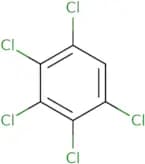
1,2,3,4,5-Pentachlorobenzene
CAS:1,2,3,4,5-Pentachlorobenzene is a chlorinated hydrocarbon that is used in the production of pesticides and herbicides. It is an ingredient in the manufacturing of pentachlorophenol and pentachloronitrobenzene. 1,2,3,4,5-Pentachlorobenzene has been used as a chemical intermediate or solvent for the production of other chemicals. The emissions from this chemical can be harmful to humans and animals because it has been shown to affect enzyme activities at sublethal doses. It also affects rat liver microsomes and causes DNA damage that can lead to cancer.
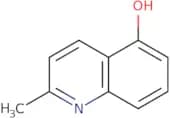
Formula:C6HCl5Purezza:Min. 95%Peso molecolare:250.34 g/mol2-Methylquinolin-5-ol
CAS:2-Methylquinolin-5-ol is a synthetic drug that is structurally similar to serotonin and has been shown to inhibit 5-HT1A receptors. It has been shown to have dilution method as its mode of action, which leads to an inhibition of the reuptake of serotonin. This compound has shown in vitro antifungal activity against Candida glabrata and has been synthesized.
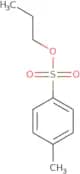
Formula:C10H9NOPurezza:Min. 95%Peso molecolare:159.18 g/molPropyl toluene-4-sulphonate
CAS:Propyl toluene-4-sulphonate is a chemical compound that is used in the synthesis of pharmaceuticals. It has been shown to have neuroprotective effects. In addition, it has been found to be genotoxic and genotoxic potential has been demonstrated in assays involving mammalian cells and the formation of micronuclei. This chemical also exhibits carcinogenic properties, which may be due to its ability to form DNA adducts with p-chlorobenzenesulfonic acid.
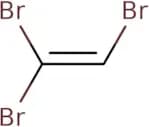
Formula:C10H14O3SPurezza:Min. 95%Peso molecolare:214.28 g/molTribromoethylene
CAS:Tribromoethylene is a reactive, hydroxyl-containing compound that has been used as a cross-linking agent in the production of polymers. It is a colorless liquid with an unpleasant odor. Tribromoethylene has many uses including as an antioxidant and a stabilizer for rubber, plastics, and paints. In addition to its use as a reactive functional group, tribromoethylene also has long-term toxicity in CD-1 mice. This toxicity may be due to the ability of tribromoethylene to produce epoxides through oxidation by hydrogen fluoride or other peroxides. Epoxides are known to disrupt cellular energy metabolism and cause cell death by reacting with lysine residues on proteins. The mechanism for this toxicity is not well understood but may involve cross-linking of proteins and DNA.
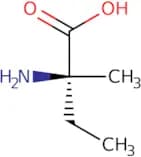
Formula:C2HBr3Purezza:Min. 95%Peso molecolare:264.74 g/mol2-Amino-2-methylbutyric acid
CAS:2-Amino-2-methylbutyric acid is a nonsteroidal anti-inflammatory drug that belongs to the group of p2 sodium salts. It is used for the treatment of bowel disease, as well as in the prevention and treatment of skin cancer. 2-Amino-2-methylbutyric acid has been shown to inhibit glutamate release from nerve endings and prevent the development of skin cancer. It also has been shown to have a protective effect against cyclic peptide alamethicin f50, which causes colon spasms. The conformational properties of 2-amino-2-methylbutyric acid have been studied using rotarod tests and laser ablation techniques.
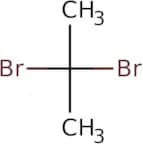
Formula:C5H11NO2Purezza:Min. 95%Peso molecolare:117.15 g/mol2,2-Dibromopropane
CAS:2,2-Dibromopropane is a synthetic chemical that has been used as a precursor in the production of nylon. It is an activator that can be used to form covalent bonds with reactive groups on other molecules. The activation energy for the reaction with piperazine is between 104 and 106 kJ/mol. 2,2-Dibromopropane undergoes acylation reactions under certain conditions, forming reaction products such as 2,2-dibromoethyl acetate and 2,2-dibromoethanol. The molecular weight of 2,2-dibromopropane is 192.19 g/mol and its structural formula is CHBrCHBrCHBrCHBrC≡C≡C≡C≡C≡C≡CC(O)OH.
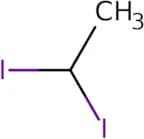
Formula:C3H6Br2Purezza:Min. 95%Peso molecolare:201.89 g/mol1,1-Diiodoethane
CAS:1,1-Diiodoethane is a chemical compound with the molecular formula C2H4I2. It is a colorless liquid that reacts with chloride to form ethylene. The desorption of 1,1-diiodoethane from an aluminum surface was studied using a cavity ringdown spectrometer. The frequency range for this process is in the infrared region. The shift and profiles for 1,1-diiodoethane are also available.
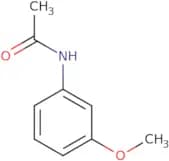
Formula:C2H4I2Purezza:Min. 95%Peso molecolare:281.86 g/molN-(3-Methoxyphenyl)acetamide
CAS:N-(3-Methoxyphenyl)acetamide is a reactive and efficient chemical for the synthesis of N-(3-methoxyphenyl)acetamide-N′,O′-diacetate. It is used as a fluorescent probe in analytical chemistry. This chemical reacts with formaldehyde to produce a formyl group, which can be detected by magnetic resonance spectroscopy (MRS). The acetanilide moiety in this compound is an active substance that is effective against pyridinium, which is a reactive substance. Methylating this acetanilide leads to pro-apoptotic proteins that are fluorescent and can be detected using fluorescent probes.
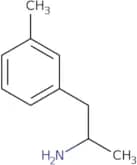
Formula:C9H11NO2Purezza:Min. 95%Peso molecolare:165.19 g/mol1-(3-Methylphenyl)propan-2-amine
CAS:Prodotto controllatoVersatile small molecule scaffold
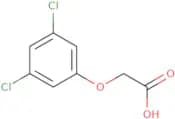
Formula:C10H15NPurezza:Min. 95%Peso molecolare:149.23 g/mol2-(3,5-Dichlorophenoxy)acetic acid
CAS:2-(3,5-Dichlorophenoxy)acetic acid is an organic compound that has both a carboxylate and a hydroxyl group. It is used as an herbicide and has been shown to be effective in preventing uptake of radioactive elements by plants. 2-(3,5-Dichlorophenoxy)acetic acid can be prepared from butanoic acid and sodium chloride. The molecular formula for 2-(3,5-Dichlorophenoxy)acetic acid is CHClOOC(CHCOCH).
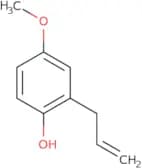
Formula:C8H6O3Cl2Purezza:Min. 95%Peso molecolare:221.03 g/mol2-Allyl-4-methoxyphenol
CAS:2-Allyl-4-methoxyphenol is a monomer that is used in synthetic antioxidants. It has been shown to scavenge free radicals and inhibit the production of 4-allyl-2-methoxyphenol (AMPM) from carthamus tinctorius. Inhibition rates have been observed at different concentrations and microwaves. 2-Allyl-4-methoxyphenol has also been shown to enhance the antioxidant activity of phenethyl propionate, and it has a dry weight of 522 g/mol. This compound is synthetically derived and can be found in submandibular gland secretions, as well as eugenol and fusarium oxysporum f.
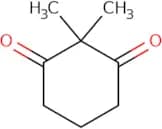
Formula:C10H12O2Purezza:Min. 95%Peso molecolare:164.2 g/mol2,2-Dimethylcyclohexane-1,3-dione
CAS:2,2-Dimethylcyclohexane-1,3-dione is a compound that has been shown to be an intermediate in the taxol synthesis. It is an ester that can be alkylated and has been shown to have intramolecular or intermolecular alkylation through its ring system. The crystal structure analysis of this compound was done by x-ray diffraction and it was found to have key structural features for the synthesis of taxanes. 2,2-Dimethylcyclohexane-1,3-dione is used as an intermediate in the synthesis of taxol. It also shows enzymatic activity because it is a substrate for alcohol dehydrogenase. This molecule has been synthesized from different types of alcohols including methanol and ethanol via nitro reduction.
Formula:C8H12O2Purezza:Min. 95%Peso molecolare:140.18 g/mol1-Monotetranoin
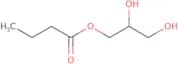
CAS:1-Monotetranoin is a fatty ester that is involved in the process of lipolysis, which is the breakdown of fat cells. Lipolysis occurs when an enzyme called lipase hydrolyzes triglycerides into glycerol and three fatty acids. 1-Monotetranoin has been shown to be a potent stimulator of growth factor production and cell proliferation in vivo models. It has also been shown to be effective at inhibiting angiogenic processes in vitro, including the release of growth factors from fat cells. The neutral pH optimum for 1-monotetranoin is between 7 and 8, which may be due to its hydrophobic nature.
Formula:C7H14O4Purezza:Min. 95%Peso molecolare:162.18 g/mol[(Carbamoylamino)carbonyl]urea
CAS:[(Carbamoylamino)carbonyl]urea (Urea) is a reactive compound that can be found in urine, saliva, and sweat. Urea is used as an active methylene group in the synthesis of polyurethane. It can be synthesized by reacting hydrochloric acid with calcium carbonate and carbonyl oxygens. The chemical formula for urea is NH2CONH2. The molecular weight of urea is 60.06 g/mol. Hydrolysis of urea produces ammonia and carbon dioxide, which are both gases at room temperature. Reaction products include ammonia, carbon dioxide, water, and hydrogen cyanide. The pH of urea ranges from 6 to 9 when in solution or solid form, depending on the concentration of the compound. Urea has been shown to produce fatty acids when heated above 300 degrees Celsius.
Formula:C3H6N4O3Purezza:Min. 95%Peso molecolare:146.11 g/mol3-Fluoro-4-phenoxyaniline hydrochloride
CAS:Versatile small molecule scaffold
Formula:C12H11ClFNOPurezza:Min. 95%Peso molecolare:239.67 g/mol1-Methoxy-4,4-dimethylpentan-3-ol
CAS:Versatile small molecule scaffold
Formula:C8H18O2Purezza:Min. 95%Peso molecolare:146.23 g/mol3-(4-Chlorophenyl)-5-hydrazinyl-1,2,4-oxadiazole
CAS:Versatile small molecule scaffold
Formula:C8H7ClN4OPurezza:Min. 95%Peso molecolare:210.62 g/mol2-(Pyrrolidin-3-yloxy)pyridine-4-carbonitrile
CAS:Versatile small molecule scaffold
Formula:C10H11N3OPurezza:Min. 95%Peso molecolare:189.21 g/mol2-Chloro-4-(methoxymethyl)pyridine
CAS:Versatile small molecule scaffold
Formula:C7H8ClNOPurezza:Min. 95%Peso molecolare:157.6 g/mol4-Amino-2,2-dimethylbutane-1,3-diol
CAS:Versatile small molecule scaffold
Formula:C6H15NO2Purezza:Min. 95%Peso molecolare:133.19 g/mol

![[(Carbamoylamino)carbonyl]urea](/_next/image/?url=https%3A%2Fstatic.cymitquimica.com%2Fproducts%2F3D%2Fthumb-webp%2FAAA55699.webp&w=3840&q=75)