


Building Blocks
Sottocategorie di "Building Blocks"
- Acidi boronici e derivati dell'acido boronico(5.774 prodotti)
- Building Blocks Chirali(1.237 prodotti)
- Building Blocks Idrocarburici(6.098 prodotti)
- Building Blocks organici(60.970 prodotti)
Trovati 205134 prodotti di "Building Blocks"
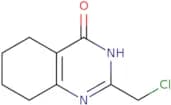
2-(Chloromethyl)-5,6,7,8-tetrahydroquinazolin-4(3H)-one
CAS:Versatile small molecule scaffold
Formula:C9H11ClN2OPurezza:Min. 95%Peso molecolare:198.65 g/molN-[Carbamothioyl(phenyl)methyl]benzamide
CAS:Versatile small molecule scaffold
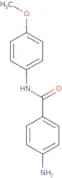
Formula:C15H14N2OSPurezza:Min. 95%Peso molecolare:270.3 g/mol4-Amino-n-(4-methoxyphenyl)benzamide
CAS:4-Amino-N-(4-methoxyphenyl)benzamide is a catalytic sulfamate that has been optimized for use in the synthesis of benzimidazole derivatives. 4-Amino-N-(4-methoxyphenyl)benzamide is used as a reagent for the preparation of aldehydes from sulfamic acid and various types of carboxylic acids. The reaction mechanism involves nucleophilic attack by the hydroxyl group from the sulfamate on the carbonyl carbon atom to form an intermediate, which then reacts with water to release hydrogen sulfate and form a new double bond.
Formula:C14H14N2O2Purezza:Min. 95%Peso molecolare:242.27 g/mol1-(4-Phenoxyphenyl)propan-1-one
CAS:Versatile small molecule scaffold
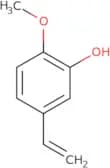
Formula:C15H14O2Purezza:Min. 95%Peso molecolare:226.27 g/mol5-Ethenyl-2-methoxyphenol
CAS:5-Ethenyl-2-methoxyphenol is a volatile compound that has been isolated from the bark of the cinnamon tree. It has shown anticancer activities "in vitro" and "in vivo". 5-Ethenyl-2-methoxyphenol has been shown to be demethylated by cytochrome P450 enzymes, which may result in its antitumor activity. This active compound can also be detected in postharvested fruit and vegetables as well as processed foods such as apple juice, tomato sauce, and dried fruits. 5-Ethenyl-2-methoxyphenol is responsible for the characteristic flavor of cinnamon, so it is often used as a flavoring agent in food processing.
Formula:C9H10O2Purezza:Min. 95%Colore e forma:PowderPeso molecolare:150.17 g/mol2-Cyclopentyloxy-benzaldehyde
CAS:2-Cyclopentyloxy-benzaldehyde has potent inhibitory activity against inflammatory diseases. It is a chemical compound that contains an amido group and two cyclopentyloxy groups. 2-Cyclopentyloxy-benzaldehyde inhibits the activation of glycogen synthase kinase-3, which is a protein that regulates inflammation in the body. This substance can be used to inhibit the spread of HIV or viral infections by inhibiting protein synthesis in these viruses. 2-Cyclopentyloxy-benzaldehyde also has an inhibitory effect on cachexia, which is a condition characterized by weight loss, muscle wasting, and fatigue.
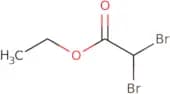
Formula:C12H14O2Purezza:Min. 95%Peso molecolare:190.24 g/molAcetic acid, dibromo-, ethyl ester
CAS:Acetic acid, dibromo-, ethyl ester is a reactive molecule that can be used as a nucleophilic substituent. It has hydroxyl group and ruthenium complex. It is a particle that can be used in the production of monoclonal antibodies. Acetic acid, dibromo-, ethyl ester also has viscosity and polycarboxylic acid. This chemical reacts with β-unsaturated ketones to form polymerization initiator. Acetic acid, dibromo-, ethyl ester also has carbonyl group and monoclonal antibodies. Acetic acid, dibromo-, ethyl ester can be conjugated with ethyl bromoacetate to produce conjugates.
Formula:C4H6Br2O2Purezza:Min. 95%Peso molecolare:245.9 g/mol2-[(3-Nitrophenyl)formamido]acetic acid
CAS:2-[(3-Nitrophenyl)formamido]acetic acid (2NPA) is a modifying agent that has been used in the modification of carboxyl groups. It can react with nucleophiles to form adducts and with carbodiimides to form ureas. 2NPA reacts with amino acids, peptides, and other nitrogenous compounds at their carboxyl groups to form ester or amide bonds. The nature of the residues after modification varies depending on the nature of the carboxyl group that was modified.
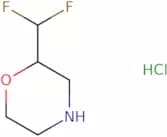
Formula:C9H8N2O5Purezza:Min. 95%Peso molecolare:224.17 g/mol2-(Difluoromethyl)morpholine hydrochloride
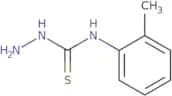
CAS:Versatile small molecule scaffoldFormula:C5H10ClF2NOPurezza:Min. 95%Peso molecolare:173.59 g/mol4-(2-Methylphenyl)-3-thiosemicarbazide
CAS:4-(2-Methylphenyl)-3-thiosemicarbazide is a crystalline solid that belongs to the group of benzoic acid derivatives. It has an orthorhombic crystal structure, with a yellow color. The crystals are measured at room temperature, and it has an atomic weight of 197.11 g/mol. 4-(2-Methylphenyl)-3-thiosemicarbazide is stable in air and in solution, but decomposes at temperatures above 250°C. This compound has been studied by using X-ray diffraction measurements and Bruker parameters. Its isotropic radiation is recorded at the following wavelength: 1.5418 Å (1).
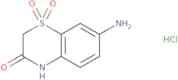
Formula:C8H11N3SPurezza:Min. 95%Peso molecolare:181.26 g/mol7-amino-2H-1,4-benzothiazin-3(4H)-one 1,1-dioxide hydrochloride
CAS:Versatile small molecule scaffold
Formula:C8H9ClN2O3SPurezza:Min. 95%Peso molecolare:248.69 g/molMethyl 2-Octynoate
CAS:Methyl 2-octynoate is a chemical that has been shown to bind to the nicotinic acetylcholine receptor. Methyl 2-octynoate has been shown to have antitumor activity in various types of cancer cells, including breast, prostate, and lung cancer cells. This chemical is not known to be chemically stable or film-forming. It also disrupts mitochondrial membrane potential and reduces the endpoints of oxidative phosphorylation. Methyl 2-octynoate was found to have low potency against cancer cells in vitro and in vivo.
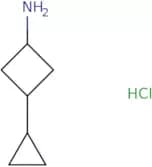
Formula:C9H14O2Purezza:Min. 95%Peso molecolare:154.21 g/mol3-Cyclopropylcyclobutan-1-amine hydrochloride, somers
CAS:Versatile small molecule scaffold
Formula:C7H14ClNPurezza:Min. 95%Peso molecolare:147.64 g/mol(4-Hydroxy-5-methoxypent-1-yn-1-yl)trimethylsilane
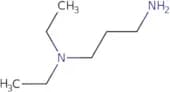
CAS:Versatile small molecule scaffoldFormula:C9H18O2SiPurezza:Min. 95%Peso molecolare:186.32 g/molN,N-Diethyl-1,3-diaminopropane
CAS:N,N-Diethyl-1,3-diaminopropane (DEET) is a compound that has been used as an insect repellent. It is a low molecular weight aliphatic amine, with two amino groups and two ethylene diamine groups. The transport properties of DEET are due to its high solubility in aromatic solvents and its lack of reactivity. It is highly soluble in water and glycol ethers. DEET's reaction mechanism begins with the nucleophilic attack of the amine on the carbonyl carbon atom in trifluoroacetic acid, forming an intermediate tautomeric form. The nucleophilic attack by the amine on the carbonyl carbon atom in trifluoroacetic acid leads to a tetrahedral intermediate which undergoes a second nucleophilic attack by hydroxide ion from hydrochloric acid, forming an intermediate tautomeric form. This
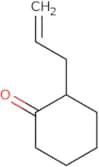
Formula:C7H18N2Purezza:Min. 95%Peso molecolare:130.24 g/mol2-Allylcyclohexanone
CAS:2-Allylcyclohexanone is an unsaturated ketone that is synthesized by the ring-opening of allyl cyclohexane carboxylate with sodium hydroxide. It can be used as a chemical intermediate for the synthesis of other compounds. 2-Allylcyclohexanone can also be used to react with hydroxide solution to produce a salt and an alcohol. The hydroxide solution can act as a base, reducing the carbonyl group in the presence of an acid to form the corresponding alcohol. This reaction is stereoselective because it only occurs when there are two different groups on adjacent carbons.
2-Allylcyclohexanone has been shown to inhibit non-nucleoside reverse transcriptase inhibitors (NNRTIs) such as nevirapine, efavirenz, and delavirdine. In addition, it has been found to have functional groups that are capable of reactingFormula:C9H14OPurezza:Min. 95%Peso molecolare:138.21 g/mol2-Hydroxy-3,5-dimethyl-benzaldehyde
CAS:Versatile small molecule scaffold
Formula:C9H10O2Purezza:Min. 95%Peso molecolare:150.18 g/mol(1,2-Thiazol-5-yl)methanamine hydrochloride
CAS:Versatile small molecule scaffold
Formula:C4H7ClN2SPurezza:Min. 95%Peso molecolare:150.63 g/mol2,3-Dimethyl-3-(thiophen-3-yl)butan-2-ol
CAS:Versatile small molecule scaffoldFormula:C10H16OSPurezza:Min. 95%Peso molecolare:184.3 g/moltert-Butyl 4-{4-oxo-1H,4H,5H-pyrazolo[3,4-d]pyrimidin-1-yl}piperidine-1-carboxylate
CAS:Versatile small molecule scaffold
Formula:C15H21N5O3Purezza:Min. 95%Peso molecolare:319.4 g/mol

![N-[Carbamothioyl(phenyl)methyl]benzamide](/_next/image/?url=https%3A%2Fstatic.cymitquimica.com%2Fproducts%2F3D%2Fthumb-webp%2FAAA89278.webp&w=3840&q=75)


![2-[(3-Nitrophenyl)formamido]acetic acid](/_next/image/?url=https%3A%2Fstatic.cymitquimica.com%2Fproducts%2F3D%2Fthumb-webp%2FAAA61710.webp&w=3840&q=75)



![tert-Butyl 4-{4-oxo-1H,4H,5H-pyrazolo[3,4-d]pyrimidin-1-yl}piperidine-1-carboxylate](/_next/image/?url=https%3A%2Fstatic.cymitquimica.com%2Fproducts%2F3D%2Fthumb-webp%2FVID41097.webp&w=3840&q=75)