Building Blocks
Questa sezione contiene prodotti fondamentali per la sintesi di composti organici e biologici. Building blocks sono i materiali di partenza essenziali utilizzati per costruire molecole complesse attraverso varie reazioni chimiche. Svolgono un ruolo critico nella scoperta di farmaci, nella scienza dei materiali e nella ricerca chimica. Presso CymitQuimica, offriamo una gamma diversificata di building blocks di alta qualità per supportare le tue ricerche innovative e progetti industriali, assicurandoti di avere i componenti essenziali per una sintesi di successo.
Sottocategorie di "Building Blocks"
- Acidi boronici e derivati dell'acido boronico(5.756 prodotti)
- Building Blocks Chirali(1.242 prodotti)
- Building Blocks Idrocarburici(6.095 prodotti)
- Building Blocks organici(61.037 prodotti)
Trovati 196139 prodotti di "Building Blocks"
Ordinare per
Purezza (%)
0
100
|
0
|
50
|
90
|
95
|
100
2-Mercaptobenzimidazole zinc salt
CAS:<p>2-Mercaptobenzimidazole zinc salt is a synthetic, organic solvent that is used as an additive in the manufacture of dyes, paints, and varnishes. It is also used to make photographic film and x-ray film. 2-Mercaptobenzimidazole zinc salt is not soluble in water but can be dissolved by organic solvents such as acrylonitrile. This compound has been shown to have photocatalytic activity when activated by light. It has been found to be heat resistant up to 110°C, which makes it suitable for use in coating and printing applications. 2-Mercaptobenzimidazole zinc salt has carboxylate properties that allow it to react with calcium carbonate and hydrogen tartrate for industrial purposes.</p>Formula:C14H10N4S2ZnColore e forma:White Off-White PowderPeso molecolare:363.8 g/molTrans-methylisoeugenol
CAS:<p>Trans-methylisoeugenol is a natural compound that has been shown to have anti-inflammatory, antioxidant, and immunomodulatory properties. It is a metabolite of isoeugenol, which is a constituent of the essential oils from plants such as angelica dahurica and eugenia caryophyllata. Trans-methylisoeugenol binds to the glucuronide conjugate receptor on the cell surface, leading to various effects including inflammatory responses. Trans-methylisoeugenol also inhibits the activity of enzymes such as benzalkonium chloride and eugenol that are responsible for inflammation. Molecular docking analysis predicts that trans-methylisoeugenol may bind to the same site on the receptor as benzalkonium chloride.</p>Formula:C11H14O2Purezza:Min. 90 Area-%Colore e forma:PowderPeso molecolare:178.23 g/mol2,3,4,6-Tetra-O-benzyl-D-galactopyranose
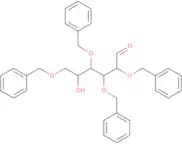
CAS:<p>2,3,4,6-Tetra-O-benzyl-D-galactopyranose is an isomeric sugar that is found in a variety of natural and synthetic carbohydrates. It has been shown to inhibit glycosidase enzymes such as aminoglycoside N-acetyltransferases and α-glycosidases. The stereoselective properties of 2,3,4,6-Tetra-O-benzyl-D-galactopyranose make it a good candidate for the treatment of drug resistant bacteria. This compound has been shown to have inhibitory activity against the hydrolase family of enzymes that includes proteases, lipases, and phospholipases.</p>Formula:C34H36O6Purezza:Min. 95%Colore e forma:PowderPeso molecolare:540.6 g/mol5-Aminopentane-1-thiol hydrochloride
CAS:<p>Versatile small molecule scaffold</p>Formula:C5H14ClNSPurezza:Min. 95%Colore e forma:PowderPeso molecolare:155.69 g/mol5-Et-furan-2-carboxylic acid
CAS:<p>5-Ethyl-furan-2-carboxylic acid is a tetrahydrofuran that can be synthesized from benzaldehyde and lithium. It has cytotoxic properties, which may be due to its acid derivative intermediates. The regiospecificity of this compound is also notable, as it was lithiated at the 5-position. This synthetic compound is an intermediate in the synthesis of other drugs such as alpidem or zolpidem.</p>Formula:C7H8O3Purezza:Min. 95%Peso molecolare:140.14 g/mol5-(Propan-2-yl)furan-2-carboxylic acid
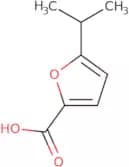
CAS:<p>5-(Propan-2-yl)furan-2-carboxylic acid is a reagent that can be used in the synthesis of complex compounds. It is a speciality chemical that has been found to be useful as a building block and intermediate. 5-(Propan-2-yl)furan-2-carboxylic acid can be used in the synthesis of many different types of compounds, including pharmaceuticals, agrochemicals, and fine chemicals. The compound is also used as a research chemical and a versatile building block for more complex molecules.</p>Formula:C8H10O3Purezza:Min. 95%Peso molecolare:154.16 g/mol2,6-Dichlorobenzaldehyde
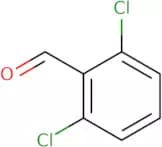
CAS:<p>2,6-Dichlorobenzaldehyde is a nucleophilic compound that has the ability to form hydrogen bonds. It reacts with phosphorus pentachloride to produce 2-chloro-4,6-dichlorobenzene. 2,6-Dichlorobenzaldehyde can be used in the synthesis of β-unsaturated ketones and anticancer drugs such as aziridines. It is also used as a precursor for coordination complexes. This compound is an efficient method for making nitrogen nucleophiles, which are important in chain reactions and the production of polymers. The 2,6-dichlorobenzaldehyde molecule contains two chiral centers that give rise to four stereoisomers. X-ray diffraction data shows that this molecule exists as a mixture of these four isomers.</p>Formula:C7H4Cl2OPurezza:Min. 97.5%Colore e forma:PowderPeso molecolare:175.01 g/mol(1S)-3-(Methylsulfanyl)-1-(2H-1,2,3,4-tetrazol-5-yl)propan-1-amine
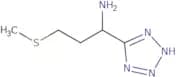
CAS:<p>Versatile small molecule scaffold</p>Formula:C5H11N5SPurezza:Min. 95%Colore e forma:PowderPeso molecolare:173.24 g/mol2,6-Dichloropyridine-1-oxide
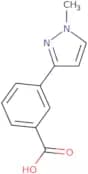
CAS:<p>2,6-Dichloropyridine-1-oxide is a reactive compound that has been synthesized by the reaction of ethyl diazoacetate and trifluoroacetic acid. The synthesis is scalable and can be immobilized in a ruthenium complex. The reactivity of this compound has been studied in kinetic experiments and molecular modeling simulations. 2,6-Dichloropyridine-1-oxide can form an epoxide with ethyl diazoacetate, which is used as the control experiment.</p>Formula:C5H3Cl2NOPurezza:Min. 95%Colore e forma:White PowderPeso molecolare:163.99 g/mol3-(1-Methyl-1H-pyrazol-3-yl)benzoic acid
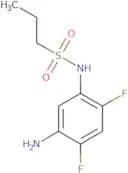
CAS:<p>3-(1-Methyl-1H-pyrazol-3-yl)benzoic acid is a chemical compound with the molecular formula C5H5NO2. It is a research chemical that has not yet been fully characterized and its potential uses have not yet been determined. 3-(1-Methyl-1H-pyrazol-3-yl)benzoic acid is used as an intermediate in the synthesis of other compounds, including pharmaceuticals and pesticides. This compound has the potential to be used as a building block for complex compounds, or as a reagent in various reactions.</p>Formula:C11H10N2O2Purezza:Min. 95%Colore e forma:PowderPeso molecolare:202.21 g/molN-(5-Amino-2,4-difluorophenyl)propane-1-sulfonamide
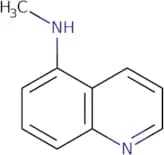
CAS:<p>Versatile small molecule scaffold</p>Formula:C9H12F2N2O2SPurezza:Min. 95%Colore e forma:PowderPeso molecolare:250.27 g/molN-Methylquinolin-5-amine
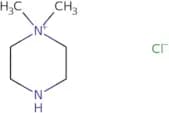
CAS:<p>Versatile small molecule scaffold</p>Formula:C10H10N2Purezza:Min. 95%Colore e forma:PowderPeso molecolare:158.2 g/mol1,1-Dimethylpiperazin-1-ium chloride
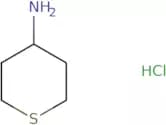
CAS:<p>1,1-Dimethylpiperazin-1-ium chloride is a fine chemical that is used as a building block in the synthesis of complex compounds. It has been shown to be useful as a reaction component in the synthesis of speciality chemicals and intermediate products for research purposes. 1,1-Dimethylpiperazin-1-ium chloride is also an important reagent for the preparation of high quality chemical compounds.</p>Formula:C6H15ClN2Purezza:Min. 95%Colore e forma:PowderPeso molecolare:150.65 g/molTetrahydro-2H-thiopyran-4-amine hydrochloride
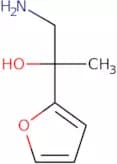
CAS:<p>Tetrahydro-2H-thiopyran-4-amine hydrochloride is a versatile building block that can be used in the synthesis of many different compounds. This compound is also a reagent and speciality chemical, and can be used as a reaction component or scaffold for more complex molecules. Tetrahydro-2H-thiopyran-4-amine hydrochloride has been used in research to study the reactivity of oxygen atoms with organic molecules. It is also useful in the formation of fine chemicals and pharmaceuticals.</p>Formula:C5H11NS•HClPurezza:Min. 95%Peso molecolare:153.67 g/mol1-Amino-2-(furan-2-yl)propan-2-ol
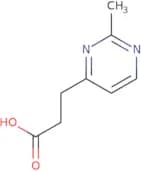
CAS:<p>1-Amino-2-(furan-2-yl)propan-2-ol is a useful building block for the synthesis of heterocycles. It is also used as a reagent for the protection of amines, hydrazones, and carbonyl groups. This compound is soluble in water and is stable under acidic conditions. 1-Amino-2-(furan-2-yl)propan-2-ol has been found to be an important intermediate in the synthesis of pharmaceuticals, pesticides, dyes, perfumes, and solar cells.</p>Formula:C7H11NO2Purezza:Min. 95%Colore e forma:Clear LiquidPeso molecolare:141.17 g/mol3-(2-Methylpyrimidin-4-yl)propanoic acid
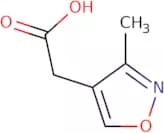
CAS:<p>Versatile small molecule scaffold</p>Formula:C8H10N2O2Purezza:Min. 95%Colore e forma:PowderPeso molecolare:166.18 g/mol2-(3-Methyl-1,2-oxazol-4-yl)acetic acid
CAS:<p>2-(3-Methyl-1,2-oxazol-4-yl)acetic acid is a useful reagent with a wide range of applications. It is the starting material for the synthesis of many complex compounds that are used in pharmaceuticals, agrochemicals, and other industries. 2-(3-Methyl-1,2-oxazol-4-yl)acetic acid has been shown to be a versatile building block for the synthesis of speciality chemicals and research chemicals. The compound has also been used as a reaction component in organic synthesis.</p>Formula:C6H7NO3Purezza:Min. 95%Colore e forma:PowderPeso molecolare:141.12 g/mol6-Hydroxy-2-oxo-1,2-dihydropyridine-3-carboxylic acid
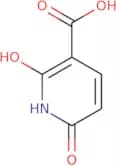
CAS:<p>6-Hydroxy-2-oxo-1,2-dihydropyridine-3-carboxylic acid is a hydroxylate that is found in animals and plants. It is also a flavinoid, meaning it has an aromatic ring with two carbon atoms and a nitrogen atom. 6-Hydroxy-2-oxo-1,2-dihydropyridine 3 carboxylic acid is found in the subunits of flavoproteins, which are enzymes that produce molecular oxygen from hydrogen peroxide. 6HODCA has been shown to be an acceptor for electrons in lipid oxidation reactions and can be used as a precursor for the synthesis of lipids. Hydroxylases also produce 6HODCA by adding water to pyridines.</p>Formula:C6H5NO4Purezza:Min. 95%Peso molecolare:155.11 g/mol2,6-Di(tert-butyl)-4-hydroxy-4-methyl-2,5-cyclohexadien-1-one
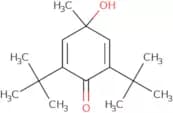
CAS:<p>2,6-Di(tert-butyl)-4-hydroxy-4-methyl-2,5-cyclohexadien-1-one (BHT) is a reactive methide that can be produced by the nucleophilic attack of an electrophile on a molecule containing a methylene group. BHT is used in analytical chemistry as an antioxidant and free radical scavenger. BHT has been shown to protect rat liver microsomes from damage induced by oxidative stress and to inhibit the development of lung cancer in rats chronically treated with cigarette smoke. This product also has been used in modelling studies to study the effect of alveolar type II cells on airway hyperresponsiveness.</p>Formula:C15H24O2Purezza:Min. 95%Colore e forma:PowderPeso molecolare:236.35 g/mol3-Methoxythiophene-2-boronic acid pinacol ester
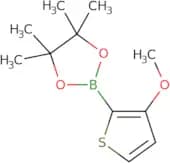
CAS:<p>3-Methoxythiophene-2-boronic acid pinacol ester is a ligand that can be used in the synthesis of organic molecules. It undergoes nucleophilic substitution reactions and has been shown to be an excellent substrate for Suzuki coupling reactions. This reactant can also be used as a backbone in the synthesis of optical materials, such as semiconductors. 3-Methoxythiophene-2-boronic acid pinacol ester is capable of forming a variety of substitutions and transfers with benzothiadiazole derivatives, which have been shown to have an acceptor effect on organic molecules.</p>Formula:C11H17BO3SPurezza:Min. 95%Colore e forma:PowderPeso molecolare:240.13 g/mol