Building Blocks
Questa sezione contiene prodotti fondamentali per la sintesi di composti organici e biologici. Building blocks sono i materiali di partenza essenziali utilizzati per costruire molecole complesse attraverso varie reazioni chimiche. Svolgono un ruolo critico nella scoperta di farmaci, nella scienza dei materiali e nella ricerca chimica. Presso CymitQuimica, offriamo una gamma diversificata di building blocks di alta qualità per supportare le tue ricerche innovative e progetti industriali, assicurandoti di avere i componenti essenziali per una sintesi di successo.
Sottocategorie di "Building Blocks"
- Acidi boronici e derivati dell'acido boronico(5.756 prodotti)
- Building Blocks Chirali(1.242 prodotti)
- Building Blocks Idrocarburici(6.095 prodotti)
- Building Blocks organici(61.037 prodotti)
Trovati 196139 prodotti di "Building Blocks"
Ordinare per
Purezza (%)
0
100
|
0
|
50
|
90
|
95
|
100
3,4-Dihydroxy-3-cyclobutene-1,2-dione
CAS:<p>3,4-Dihydroxy-3-cyclobutene-1,2-dione is a small molecule that has been shown to be an effective antimicrobial agent. It is structurally related to squaric acid and has high reactivity with hydrogen fluoride. 3,4-Dihydroxy-3-cyclobutene-1,2-dione has the ability to lyse cells through the formation of hydrogen bonds with nucleic acids. This chemical compound can also act as a fluorescence probe for group P2 human serum proteins. The kinetic energy of this molecule was found to be very high in comparison to other molecules in its structural class.</p>Formula:C4H2O4Purezza:Min 99.0%Colore e forma:Off-White PowderPeso molecolare:114.06 g/molcis-2-Decenoic acid
CAS:<p>cis-2-Decenoic acid is a fatty acid that acts as an antimicrobial agent. It has been shown to inhibit the growth of many human pathogens, including methicillin-resistant Staphylococcus aureus, Pseudomonas aeruginosa, and Candida albicans. cis-2-Decenoic acid also inhibits the production of proinflammatory cytokines by lipopolysaccharide and stimulates the production of anti-inflammatory cytokines. cis-2-Decenoic acid was also found to be effective against diabetic neuropathy biofilm in mice and may be useful for treatment of this condition.</p>Formula:C10H18O2Purezza:Min. 98 Area-%Colore e forma:Clear LiquidPeso molecolare:170.25 g/mol1,4-Diaminobutane dihydrochloride
CAS:<p>Ubiquitous polyamine necessary for optimal cell growth</p>Formula:C4H14Cl2N2Purezza:Min. 98.0%Colore e forma:PowderPeso molecolare:161.07 g/mol2,3-Diaminobenzoic acid methyl ester
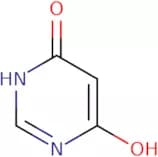
CAS:<p>2,3-Diaminobenzoic acid methyl ester is a redox potential catalyst that has been shown to have anticancer activity in vitro and in vivo. It is a 5-ht4 receptor agonist, which causes an increase in the intracellular concentration of cAMP. The anticancer effect of this compound may be due to its ability to inhibit the growth of cancer cells by blocking DNA synthesis and cell division. The biological properties of this drug are not well understood, but it has been shown to have antioxidant effects, as well as proton-reducing and electron-accepting properties. This compound has also been studied electrochemically.</p>Formula:C8H10N2O2Purezza:95%NmrColore e forma:PowderPeso molecolare:166.18 g/mol4,6-Dihydroxypyrimidine
CAS:<p>4,6-Dihydroxypyrimidine is a competitive inhibitor of the bacterial enzyme DNA gyrase. It binds to the ATP-binding site and blocks the conversion of ATP to ADP. This leads to inhibition of the DNA replication process. 4,6-Dihydroxypyrimidine has shown inhibition constants against various bacterial strains. The kinetic data indicate that this compound is a noncompetitive inhibitor for DNA gyrase. 4,6-Dihydroxypyrimidine also binds to sodium hydroxide solution and forms a Langmuir adsorption isotherm that can be described by an equation with a single binding site. The chemical structure of 4,6-dihydroxypyrimidine consists of three atoms: two hydrogen atoms and one oxygen atom. This molecule has been found in electrochemical impedance spectroscopy experiments using methanol solvent as an electrolyte and monosodium salt as a supporting electrolyte.</p>Formula:C4H4N2O2Purezza:Min. 95%Colore e forma:Yellow PowderPeso molecolare:112.09 g/mol3-(Trifluoromethyl)-1-oxa-2,8-diazaspiro[4.5]dec-2-ene
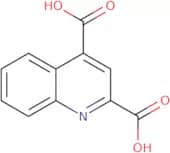
CAS:<p>Versatile small molecule scaffold</p>Formula:C8H11F3N2OPurezza:(%) Min. 85%Colore e forma:PowderPeso molecolare:208.18 g/molQuinoline 2,4-dicarboxylic acid
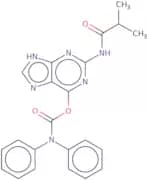
CAS:<p>Quinoline 2,4-dicarboxylic acid (QDA) is a novel cytotoxic agent that targets cervical cancer cells. It inhibits the uptake of glucose and other nutrients by cervical cancer cells, leading to cell death through apoptosis. QDA also inhibits the expression of genes involved in cross-linking reactions, which are important for the structural integrity of proteins. This agent has been shown to inhibit the growth of aniline-induced breast cancer cells and glutamate-stimulated PC12 cells. QDA binds to DNA and forms covalent bonds with nucleotide bases, inhibiting DNA synthesis, as well as interfering with protein synthesis and cell division. The QDA mechanism is similar to that of benzoquinolines and estrone sulfate.</p>Formula:C11H7NO4Purezza:Min. 95%Colore e forma:White PowderPeso molecolare:217.18 g/molO6-Diphenylcarbamoyl-N2-isobutyrylguanine
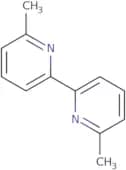
CAS:<p>Synthetic building block for nucleic acid research</p>Formula:C22H20N6O3Purezza:Min. 95%Colore e forma:PowderPeso molecolare:416.43 g/mol6,6'-Dimethyl-2,2'-bipyridine
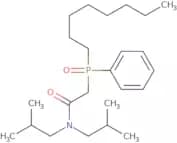
CAS:<p>6,6'-Dimethyl-2,2'-bipyridine (DMBP) is a bidentate ligand that is used in the functional theory of antibacterial activity. The bond cleavage of DMBP is believed to be due to its high oxidation potential and its ability to form hydrogen bonds with the bacteria cell wall. DMBP has been shown to have an antibacterial effect on both Gram-positive and Gram-negative bacteria. The mechanism of action may be due to its ability to release hydroxyl radicals when exposed to ultraviolet light. This compound also has a boronic acid group that can form a complex with 4-methoxyphenylboronic acid (MPA) which can inhibit bacterial growth.</p>Formula:C12H12N2Purezza:Min. 98%Colore e forma:PowderPeso molecolare:184.24 g/molN,N-Diisobutyl-2-(octylphenylphosphoryl)acetamide
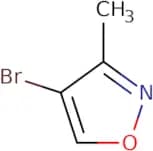
CAS:<p>N,N-Diisobutyl-2-(octylphenylphosphoryl)acetamide is a redox active extractant that is used for the extraction of metals from acidic solutions. It has been shown to have an adsorption mechanism that includes hydrogen bonding and intramolecular hydrogen bonding. N,N-Diisobutyl-2-(octylphenylphosphoryl)acetamide also has a high redox potential and fluorescence properties. This extractant can be used as a metal chelate to extract copper from hydroxide or carbonate solutions. It can also be used in titration calorimetry experiments.</p>Formula:C24H42NO2PPurezza:Min. 98 Area-%Colore e forma:White To Off-White SolidPeso molecolare:407.57 g/mol4-Bromo-3-methyl-1,2-oxazole
CAS:<p>4-Bromo-3-methyl-1,2-oxazole is a chemical compound that is used as a reaction component in organic synthesis. It is also used as a reagent for the synthesis of various pharmaceuticals. 4-Bromo-3-methyl-1,2-oxazole can be used to produce useful scaffolds and intermediates. This compound has been shown to be useful in the production of complex compounds and fine chemicals. CAS No. 101084-19-9</p>Formula:C4H4BrNOPurezza:Min. 90%Colore e forma:Clear LiquidPeso molecolare:161.98 g/mol2-Quinolinecarboxylic acid
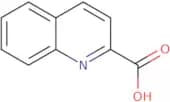
CAS:<p>2-Quinolinecarboxylic acid is an antibiotic that is used in the treatment of bacterial infections and has inhibitory properties. It has been shown to be a competitive inhibitor of the enzyme quinolinate phosphoribosyltransferase, which catalyzes the conversion of quinolinic acid to nicotinic acid. 2-Quinolinecarboxylic acid binds to the active site of the enzyme and prevents substrate binding, thereby blocking the production of nicotinic acid. This drug also inhibits bacterial growth by binding to DNA-dependent RNA polymerase, thereby preventing transcription and replication. The high frequency of human activity has been shown using a patch-clamp technique on human erythrocytes. This active form is metabolized through a number of metabolic transformations, including hydrolysis by esterases or glucuronidases, oxidation by cytochrome P450 enzymes, reduction by glutathione reductase, or conjugation with glucur</p>Formula:C10H7NO2Purezza:Min. 98 Area-%Colore e forma:PowderPeso molecolare:173.17 g/mol3,4-Dihydroxybenzaldehyde
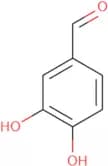
CAS:<p>3,4-Dihydroxybenzaldehyde is an active compound that is a protocatechuic aldehyde. It has been shown to inhibit protein oxidation and kidney injury. 3,4-Dihydroxybenzaldehyde also inhibits the production of bcl-2 protein and growth factor-β in rat urine. This compound has been used in Chinese medicinal preparations as well as in control methods for oxidizing agents.</p>Formula:C7H6O3Colore e forma:Brown White PowderPeso molecolare:138.12 g/moltrans-1,4-Dihydroxy-2-butene
CAS:<p>Extender in polyurethane synthesis</p>Formula:C4H8O2Purezza:Min. 95%Colore e forma:Colorless PowderPeso molecolare:88.11 g/mol2,6-Dichloro-3-deazapurine
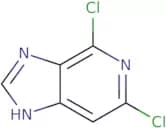
CAS:<p>2,6-Dichloro-3-deazapurine is an isomer of the nucleoside guanosine. It has been shown to inhibit the synthesis of viruses in cell cultures and may be useful in the treatment of leukemia. The synthesis of 2,6-dichloro-3-deazapurine can be achieved through a solid-phase synthesis that uses synthons as starting materials. The molecular modelling studies have shown that this molecule has a potential to bind to adenosine receptor subtypes A2a, A2b, and A3.</p>Formula:C6H3Cl2N3Purezza:Min. 95%Colore e forma:Off-White PowderPeso molecolare:188.02 g/mol2,6-Dichloro-7-deazapurine
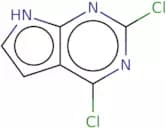
CAS:<p>Intermediate in the synthesis of tofacitinib</p>Formula:C6H3Cl2N3Purezza:Min. 95%Colore e forma:Off-White PowderPeso molecolare:188.02 g/mol2,5-Dibromopyrazine
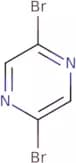
CAS:<p>2,5-Dibromopyrazine is a heterocyclic compound that can be synthesized by the Suzuki coupling reaction of 2-bromo-1,3-dibromopropane with an acceptor. It has been shown to have glycemic parameters and a high rate enhancement for the water molecule photophysical isomerization reaction. Structural isomers of 2,5-dibromopyrazine exist as well and are thought to have different rates of photocatalytic activity. The rate enhancement may be due to the increase in electron density on the heteroatoms in the ring.</p>Formula:C4H2Br2N2Purezza:Min. 98%Colore e forma:Brown White Off-White Yellow Clear LiquidPeso molecolare:237.88 g/mol3-Thiopheneacetic acid
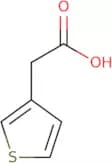
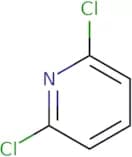
CAS:<p>3-Thiopheneacetic acid (3-TAA) is an insoluble polymer that can be used in analytical chemistry to measure the concentration of sodium carbonate. This polymer is prepared by reacting 3-thiophenecarboxylic acid with sodium carbonate. 3-TAA is a white powder and soluble in water, but insoluble in organic solvents. The transfer reactions of 3-TAA have been studied using electrochemical impedance spectroscopy and thermal expansion measurements. Due to its redox potential, it has been shown to be a potent inhibitor of human serum albumin transport and also inhibits the activity of enzymes such as glyceraldehyde phosphate dehydrogenase, phosphofructokinase, and pyruvate kinase.</p>Formula:C6H6O2SPurezza:Min. 97.5 Area-%Colore e forma:White PowderPeso molecolare:142.18 g/mol2,6-Dichloropyridine
CAS:<p>2,6-Dichloropyridine is an organohalide used as a reagent for asymmetric catalysis. It is use as a precursor for the synthesis of antibacterial agents, for example the synthesis of the antibiotic enoxacin.</p>Formula:C5H3Cl2NPurezza:Min. 98%Colore e forma:White To Yellowish To Pink To Grey To Light Brown SolidPeso molecolare:147.99 g/mol2-Hydroxy-4-methoxybenzaldehyde
CAS:<p>2-Hydroxy-4-methoxybenzaldehyde is an organic chemical that is used as a versatile building block for complex compounds, research chemicals, and reagents. It is also used as a speciality chemical and as a useful intermediate in the synthesis of other chemicals. 2-Hydroxy-4-methoxybenzaldehyde has CAS No. 673-22-3 and can be used to make many different types of compounds. This compound is a useful scaffold for the synthesis of diverse compounds with biological activity such as pharmaceuticals, agrochemicals, dyes, perfumes, fragrances, flavors and fragrances.</p>Formula:C8H8O3Purezza:Min. 99.0 Area-%Peso molecolare:152.15 g/mol


![3-(Trifluoromethyl)-1-oxa-2,8-diazaspiro[4.5]dec-2-ene](/_next/image/?url=https%3A%2Fstatic.cymitquimica.com%2Fproducts%2F3D%2Fthumb-webp%2FRID39800.webp&w=3840&q=75)