


Building Blocks
Questa sezione contiene prodotti fondamentali per la sintesi di composti organici e biologici. Building blocks sono i materiali di partenza essenziali utilizzati per costruire molecole complesse attraverso varie reazioni chimiche. Svolgono un ruolo critico nella scoperta di farmaci, nella scienza dei materiali e nella ricerca chimica. Presso CymitQuimica, offriamo una gamma diversificata di building blocks di alta qualità per supportare le tue ricerche innovative e progetti industriali, assicurandoti di avere i componenti essenziali per una sintesi di successo.
Sottocategorie di "Building Blocks"
- Acidi boronici e derivati dell'acido boronico(5.756 prodotti)
- Building Blocks Chirali(1.242 prodotti)
- Building Blocks Idrocarburici(6.095 prodotti)
- Building Blocks organici(61.038 prodotti)
Trovati 196817 prodotti di "Building Blocks"
Ordinare per
Purezza (%)
0
100
|
0
|
50
|
90
|
95
|
100
Penicillin V
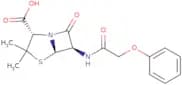
CAS:<p>Penicillin V is an antibiotic that belongs to the class of penicillins. It is used in the treatment of bacterial infections, such as streptococcal pharyngitis and infectious diseases. Penicillin V binds to the penicillin-binding proteins, which are located on the outer surface of the bacterial membrane and prevent cell wall synthesis. This binding inhibits cell wall biosynthesis by preventing transpeptidation and transglycosylation reactions and leads to cell death. Penicillin V also inhibits the production of certain cytokines, including interleukin-1β (IL-1β) and tumor necrosis factor α (TNFα), which may be a result of its ability to inhibit Toll-like receptor 4 (TLR4). The solubility data for penicillin V was obtained from experiments conducted with experimental animals. The oral cephalosporins were shown to have a greater affinity for penicillin-binding proteins than pen</p>Formula:C16H18N2O5SPurezza:Min. 95%Peso molecolare:350.39 g/molBenzylamine
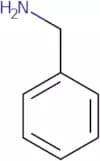
CAS:<p>Substrate of benzylamine oxidase and monoamine oxidase B</p>Formula:C7H9NPurezza:Min. 98.0 Area-%Colore e forma:Colorless Slightly Yellow Clear LiquidPeso molecolare:107.15 g/molo-Sulfobenzoic acid anhydride
CAS:<p>Please enquire for more information about o-Sulfobenzoic acid anhydride including the price, delivery time and more detailed product information at the technical inquiry form on this page</p>Formula:C7H4O4SPeso molecolare:184.17 g/molRef: 3D-S-9350
1kgPrezzo su richiesta5kgPrezzo su richiesta10kgPrezzo su richiesta500gPrezzo su richiesta2500gPrezzo su richiesta-Unit-kgkgPrezzo su richiestaα-Sulfophenylacetic acid
CAS:<p>Alpha-Sulfophenylacetic acid is a high quality reagent that is useful as an intermediate in the synthesis of complex compounds. It is also a fine chemical that can be used as a building block for the synthesis of speciality chemicals and research chemicals. Alpha-sulfophenylacetic acid is a versatile building block for reactions involving organic synthesis, and can be used as a reaction component to produce dyes, pharmaceuticals, pesticides, and herbicides.</p>Formula:C8H8O5SPurezza:Min. 95.0 Area-%Peso molecolare:216.21 g/molRef: 3D-S-9630
1kgPrezzo su richiesta5kgPrezzo su richiesta10kgPrezzo su richiesta25kgPrezzo su richiesta2500gPrezzo su richiesta-Unit-kgkgPrezzo su richiesta2-[4-(Aminomethyl)phenyl]ethan-1-ol
CAS:<p>Versatile small molecule scaffold</p>Formula:C9H13NOPurezza:Min. 95%Peso molecolare:151.21 g/mol6-Methoxyindole-2-carboxylic acid
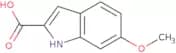
CAS:<p>6-Methoxyindole-2-carboxylic acid (6MI) is a potent inhibitor of the enzyme catechol-O-methyltransferase (COMT). This inhibition prevents the conversion of catecholamines, such as dopamine and norepinephrine, to their corresponding methylated products. COMT inhibitors are used clinically to treat Parkinson's disease and other diseases that result from excessive levels of these neurotransmitters. 6MI is also an effective inhibitor of tyrosinase activity in vitro. It has been shown to inhibit the synthesis of melanin by melanocytes and inhibits the production of eumelanin, which is responsible for black or brown skin pigments. The inhibitory potency of 6MI was found to be greater than that for kojic acid, arbutin, and hydroquinone. Optimization studies showed that 6MI was most potent at a concentration of 1 mM and had an IC50 value of 0.3 mM in</p>Formula:C10H9NO3Purezza:Min. 95%Colore e forma:PowderPeso molecolare:191.18 g/mol6-Methoxyindole-2-carboxylic acid methyl ester
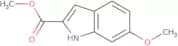
CAS:<p>6-Methoxyindole-2-carboxylic acid methyl ester is a pyrroloquinoline alkaloid with cytotoxic and antiproliferative activities. It inhibits the growth of cancer cells in culture by inducing apoptosis and cell cycle arrest. 6-Methoxyindole-2-carboxylic acid methyl ester has been shown to be effective against breast cancer cell lines in vitro and to inhibit the proliferation of breast cancer cells in vivo. This compound also inhibits the growth of a number of other cancer cell lines such as prostate, colon, lung, liver, stomach, and leukemia. The mechanism of action for this compound is thought to be due to its ability to act as an intramolecular quencher of reactive oxygen species (ROS) or as an inhibitor of DNA synthesis through inhibition of ribonucleotide reductase activity.</p>Formula:C11H11NO3Purezza:Min. 95%Colore e forma:PowderPeso molecolare:205.21 g/mol4,4,5,5-Tetramethyl-2-[4-(pentafluorosulfanyl)phenyl]-1,3,2-dioxaborolane
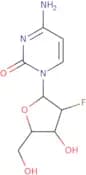
CAS:<p>Versatile small molecule scaffold</p>Formula:C12H16BF5O2SPurezza:Min. 80%Peso molecolare:330.13 g/mol4-Amino-1-(2-deoxy-2-fluoro-β-D-arabinofuranosyl)-2(1H)-pyrimidinone
CAS:<p>Please enquire for more information about 4-Amino-1-(2-deoxy-2-fluoro-β-D-arabinofuranosyl)-2(1H)-pyrimidinone including the price, delivery time and more detailed product information at the technical inquiry form on this page</p>Formula:C9H12FN3O4Purezza:Min. 95%Peso molecolare:245.21 g/mol6-Mercaptopurine hydrate
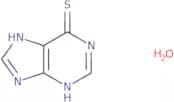
CAS:<p>6-Mercaptopurine is a purine analog that suppresses the production of white blood cells by inhibiting the enzyme thiopurine methyltransferase. It has been used to treat bowel disease and also for long-term suppression of the immune system in patients with autoimmune diseases. 6-Mercaptopurine is metabolized to 6-mercaptopurine, which is then converted to dinucleotide phosphate (dNTP) by group P2 enzymes. This conversion allows 6-mercaptopurine to inhibit dNTP synthesis and cell division. The effects of 6-mercaptopurine are potentiated when given in conjunction with azathioprine, another drug that inhibits purine metabolism. 6-Mercaptopurine is not active against human serum albumin or erythrocytes because it cannot be cleaved into an active form by these proteins. However, it does inhibit enzyme activities such as DNA polymerase, RNA polymerase, and protein</p>Formula:C5H4N4S•H2OPurezza:Min. 97 Area-%Colore e forma:Yellow PowderPeso molecolare:152.18 g/mol5-Bromoindole-3-carboxaldehyde
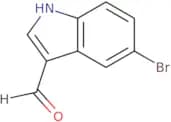
CAS:<p>5-Bromoindole-3-carboxaldehyde is a water molecule that has been crystallized in the form of an amide. It is a chemical substance with asymmetric synthesis and significant antifungal activity. 5-Bromoindole-3-carboxaldehyde is active against some strains of the fungus Candida albicans and has been shown to inhibit the growth of kidney cells. This molecule also binds to the neurokinin 1 receptor and is used as a probe for fluorescence studies. The efficient method for synthesizing 5-Bromoindole-3-carboxaldehyde includes using silico analysis to confirm the structure on a computer, then performing an asymmetric synthesis with an acid catalyst to produce this compound.</p>Formula:C9H6BrNOPurezza:Min. 98 Area-%Colore e forma:PowderPeso molecolare:224.05 g/moltert-Butyl 2-(furan-2-yl)-1H-indole-1-carboxylate
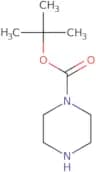
CAS:<p>Please enquire for more information about tert-Butyl 2-(furan-2-yl)-1H-indole-1-carboxylate including the price, delivery time and more detailed product information at the technical inquiry form on this page</p>Formula:C17H17NO3Purezza:Min. 95%Colore e forma:Clear LiquidPeso molecolare:283.32 g/moltert-Butyl 1-piperazinecarboxylate
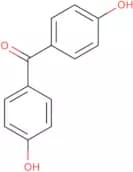
CAS:<p>tert-Butyl 1-piperazinecarboxylate is an antimicrobial agent that belongs to the group of aryl halides. It has been shown to have high affinity for the 5-HT1A receptor and inhibit its function. Tert-butyl 1-piperazinecarboxylate inhibits the kinase activity of protein tyrosine phosphatase 1B (PTP1B) and prevents the activation of this enzyme, which is involved in a number of cellular processes. This compound has been shown to inhibit the growth factor amines, such as NGF, IGF-1, PDGF and GHRH. Hydrogen bonds are formed between tert-butyl 1-piperazinecarboxylate molecules through hydrophobic interactions with aromatic rings, which may account for its potency against resistant mutants.</p>Formula:C9H18N2O2Purezza:Min. 95%Colore e forma:PowderPeso molecolare:186.25 g/molBis(4-hydroxy)benzophenone
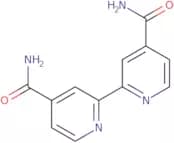
CAS:<p>Bis(4-hydroxyphenyl)benzene is a cross-linking agent that is used as a photoinitiator in the production of polymers and coatings. It is also used in wastewater treatment to remove organic matter, phenols, and other pollutants. This chemical has been shown to have physiological effects on hamster V79 cells and may cause cancer. The toxicity of Bis(4-hydroxyphenyl)benzene can be reduced by the addition of hydroxylamine or hydrogen fluoride. Hydroxyl groups can be quantified using diphenyl ether or p-hydroxybenzoic acid. Bis(4-hydroxyphenyl)benzene also reacts with serine protease and has been shown to inhibit the growth of V79 cells in urine samples.</p>Formula:C13H10O3Purezza:Min. 95%Colore e forma:White Off-White PowderPeso molecolare:214.22 g/mol2,2'-Bipyridine-4,4'-dicarboxamide
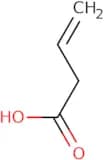
CAS:<p>2,2'-Bipyridine-4,4'-dicarboxamide is a catalyst that can be used in a variety of reactions. It has been used as an additive to increase yields and to accelerate catalytic reactions. The compound also has the ability to oxidize picolinic acid and form formic acid. This product can be used in glycerol synthesis or hydrogen peroxide production. 2,2'-Bipyridine-4,4'-dicarboxamide is a ligand that binds to picolinic acid and peroxide ions, forming an ion pair with the peroxide ion. This complex increases the efficiency of hydrogen peroxide evolution from water by up to 100%.</p>Formula:C12H10N4O2Purezza:Min. 95%Colore e forma:PowderPeso molecolare:242.23 g/mol3-Butenoic acid
CAS:<p>3-Butenoic acid is a fatty acid that belongs to the group of short chain carboxylic acids. It is used in detergent compositions where it functions as a cationic surfactant and has a hydroxyl group that can be used for polymerization reactions. 3-Butenoic acid is also used as an analytical reagent, e.g., in electrochemical impedance spectroscopy, in which it has been shown to have phase transition temperature of around 38°C. 3-Butenoic acid can be synthesized by reacting butanol with hydrochloric acid and copper chloride in the presence of a cationic surfactant such as alkyltrimethylammonium chloride or benzalkonium chloride. 3-Butenoic acid also acts as a Jak1 inhibitor and has receptor activity against all types of receptors, including those for histamine, acetylcholine, dopamine, serotonin, and GABA (gamma aminob</p>Formula:C4H6O2Purezza:Min. 95 Area-%Colore e forma:Colorless Clear LiquidPeso molecolare:86.09 g/mol6-Methyluracil
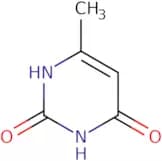
CAS:<p>6-Methyluracil is an antimetabolite that inhibits protein synthesis and is therefore used in the treatment of infectious diseases. 6-Methyluracil has two hydroxyl groups, which are located in adjacent positions on the ring. The optimum concentration for this drug is 3-10 μM, which can be achieved with a malonic acid buffer solution at pH 7.4. 6-Methyluracil reacts with sodium succinate to form an acid complex, which may have antiinflammatory activity. 6-Methyluracil has been shown to inhibit prostaglandin synthesis and exhibits a reaction with radiation to produce photoproducts that can be detected by analytical chemistry.</p>Formula:C5H6N2O2Purezza:Min. 95%Colore e forma:PowderPeso molecolare:126.12 g/mol4-Methyl-4'-carboxy-2,2'-bipyridine
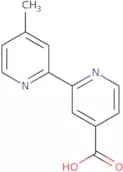
CAS:<p>4-Methyl-4'-carboxy-2,2'-bipyridine is a fluorescent probe that can be used to detect the presence of hydrogen peroxide in cells. It has been shown to bind to mitochondria and liver cells. The binding constants are in the range of 10 M. When exposed to light, 4-methyl-4'-carboxy-2,2'-bipyridine emits an orange fluorescence. This chemical has been used as an oxidation catalyst for amides and as an enhancer for reactive species in kinetic experiments. It also has been shown to have proton uptake properties.</p>Formula:C12H10N2O2Purezza:Min. 95%Colore e forma:Off-White PowderPeso molecolare:214.22 g/mol2-Methyl-4-nitrobenzoic acid
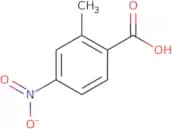
CAS:<p>2-Methyl-4-nitrobenzoic acid is a synthetic drug substance. The crystalline structure of 2-methyl-4-nitrobenzoic acid is polymorphic and it can be obtained in two different forms: anhydrous form and monohydrate form. The reaction yield for this compound is low, which may be due to the presence of additives or deionized water. This drug substance has a high solubility in hydroxide solutions and methylbenzene. It reacts slowly with hydrochloric acid and sodium hydroxide solution to produce 2-methyl-4-nitrobenzoic acid hydrochloride and sodium benzoate, respectively. 2-Methyl-4-nitrobenzoic acid has low bioavailability due to its poor absorption from the gastrointestinal tract into the bloodstream.</p>Formula:C8H7NO4Purezza:Min. 95%Colore e forma:PowderPeso molecolare:181.15 g/mol4-[(5-Ethyl-1,2,4-oxadiazol-3-yl)methoxy]piperidine
CAS:<p>Versatile small molecule scaffold</p>Formula:C10H17N3O2Purezza:Min. 90%Colore e forma:Clear LiquidPeso molecolare:211.26 g/mol



![2-[4-(Aminomethyl)phenyl]ethan-1-ol](/_next/image/?url=https%3A%2Fstatic.cymitquimica.com%2Fproducts%2F3D%2Fthumb-webp%2FLFA08118.webp&w=3840&q=75)
![4,4,5,5-Tetramethyl-2-[4-(pentafluorosulfanyl)phenyl]-1,3,2-dioxaborolane](/_next/image/?url=https%3A%2Fstatic.cymitquimica.com%2Fproducts%2F3D%2Fthumb-webp%2FLBC27834.webp&w=3840&q=75)
![4-[(5-Ethyl-1,2,4-oxadiazol-3-yl)methoxy]piperidine](/_next/image/?url=https%3A%2Fstatic.cymitquimica.com%2Fproducts%2F3D%2Fthumb-webp%2FBAC08222.webp&w=3840&q=75)