Building Blocks
Questa sezione contiene prodotti fondamentali per la sintesi di composti organici e biologici. Building blocks sono i materiali di partenza essenziali utilizzati per costruire molecole complesse attraverso varie reazioni chimiche. Svolgono un ruolo critico nella scoperta di farmaci, nella scienza dei materiali e nella ricerca chimica. Presso CymitQuimica, offriamo una gamma diversificata di building blocks di alta qualità per supportare le tue ricerche innovative e progetti industriali, assicurandoti di avere i componenti essenziali per una sintesi di successo.
Sottocategorie di "Building Blocks"
- Acidi boronici e derivati dell'acido boronico(5.756 prodotti)
- Building Blocks Chirali(1.242 prodotti)
- Building Blocks Idrocarburici(6.093 prodotti)
- Building Blocks organici(60.533 prodotti)
Trovati 195534 prodotti di "Building Blocks"
Ordinare per
Purezza (%)
0
100
|
0
|
50
|
90
|
95
|
100
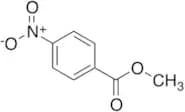
Methyl 4-Nitrobenzoate
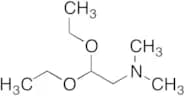
CAS:Prodotto controllato<p>Applications Methyl 4-nitrobenzoate (cas# 619-50-1) is a useful research chemical.<br></p>Formula:C8H7NO4Colore e forma:NeatPeso molecolare:181.15Dimethylaminoacetaldehyde Diethyl Acetal
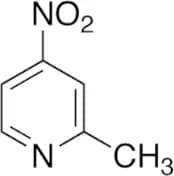
CAS:Prodotto controllatoFormula:C8H19NO2Colore e forma:NeatPeso molecolare:161.252-Methyl-4-nitropyridine
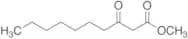
CAS:Prodotto controllato<p>Applications 2-Methyl-4-nitropyridine (cas# 13508-96-8) is a compound useful in organic synthesis.<br></p>Formula:C6H6N2O2Colore e forma:NeatPeso molecolare:138.12Methyl 3-Oxodecanoate
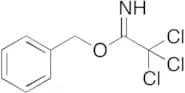
CAS:Prodotto controllatoFormula:C11H20O3Colore e forma:NeatPeso molecolare:200.27Benzyl 2,2,2-Trichloroacetimidate
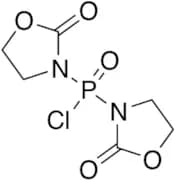
CAS:Prodotto controllatoFormula:C9H8Cl3NOColore e forma:NeatPeso molecolare:252.52Bis(2-oxo-3-oxazolidinyl)phosphinic Chloride
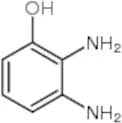
CAS:Prodotto controllato<p>Applications Bis(2-Oxo-3-Oxazolidinyl)Phosphinic Chloride (cas# 68641-49-6) is a useful research chemical.<br></p>Formula:C6H8ClN2O5PColore e forma:NeatPeso molecolare:254.562,3-Diaminophenol
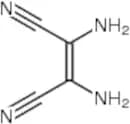
CAS:Prodotto controllato<p>Applications 2,3-Diaminophenol<br></p>Formula:C6H8N2OColore e forma:NeatPeso molecolare:124.14Diaminomaleonitrile
CAS:Prodotto controllato<p>Applications Diaminomaleonitrile is a reagent used for the synthesis of 1,4-diazepine-2,3-dicarbonitrile dervatives. Also, it is used for the synthesis of Diaminomaleonitrile-based Schiff bases with a donor-acceptor structure and an aggregation-enhanced emission feature.<br> Not a dangerous good if item is equal to or less than 1g/ml and there is less than 100g/ml in the package<br>References Wieczorek, E., et al.: Tetrahedron Lett., 58, 758-761 (2017); Han, T., et al.: J. Mater. Chem. C Mater. Opt. Electron Devices, 4, 10430-10434 (2016);<br></p>Formula:C4H4N4Colore e forma:NeatPeso molecolare:108.11,4-Cyclohexanediol (Cis/Trans Mixture)
CAS:Prodotto controllato<p>Applications 1,4-Cyclohexanediol is used as a reagent in the development of noviomimetics as C-terminal Hsp90 inhibitors.<br>References Anyika, M., et al.: ACS Med. Chem. Lett., 7, 67 (2016)<br></p>Formula:C6H12O2Colore e forma:NeatPeso molecolare:116.162,4,6-Collidine
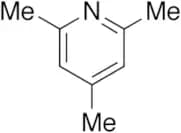
CAS:Prodotto controllato<p>Applications 2,4,6-Collidine is an reagent used for various synthetic preparations such as the synthesis of methylated pyridines by three-componet catalytic condensation of acetylene, acetone and ammonia.<br> Not a dangerous good if item is equal to or less than 1g/ml and there is less than 100g/ml in the package<br>References Pertel, S.S., et al.: Carbohydrate. Rsch., 356, 172 (2012); Kung, A. C., et al.: J. Org. Chem., 70, 3127 (2005);<br></p>Formula:C8H11NColore e forma:NeatPeso molecolare:121.18(4S,cis)-1,1-Dimethylethyl-6-aminoethyl-2,2-dimethyl-1,3-dioxane-4-acetate
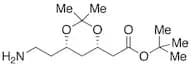
CAS:Prodotto controllato<p>Applications An impurity of Atorvastatin.<br>References Graul, A., et al.: Drugs Fut. 22, 956 (1997),<br></p>Formula:C14H27NO4Colore e forma:NeatPeso molecolare:273.373-Methylphthalic Acid
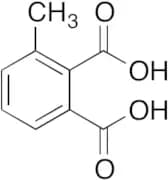
CAS:Prodotto controllatoFormula:C9H8O4Colore e forma:NeatPeso molecolare:180.164-Bromomethyl-7-methoxycoumarin
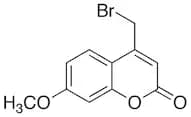
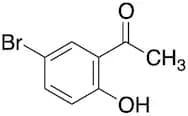
CAS:Prodotto controllato<p>Stability Moisture, Light Sensitive<br>Applications Used for derivatization, TLC and HPLC separation, and fluorometric analysis of a wide range of naturally occurring acids, including bile and thromboxane B2.<br>References Clin. Chim. Acta., 214, 195 (1993), Anal. Lett., 26, 429 (1993)<br></p>Formula:C11H9BrO3Colore e forma:NeatPeso molecolare:269.091-(5-Bromo-2-hydroxyphenyl)ethanone
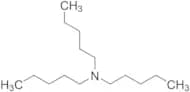
CAS:Prodotto controllato<p>Applications 1-(5-Bromo-2-hydroxyphenyl)ethanone<br></p>Formula:C8H7BrO2Colore e forma:NeatPeso molecolare:215.044Triamylamine(mixture of branched chain isomers)
CAS:Prodotto controllato<p>Applications Triamylamine(mixture of branched chain isomers) (CAS# 621-77-2) is a useful research chemical compound.<br></p>Formula:C15H33NColore e forma:NeatPeso molecolare:227.435-Iodo-2-furaldehyde
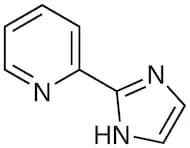
CAS:Formula:C5H3IO2Purezza:>98.0%(GC)Colore e forma:White to Yellow powder to crystalPeso molecolare:221.982-(1H-Imidazol-2-yl)pyridine
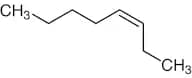
CAS:Formula:C8H7N3Purezza:>98.0%(GC)(T)Colore e forma:White to Light yellow to Light orange powder to crystalPeso molecolare:145.17cis-3-Octene
CAS:Formula:C8H16Purezza:>98.0%(GC)Colore e forma:Colorless to Almost colorless clear liquidPeso molecolare:112.222-Iodopyridine
CAS:<p>2-Iodopyridine is an organic compound with the chemical formula C5H5N. It is a white crystalline solid that is soluble in water, alcohol, and ether. The molecule contains a methyl group and two iodine atoms. 2-Iodopyridine has several industrial uses. It acts as a precursor to various pharmaceuticals and agrochemicals. The compound also exhibits insulin resistance properties, which may be related to its ability to bind to the insulin receptor and inhibit insulin signaling. 2-Iodopyridine can also be used for treating cancer because it binds to the DNA of cancer cells, preventing replication and leading to cell death.</p>Formula:C5H4INPurezza:Min. 95%Colore e forma:PowderPeso molecolare:205 g/mol1,2,3,4-Tetrachlorohexafluorobutane
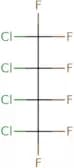
CAS:<p>1,2,3,4-Tetrachlorohexafluorobutane is a colorless liquid with an unpleasant odor. It is used as a solvent and as a chemical intermediate in the production of other chemicals. 1,2,3,4-Tetrachlorohexafluorobutane has been shown to react with hydrochloric acid to produce hydrogen chloride gas and hydrogen fluoride. The reaction vessel must be well-ventilated and the use of protective clothing is recommended due to the potential for exposure to hydrogen fluoride. This compound can also be chlorinated using chlorine gas or hypochlorite solution.</p>Formula:C4Cl4F6Purezza:Min. 95%Colore e forma:Colorless Clear LiquidPeso molecolare:303.84 g/mol