Building Blocks
Questa sezione contiene prodotti fondamentali per la sintesi di composti organici e biologici. Building blocks sono i materiali di partenza essenziali utilizzati per costruire molecole complesse attraverso varie reazioni chimiche. Svolgono un ruolo critico nella scoperta di farmaci, nella scienza dei materiali e nella ricerca chimica. Presso CymitQuimica, offriamo una gamma diversificata di building blocks di alta qualità per supportare le tue ricerche innovative e progetti industriali, assicurandoti di avere i componenti essenziali per una sintesi di successo.
Sottocategorie di "Building Blocks"
- Acidi boronici e derivati dell'acido boronico(5.756 prodotti)
- Building Blocks Chirali(1.242 prodotti)
- Building Blocks Idrocarburici(6.093 prodotti)
- Building Blocks organici(60.534 prodotti)
Trovati 195534 prodotti di "Building Blocks"
Ordinare per
Purezza (%)
0
100
|
0
|
50
|
90
|
95
|
100
2-Amino-3-bromopyrazine
CAS:<p>2-Amino-3-bromopyrazine is a molecule that belongs to the class of pyrazoles. It has been synthesized and optimised for its diffraction properties. The active conformation of 2-amino-3-bromopyrazine has been determined by xanthate methylation and hydrobromide formation. This molecule has been synthesised using a variety of different methods, including an intramolecular hydrogen transfer reaction with methyl derivatives, as well as the use of xanthates. The physicochemical properties of this molecule have also been studied, yielding some interesting results.</p>Formula:C4H4BrN3Purezza:Min. 95%Colore e forma:PowderPeso molecolare:174.01 g/mol2-Thiophenemethanol
CAS:<p>2-Thiophenemethanol is a colorless liquid that has a strong, disagreeable odor and is soluble in water. It can be prepared by the reaction of 2-methylpropanal with trifluoroacetic acid. This compound reacts with methapyrilene to form polymers, which have a cationic character. The chemical structure of the molecule was determined by a combination of experimental techniques such as proton nuclear magnetic resonance spectroscopy, infrared spectroscopy, and mass spectrometry. Hydrogen bonding plays an important role in the structure of 2-thiophenemethanol as it forms intermolecular hydrogen bonds with neighboring molecules. The chemical formula for this compound is CH3C6H4SO2H. Hydrochloric acid can be used to break down this compound into methylmercaptan and sulfur dioxide.</p>Formula:C5H6OSPurezza:Min. 98%Colore e forma:Clear LiquidPeso molecolare:114.17 g/molD-Phenylalanine
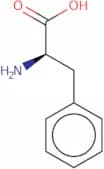
CAS:<p>D-Phenylalanine is an amino acid that is found in the human body and is used as a pharmacological agent. It has been shown to be an antimicrobial peptide with a broad spectrum of activity against bacteria, yeast, and fungi. D-Phenylalanine also has the ability to inhibit the production of peptide hormones, such as gastrin and vasopressin, and can be used as an inhibitor for enzymes such as acetylcholine esterase. Studies have shown that D-phenylalanine can increase mitochondrial membrane potential in cells by binding to ester hydrochloride. This leads to increased enzyme activities, which may result in a decrease in hydrogen bonding interactions.</p>Formula:C9H11NO2Purezza:Min. 95%Colore e forma:White Off-White PowderPeso molecolare:165.19 g/molThieno[3,2-d]pyrimidin-4(1H)-one
CAS:Formula:C6H4N2OSPurezza:>98.0%(T)(HPLC)Colore e forma:White to Almost white powder to crystalPeso molecolare:152.171-Bromo-5-fluoropentane
CAS:<p>1-Bromo-5-fluoropentane is a colorless liquid with a high viscosity. It is an inhibitor of enzymes that catalyze fatty acid synthesis, and can be used to treat hepatitis C. 1-Bromo-5-fluoropentane has been shown to have anti-HIV activity in vitro, inhibiting the infection of human cells by HIV. This compound blocks the cb2 receptor, which is involved in the inflammatory process. 1-Bromo-5-fluoropentane also inhibits hydroxylase and thiolase activities in human liver cells. This agent is a synthetic cannabinoid that is structurally similar to THC, but does not bind to CB1 or CB2 receptors. It has a liquid crystal composition at room temperature, but becomes a solid crystal at higher temperatures. 1-Bromo-5-fluoropentane exhibits spontaneous activity when heated to about 100°C. It reacts</p>Formula:C5H10BrFPurezza:Min. 95%Colore e forma:Colorless Slightly Yellow Clear LiquidPeso molecolare:169.04 g/mol2,6-Pyridinedicarboxylic acid dimethyl ester
CAS:<p>2,6-Pyridinedicarboxylic acid dimethyl ester is a drug that has shown anticancer activity in animal models. It binds to DNA, forming a ternary complex with the DNA and the enzyme topoisomerase I. The binding of this drug to the enzyme prevents it from breaking the DNA strands during replication, causing the cell to die. It has been shown that 2,6-pyridinedicarboxylic acid dimethyl ester can be used as a non-competitive inhibitor of topoisomerase I. Furthermore, it has been demonstrated that 2,6-pyridinedicarboxylic acid dimethyl ester is able to bind to human endometrial cancer cells with high affinity. Finally, 2,6-pyridinedicarboxylic acid dimethyl ester was found in x-ray crystal structures of complexes with hydrogen bonds and low activation enthalpy and entropy.</p>Formula:C9H9NO4Purezza:Min. 95%Colore e forma:White PowderPeso molecolare:195.17 g/mol4-Methoxybenzenesulfonyl chloride
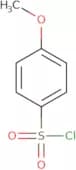
CAS:<p>4-Methoxybenzenesulfonyl chloride is a water-soluble and colorless solid that is used in the treatment of wastewater. It binds to hydroxyl groups and copper complexes, which are present in high concentrations in wastewater. 4-Methoxybenzenesulfonyl chloride can be used as an analytical reagent for determining binding constants, as well as for the separation of amyloid proteins. This compound has been shown to have anti-inflammatory properties by inhibiting the production of pro-inflammatory cytokines such as tumor necrosis factor (TNF) and interleukin (IL)-1β. 4-Methoxybenzenesulfonyl chloride also has activity against certain cancers such as L1210 leukemia cells in mice and diphenyl ethers.</p>Formula:C7H7ClO3SPurezza:Min. 97 Area-%Colore e forma:Brown Off-White PowderPeso molecolare:206.65 g/mol(Dimethylamino)acetonitrile
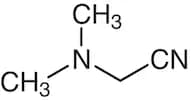
CAS:Formula:C4H8N2Purezza:>96.0%(GC)(T)Colore e forma:Colorless to Light yellow to Light orange clear liquidPeso molecolare:84.122-Phenylacetophenone
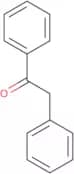
CAS:<p>2-Phenylacetophenone is a synthetic compound that has been shown to be cytotoxic and significantly inhibit the growth of bacteria. 2-Phenylacetophenone binds to fatty acids in the cell membrane and forms covalent linkages with them, leading to the permeabilization of the cell membrane. This leads to bacterial death because without a functional cell membrane, cells cannot maintain homeostasis. The mechanism for this is not fully understood but it is believed that 2-phenylacetophenone binds to toll-like receptor 4 (TLR4) on macrophages, which triggers an inflammatory response. 2-Phenylacetophenone also reacts with hydroxyl groups on DNA and may interfere with DNA repair mechanisms.</p>Formula:C14H12OPurezza:Min. 95%Colore e forma:Red PowderPeso molecolare:196.24 g/mol3-Chloro-N,N-diethylpropan-1-amine
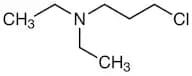
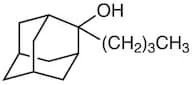
CAS:Formula:C7H16ClNPurezza:>98.0%(GC)(T)Colore e forma:Colorless to Almost colorless clear liquidPeso molecolare:149.662-Butyl-2-adamantanol
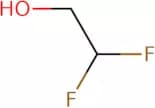
CAS:Formula:C14H24OPurezza:>98.0%(GC)Colore e forma:White to Almost white powder to crystalPeso molecolare:208.352,2-Difluoroethanol
CAS:<p>2,2-Difluoroethanol is a chemical compound with the molecular formula C2H4F2O. It is a colorless liquid that has a distinctive odor and is highly flammable. 2,2-Difluoroethanol reacts in an electrophilic substitution reaction to replace chlorine atoms with hydrogen atoms from the ethyl formate molecule. This reaction can be described by the following equation:</p>Formula:C2H4OF2Purezza:Min. 95%Colore e forma:PowderPeso molecolare:82.05 g/mol2-Toluenesulfonyl isocyanate
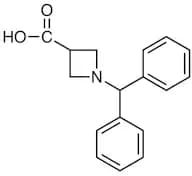
CAS:<p>2-Toluenesulfonyl isocyanate (2TSIC) is a reactive compound that belongs to the group of polyols. It has high resistance to water and other solvents, which makes it an excellent sealant. 2TSIC reacts with hydroxy groups on polymers and monomers to form hydrogen bonds. This reaction can be used in radiation curing of sealants. 2TSIC also interacts with m1 receptors, which are proteins found in the brain and spinal cord that regulate neurotransmitter release.</p>Formula:C8H7NO3SPurezza:Min. 95%Colore e forma:Colourless liquid.Peso molecolare:197.21 g/mol1-Benzhydrylazetidine-3-carboxylic Acid
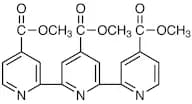
CAS:Formula:C17H17NO2Purezza:>98.0%(T)(HPLC)Colore e forma:White to Light yellow to Light orange powder to crystalPeso molecolare:267.33Trimethyl 2,2':6',2''-Terpyridine-4,4',4''-tricarboxylate
CAS:Formula:C21H17N3O6Purezza:>96.0%(HPLC)Colore e forma:White to Light yellow powder to crystalPeso molecolare:407.382,6-Dibromobenzoic acid
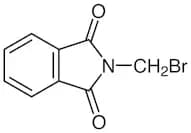
CAS:<p>2,6-Dibromobenzoic acid is a synthetic molecule that can be used to synthesize pyrrole derivatives in the presence of a base. It has been shown to react with a number of molecules, including halogens and chlorides. The active site of 2,6-dibromobenzoic acid is its bromine atom. The steric interactions between the 2,6-dibromobenzoic acid molecule and the substrate are strong enough to prevent other molecules from accessing the active site. Chlorides and diphenylmethane can also bind to 2,6-dibromobenzoic acid due to their similar properties. This molecule has also been shown to interact with aluminium and solvents such as ethanol or acetone.</p>Formula:C7H4Br2O2Purezza:Min. 95%Colore e forma:White PowderPeso molecolare:279.91 g/molN-(Bromomethyl)phthalimide
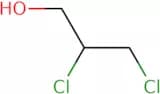
CAS:Formula:C9H6BrNO2Purezza:>96.0%(T)Colore e forma:White to Almost white powder to crystalPeso molecolare:240.062,3-Dichloro-1-propanol
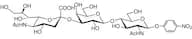
CAS:<p>2,3-Dichloro-1-propanol is a metabolic byproduct of chlorinated solvents. It has been shown to be toxic to mitochondria and can cause mitochondrial membrane potential disruption in rat liver cells. The chemical reacts with fatty acids to form a reactive carbonyl group that can react with the hydrogen bond of membrane phospholipids. This reaction disrupts the structure of the lipid bilayer, leading to mitochondrial degeneration. 2,3-Dichloro-1-propanol also reacts with glutathione and carbonic anhydrase, which leads to the formation of reactive intermediates that react with DNA or proteins. These reactions are responsible for the observed toxicity effects in animals.</p>Formula:C3H6Cl2OPurezza:Min. 95%Colore e forma:Clear LiquidPeso molecolare:128.98 g/molNeu5Acα(2-3)Galβ(1-4)GlcNAc-β-pNP
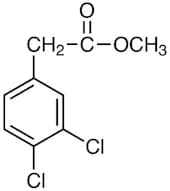
CAS:Formula:C31H45N3O21Purezza:>95.0%(HPLC)Colore e forma:White to Almost white powder to crystalPeso molecolare:795.70Methyl 3,4-Dichlorophenylacetate
CAS:Formula:C9H8Cl2O2Purezza:>98.0%(GC)Colore e forma:Colorless to Light orange to Yellow clear liquidPeso molecolare:219.06


![Thieno[3,2-d]pyrimidin-4(1H)-one](/_next/image/?url=https%3A%2Fstatic.cymitquimica.com%2Fproducts%2F3B%2Fthumb-webp%2FT3301.webp&w=3840&q=75)