Building Blocks
Questa sezione contiene prodotti fondamentali per la sintesi di composti organici e biologici. Building blocks sono i materiali di partenza essenziali utilizzati per costruire molecole complesse attraverso varie reazioni chimiche. Svolgono un ruolo critico nella scoperta di farmaci, nella scienza dei materiali e nella ricerca chimica. Presso CymitQuimica, offriamo una gamma diversificata di building blocks di alta qualità per supportare le tue ricerche innovative e progetti industriali, assicurandoti di avere i componenti essenziali per una sintesi di successo.
Sottocategorie di "Building Blocks"
- Acidi boronici e derivati dell'acido boronico(5.756 prodotti)
- Building Blocks Chirali(1.242 prodotti)
- Building Blocks Idrocarburici(6.093 prodotti)
- Building Blocks organici(60.525 prodotti)
Trovati 195536 prodotti di "Building Blocks"
Ordinare per
Purezza (%)
0
100
|
0
|
50
|
90
|
95
|
100
2,4-Dinitroaniline
CAS:<p>2,4-Dinitroaniline is a diazonium salt that is used in the wastewater treatment process. It is an analytical reagent that can be used to detect and identify nucleophilic groups. 2,4-Dinitroaniline is used as a precursor for other dyes and has been shown to have genotoxic activity in some cases. The chemical structure of 2,4-dinitroaniline is made up of two nitro groups attached to an amino group. This compound absorbs ultraviolet light at 260 nm and emits radiation at 360 nm, which can be measured using synchronous fluorescence spectroscopy. It reacts with hydrochloric acid to form diazonium salt.<br>2,4-Dinitroaniline has been shown to react with the protein monoclonal antibody CEA3B3 by binding to its reactive thiols. This binding leads to the disruption of the antibody's function and inhibits</p>Formula:C6H5N3O4Purezza:Min. 95%Colore e forma:Yellow PowderPeso molecolare:183.12 g/mol2,3-Dimethylnaphthalene
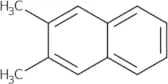
CAS:<p>Dimethylnaphthalene is an aromatic hydrocarbon that absorbs UV radiation. The absorption of UV radiation can be used to measure the concentration of this compound in a sample. The solubility data for dimethylnaphthalene show that it is soluble in supercritical carbon dioxide, but insoluble in water. Dimethylnaphthalene is a chemical compound that can be used as a skin conditioner or in biological treatment. It has been shown to have antioxidant properties and may also have anti-inflammatory effects. Dimethylnaphthalene is synthesized from naphthalene by two different reactions: hydrogenation and oxidation. The reaction mechanism for these two reactions has not yet been determined, but both are believed to produce the same product.</p>Formula:C12H12Purezza:Min. 95%Colore e forma:White PowderPeso molecolare:156.22 g/mol3,4-Dimethoxyphenylacetic acid
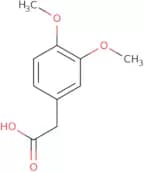
CAS:3,4-Dimethoxyphenylacetic acid is an aromatic acid that has antimicrobial properties. It is used as a food additive for the preservation of meat and poultry. The 3,4-dimethoxyphenyl group in this molecule is an intramolecular hydrogen acceptor. This property allows it to undergo transfer reactions with other molecules, such as protocatechuic acid and lignin. 3,4-Dimethoxyphenylacetic acid also inhibits cellular physiology and can be used in the treatment of bacteria in biological systems. The hydroxyl group can form an acidic compound by reacting with a proton donor, such as water or trifluoroacetic acid (TFA). This reaction may be catalyzed by the enzyme cytochrome P450 reductase.Formula:C10H12O4Purezza:Min. 95%Colore e forma:White PowderPeso molecolare:196.2 g/mol4,6-Dichloro-2-methylpyrimidine
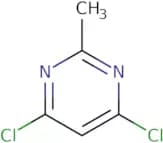
CAS:<p>2-Chloro-6-methylaniline is a synthetic compound that has been used in the synthesis of medicines, such as dasatinib. It is a nucleophile that binds to the receptor site on cells and blocks the binding of natural hormones. It is also an inhibitor of certain enzymes, including RNA polymerase and protein kinase. 2-Chloro-6-methylaniline is industrially produced by reacting sodium chloride with chlorosulfonic acid or hydrochloric acid in an autoclave at a temperature of 180 °C for three hours. The product can be purified by adding magnesium oxide and activated with hydrochloric acid to form 2-chloro-6-methylpyrimidine. The main impurities are 4,6-dichloro2 methylpyrimidine and 6,8 dichloro2 methylpyrimidine.</p>Formula:C5H4Cl2N2Purezza:Min. 95%Colore e forma:White To Yellow SolidPeso molecolare:163 g/molDL-Alanine methyl ester hydrochloride
CAS:<p>DL-Alanine methyl ester hydrochloride is a cytotoxic drug that is used to treat cancer. It inhibits the growth of cancer cells by binding to guanine in the cell's DNA and preventing its incorporation into DNA during replication. The substance also inhibits amino acid transport, causing a shortage of amino acids for protein synthesis. This leads to cell death by nucleophilic attack on the bond between two amino acids. DL-Alanine methyl ester hydrochloride has been shown to be effective against murine leukemia, HIV, and Herpes simplex virus type 1 (HSV-1). DL-Alanine methyl ester hydrochloride has two geometric isomers: L-alanine methyl ester hydrochloride and D-alanine methyl ester hydrochloride. These substances have different reactivities due to their different geometric shapes. Magnetic resonance spectroscopy can be used to differentiate between these substances in vivo, as well as in vitro.</p>Formula:C4H9NO2·HClPurezza:Min. 95%Colore e forma:White PowderPeso molecolare:139.58 g/mol4-(2-Aminoanilino)pyridine
CAS:<p>4-(2-Aminoanilino)pyridine is a pyridine that has been shown to be an impurity in the acid salt of 4-(2-aminophenyl)pyridine. It is an acidified impurity that can form when the pyridine reacts with hydrochloric acid or sulfuric acid.</p>Formula:C11H11N3Purezza:Min. 95%Colore e forma:PowderPeso molecolare:185.23 g/molD-Allylglycine
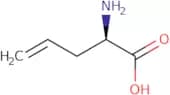
CAS:<p>D-Allylglycine is a l-amino acid with the chemical formula of CH2CH(CH3)COOH. D-Allylglycine binds to the N-methyl-D-aspartate (NMDA) receptor and has been shown in animal studies to have effects on blood pressure, although its clinical relevance remains unclear. It is an enantiopure compound and can be obtained as a trifluoroacetate salt or ethyl diazoacetate ester hydrochloride. D-Allylglycine is also an aminoglycoside and ester hydrochloride that can be used for the treatment of bacterial infections. The amino group in D-allylglycine binds to glutamate receptors, which are found on neurons, and inhibits the release of gamma-aminobutyric acid (GABA). This drug may also have potential as a serotonergic agent due to its ability to inhibit serotonin re</p>Formula:C5H9NO2Purezza:Min. 95%Colore e forma:White PowderPeso molecolare:115.13 g/mol2-Toluenesulfonyl isocyanate
CAS:<p>2-Toluenesulfonyl isocyanate (2TSIC) is a reactive compound that belongs to the group of polyols. It has high resistance to water and other solvents, which makes it an excellent sealant. 2TSIC reacts with hydroxy groups on polymers and monomers to form hydrogen bonds. This reaction can be used in radiation curing of sealants. 2TSIC also interacts with m1 receptors, which are proteins found in the brain and spinal cord that regulate neurotransmitter release.</p>Formula:C8H7NO3SPurezza:Min. 95%Colore e forma:Colourless liquid.Peso molecolare:197.21 g/mol3-Amino-5-bromo-2-chloropyridine
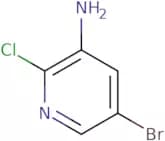
CAS:<p>3-Amino-5-bromo-2-chloropyridine is a synthetic compound that has been shown to be an inhibitor of phosphoinositide 3 kinase delta (PI3Kδ). It is also a potent inhibitor of the proliferation of human cancer cells in vitro and in vivo. The PI3Kδ is activated by insulin and other growth factors, which leads to the activation of downstream pathways. These pathways trigger cell growth and proliferation. 3-Amino-5-bromo-2-chloropyridine may have potential as a novel anticancer drug due to its ability to inhibit PI3Kδ activity and prevent the progression of cancer.</p>Formula:C5H4BrClN2Purezza:Min. 95%Colore e forma:Yellow PowderPeso molecolare:207.46 g/mol4-Amino-2,6-dichloro-3-nitropyridine
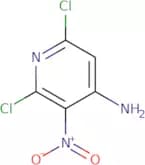
CAS:<p>4-Amino-2,6-dichloro-3-nitropyridine is a synthetic compound that inhibits tyrosine kinases. It is an isomer of 2,6-Dichloropyridine and has been shown to inhibit the growth of lymphoma cells in vitro. 4-Amino-2,6-dichloro-3-nitropyridine has three substitutions on the pyridine ring as compared to 2,6-Dichloropyridine. The substitutions are thought to be responsible for the increased hydrophilic properties of this compound. This may lead to increased cellular uptake and better bioavailability.</p>Formula:C5H3Cl2N3O2Purezza:Min. 95%Colore e forma:Slightly Yellow PowderPeso molecolare:208 g/mol2-Amino-3-methoxybenzoic acid
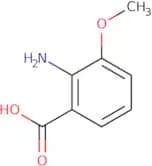
CAS:<p>2-Amino-3-methoxybenzoic acid is a chemical compound that is found in humans. It has antioxidative activity, and it inhibits the conversion of picolinic acid to kynurenine in vitro. 2-Amino-3-methoxybenzoic acid also significantly inhibits the formation of 3-hydroxyanthranilic acid and xanthurenic acid from anthranilic acid. This inhibition may be due to its ability to form hydrogen bonds with the substrate or competitive inhibition of enzymes such as quinoline reductase.<br>2-Amino-3-methoxybenzoic acid has been shown to have significant inhibitory effects on thermodynamic parameters for hydroxy group addition reactions involving quinoline derivatives, which may be due to its ability to bind covalently with these substrates.</p>Formula:C8H9NO3Purezza:Min. 95%Colore e forma:PowderPeso molecolare:167.16 g/mol6-Amino-5-bromopyrimidine-2,4(1H,3H)-dione
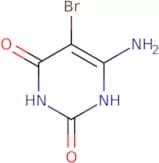
CAS:<p>6-Amino-5-bromopyrimidine-2,4(1H,3H)-dione (6ABPD) is a purine derivative that functions as an inhibitor of phosphorylase kinase. It has been shown to inhibit tumor growth in vivo and in vitro and is used as a therapeutic agent for the treatment of cancer. 6ABPD inhibits the production of phosphorylase kinase by binding to the enzyme's active site with noncompetitive inhibition. Inhibition of phosphorylase kinase leads to a decrease in the levels of ATP and thus decreases the availability of substrates for tumor cell growth and proliferation. 6ABPD also binds to thymidine kinase and inhibits its activity, which may account for some of its antitumor effects.</p>Formula:C4H4BrN3O2Purezza:Min. 95%Colore e forma:PowderPeso molecolare:206 g/mol2-(Acetylamino)-1,3-benzothiazole-6-carboxylic acid
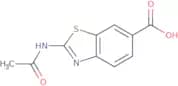
CAS:<p>2-(Acetylamino)-1,3-benzothiazole-6-carboxylic acid is a chemical intermediate that is used in organic synthesis as a reagent for the preparation of other compounds. It is a versatile building block and useful scaffold for the preparation of complex compounds. This compound can be used as a reaction component for research chemicals and speciality chemicals.</p>Formula:C10H8N2O3SPurezza:Min. 95%Colore e forma:PowderPeso molecolare:236.25 g/mol1-Amino-1-cyclopropanecarbonitrile hydrochloride
CAS:<p>1-Amino-1-cyclopropanecarbonitrile hydrochloride (ACN) is a synthetic compound that has been shown to be effective against cancer and inflammatory diseases. It is an acidic compound that has been shown to inhibit the growth of tumor cells by inducing apoptosis. This drug also binds to chloride ions and inhibits the production of inflammatory cytokines, such as IL-6, TNFα, and IL-2. 1-Amino-1-cyclopropanecarbonitrile hydrochloride is soluble in water and acetonitrile with a melting point of about 157°C. The molecule's structure was determined through kinetic measurements and thermodynamic calculations.</p>Formula:C4H6N2·HClPurezza:Min. 95%Colore e forma:Off-White PowderPeso molecolare:118.56 g/mol6,6'-Dibromo-2,2'-bipyridine
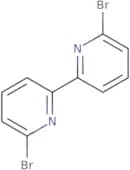
CAS:<p>6,6'-Dibromo-2,2'-bipyridine is a synthetic molecule that is used to produce amines. It can be synthesized in a cross-coupling reaction involving the reaction of an amine with bromine and a palladium catalyst. 6,6'-Dibromo-2,2'-bipyridine reacts with formaldehyde to form 2,4-diaminobiphenyls. This reaction is catalyzed by acid or base. 6,6'-Dibromo-2,2'-bipyridine has been shown to be reactive and photoexcited. Its photophysical properties make it a useful synthetic intermediate for the production of amines.</p>Formula:C10H6Br2N2Purezza:Min. 95%Colore e forma:PowderPeso molecolare:313.98 g/mol2-Amino-3-bromopyrazine
CAS:<p>2-Amino-3-bromopyrazine is a molecule that belongs to the class of pyrazoles. It has been synthesized and optimised for its diffraction properties. The active conformation of 2-amino-3-bromopyrazine has been determined by xanthate methylation and hydrobromide formation. This molecule has been synthesised using a variety of different methods, including an intramolecular hydrogen transfer reaction with methyl derivatives, as well as the use of xanthates. The physicochemical properties of this molecule have also been studied, yielding some interesting results.</p>Formula:C4H4BrN3Purezza:Min. 95%Colore e forma:PowderPeso molecolare:174.01 g/mol2-Amino-6-methoxypurine
CAS:<p>Intermediate in the synthesis of nelarabine</p>Formula:C6H7N5OPurezza:Min. 95%Colore e forma:PowderPeso molecolare:165.15 g/mol2-Amino-6-iodopurine
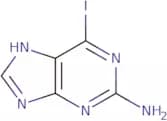
CAS:<p>2-Amino-6-iodopurine is an analog of the purine nucleoside guanine, which has been used to synthesize a variety of boronic acids. The most common use for 2-amino-6-iodopurine is in the synthesis of benzylboronic acid, which can be used as an organometallic reagent in organic synthesis. This compound also has dehydrogenase activity and has been shown to catalyze the conversion of benzoic acid to benzaldehyde, mediated by NADH. 2-Amino-6-iodopurine is found in the biosynthesis of ribonucleotides and deoxyribonucleotides, where it reacts with chloride ions and phosphate groups to form adenylate and xanthosine monophosphates.</p>Formula:C5H4IN5Purezza:Min. 95%Colore e forma:PowderPeso molecolare:261.02 g/mol2-Aminomethyl-3-chloropyrazine
CAS:<p>2-Aminomethyl-3-chloropyrazine is a potent inhibitor of the tyrosine kinase, which is an enzyme that controls the transmission of signals from outside the cell to inside. It inhibits collagen production by cells, thereby preventing cancer formation. 2-Aminomethyl-3-chloropyrazine has been shown to inhibit tumor growth in mice and rats. This drug also inhibits the activity of certain enzymes, including piperidine oxidase and xanthine oxidase, which are involved in the production of reactive oxygen species that can cause cancer. The drug's selectivity for tumor cells makes it a potential candidate for treating cancer.</p>Formula:C5H5ClN3Purezza:Min. 95%Peso molecolare:143.58 g/mol2-Thiophenemethanol
CAS:<p>2-Thiophenemethanol is a colorless liquid that has a strong, disagreeable odor and is soluble in water. It can be prepared by the reaction of 2-methylpropanal with trifluoroacetic acid. This compound reacts with methapyrilene to form polymers, which have a cationic character. The chemical structure of the molecule was determined by a combination of experimental techniques such as proton nuclear magnetic resonance spectroscopy, infrared spectroscopy, and mass spectrometry. Hydrogen bonding plays an important role in the structure of 2-thiophenemethanol as it forms intermolecular hydrogen bonds with neighboring molecules. The chemical formula for this compound is CH3C6H4SO2H. Hydrochloric acid can be used to break down this compound into methylmercaptan and sulfur dioxide.</p>Formula:C5H6OSPurezza:Min. 98%Colore e forma:Clear LiquidPeso molecolare:114.17 g/mol