Building Blocks
Questa sezione contiene prodotti fondamentali per la sintesi di composti organici e biologici. Building blocks sono i materiali di partenza essenziali utilizzati per costruire molecole complesse attraverso varie reazioni chimiche. Svolgono un ruolo critico nella scoperta di farmaci, nella scienza dei materiali e nella ricerca chimica. Presso CymitQuimica, offriamo una gamma diversificata di building blocks di alta qualità per supportare le tue ricerche innovative e progetti industriali, assicurandoti di avere i componenti essenziali per una sintesi di successo.
Sottocategorie di "Building Blocks"
- Acidi boronici e derivati dell'acido boronico(5.756 prodotti)
- Building Blocks Chirali(1.242 prodotti)
- Building Blocks Idrocarburici(6.095 prodotti)
- Building Blocks organici(61.037 prodotti)
Trovati 196139 prodotti di "Building Blocks"
Ordinare per
Purezza (%)
0
100
|
0
|
50
|
90
|
95
|
100
3,5-Dichloro-2-methoxybenzoic acid
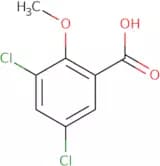
CAS:<p>3,5-Dichloro-2-methoxybenzoic acid (3,5-DMB) is a diphenyl ether with a pharmacokinetic half-life of about 3 hours. It has two isomers: the cis and trans forms. The cis isomer is more active than the trans form. The cis isomer has been shown to be effective in treatments for amine oxidase inhibitors and short-chain fatty acids. It also has growth regulator properties that are used in treatments for psoriasis and acne. 3,5-DMB inhibits bacterial growth by binding to the enzyme dioxygenase, which catalyzes the conversion of 4-hydroxybenzoic acid into 4-hydroxyphenylpyruvic acid; this prevents the production of catecholamines and subsequent cell proliferation. This drug binds to apical membranes in the intestine by attaching to sulfhydryl groups on proteins involved in transport processes, preventing uptake</p>Formula:C8H6Cl2O3Purezza:Min. 95%Colore e forma:White PowderPeso molecolare:221.04 g/mol3,5-Dimethoxyphenylacetic acid methyl ester
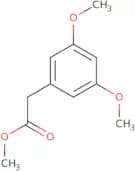
CAS:<p>3,5-Dimethoxyphenylacetic acid methyl ester is a synthetic compound that inhibits the growth of human pathogens by inhibiting protein synthesis. It has been shown to inhibit the biosynthesis of DNA and RNA in human cancer cells. 3,5-Dimethoxyphenylacetic acid methyl ester also binds to aluminium ions and prevents their absorption into the body. This agent is not active against bacteria or fungi because they do not have a cell membrane.</p>Formula:C11H14O4Purezza:Min. 95%Colore e forma:Colorless Clear LiquidPeso molecolare:210.23 g/mol3,5-Dimethoxyphenylacetic acid
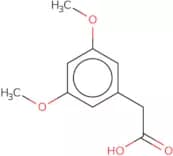
CAS:<p>3,5-Dimethoxyphenylacetic acid is a reagent that can be used in the synthesis of many organic compounds. It is also a high quality chemical with a CAS number of 4670-10-4. 3,5-Dimethoxyphenylacetic acid is useful as a research chemical and as an intermediate for the synthesis of more complex compounds. This compound has been shown to be a versatile building block and useful scaffold in the synthesis of highly complex chemicals.</p>Formula:C10H12O4Purezza:Min. 95%Colore e forma:White PowderPeso molecolare:196.2 g/mol3,4-Dihydroxybenzonitrile
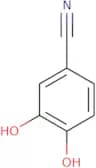
CAS:<p>3,4-Dihydroxybenzonitrile is a chemical compound that is found in soybean lipoxygenase. The molecule has been shown to be an excellent Michaelis-Menten substrate and hydrogen bonding partner. It also reacts with chlorine to form chlorinating agents such as 3,4-dichlorobenzonitrile and 3,4-dibromobenzonitrile. 3,4-Dihydroxybenzonitrile can act as a nucleophile and forms stable complexes when reacted with hydroxyl group compounds such as protocatechuic acid or reaction solution. This chemical is reactive and can be activated by redox cycling or light.<br>3,4-Dihydroxybenzonitrile has been used to treat protocatechuic acid levels in the blood of patients with chronic liver disease who are being treated for alcoholism.</p>Formula:C7H5NO2Purezza:Min. 95%Colore e forma:PowderPeso molecolare:135.12 g/mol4,4'-Dibenzoic acid
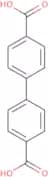
CAS:<p>4,4'-Dibenzoic acid is a chemical compound that has been used as a precursor to other compounds. It is also used in the production of polycarbonates and epoxy resins. 4,4'-Dibenzoic acid has low energy, which means it can be transported more easily than high energy molecules. This property makes it an excellent candidate for use as an enhancement agent for organometallic catalysts such as biphenyl. The structure of 4,4'-dibenzoic acid consists of two benzene rings connected by an ethylene chain. This molecule has one hydrogen bond on each side of the molecule. The 4-hydroxyl group on the left side of the molecule is susceptible to oxidation and can act as an oxidation catalyst when exposed to heat or radiation.</p>Formula:C14H10O4Purezza:Min. 95%Colore e forma:PowderPeso molecolare:242.23 g/mol3',4'-Dimethylacetophenone
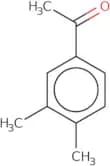
CAS:<p>3',4'-Dimethylacetophenone is a natural product that belongs to the class of salicylates. It is a yellow oily liquid with an odor reminiscent of ocimene, which has been shown to be an attractant for the cotton bollworm (Hirsutum). 3',4'-Dimethylacetophenone is also used in cyclization reactions, such as the conversion of a benzene ring into a cyclohexane ring. This compound can be found in many plants and flowers, including hirsutum, caryophyllene, gossypium, medicago, and chalcone. The molecule can be synthesized in several ways through combinations of different reactants.</p>Formula:C10H12OPurezza:Min. 95%Colore e forma:PowderPeso molecolare:148.2 g/mol1-[(2S)-2-(Hydroxymethyl)pyrrolidin-1-yl]ethan-1-one
CAS:<p>1-[(2S)-2-(Hydroxymethyl)pyrrolidin-1-yl]ethan-1-one is a molecule with biological properties. It is a non-competitive inhibitor of exonucleases and circularizes DNA, stabilizing it. The molecule has been sequenced and shown to be polymorphic in different individuals, which may affect its biological properties. 1-[(2S)-2-(Hydroxymethyl)pyrrolidin-1-yl]ethan-1-one is an acid molecule that can be used as a translation inhibitor on RNA polymerase II.</p>Formula:C7H13NO2Purezza:Min. 95%Peso molecolare:143.18 g/mol2,5-Dimethoxybenzoic acid
CAS:<p>2,5-Dimethoxybenzoic acid (2,5-DMA) is a plant metabolite that belongs to the group of cinnamic acid derivatives. It can be found in plants and has been shown to have systemic effects. 2,5-DMA is involved in the cycloacylation of protocatechuic acid. This reaction is catalyzed by an enzyme called cyclooxygenase and requires molecular oxygen as a cofactor. 2,5-DMA also forms hydrogen bonds with methoxy groups and other molecules. The monoclonal antibodies against 2,5-DMA have been used for radiation therapy and are effective against cancer cells. Model studies show that 2,5-DMA can be converted into more potent metabolites by the action of cytochrome P450 enzymes or glutathione S-transferases.</p>Formula:C9H10O4Purezza:Min. 95%Colore e forma:PowderPeso molecolare:182.17 g/molN,N'-Dimethyl-trans-1,2-cyclohexanediamine
CAS:<p>N,N'-Dimethyl-trans-1,2-cyclohexanediamine (DMCDA) is a hydroxy compound that can be used as an intermediate for the synthesis of various organic compounds. It has been shown to have a stable hydroxy group and hydrogen bond donor. DMCDA is also reactive, with a reaction rate of 10.5x10 mol/s at room temperature. DMCDA forms reaction intermediates such as oxazolidinones and 1,4-dioxanes. These intermediates have been studied by structural studies and kinetic methods to understand the mechanism of the reaction. The chronic oral toxicity of DMCDA has been determined in rats through a series of experiments and tests on protein genes. The oral LD50 value was found to be more than 5000 mg/kg body weight. This means that there is no adverse effect on the body when 5000 mg/kg or more is taken orally over an extended period (usually 28 days). Functional</p>Formula:C8H18N2Purezza:Min. 98.5%Colore e forma:Clear Liquid Solidified MassPeso molecolare:142.24 g/mol2-(Diphenylamino)benzoic acid
CAS:<p>Please enquire for more information about 2-(Diphenylamino)benzoic acid including the price, delivery time and more detailed product information at the technical inquiry form on this page</p>Formula:C19H15NO2Purezza:Min. 95%Peso molecolare:289.33 g/mol1,1-Dimethylethyl (2S)-2-[[[5-(tributylstannyl)-3-pyridinyl]oxy]methyl]-1-azetidinecarboxylate
CAS:Prodotto controllato<p>Please enquire for more information about 1,1-Dimethylethyl (2S)-2-[[[5-(tributylstannyl)-3-pyridinyl]oxy]methyl]-1-azetidinecarboxylate including the price, delivery time and more detailed product information at the technical inquiry form on this page</p>Formula:C26H46N2O3SnPurezza:Min. 95%Colore e forma:Clear LiquidPeso molecolare:553.37 g/mol4-[8-[(2,6-Diethoxy-4′-fluoro[1,1′-biphenyl]-4-yl)methyl]-3-oxo-2,8-diazaspiro[4.5]dec-2-yl]benzoic acid hydrochloride
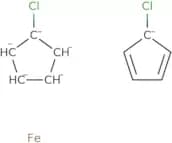
<p>Please enquire for more information about 4-[8-[(2,6-Diethoxy-4′-fluoro[1,1′-biphenyl]-4-yl)methyl]-3-oxo-2,8-diazaspiro[4.5]dec-2-yl]benzoic acid hydrochloride including the price, delivery time and more detailed product information at the technical inquiry form on this page</p>Formula:C32H35FN2O5•(HCl)xPurezza:Min. 95%Colore e forma:Powder1,1'-Dichloroferrocene
CAS:<p>1,1'-Dichloroferrocene is a molecule that belongs to the group of benzenes and has a gaseous form. It has potential energy and is an optical active compound. 1,1'-Dichloroferrin can be found in synchrotron radiation and it's optical absorption is dipole. The ligand for 1,1'-dichloroferrocene is ferrocene. This molecule transfers energy through radiation and optical excitation. The parameters for bromoferrocene are similar to those of 1,1'-dichloroferrin except that it does not have the same steric properties.</p>Formula:C10H8Cl2FePurezza:Min. 95%Colore e forma:Off-White To Dark Yellow SolidPeso molecolare:254.92 g/mol2,5-Diamino-4,6-dichloropyrimidine
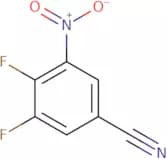
CAS:<p>2,5-Diamino-4,6-dichloropyrimidine is a biomolecule that is made of carbon, hydrogen, nitrogen, and chloride. It has been shown to inhibit cell growth in culture by reacting with malonic acid to form an oxidation product. This product can then react with trifluoroacetic acid to form a chlorinating agent which reacts reversibly with amine groups on the nucleobases in DNA. The reaction mechanism may be due to the ability of 2,5-Diamino-4,6-dichloropyrimidine to react with amino function and amide groups on nucleobases in DNA. 2,5-Diamino-4,6-dichloropyrimidine has also been shown to have anti-cancer activity against leukemia cells.</p>Formula:C4H4N4Cl2Purezza:Min. 95%Colore e forma:PowderPeso molecolare:179.01 g/mol3,4-Difluoro-5-nitrobenzonitrile
CAS:<p>3,4-Difluoro-5-nitrobenzonitrile is a hepatotoxic compound that is found in the environment. It has been shown to cause cirrhosis and overgrowth of the liver. 3,4-Difluoro-5-nitrobenzonitrile also inhibits hepatic encephalopathy and may be used to treat liver disease. This toxicant has been detected in the bowel and duodenum of humans with nonalcoholic steatohepatitis, as well as in the jejunum and duodenum of mice with spontaneous steatohepatitis. It also causes nonalcoholic steatohepatitis when given orally to rats.</p>Formula:C7H2F2N2O2Purezza:Min. 95%Colore e forma:Yellow PowderPeso molecolare:184.1 g/moltert-Butyl 3-formyl-5H,6H,7H,8H-[1,2,4]triazolo[4,3-α]pyrazine-7-carboxylate
CAS:<p>Tert-butyl 3-formyl-5H,6H,7H,8H-[1,2,4]triazolo[4,3-α]pyrazine-7-carboxylate is a research chemical that is used as a building block in the synthesis of complex compounds. It is also used as a reagent and a speciality chemical. Tert-butyl 3-formyl-5H,6H,7H,8H-[1,2,4]triazolo[4,3-α]pyrazine-7-carboxylate is an intermediate in the synthesis of other chemicals with high quality and versatile building blocks. It has been used in reactions to produce various heterocycles including 1-(2'-aminophenoxy)propane hydrochloride.</p>Formula:C11H16N4O3Purezza:Min. 95%Colore e forma:PowderPeso molecolare:252.27 g/mol[(2-Bromophenyl)sulfamoyl]dimethylamine
CAS:<p>Versatile small molecule scaffold</p>Formula:C8H11BrN2O2SPurezza:Min. 95%Colore e forma:PowderPeso molecolare:279.16 g/mol3,5-Diiodophenol
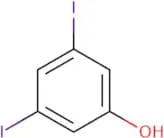
CAS:<p>Versatile small molecule scaffold</p>Formula:C6H4I2OPurezza:Min. 95%Peso molecolare:345.9 g/mol1,1-Diethoxy-2-propanamine
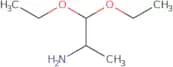
CAS:<p>1,1-Diethoxy-2-propanamine is a primary amine that serves as a versatile building block in various chemical reactions. It is commonly used in research laboratories for the synthesis of new compounds and the development of innovative chemical processes. This high-quality research chemical offers excellent purity and reliability, making it a preferred choice among chemists and scientists. Whether you are conducting experiments or exploring new avenues in chemistry, 1,1-Diethoxy-2-propanamine is an essential component to consider for your research needs.</p>Formula:C7H17NO2Purezza:Min. 95%Colore e forma:Clear LiquidPeso molecolare:147.22 g/mol2-Chloro-6-fluorobenzaldehyde
CAS:<p>2-Chloro-6-fluorobenzaldehyde is an impurity that can be found in wastewater. It has been shown to be a reactive intermediate for the synthesis of streptochlorin, which is a natural product with potential antibiotic activity. 2-Chloro-6-fluorobenzaldehyde is produced by the reaction of chlorine and anhydrous sodium, with acid as catalyst. The molecule has two fluorine atoms and one chloride atom. This compound can also be used in the treatment of waste water due to its ability to react with hydroxyl ions and chloride ions in the presence of hydrogen chloride or hydrochloric acid. The pain model was evaluated using nmr spectra and optical properties.</p>Formula:C7H4ClFOPurezza:Min. 95%Colore e forma:White PowderPeso molecolare:158.56 g/mol

![1-[(2S)-2-(Hydroxymethyl)pyrrolidin-1-yl]ethan-1-one](/_next/image/?url=https%3A%2Fstatic.cymitquimica.com%2Fproducts%2F3D%2Fthumb-webp%2FRCA15868.webp&w=3840&q=75)



![1,1-Dimethylethyl (2S)-2-[[[5-(tributylstannyl)-3-pyridinyl]oxy]methyl]-1-azetidinecarboxylate](/_next/image/?url=https%3A%2Fstatic.cymitquimica.com%2Fproducts%2F3D%2Fthumb-webp%2FFD183344.webp&w=3840&q=75)
![4-[8-[(2,6-Diethoxy-4′-fluoro[1,1′-biphenyl]-4-yl)methyl]-3-oxo-2,8-diazaspiro[4.5]dec-2-yl]benzoi…](/_next/image/?url=https%3A%2Fstatic.cymitquimica.com%2Fproducts%2F3D%2Fthumb-webp%2FFD183056.webp&w=3840&q=75)

![tert-Butyl 3-formyl-5H,6H,7H,8H-[1,2,4]triazolo[4,3-α]pyrazine-7-carboxylate](/_next/image/?url=https%3A%2Fstatic.cymitquimica.com%2Fproducts%2F3D%2Fthumb-webp%2FZWB06903.webp&w=3840&q=75)
![[(2-Bromophenyl)sulfamoyl]dimethylamine](/_next/image/?url=https%3A%2Fstatic.cymitquimica.com%2Fproducts%2F3D%2Fthumb-webp%2FZNA54050.webp&w=3840&q=75)