Building Blocks
Questa sezione contiene prodotti fondamentali per la sintesi di composti organici e biologici. Building blocks sono i materiali di partenza essenziali utilizzati per costruire molecole complesse attraverso varie reazioni chimiche. Svolgono un ruolo critico nella scoperta di farmaci, nella scienza dei materiali e nella ricerca chimica. Presso CymitQuimica, offriamo una gamma diversificata di building blocks di alta qualità per supportare le tue ricerche innovative e progetti industriali, assicurandoti di avere i componenti essenziali per una sintesi di successo.
Sottocategorie di "Building Blocks"
- Acidi boronici e derivati dell'acido boronico(5.756 prodotti)
- Building Blocks Chirali(1.242 prodotti)
- Building Blocks Idrocarburici(6.093 prodotti)
- Building Blocks organici(60.529 prodotti)
Trovati 195534 prodotti di "Building Blocks"
Ordinare per
Purezza (%)
0
100
|
0
|
50
|
90
|
95
|
100
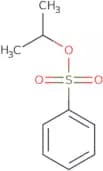
Isopropyl benzenesulfonate
CAS:<p>Isopropyl benzenesulfonate is an ester compound that reacts with the chlorine atom to produce a sulfonic acid. It has antimicrobial properties and is used in the production of quinoline derivatives, which are aliphatic hydrocarbons that have been found to be effective in the treatment of cancer. Isopropyl benzenesulfonate also has potential as a cross-linking agent for ester compounds, due to its ability to react with both aromatic hydrocarbons and radiation. It can be synthesized by reacting a phase liquid chromatography solution with hydroxyl group or patterning with a solid catalyst. Isopropyl benzenesulfonate has carbonyl groups that are reactive with other chemicals and may be used as a reagent for storing reactive substances.</p>Formula:C9H12O3SPurezza:Min. 95%Colore e forma:Colorless Clear LiquidPeso molecolare:200.26 g/molBenzo[b]furan-2-boronic acid
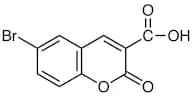
CAS:<p>Benzo[b]furan-2-boronic acid is a potent matrix metalloproteinase inhibitor that can be used in the treatment of cancer. It is synthesized from 2-aminobenzofuran by using a Suzuki coupling reaction with boronic acid. Benzo[b]furan-2-boronic acid has been shown to inhibit MMP-1, MMP-13, and MMP-14. This compound also inhibits the activity of other proteases such as cathepsin G, elastase, and chymase. The compound has been shown to be cytotoxic against human breast cancer cells and colon cancer cells. In addition, this compound is fluorescent and its fluorescence has been shown to increase when it binds to cancer cells.</p>Formula:C8H7BO3Purezza:Min. 95%Colore e forma:White PowderPeso molecolare:161.95 g/mol6-Bromocoumarin-3-carboxylic Acid
CAS:Formula:C10H5BrO4Purezza:>98.0%(HPLC)Colore e forma:White to Orange to Green powder to crystalPeso molecolare:269.05Bromoform (stabilized with 2-Methyl-2-butene) [for Spectrophotometry]
CAS:Formula:CHBr3Purezza:>99.0%(GC)Colore e forma:Colorless clear liquidPeso molecolare:252.734'-Iodoacetophenone
CAS:<p>4'-Iodoacetophenone is a catalyst in organic synthesis. It is a cross-coupling agent that is used to catalyze reactions of alkyl halides with organometallic compounds. The reaction mechanism is the same as for other cross-coupling reactions and involves the formation of a palladium complex. 4'-Iodoacetophenone has been shown to be effective in asymmetric synthesis, where it can be used as a homogeneous catalyst. This compound has also been shown to be an efficient methylating agent and can be used in the methylation of various functional groups, such as amines, nitro groups, and phenols.</p>Formula:C8H7IOPurezza:Min. 95%Colore e forma:Yellow PowderPeso molecolare:246.05 g/mol2-(Hydroxymethyl)pyridine
CAS:<p>2-(Hydroxymethyl)pyridine is a metal chelate that has been shown to be a potent inhibitor of picolinic acid amidohydrolase. This enzyme is responsible for the conversion of picolinic acid to nicotinamide adenine dinucleotide (NAD), which is a cofactor in the citric acid cycle. The 2-(hydroxymethyl)pyridine-picolinic acid complex inhibits the activity of this enzyme, blocking the conversion of NAD into nicotinamide adenine dinucleotide phosphate (NADP). This inhibition leads to higher levels of NAD and lower levels of NADP, which may lead to an increase in metabolic activity by increasing the availability of ATP. 2-(Hydroxymethyl)pyridine has been shown to have immunosuppressive properties, as well as anti-inflammatory properties. It also has been shown to be effective against bowel disease and infectious diseases.</p>Formula:C6H7NOPurezza:Min. 95%Colore e forma:Clear LiquidPeso molecolare:109.13 g/mol2-Cyano-N,N-diethylacetamide
CAS:Formula:C7H12N2OPurezza:>98.0%(GC)Colore e forma:Colorless to Light yellow clear liquidPeso molecolare:140.191-Hydroxymethyl-1-methylcyclohexane
CAS:<p>1-Hydroxymethyl-1-methylcyclohexane is a biodiesel that has been shown to be a good solvent for nonpolar compounds and can also be used as a reaction medium in organic synthesis. It has a relatively high boiling point and is soluble in both water and other nonpolar solvents. 1-Hydroxymethyl-1-methylcyclohexane is also known for its conformational properties and ability to bind to fatty acids, which are the main components of biodiesel.</p>Formula:C8H16OPurezza:Min. 95%Colore e forma:PowderPeso molecolare:128.21 g/mol2-Methylimidazole
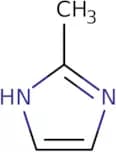
CAS:<p>2-Methylimidazole is a crystalline solid that has been used in the preparation of coordination compounds. The compound is prepared by reacting 2-methylimidazole with an appropriate metal cyanide, such as copper cyanide or nickel cyanide. The crystal structure of 2-methylimidazole shows strong hydrogen bonding interaction between the nitrogen atoms and the carboxylate groups. This compound has been used in clinical pathology to detect increased levels of ammonia, uric acid, and lactic acid in the blood. 2-Methylimidazole is not toxic to humans but has shown some toxicity to mice when injected intravenously at high concentrations. It can be used as an analytical method for determining trace amounts of chlorine in chemical compounds by way of electrochemical impedance spectroscopy (EIS).</p>Formula:C4H6N2Purezza:Min. 95%Colore e forma:White Clear LiquidPeso molecolare:82.1 g/mol2-Butyl-4-chloro-1H-imidazole-5-carboxaldehyde
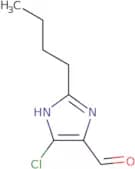
CAS:<p>Glyoxal is a chemical compound that has shown to have bactericidal activity against human pathogens such as Mycobacterium tuberculosis, Helicobacter pylori, and Staphylococcus aureus. It is used in the synthesis of heterocyclic amines and can be found as an impurity in imidazole derivatives. Glyoxal is a broad-spectrum antimicrobial that has been shown to inhibit the growth of fungi and bacteria by reacting with functional groups on the microorganisms' cell walls. It reacts with bacterial cell walls by forming an intermediate molecule, which reacts with other molecules present in the microorganism's environment to form carbon dioxide, water, and glyoxal. The reaction time for glyoxal depends on temperature; higher temperatures will result in faster reactions. Techniques used to synthesize glyoxal include dehydration of oximes or by reaction with phosphorus oxychloride.</p>Formula:C8H11ClN2OPurezza:Min. 95%Colore e forma:PowderPeso molecolare:186.64 g/mol6-Bromo-2-(4-bromophenyl)-indole
CAS:<p>6-Bromo-2-(4-bromophenyl)-indole is a fine chemical with CAS No. 28718-96-9 that can be used as a versatile building block for the synthesis of complex compounds, useful scaffold for research chemicals, and reaction component for speciality chemicals. This compound has high quality and is a reagent in the synthesis of other compounds.</p>Formula:C14H9Br2NPurezza:Min. 95%Colore e forma:Off white to pale yellow powder.Peso molecolare:351.04 g/molFmoc-D-Asp(OtBu)-Opfp
CAS:<p>Fmoc-D-Asp(OtBu)-Opfp is a high quality, complex compound that is used as a building block for the synthesis of various drugs and pharmaceuticals. It has been shown to be an excellent reaction component in the synthesis of various drugs and pharmaceuticals. The versatility of this chemical makes it a useful scaffold for generating complex molecules. It has been shown to be a useful intermediate for the synthesis of peptides, oligonucleotides, and small organic molecules. Fmoc-D-Asp(OtBu)-Opfp can also be used as a reagent in biochemical research.<br>Fmoc-D-Asp(OtBu)-Opfp can be synthesized by reacting 2-(2'-aminoethoxy)propionic acid with N,N'-dimethylformamide dimethyl acetal in the presence of sodium hydride at 0°C. This reaction produces an amide bond between the N termin</p>Formula:C29H24NO6F5Purezza:Min. 95%Colore e forma:PowderPeso molecolare:577.5 g/mol4-Chloropiperidine
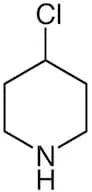
CAS:Formula:C5H10ClNPurezza:>97.0%(GC)(T)Colore e forma:Colorless to Light yellow to Light orange clear liquidPeso molecolare:119.592-Methylnicotinic Acid
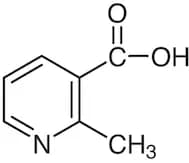
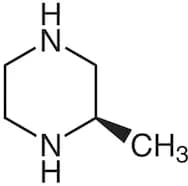
CAS:Formula:C7H7NO2Purezza:>98.0%(GC)(T)Colore e forma:White to Green to Brown powder to crystalPeso molecolare:137.14(R)-(-)-2-Methylpiperazine
CAS:Formula:C5H12N2Purezza:>98.0%(GC)(T)Colore e forma:White to Light yellow powder to crystalPeso molecolare:100.172-Acetylthiazole
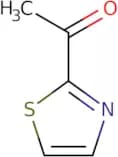
CAS:<p>2-Acetylthiazole is a heterocyclic compound that is a derivative of thiazole. It is used in the production of dyes, pharmaceuticals and other organic compounds. 2-Acetylthiazole can be synthesized by reacting glyoxal with an acid chloride or carboxylic acid to form the corresponding sulfonyl chloride, which can then be reacted with sodium acetate in ethanol to produce 2-acetylthiazole. This reaction was found to proceed efficiently at room temperature and without the need for strong acids or bases. The product has been shown to have anticancer activity in model systems, with carbonyl groups being suggested as a possible mechanism of action.<br>2-Acetylthiazole is also an intermediate in the synthesis of many other organic compounds and has been shown to react with d-arabinose, producing d-ribofuranose and water.</p>Formula:C5H5NOSPurezza:Min. 95%Colore e forma:Colorless Clear LiquidPeso molecolare:127.17 g/molc(R,S)-1-(2-Nitrophenyl)ethanol
CAS:<p>1,2-Dichloroethane is an organic solvent that has a number of industrial uses. It is also used as an antigen for the detection of antibodies in biological studies. 1,2-Dichloroethane reacts with free amino groups on proteins to form antigen-binding sites. The cavity created by the reaction then binds to the antigen and induces a change in fluorescence. This process can be detected using fluorescence resonance energy transfer (FRET). Irradiation of 1,2-dichloroethane leads to the formation of reactive oxygen species (ROS) such as singlet oxygen, which can react with aspartyl groups in proteins to form diphosgene. This reaction can lead to protein denaturation and loss of function, which may be responsible for some of the toxic effects observed with this compound.</p>Formula:C8H9NO3Purezza:Min. 95%Colore e forma:PowderPeso molecolare:167.16 g/molD-Threonine methyl ester hydrochloride
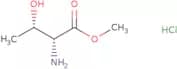
CAS:<p>D-Threonine methyl ester hydrochloride is a versatile building block that is used in the synthesis of complex compounds. It can be used as a reagent, speciality chemical, and useful scaffold in organic chemistry. D-Threonine methyl ester hydrochloride has been shown to react with a variety of electrophiles and nucleophiles to form diverse products. This product is also used as a reaction component for the synthesis of high quality chemical intermediates.</p>Formula:C5H11NO3·HClPurezza:Min. 98%Colore e forma:PowderPeso molecolare:169.61 g/mol(3-Trifluoromethylpyrid-2-yl)hydrazine
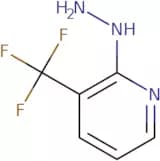
CAS:<p>Building block for preparation of heteroaryltriazole derivatives</p>Formula:C6H6F3N3Purezza:Min. 95%Colore e forma:PowderPeso molecolare:177.13 g/mol2,3,4-Trifluorobenzoic acid
CAS:<p>2,3,4-Trifluorobenzoic acid is a fluorinated fatty acid that has been shown to have anticancer activity. The molecule can be synthesized by reacting 2-bromo-1-(trifluoromethyl)benzene with potassium hydroxide in the presence of benzoic anhydride. This synthesis reaction yields (2,3,4-trifluoro)benzoic acid as the main product and a small amount of 2,3-dihydrobenzoic acid. The analytical method used to determine the purity of this compound is LC-MS/MS. The vibrational spectrum of this compound has been found to show strong absorption in the UV region at 290 nm. It also shows strong absorption at uv wavelengths greater than 300 nm due to its conjugation with fluorine atoms. This chemical is a precursor for synthesis of coumarin derivatives such as 4-[(2,3</p>Formula:C7H3F3O2Purezza:Min. 95%Colore e forma:White PowderPeso molecolare:176.09 g/mol

![Benzo[b]furan-2-boronic acid](/_next/image/?url=https%3A%2Fstatic.cymitquimica.com%2Fproducts%2F3D%2Fthumb-webp%2FFB40264.webp&w=3840&q=75)

![Bromoform (stabilized with 2-Methyl-2-butene) [for Spectrophotometry]](/_next/image/?url=https%3A%2Fstatic.cymitquimica.com%2Fproducts%2F3B%2Fthumb-webp%2FB0806.webp&w=3840&q=75)