Building Blocks
Questa sezione contiene prodotti fondamentali per la sintesi di composti organici e biologici. Building blocks sono i materiali di partenza essenziali utilizzati per costruire molecole complesse attraverso varie reazioni chimiche. Svolgono un ruolo critico nella scoperta di farmaci, nella scienza dei materiali e nella ricerca chimica. Presso CymitQuimica, offriamo una gamma diversificata di building blocks di alta qualità per supportare le tue ricerche innovative e progetti industriali, assicurandoti di avere i componenti essenziali per una sintesi di successo.
Sottocategorie di "Building Blocks"
- Acidi boronici e derivati dell'acido boronico(5.756 prodotti)
- Building Blocks Chirali(1.242 prodotti)
- Building Blocks Idrocarburici(6.093 prodotti)
- Building Blocks organici(60.529 prodotti)
Trovati 195534 prodotti di "Building Blocks"
Ordinare per
Purezza (%)
0
100
|
0
|
50
|
90
|
95
|
100
N-Methyl methanesulfonamide
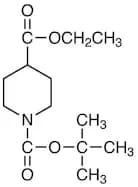
CAS:<p>N-Methyl methanesulfonamide is an amide compound that has a vibrational frequency of 1605 cm-1. It is used in the manufacture of covid-19, a pandemic influenza virus vaccine. Covid-19 contains N-methyl methanesulfonamide as one of its ingredients. The vaccine has been shown to have a constant temperature and an inhibitory effect on the production of tyrosine kinase, which is a protein that regulates cell growth and division. The reaction product also inhibits sulfoxide reductase, an enzyme that catalyzes the reduction of sulfoxides. N-Methyl methanesulfonamide is susceptible to acidic hydrolysis and can be structurally represented as follows:</p>Formula:C2H7NO2SPurezza:Min. 95%Colore e forma:Light (Or Pale) Yellow To Amber To Brown LiquidPeso molecolare:109.15 g/molEthyl 1-(tert-Butoxycarbonyl)-4-piperidinecarboxylate
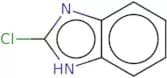
CAS:Formula:C13H23NO4Purezza:>97.0%(GC)Colore e forma:Colorless to Light yellow to Light orange clear liquid to slightly cloudy liquidPeso molecolare:257.332-Chlorobenzimidazole
CAS:<p>2-Chlorobenzimidazole is an analog of benzimidazole that has been synthesized by Langmuir adsorption isotherm. It is a white crystalline solid that can be dissolved in water and hydrochloric acid. 2-Chlorobenzimidazole inhibits the growth of herpes simplex virus by acting as a competitive inhibitor for the viral enzyme thymidine kinase, which catalyzes the conversion of thymine to thymidine. 2-Chlorobenzimidazole also binds to monoclonal antibodies, inhibiting their binding to their corresponding antigens. This activity may be due to its ability to bind covalently with amino groups on proteins and other molecules. Magnetic resonance spectroscopy has shown that 2-chlorobenzimidazole binds tightly with protonated (positively charged) phosphorous atoms within cells.</p>Formula:C7H5ClN2Purezza:Min. 95%Colore e forma:White PowderPeso molecolare:152.58 g/molGalβ(1-4)[Neu5Acα(2-6)]GlcNAc-β-pNP
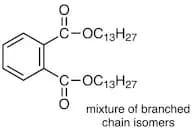
Formula:C31H45N3O21Purezza:>90.0%(HPLC)Colore e forma:White to Light yellow powder to crystalPeso molecolare:795.70Ditridecyl Phthalate (mixture of branched chain isomers)
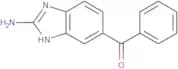
CAS:Formula:C34H58O4Purezza:multi component mixture(GC)Colore e forma:Colorless to Almost colorless clear liquidPeso molecolare:530.832-Amino-5(6)-benzoylbenzimidazole
CAS:<p>2-Amino-5(6)-benzoylbenzimidazole is an antifilarial and anthelmintic drug that belongs to the benzimidazole class. It is used for the treatment of filarial infections in humans, including lymphatic filariasis, which is caused by worms transmitted by mosquitoes. 2-Amino-5(6)-benzoylbenzimidazole has low bioavailability due to its poor water solubility. The drug can be administered orally or topically and is metabolized in the liver. The metabolites are excreted in urine as glucuronides and sulfates.</p>Formula:C14H11N3OPurezza:Min. 95%Colore e forma:PowderPeso molecolare:237.26 g/mol4-Hydroxy-2-iodobenzaldehyde
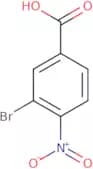
CAS:<p>4-Hydroxy-2-iodobenzaldehyde is a high quality chemical that belongs to the group of complex compounds. It has been shown to be a useful intermediate, fine chemical, and speciality chemical. It can also be used as a reaction component in the synthesis of other chemicals and is an important building block for making other compounds. 4-Hydoxy-2-iodobenzaldehyde is versatile and can be used in many different reactions.</p>Formula:C7H5IO2Purezza:Min. 98 Area-%Peso molecolare:248.02 g/mol3-Bromo-4-nitrobenzoic acid
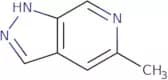
CAS:<p>3-Bromo-4-nitrobenzoic acid is a chemical compound with the molecular formula CHBrNO2. It is a versatile building block that can be used in the synthesis of many different compounds. 3-Bromo-4-nitrobenzoic acid is a white crystalline solid that is soluble in water, ethanol, and ether. It reacts with many substances to produce other useful compounds. It can also be used as a reagent for the detection of proteins or nucleic acids. This product has been shown to be an effective intermediate in organic reactions and has been used as a scaffold in the synthesis of complex molecules such as natural products, pharmaceuticals, and agrochemicals.</p>Formula:C7H4BrNO4Purezza:Min. 95%Colore e forma:PowderPeso molecolare:246.02 g/mol6-Aza-5-methyl-1H-indazole
CAS:<p>6-Aza-5-methyl-1H-indazole is a chemical compound that acts as a building block for the synthesis of pharmaceuticals and other compounds. It is used in research for the development of new drugs, such as antihypertensive agents, antibiotics, and immunosuppressants. 6-Aza-5-methyl-1H-indazole has been shown to be an effective intermediate in the synthesis of many complex compounds, including cephalosporins, penicillins, carbapenems, and aminoglycosides. This versatile reagent can be used to synthesize a wide variety of organic compounds.</p>Formula:C7H7N3Purezza:Min. 95%Colore e forma:White To Beige SolidPeso molecolare:133.15 g/mol2,4-Dinitroaniline
CAS:<p>2,4-Dinitroaniline is a diazonium salt that is used in the wastewater treatment process. It is an analytical reagent that can be used to detect and identify nucleophilic groups. 2,4-Dinitroaniline is used as a precursor for other dyes and has been shown to have genotoxic activity in some cases. The chemical structure of 2,4-dinitroaniline is made up of two nitro groups attached to an amino group. This compound absorbs ultraviolet light at 260 nm and emits radiation at 360 nm, which can be measured using synchronous fluorescence spectroscopy. It reacts with hydrochloric acid to form diazonium salt.<br>2,4-Dinitroaniline has been shown to react with the protein monoclonal antibody CEA3B3 by binding to its reactive thiols. This binding leads to the disruption of the antibody's function and inhibits</p>Formula:C6H5N3O4Purezza:Min. 95%Colore e forma:Yellow PowderPeso molecolare:183.12 g/mol4-Amino-2,6-dichloro-3-nitropyridine
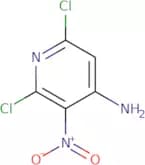
CAS:<p>4-Amino-2,6-dichloro-3-nitropyridine is a synthetic compound that inhibits tyrosine kinases. It is an isomer of 2,6-Dichloropyridine and has been shown to inhibit the growth of lymphoma cells in vitro. 4-Amino-2,6-dichloro-3-nitropyridine has three substitutions on the pyridine ring as compared to 2,6-Dichloropyridine. The substitutions are thought to be responsible for the increased hydrophilic properties of this compound. This may lead to increased cellular uptake and better bioavailability.</p>Formula:C5H3Cl2N3O2Purezza:Min. 95%Colore e forma:Slightly Yellow PowderPeso molecolare:208 g/mol4-Bromoisatin
CAS:<p>4-Bromoisatin is a synthetic compound that reversibly inhibits the activity of telomerase and has been shown to be effective against a broad range of bacterial species. It binds to the catalytic site on telomerase and prevents the synthesis of ribonucleotides, which are necessary for DNA replication. 4-Bromoisatin is synthesized by humans, but can also be found in plants such as coffee beans and black tea leaves. The antibacterial properties of 4-bromoisatin may be due to its ability to inhibit the biosynthesis of purine, an essential component in bacterial DNA synthesis.</p>Formula:C8H4BrNO2Purezza:Min. 95%Colore e forma:Orange PowderPeso molecolare:226.03 g/molBoc-1-amino-3,6-dioxa-8-octanediamine
CAS:<p>Boc-1-amino-3,6-dioxa-8-octanediamine is a linker used to attach targeting moieties to drugs. It is capable of binding iron, chlorine and other metals. Boc-1-amino-3,6-dioxa-8-octanediamine has been shown to be a useful tool for the development of novel cancer treatments by enhancing the uptake of chemotherapeutic agents in tumor tissue. This linker can be modified with functional groups such as amines and carboxyls that allow it to bind various types of molecules. The cellular distribution of this compound is not well understood due to its lack of availability in cell culture models.</p>Formula:C11H24N2O4Purezza:Min. 95%Colore e forma:Red Clear LiquidPeso molecolare:248.32 g/mol2-Amino-3-methoxybenzoic acid
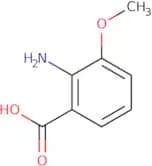
CAS:<p>2-Amino-3-methoxybenzoic acid is a chemical compound that is found in humans. It has antioxidative activity, and it inhibits the conversion of picolinic acid to kynurenine in vitro. 2-Amino-3-methoxybenzoic acid also significantly inhibits the formation of 3-hydroxyanthranilic acid and xanthurenic acid from anthranilic acid. This inhibition may be due to its ability to form hydrogen bonds with the substrate or competitive inhibition of enzymes such as quinoline reductase.<br>2-Amino-3-methoxybenzoic acid has been shown to have significant inhibitory effects on thermodynamic parameters for hydroxy group addition reactions involving quinoline derivatives, which may be due to its ability to bind covalently with these substrates.</p>Formula:C8H9NO3Purezza:Min. 95%Colore e forma:PowderPeso molecolare:167.16 g/molZ-O-tert-Butyl-L-tyrosine
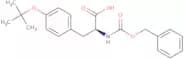
CAS:<p>Z-O-tert-Butyl-L-tyrosine is a fine chemical that is soluble in water and has a wide range of uses. It is a versatile scaffold for the synthesis of complex compounds, and can be used as a building block or reaction component in research chemicals. Z-O-tert-Butyl-L-tyrosine is an important reagent for organic synthesis, especially when combined with other chemicals. This chemical can also be used as a speciality chemical to produce high quality products.</p>Formula:C21H25NO5Purezza:Min. 95%Colore e forma:White PowderPeso molecolare:371.43 g/molNeu5Ac[1Me,4789Ac]α(2-6)Gal[24Bz,3Bn]-β-MP
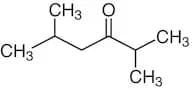
CAS:Formula:C54H59NO21Purezza:>95.0%(HPLC)Colore e forma:White to Almost white powder to crystalPeso molecolare:1,058.052,5-Dimethyl-3-hexanone
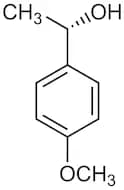
CAS:Formula:C8H16OPurezza:>96.0%(GC)Colore e forma:Colorless to Light yellow clear liquidPeso molecolare:128.22(S)-1-(4-Methoxyphenyl)ethanol
CAS:Formula:C9H12O2Purezza:>95.0%(GC)Colore e forma:Colorless to Light yellow clear liquidPeso molecolare:152.194-Nitrophenylacetic acid
CAS:<p>4-Nitrophenylacetic acid is a chemical compound that belongs to the class of organic compounds known as nitrophenols. It has been shown to inhibit malonic enzyme, also known as 3-hydroxyacyl-CoA dehydrogenase. This inhibition is thought to be due to the nitro group on the molecule, which reacts with the active site cysteine residue in the enzyme. 4-Nitrophenylacetic acid can be used in the synthesis of monoclonal antibodies. The structure of 4-nitrophenylacetic acid has one hydroxyl group and two nitro groups that are separated by a methylene bridge (a carbon atom with two hydrogen atoms). The reaction solution for this substance contains diazonium salt and hydrochloric acid.</p>Formula:C8H7NO4Purezza:Min. 98 Area-%Colore e forma:White PowderPeso molecolare:181.15 g/mol2-Naphthalenesulfonic acid sodium
CAS:<p>2-Naphthalenesulfonic acid sodium is a chemical compound that belongs to the class of naphthalene sulfonic acids. It is used in the production of medicines and as an industrial chemical. 2-Naphthalenesulfonic acid sodium has been shown to inhibit the viscosity of blood capillaries and has been proposed for use in the treatment of diabetic retinopathy. This compound also reduces the permeability of cell membranes by binding to fatty acids, which has led it to be studied for its potential effects on prostate cancer. 2-Naphthalenesulfonic acid sodium has been shown to have a Michaelis–Menten kinetics with respect to the enzyme ft-ir spectroscopy and can be used as a reagent for cationic surfactants. 2-Naphthalenesulfonic acid sodium is soluble in water, but insoluble in hydrochloric acid or solvents such as chloroform or acetone.</p>Formula:C10H7O3SNaPurezza:Min. 98 Area-%Colore e forma:White Off-White PowderPeso molecolare:230.22 g/mol



![Galβ(1-4)[Neu5Acα(2-6)]GlcNAc-β-pNP](/_next/image/?url=https%3A%2Fstatic.cymitquimica.com%2Fproducts%2F3B%2Fthumb-webp%2FG0353.webp&w=3840&q=75)




![Neu5Ac[1Me,4789Ac]α(2-6)Gal[24Bz,3Bn]-β-MP](/_next/image/?url=https%3A%2Fstatic.cymitquimica.com%2Fproducts%2F3B%2Fthumb-webp%2FM1761.webp&w=3840&q=75)