Building Blocks
Questa sezione contiene prodotti fondamentali per la sintesi di composti organici e biologici. Building blocks sono i materiali di partenza essenziali utilizzati per costruire molecole complesse attraverso varie reazioni chimiche. Svolgono un ruolo critico nella scoperta di farmaci, nella scienza dei materiali e nella ricerca chimica. Presso CymitQuimica, offriamo una gamma diversificata di building blocks di alta qualità per supportare le tue ricerche innovative e progetti industriali, assicurandoti di avere i componenti essenziali per una sintesi di successo.
Sottocategorie di "Building Blocks"
- Acidi boronici e derivati dell'acido boronico(5.756 prodotti)
- Building Blocks Chirali(1.242 prodotti)
- Building Blocks Idrocarburici(6.093 prodotti)
- Building Blocks organici(60.529 prodotti)
Trovati 195534 prodotti di "Building Blocks"
Ordinare per
Purezza (%)
0
100
|
0
|
50
|
90
|
95
|
100
4-Bromo-2-nitrobenzoic acid
CAS:<p>4-Bromo-2-nitrobenzoic acid is an anthranilic acid derivative that can be used as a radiolabel for the diagnosis of bladder cancer. The uptake of 4-Bromo-2-nitrobenzoic acid in the bladder is proportional to the number of cells, which are then detected by positron emission tomography (PET) scanning. The affinity of 4-Bromo-2-nitrobenzoic acid to human bladder tissue was determined by measuring its uptake in humans and rats. 4-Bromo-2-nitrobenzoic acid has been shown to be effective against cancer cells in vitro. Radiolabeling with this compound allows for more accurate diagnostic imaging than using other radiopharmaceuticals.</p>Formula:C7H4BrNO4Purezza:Min. 95%Colore e forma:PowderPeso molecolare:246.02 g/mol2,2'-Bipyridine-6,6'-(1H,1'H)dione
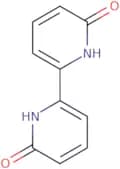
CAS:<p>2,2'-Bipyridine-6,6'-(1H,1'H)dione is a high-quality compound that is used as a reagent to provide a variety of useful compounds. This compound can be used as a building block for various chemical syntheses or as a component in many reactions. It is also a versatile building block and can be used in the synthesis of other compounds. 2,2'-Bipyridine-6,6'-(1H,1'H)dione has been shown to be an effective intermediate for organic synthesis.</p>Formula:C10H8N2O2Purezza:Min. 95%Colore e forma:Off-White To Light Brown SolidPeso molecolare:188.18 g/mol3-Bromo-5-cyanobenzoic acid
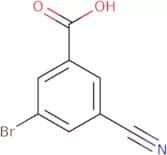
CAS:<p>3-Bromo-5-cyanobenzoic acid is a fine chemical that is used as a reagent or intermediate in the production of other chemicals. 3-Bromo-5-cyanobenzoic acid can be used as an intermediate in the synthesis of pharmaceuticals, agrochemicals, and perfumes. This compound is also useful as a building block for making speciality chemicals and research chemicals. 3-Bromo-5-cyanobenzoic acid is versatile because it can be used in many different reactions with many different substrates to make many different products.</p>Formula:C8H4BrNO2Purezza:Min. 95%Colore e forma:PowderPeso molecolare:226.03 g/mol5-Nitroquinoline
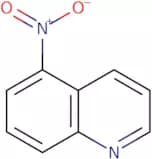
CAS:<p>5-Nitroquinoline is a nitrogen-containing heterocyclic organic compound. It is a white solid that has a melting point of 104 °C and a boiling point of 212 °C. 5-Nitroquinoline can be synthesized by the addition of sodium carbonate to 6-nitroquinoline in hydrochloric acid. The product is then purified by vacuum distillation and recrystallization from nitric acid and acetic acid. 5-Nitroquinoline can be used as an intermediate in the synthesis of other molecules, such as quinolones, which are used in pharmaceuticals. This compound has been shown to cause metastatic colorectal cancer in mice, but not in human liver cells or human lymphocytes.</p>Formula:C9H6N2O2Purezza:Min. 95%Colore e forma:Light (Or Pale) Yellow To Dark Yellow SolidPeso molecolare:174.16 g/mol2-Bromo-1H-imidazole
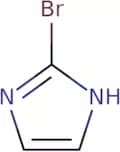
CAS:<p>2-Bromo-1H-imidazole is an environmental pollutant that has been detected in the atmosphere, water, and soil. It is used as a pesticide and has been found to be an impurity in biphenyl. 2-Bromo-1H-imidazole can be used as a substrate for the Suzuki coupling reaction or as a starting material for the synthesis of imidazole derivatives. The compound spontaneously fragments under acidic conditions to form nitric acid and hydrogen bromide. 2-Bromo-1H-imidazole has been shown to inhibit hepatitis C virus (HCV) replication and induce cancer cell apoptosis in vitro.<br>2-Bromo-1H-imidazole is also known to cause DNA fragmentation in cells through oxidation by reactive oxygen species or through spontaneous decomposition of the molecule into acid, bromine radicals, and ammonia.</p>Formula:C3H3BrN2Purezza:Min. 95%Colore e forma:PowderPeso molecolare:146.97 g/mol7-Bromobenzo[b]thiophene-2-carboxylic acid
CAS:<p>7-Bromobenzo[b]thiophene-2-carboxylic acid is a fine chemical with CAS No. 19075-59-3. It is a useful building block for research chemicals, reagents, and speciality chemicals. It has high quality and can be used as a versatile building block for reactions. 7-Bromobenzo[b]thiophene-2-carboxylic acid can also be used as an intermediate or scaffold in synthesis of complex compounds.</p>Formula:C9H5BrO2SPurezza:Min. 95%Colore e forma:White PowderPeso molecolare:257.1 g/mol(S)-4-Methylbenzenesulfinamide
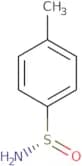
CAS:<p>(S)-4-Methylbenzenesulfinamide is a synthetic β-amino acid that has been used for the synthesis of various heterocycles. It has been shown to be a selective inhibitor of the enzyme carboxypeptidase B (CPB) in vitro, which is involved in the degradation of β-amino acids. The stereoselective synthesis of (S)-4-methylbenzenesulfinamide has been achieved through the use of hydrophobic phenylphosphinate as a chiral ligand and an azetidine as a starting material. The reaction time was found to be 20 minutes at room temperature with ethyl phenylphosphinate.</p>Formula:C7H9NOSPurezza:Min. 95%Colore e forma:White PowderPeso molecolare:155.22 g/mol6-Amino-2-pyrazinecarboxylic acid
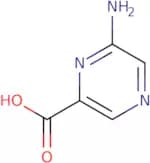
CAS:<p>6-Amino-2-pyrazinecarboxylic acid is a high quality reagent that is used as an intermediate for the synthesis of complex compounds. It is also a useful scaffold for the production of valuable speciality chemicals. This chemical is also used as a reaction component in research and development to produce versatile building blocks. 6-Amino-2-pyrazinecarboxylic acid has been shown to be useful for producing fine chemicals and speciality chemicals, which are often used in many industries.</p>Formula:C5H5N3O2Purezza:Min. 95%Colore e forma:Yellow To Brown SolidPeso molecolare:139.11 g/mol1,2-Bis(diphenylphosphino)ethane
CAS:<p>1,2-Bis(diphenylphosphino)ethane is a ligand that binds to the metal molybdenum. It has been shown to have biochemical properties in relation to its ability to form complexes with adriamycin and other drugs. The redox potential of 1,2-Bis(diphenylphosphino)ethane depends on the presence of sodium ions. This ligand is able to bind to the iron in the mitochondrial membrane and can affect the mitochondrial membrane potential. X-ray crystal structures show that this ligand binds to a monosodium salt. 1,2-Bis(diphenylphosphino)ethane has been shown to be a potent inhibitor of transfer reactions and is used as an analytical reagent for structural analysis.</p>Formula:C26H24P2Purezza:Min. 98 Area-%Colore e forma:White Off-White PowderPeso molecolare:398.42 g/mol4-Methoxy-1-naphthol
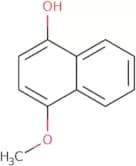
CAS:<p>Spectrophotometric substrate for peroxidase</p>Formula:C11H10O2Purezza:Min. 95%Colore e forma:Brown PowderPeso molecolare:174.2 g/mol3-Methylpyridine
CAS:<p>3-Methylpyridine is a compound that can be used in the treatment of wastewater. It has been shown to have high adsorption capacity for malonic acid and a Langmuir adsorption isotherm with high values. 3-Methylpyridine is stable in acidic conditions and has been shown to efficiently remove nitrogen from wastewater. The coordination geometry of 3-methylpyridine is octahedral, which makes it capable of removing hydrogen fluoride from wastewater. This compound also has the ability to transfer reactions and can be used for titration calorimetry.</p>Formula:C6H7NPurezza:Min. 95%Colore e forma:Colorless Clear LiquidPeso molecolare:93.13 g/mol2'-Hydroxy-4',5'-dimethylacetophenone
CAS:<p>2'-Hydroxy-4',5'-dimethylacetophenone is a chalcone that is structurally similar to the catecholamines. It has been shown to inhibit bacterial growth in vitro and in vivo and to be active against both Gram-positive and Gram-negative bacteria. This compound also has antiviral activity, inhibiting the replication of herpes simplex virus type 1 (HSV-1) in cell culture. 2'-Hydroxy-4',5'-dimethylacetophenone also has antibacterial activity against Trichophyton mentagrophytes and Melaleuca alternifolia, an Australian tree that produces a range of bioactive compounds with antimicrobial properties. 2'-Hydroxy-4',5'-dimethylacetophenone binds to the enzyme phosphodiesterase, blocking the conversion of cyclic adenosine monophosphate (cAMP) into its inactive form cAMP hydrolysis product (cAMP). Inhibition of this enzyme</p>Formula:C10H12O2Purezza:Min. 95%Colore e forma:Off-White To Yellow SolidPeso molecolare:164.2 g/mol1-Bromoadamantane - 99%min
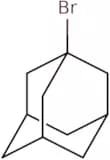
CAS:<p>1-Bromoadamantane is a quinoline derivative that is used as a pharmaceutical preparation. It was first synthesized in the 1950s, and has been used to treat inflammatory bowel disease. The synthesis of 1-Bromoadamantane is accomplished by the palladium-catalyzed coupling of trifluoromethanesulfonic acid with an organic solution containing the bromide salt of the quinoline. The chemical structure of 1-Bromoadamantane can be seen below:</p>Formula:C10H15BrPurezza:Min. 98.5%Colore e forma:PowderPeso molecolare:215.13 g/mol2-Ethylbenzaldehyde
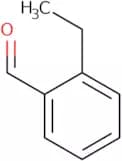
CAS:<p>2-Ethylbenzaldehyde is a colorless volatile liquid that has an odor similar to that of cloves. 2-Ethylbenzaldehyde can be found in the essential oil of nutmeg and other spices, such as cinnamon. It is used in the chemical industry as a control agent for analytical methods, such as the spectrometric determination of ether linkages. 2-Ethylbenzaldehyde has been shown to inhibit fatty acid production by bacteria and to inhibit lipid peroxidation. It also exhibits anti-inflammatory effects when exposed to cells in vitro. Exposure to 2-ethylbenzaldehyde may cause irritation of the eyes, skin, and respiratory tract, dizziness, headache, nausea and vomiting.<br>2-Ethylbenzaldehyde is generally considered safe for human consumption at low levels; however it may cause adverse health effects if ingested in large quantities or if heated over 400° F (204° Celsius).</p>Formula:C9H10OPurezza:Min. 95%Colore e forma:PowderPeso molecolare:134.18 g/mol2-Iodobenzenesulfonic acid
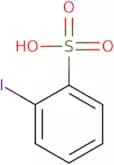
CAS:<p>2-Iodobenzenesulfonic acid is a synthetic molecule with a molecular weight of 169.27 g/mol. It is an acidic salt that reacts with nucleophilic substitutions, such as hydroxyl groups and heterocycles. 2-Iodobenzenesulfonic acid has been studied using molecular modeling techniques to identify its pharmacophore and the key features that may be important for binding to the active site of the enzyme. The results of these studies show that the most important features are a sulfonyl group, two hydroxyl groups, and an aromatic ring.</p>Formula:C6H5IO3SPurezza:Min. 95%Colore e forma:Slightly Yellow PowderPeso molecolare:284.07 g/molBoc-L-Histidine
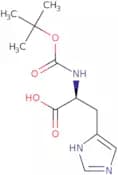
CAS:<p>Boc-L-histidine is a histidine derivative with a boronic acid group that can be used to synthesize imines. It is an organic solvent and can be used in magnetic resonance spectroscopy. Boc-L-histidine has been shown to inhibit the tyrosine activity of tyrosinase, which is involved in melanin synthesis. This compound also inhibits cancer cells by inhibiting the cellular process of protein synthesis and, as such, may be useful for the treatment of cancers.</p>Formula:C11H17N3O4Purezza:Min. 98 Area-%Colore e forma:White PowderPeso molecolare:255.27 g/mol2-Ethylhexylphosphonic acid mono-2-ethylhexyl ester
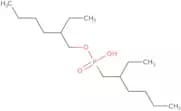
CAS:<p>Sodium carbonate is a chemical compound that is used as an alkaline substance in the laboratory. It is also used in the manufacture of detergents, glass, and textiles. Sodium carbonate has been shown to be an extractant for 2-ethylhexylphosphonic acid mono-2-ethylhexyl ester. It has been shown to react with acidic sodium salts to form a copper complex and adsorb onto the surface of hydrochloric acid at high concentrations. The Langmuir adsorption isotherm shows that 2-ethylhexylphosphonic acid mono-2-ethylhexyl ester has an optimum concentration at around 3 milliliters per gram, with a kinetic data of 4.74 x 10^4 mL/g/sec. The kinetic data also indicates that this reaction proceeds via a Langmuir adsorption mechanism.</p>Formula:C16H35O3PPurezza:Min. 95%Colore e forma:Clear LiquidPeso molecolare:306.42 g/mol6-Hydroxyquinoline-(1H)-2-one
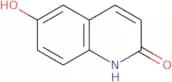
CAS:<p>6-Hydroxyquinoline-(1H)-2-one is an organic compound that has been shown to inhibit the uptake of carbostyril by bacterial cells. This inhibition causes increased uptake of xanthurenic acid and anthranilic acid, which are two compounds that are found in wastewater treatment. 6-Hydroxyquinoline-(1H)-2-one may be a potential anticancer agent, as it inhibits the growth of astroglia cells and bladder cancer cells. It also reacts with acylation reactions to form quinolinic acid, which has been shown to have anticancer effects.</p>Formula:C9H7NO2Purezza:Min. 95%Colore e forma:White SolidPeso molecolare:161.16 g/mol2-Hydroxytetrahydrofuran
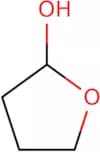
CAS:<p>2-Hydroxytetrahydrofuran is a glycol ether that is used as an agent in various industrial processes. It has been shown to be a potent inhibitor of the Mcl-1 protein, which plays an important role in apoptosis. 2-Hydroxytetrahydrofuran has also been found to be effective against autoimmune diseases and metabolic disorders such as diabetes mellitus. In addition, this chemical is known for its ability to inhibit the oxidation of hydrogen peroxide by acting as a catalyst. 2-Hydroxytetrahydrofuran is used in wastewater treatment because it prevents the formation of nitrates and nitrites from nitrogen-containing organic compounds. This chemical can also cause eye disorders if it penetrates the cornea or other parts of the eye.</p>Formula:C4H8O2Purezza:Min. 95 Area-%Colore e forma:Colorless Clear LiquidPeso molecolare:88.11 g/mol1-Hydroxy-2,3-dimethylbenzene
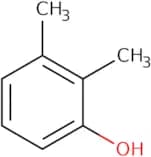
CAS:<p>1-Hydroxy-2,3-dimethylbenzene (1,2-DMB) is a chemical compound that is used as an industrial catalyst. It has been shown to be an efficient catalyst for the treatment of wastewater, and has been studied in the removal of nitrogen from industrial gases. 1,2-DMB has also been found to be active against bacteria such as Pseudomonas aeruginosa and Staphylococcus aureus. This compound reacts with copper ions to form an organometallic complex, which then reacts with trifluoroacetic acid in an organic solution to form an aldehyde group.</p>Formula:C8H10OPurezza:Min. 95%Colore e forma:Off-White PowderPeso molecolare:122.16 g/mol


![7-Bromobenzo[b]thiophene-2-carboxylic acid](/_next/image/?url=https%3A%2Fstatic.cymitquimica.com%2Fproducts%2F3D%2Fthumb-webp%2FFB139377.webp&w=3840&q=75)