Building Blocks
Questa sezione contiene prodotti fondamentali per la sintesi di composti organici e biologici. Building blocks sono i materiali di partenza essenziali utilizzati per costruire molecole complesse attraverso varie reazioni chimiche. Svolgono un ruolo critico nella scoperta di farmaci, nella scienza dei materiali e nella ricerca chimica. Presso CymitQuimica, offriamo una gamma diversificata di building blocks di alta qualità per supportare le tue ricerche innovative e progetti industriali, assicurandoti di avere i componenti essenziali per una sintesi di successo.
Sottocategorie di "Building Blocks"
- Acidi boronici e derivati dell'acido boronico(5.756 prodotti)
- Building Blocks Chirali(1.242 prodotti)
- Building Blocks Idrocarburici(6.093 prodotti)
- Building Blocks organici(60.532 prodotti)
Trovati 195533 prodotti di "Building Blocks"
Ordinare per
Purezza (%)
0
100
|
0
|
50
|
90
|
95
|
100
5-Chloroindole-2-carboxylic acid
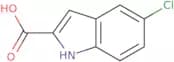
CAS:<p>5-Chloroindole-2-carboxylic acid is a fatty acid that is synthesized from glucose. It has been shown to have inhibitory properties against the enzyme cyclooxygenase-2 (COX-2), which may be due to its ability to suppress prostaglandin synthesis. 5-Chloroindole-2-carboxylic acid also has been shown to have anticancer properties and can inhibit cancer cell growth in vitro. The drug may also play a role in the central nervous system, as it has been shown to cause neuronal death. 5-Chloroindole-2-carboxylic acid is not water soluble, so it must be dissolved in organic solvents such as cyclohexane or chloroform before being used for chemical reactions. This drug can be used with other drugs that are coxib sensitive, such as aspirin, acetaminophen, and ibuprofen.</p>Formula:C9H6ClNO2Colore e forma:PowderPeso molecolare:195.6 g/mol2-Fluoro-4-iodo-5-methylpyridine
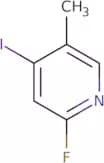
CAS:<p>2-Fluoro-4-iodo-5-methylpyridine is a versatile building block that can be used as a reagent or reaction component. It is an intermediate for the production of pharmaceuticals, pesticides, and other organic compounds. 2-Fluoro-4-iodo-5-methylpyridine is also used as a speciality chemical in research laboratories. 2-Fluoro-4-iodo-5-methylpyridine can be used as a building block to produce complex compounds with various functionalities.</p>Formula:C6H5FINPurezza:Min. 95%Colore e forma:White PowderPeso molecolare:237.01 g/molHeptylnonyl Adipate (so called) [Plasticizer]
CAS:Purezza:mixture of Heptylnonyl adipate, Diheptyl adipate, Dinonyl adipate(GC)Colore e forma:Colorless to Almost colorless clear liquidMethyl 3-cyano-1H-indole-7-carboxylate
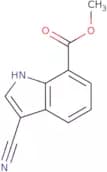
CAS:<p>Methyl 3-cyano-1H-indole-7-carboxylate is a fine chemical that belongs to the class of useful scaffolds, versatile building blocks, and useful intermediates. It is used as a research chemical and a reaction component. Methyl 3-cyano-1H-indole-7-carboxylate is also a speciality chemical with high quality and can be used as a reagent in the production of other compounds.</p>Formula:C11H8N2O2Purezza:Min. 95%Colore e forma:White PowderPeso molecolare:200.19 g/mol4-Iodotoluene
CAS:Formula:C7H7IPurezza:>99.0%(GC)Colore e forma:White or Colorless to Yellow powder to lump to clear liquidPeso molecolare:218.043,5,5-Trimethylhexyl Acetate
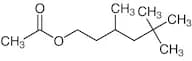
CAS:Formula:C11H22O2Purezza:>93.0%(GC)Colore e forma:Colorless to Almost colorless clear liquidPeso molecolare:186.302-Amino-1,1,3-tricyano-1-propene
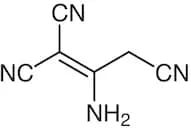
CAS:Formula:C6H4N4Purezza:>98.0%(T)Colore e forma:White to Gray to Brown powder to crystalPeso molecolare:132.132-Fluoro-4-methoxyaniline
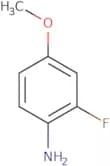
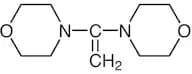
CAS:<p>2-Fluoro-4-methoxyaniline is a non-selective amide that forms in the presence of amines, aminobutyraldehyde, and fluorine. 2-Fluoro-4-methoxyaniline is a product of the industrial process for synthesizing acetylated products through the use of dichloroketene as an acetylating agent. This chemical compound has been used to produce five-membered heterocycles that are used in the manufacture of pharmaceuticals. Mechanistic studies have shown that this chemical reacts with oxygen, water, and halogens to form a variety of products.</p>Formula:C7H8FNOPurezza:Min. 95%Colore e forma:Yellow PowderPeso molecolare:141.14 g/mol1,1-Bis(morpholino)ethylene
CAS:Formula:C10H18N2O2Purezza:>97.0%(GC)(T)Colore e forma:White to Orange to Green powder to lumpPeso molecolare:198.27Benzo[b]furan-2-boronic acid
CAS:<p>Benzo[b]furan-2-boronic acid is a potent matrix metalloproteinase inhibitor that can be used in the treatment of cancer. It is synthesized from 2-aminobenzofuran by using a Suzuki coupling reaction with boronic acid. Benzo[b]furan-2-boronic acid has been shown to inhibit MMP-1, MMP-13, and MMP-14. This compound also inhibits the activity of other proteases such as cathepsin G, elastase, and chymase. The compound has been shown to be cytotoxic against human breast cancer cells and colon cancer cells. In addition, this compound is fluorescent and its fluorescence has been shown to increase when it binds to cancer cells.</p>Formula:C8H7BO3Purezza:Min. 95%Colore e forma:White PowderPeso molecolare:161.95 g/mol(1S,4S)-2-Benzyl-2,5-diazabicyclo[2.2.1]heptane Dihydrobromide
CAS:Formula:C12H16N2·2HBrPurezza:>98.0%(T)(HPLC)Colore e forma:White to Almost white powder to crystalPeso molecolare:350.10Boc-Lys-OMe HCl
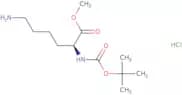
CAS:<p>Boc-Lys-OMe HCl is an ester hydrochloride of N-Boc-Lysine. It is a macrocyclic compound that has been used in the laboratory as an acidifying agent to convert sodium borohydride to methyl ester hydrochloride. Boc-Lys-OMe HCl is also used in the synthesis of macrocyclic compounds, such as n-boc-l-lysine and other polyamino compounds.</p>Formula:C12H24N2O4·HClPurezza:Min. 95%Colore e forma:White PowderPeso molecolare:296.79 g/mol1-(2-Dimethylaminoethyl)-4-methylpiperazine
CAS:<p>Polyurethane is a polymer that is synthesized by the reaction of diisocyanates with polyols, such as glycols or sugar alcohols. Polyurethanes are used in a wide variety of products, including coatings, foams and elastomers. 1-(2-Dimethylaminoethyl)-4-methylpiperazine (DMP) is an ionic surfactant that is commonly used as an extender and/or viscosity stabilizer in polyurethane systems. DMP provides good wetting properties to the coating and improves film formation, surface smoothness and abrasion resistance. It also helps to reduce the hardness of the surface film, which can be beneficial when using soft materials such as foam or rubber.</p>Formula:C9H21N3Purezza:Min. 95%Colore e forma:Clear LiquidPeso molecolare:171.28 g/mol2-(4-Methoxyphenyl)ethanol
CAS:<p>2-(4-Methoxyphenyl)ethanol is a chemical compound that can be synthesized in an efficient method. It is a by-product of the reaction of fatty acids with hydroxyl compounds and has been shown to have synergistic effects when combined with chloride. 2-(4-Methoxyphenyl)ethanol is used as a synthetic intermediate for the production of methyl anthranilate, which is an important industrial chemical that is used as a flavor and fragrance additive. 2-(4-Methoxyphenyl)ethanol also has eugenol as one of its cleavage products, which can be found in plants such as clove oil, cinnamon bark, and nutmeg.</p>Formula:C9H12O2Purezza:Min. 98%Colore e forma:White PowderPeso molecolare:152.19 g/mol2,6-Dibromobenzaldehyde
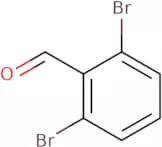
CAS:<p>2,6-Dibromobenzaldehyde is an imidazole derivative that has been shown to be a potent inhibitor of tyrosine kinase. It has been shown to inhibit the replication of virus type-1 and is effective in the treatment of pain models. 2,6-Dibromobenzaldehyde also inhibits the activity of enzymes, such as phosphodiesterases and protein kinases. This compound has shown promising results in animal studies for the treatment of human immunodeficiency virus type 1 (HIV-1) infection. The pharmacokinetic properties of 2,6-dibromobenzaldehyde have been studied in rats and dogs with oral administration and found to be linear and rapid with high bioavailability.</p>Formula:C7H4Br2OPurezza:Min. 95%Colore e forma:PowderPeso molecolare:263.91 g/molSodium 4-Ethylbenzenesulfonate
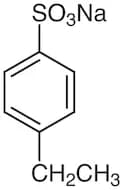
CAS:Formula:C8H9NaO3SPurezza:>98.0%(T)(HPLC)Colore e forma:White to Almost white powder to crystalPeso molecolare:208.21Methyl 5-methoxy-2-methylindole-3-acetate
CAS:<p>Methyl 5-methoxy-2-methylindole-3-acetate is a versatile building block that can be used as a research chemical, reagent, or speciality chemical. It is also an intermediate in the synthesis of other compounds and has been shown to be useful in reactions involving nucleophilic substitution and electrophilic addition. This compound can be used as a scaffold for complex organic molecules. CAS No. 7588-36-5</p>Formula:C13H15NO3Purezza:Min. 95%Colore e forma:Beige SolidPeso molecolare:233.26 g/molBoc-L-Histidine
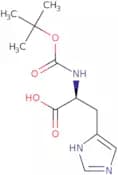
CAS:<p>Boc-L-histidine is a histidine derivative with a boronic acid group that can be used to synthesize imines. It is an organic solvent and can be used in magnetic resonance spectroscopy. Boc-L-histidine has been shown to inhibit the tyrosine activity of tyrosinase, which is involved in melanin synthesis. This compound also inhibits cancer cells by inhibiting the cellular process of protein synthesis and, as such, may be useful for the treatment of cancers.</p>Formula:C11H17N3O4Purezza:Min. 98 Area-%Colore e forma:White PowderPeso molecolare:255.27 g/mol2,2-Difluoroethanol
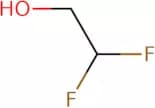
CAS:<p>2,2-Difluoroethanol is a chemical compound with the molecular formula C2H4F2O. It is a colorless liquid that has a distinctive odor and is highly flammable. 2,2-Difluoroethanol reacts in an electrophilic substitution reaction to replace chlorine atoms with hydrogen atoms from the ethyl formate molecule. This reaction can be described by the following equation:</p>Formula:C2H4OF2Purezza:Min. 95%Colore e forma:PowderPeso molecolare:82.05 g/mol2-Amino-2',4-dichlorodiphenyl Ether
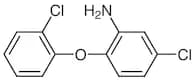
CAS:Formula:C12H9Cl2NOPurezza:>98.0%(GC)(T)Colore e forma:Colorless to Brown clear liquidPeso molecolare:254.11

![Heptylnonyl Adipate (so called) [Plasticizer]](/_next/image/?url=https%3A%2Fstatic.cymitquimica.com%2Fproducts%2F3B%2Fthumb-webp%2FA1388.webp&w=3840&q=75)


![Benzo[b]furan-2-boronic acid](/_next/image/?url=https%3A%2Fstatic.cymitquimica.com%2Fproducts%2F3D%2Fthumb-webp%2FFB40264.webp&w=3840&q=75)
![(1S,4S)-2-Benzyl-2,5-diazabicyclo[2.2.1]heptane Dihydrobromide](/_next/image/?url=https%3A%2Fstatic.cymitquimica.com%2Fproducts%2F3B%2Fthumb-webp%2FB2054.webp&w=3840&q=75)