Building Blocks
Questa sezione contiene prodotti fondamentali per la sintesi di composti organici e biologici. Building blocks sono i materiali di partenza essenziali utilizzati per costruire molecole complesse attraverso varie reazioni chimiche. Svolgono un ruolo critico nella scoperta di farmaci, nella scienza dei materiali e nella ricerca chimica. Presso CymitQuimica, offriamo una gamma diversificata di building blocks di alta qualità per supportare le tue ricerche innovative e progetti industriali, assicurandoti di avere i componenti essenziali per una sintesi di successo.
Sottocategorie di "Building Blocks"
- Acidi boronici e derivati dell'acido boronico(5.756 prodotti)
- Building Blocks Chirali(1.242 prodotti)
- Building Blocks Idrocarburici(6.093 prodotti)
- Building Blocks organici(60.532 prodotti)
Trovati 195534 prodotti di "Building Blocks"
Ordinare per
Purezza (%)
0
100
|
0
|
50
|
90
|
95
|
100
2-(4-Methoxyphenyl)ethanol
CAS:<p>2-(4-Methoxyphenyl)ethanol is a chemical compound that can be synthesized in an efficient method. It is a by-product of the reaction of fatty acids with hydroxyl compounds and has been shown to have synergistic effects when combined with chloride. 2-(4-Methoxyphenyl)ethanol is used as a synthetic intermediate for the production of methyl anthranilate, which is an important industrial chemical that is used as a flavor and fragrance additive. 2-(4-Methoxyphenyl)ethanol also has eugenol as one of its cleavage products, which can be found in plants such as clove oil, cinnamon bark, and nutmeg.</p>Formula:C9H12O2Purezza:Min. 98%Colore e forma:White PowderPeso molecolare:152.19 g/mol4-Phenylcinnamic acid
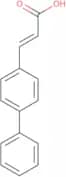
CAS:<p>4-Phenylcinnamic acid is a prenylated aromatic compound that is used as a chromatographic stationary phase. It has been shown to inhibit the activity of tyrosinase and thus may be used for the treatment of hyperpigmentation disorders such as melasma. 4-Phenylcinnamic acid interacts with piperidine and inhibits its activity, which may lead to new drug development. Molecular modelling of 4-phenylcinnamic acid has shown that it is possible to introduce functional groups into the molecule, making it more reactive. The introduction of biphenyl derivatives may improve the lipophilicity of this molecule.</p>Formula:C15H12O2Purezza:Min. 95%Colore e forma:White PowderPeso molecolare:224.25 g/molBithionol Disodium Salt
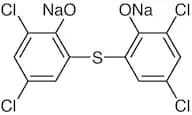
CAS:Formula:C12H4Cl4Na2O2SPurezza:>98.0%(T)(HPLC)Colore e forma:White to Gray to Brown powder to crystalPeso molecolare:400.00Boc-N-Ethylglycine
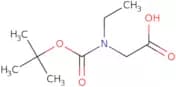
CAS:<p>Building block</p>Formula:C9H17NO4Purezza:Min. 95%Colore e forma:White PowderPeso molecolare:203.24 g/mol3-Methoxycinnamic acid
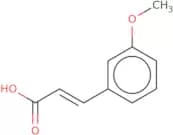
CAS:<p>3-Methoxycinnamic acid is a hydroxycinnamic acid that has been shown to inhibit the migration of polymorphonuclear cells and leukocytes. It also inhibits chemotaxis by blocking the production of intracellular cyclic AMP (cAMP) in these cells. 3-Methoxycinnamic acid has been shown to have an inhibitory effect on the production of cAMP in leukocytes and polymorphonuclear cells, as well as inhibiting chemotaxis. The compound is also known to be a potent antioxidant due to its ability to scavenge reactive oxygen species (ROS).</p>Formula:C10H10O3Purezza:Min. 95%Colore e forma:PowderPeso molecolare:178.18 g/mol4-Methoxy-1-naphthol
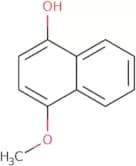
CAS:<p>Spectrophotometric substrate for peroxidase</p>Formula:C11H10O2Purezza:Min. 95%Colore e forma:Brown PowderPeso molecolare:174.2 g/molDiethyl Oxalacetate Sodium Salt
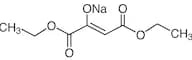
CAS:Formula:C8H11NaO5Purezza:>95.0%(T)Colore e forma:White to Light yellow to Light orange powder to crystalPeso molecolare:210.16Tetrahydropyranylethyleneglycol
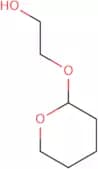
CAS:<p>Tetrahydropyranyl ethyleneglycol is a polymerized, telechelic molecule with a hetero-bifunctional linkage. It is used in bioconjugate chemistry and has been shown to be effective in the treatment of neuropathic pain. Tetrahydropyranyl ethyleneglycol has an acidic hydroxyl group that can be used for ring-opening reactions. It also has a primary amino group that can be used for ion exchange or as a bifunctional agent. The heterobifunctional properties of tetrahydropyranyl ethyleneglycol allow it to be incorporated into polymers and other polymeric materials.</p>Formula:C7H14O3Purezza:Min. 95%Colore e forma:PowderPeso molecolare:146.18 g/mol(2-Mercapto-4-methyl-5-thiazolyl)acetic Acid
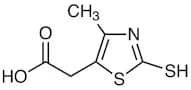
CAS:Formula:C6H7NO2S2Purezza:>98.0%(T)(HPLC)Colore e forma:White to Light yellow powder to crystalPeso molecolare:189.253,5,7-Trimethyl-1-aminoadamantane hydrochloride
CAS:<p>3,5,7-Trimethyl-1-aminoadamantane hydrochloride is a versatile building block that can be used in the production of various fine chemicals. 3,5,7-Trimethyl-1-aminoadamantane hydrochloride is a reagent and speciality chemical that has been used as a research chemical in the synthesis of complex compounds. It is also a useful building block for the synthesis of high quality reaction components and scaffolds.</p>Formula:C13H23N•HClPurezza:Min. 95%Colore e forma:White PowderPeso molecolare:229.79 g/mol5-Nitro-7-azaindole
CAS:<p>5-Nitro-7-azaindole is a heterocyclic compound that is structurally related to the furoquinolines. It has been shown to act as an inhibitor of benzene and pyridine oxidases, which are enzymes that catalyze the conversion of these compounds into reactive intermediates. The reaction mechanism of 5-Nitro-7-azaindole with benzene and pyridine oxidases involves the formation of covalent bonds with reactive sulfur atoms in the enzyme active site. 5-Nitro-7-azaindole also inhibits bacterial growth by inhibiting DNA synthesis. This compound has been found to be scalable and can be produced at large scales without loss in quality. 5-Nitro-7-azaindole is not stereoselective and it is not an aromatic system, meaning that it does not have a benzene ring.</p>Formula:C7H5N3O2Purezza:Min. 95%Colore e forma:PowderPeso molecolare:163.13 g/mol2-(Chloromethyl)-1,3-thiazole
CAS:<p>2-(Chloromethyl)-1,3-thiazole is an aromatic hydrocarbon that is used as a pesticide. It is also a metabolic intermediate in the metabolism of chlorinating agents and has been shown to be carcinogenic. This compound degrades by reacting with hydrochloric acid, nitric acid, sodium hydroxide solution, or hydrogen chloride to form 2-chloro-1,3-thiazole or 2-chloromethyltetrahydrothiophene. The pharmacokinetic properties of this compound are unknown.</p>Formula:C4H4ClNSPurezza:Min. 95%Colore e forma:PowderPeso molecolare:133.6 g/mol3,5-Dibromo-4-hydroxytoluene
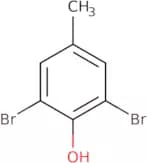
CAS:<p>3,5-Dibromo-4-hydroxytoluene (DBHT) is a brominated aromatic hydrocarbon. It has been shown to be an efficient debrominating agent for bromophenols and chloride, which are two major environmental pollutants. DBHT can also catalyze the conversion of styrene to benzene and acetic acid in the presence of hydrogen, as well as methylating styrene. This chemical is an effective catalyst for the formation of metabolic intermediates and crystal x-ray diffraction studies have shown that DBHT is a good substrate for enzyme activity.</p>Formula:C7H6Br2OPurezza:Min. 95%Colore e forma:White To Yellow To Light Brown SolidPeso molecolare:265.93 g/molTetrahydro-1,3-dimethyl-1H-pyrimidin-2-one
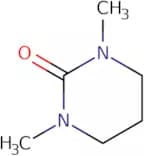
CAS:<p>Tetrahydro-1,3-dimethyl-1H-pyrimidin-2-one is an organic compound that is used in the synthesis of drugs and other organic compounds. It can be synthesized by reacting hydrogen fluoride with nitrogen atoms. Tetrahydro-1,3-dimethyl-1H-pyrimidin-2-one can form stable complexes with iodination reactions and has been used to prepare monoclonal antibodies. This molecule has also been studied using x-ray crystal structures and titration calorimetry to investigate its reaction mechanism. The light emission from this molecule is due to intermolecular hydrogen bonding between a pyrazole ring and a phenyl ring.</p>Formula:C6H12N2OPurezza:Min. 98%Colore e forma:Colorless Slightly Yellow Clear LiquidPeso molecolare:128.17 g/mol2-Cyanopyrazine
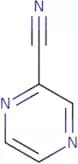
CAS:<p>2-Cyanopyrazine is a molecule that belongs to the group of nitrogen-containing heterocyclic compounds. It has been shown to exhibit antiinflammatory activity in skin cancer cells and bacterial strain, group P2. This compound inhibits the growth of bacteria by binding to their pyrazinoic acid, which is an electron acceptor. 2-Cyanopyrazine also exhibits tuberculostatic activity against M. tuberculosis and M. avium complex by inhibiting the synthesis of mycolic acids and cell wall lipids, respectively. The redox cycle of this compound is coordinated with a hydrogen bond between the hydroxyl group and the carbonyl carbon atom. 2-Cyanopyrazine is oxidized from its initial state through a reaction mechanism involving molecular oxygen or hydrogen peroxide as an oxidant and water as a reductant. The oxidation products can be reduced back to 2-cyanoapyrazine using ascorbate or NADH as</p>Formula:C5H3N3Purezza:Min. 95%Colore e forma:Off-White To Light (Or Pale) Yellow Solid Or Liquid (May Vary)Peso molecolare:105.1 g/molDiphenyl Oxalate
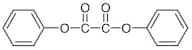
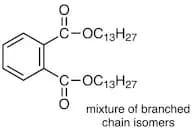
CAS:Formula:C14H10O4Purezza:>98.0%(GC)Colore e forma:White to Light yellow to Light orange powder to crystalPeso molecolare:242.23Ditridecyl Phthalate (mixture of branched chain isomers)
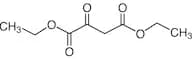
CAS:Formula:C34H58O4Purezza:multi component mixture(GC)Colore e forma:Colorless to Almost colorless clear liquidPeso molecolare:530.83Diethyl Oxalacetate
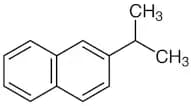
CAS:Formula:C8H12O5Purezza:>95.0%(GC)Colore e forma:Colorless to Light yellow clear liquidPeso molecolare:188.182-Isopropylnaphthalene
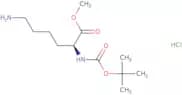
CAS:Formula:C13H14Purezza:>95.0%(GC)Colore e forma:Colorless to Light yellow clear liquidPeso molecolare:170.26Boc-Lys-OMe HCl
CAS:<p>Boc-Lys-OMe HCl is an ester hydrochloride of N-Boc-Lysine. It is a macrocyclic compound that has been used in the laboratory as an acidifying agent to convert sodium borohydride to methyl ester hydrochloride. Boc-Lys-OMe HCl is also used in the synthesis of macrocyclic compounds, such as n-boc-l-lysine and other polyamino compounds.</p>Formula:C12H24N2O4·HClPurezza:Min. 95%Colore e forma:White PowderPeso molecolare:296.79 g/mol