Building Blocks
Questa sezione contiene prodotti fondamentali per la sintesi di composti organici e biologici. Building blocks sono i materiali di partenza essenziali utilizzati per costruire molecole complesse attraverso varie reazioni chimiche. Svolgono un ruolo critico nella scoperta di farmaci, nella scienza dei materiali e nella ricerca chimica. Presso CymitQuimica, offriamo una gamma diversificata di building blocks di alta qualità per supportare le tue ricerche innovative e progetti industriali, assicurandoti di avere i componenti essenziali per una sintesi di successo.
Sottocategorie di "Building Blocks"
- Acidi boronici e derivati dell'acido boronico(5.756 prodotti)
- Building Blocks Chirali(1.242 prodotti)
- Building Blocks Idrocarburici(6.095 prodotti)
- Building Blocks organici(61.036 prodotti)
Trovati 195887 prodotti di "Building Blocks"
Ordinare per
Purezza (%)
0
100
|
0
|
50
|
90
|
95
|
100
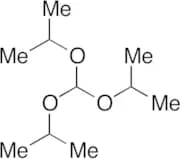
Triisopropyl Orthoformate
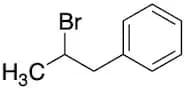
CAS:Prodotto controllatoFormula:C9H12O4Colore e forma:NeatPeso molecolare:184.1892-Bromo-1-phenylpropane
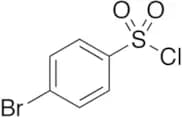
CAS:Prodotto controllato<p>Applications 2-BROMO-1-PHENYLPROPANE (cas# 2114-39-8) is a useful research chemical.<br></p>Formula:C9H11BrColore e forma:NeatPeso molecolare:199.084-Bromobenzenesulfonyl Chloride
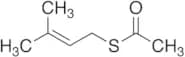
CAS:Prodotto controllato<p>Applications Used for identification of amines, and also in the synthesis and inhibition studies of substituted N-L-histidinylphenylsulfonyl hydrazide.<br> Not a dangerous good if item is equal to or less than 1g/ml and there is less than 100g/ml in the package<br>References Teng, H., et al.: Biochemistry, 38, 7363 (1999), Abdo, M., et al.: Bioorg. Med. Chem., 15, 4427 (2007),<br></p>Formula:C6H4BrClO2SColore e forma:NeatPeso molecolare:255.523-Methyl-2-buten-1-yl Thiolacetate(3-Methyl-2-buten-1-thiol precursor)
CAS:Prodotto controllato<p>Applications A precursor to 3-Methyl-2-butenyl-1-thiol which is very unstable. We will provide a detailed procedure for the preparation of the thiol from the thiolacetate with spectral data upon request.<br> Not a dangerous good if item is equal to or less than 1g/ml and there is less than 100g/ml in the package<br></p>Formula:C7H12OSColore e forma:NeatPeso molecolare:144.23Dichloroacetic Acid Methyl Ester
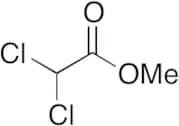
CAS:Prodotto controllato<p>Applications Dichloroacetic Acid Methyl Ester is used in the preparation of telechelics and block copolymers through living radical polymerization.<br>References Keul, H., et. al.: Macromol. S., 19, 1 (1971)<br></p>Formula:C3H4Cl2O2Colore e forma:NeatPeso molecolare:142.97Triethyl Orthopropionate (Technical Grade)
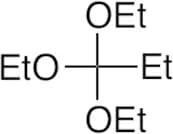
CAS:Prodotto controllato<p>Stability Moisture Sensitive<br>Applications Triethyl orthopropionate is used as a starting material in the synthesis of Triethyl orthoacrylate. Triethyl orthopropionate is also commonly used in Claisen rearrangement reactions that yield γ,δ-unsaturated esters.<br> Not a dangerous good if item is equal to or less than 1g/ml and there is less than 100g/ml in the package<br>References Ghosh, A. & Moon, D.: Org. Lett., 9, 2425 (2007); Ito, H. & Taguchi, T.: Tetrahedron Lett., 38, 5829 (1997); Sarkar, D., et al.: Tetrahedron Lett., 50, 1431 (2009)<br></p>Formula:C9H20O3Colore e forma:NeatPeso molecolare:176.251-Bromohexadecane
CAS:Prodotto controllato<p>Applications 1-Bromohexadecane is used in the preparation of soluble carbon nano-onions by covalent functionalization with hexadecyl chains. It is also used to synthesize [2-(methacryloyloxy)ethyl]dimethylhexadecylammonium bromide monomer, required for the synthesis of novel methacrylate based adsorbents.<br>References Molina-Ontoria, A., et al.: Chem. Comm., 49, 2406 (2013); Shu, M., et al.: Analyst, 137, 2143 (2012)<br></p>Formula:C16H33BrColore e forma:NeatPeso molecolare:305.343-Bromopyridine
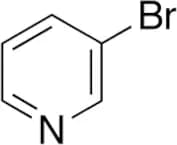
CAS:Prodotto controllato<p>Applications Pyridine as novel substrate for regioselective oxygenation with aromatic peroxygenase from Agrocybe aegerita.<br> Not a dangerous good if item is equal to or less than 1g/ml and there is less than 100g/ml in the package<br>References Colby, J., et al.: Biochem. J., 165, 395 (1977), Damani, L., et al.: Xenobiotica, 12, 527 (1982), Balzarini, J., et al.: J. Antimicrob. Chemother., 55, 135 (2005),<br></p>Formula:C5H4BrNColore e forma:NeatPeso molecolare:158.03-(Methylthio)propylamine
CAS:Prodotto controllato<p>Applications 3-(Methylthio)propylamine (cas# 4104-45-4) is a useful research chemical.<br></p>Formula:C4H11NSColore e forma:NeatPeso molecolare:105.22-Fluorocinnamic Acid
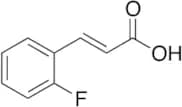
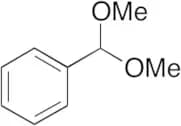
CAS:Prodotto controllato<p>Applications 2-Fluorocinnamic acid, 98% (cas# 451-69-4) is a useful research chemical.<br></p>Formula:C9H7FO2Colore e forma:NeatPeso molecolare:166.15Benzaldehyde Dimethyl Acetal
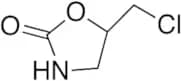
CAS:Prodotto controllatoFormula:C9H12O2Colore e forma:NeatPeso molecolare:152.195-Chloromethyl-2-oxazolidinone
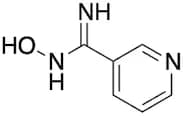
CAS:Prodotto controllatoFormula:C4H6ClNO2Colore e forma:NeatPeso molecolare:135.55N'-Hydroxypyridine-3-carboximidamide
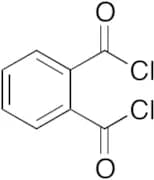
CAS:Prodotto controllato<p>Applications: N'-Hydroxypyridine-3-carboximidamide<br></p>Formula:C6H7N3OColore e forma:NeatPeso molecolare:137.14o-Phthaloyl Dichloride
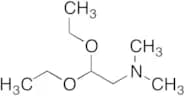
CAS:Prodotto controllatoFormula:C8H4Cl2O2Colore e forma:NeatPeso molecolare:203.02Dimethylaminoacetaldehyde Diethyl Acetal
CAS:Prodotto controllatoFormula:C8H19NO2Colore e forma:NeatPeso molecolare:161.25(S)-(-)-2-Acetoxypropionic Acid
CAS:Formula:C5H8O4Purezza:>98.0%(T)Colore e forma:Colorless to Almost colorless clear liquidPeso molecolare:132.122-Toluenesulfonyl isocyanate
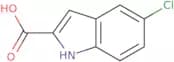
CAS:<p>2-Toluenesulfonyl isocyanate (2TSIC) is a reactive compound that belongs to the group of polyols. It has high resistance to water and other solvents, which makes it an excellent sealant. 2TSIC reacts with hydroxy groups on polymers and monomers to form hydrogen bonds. This reaction can be used in radiation curing of sealants. 2TSIC also interacts with m1 receptors, which are proteins found in the brain and spinal cord that regulate neurotransmitter release.</p>Formula:C8H7NO3SPurezza:Min. 95%Colore e forma:Colourless liquid.Peso molecolare:197.21 g/mol5-Chloroindole-2-carboxylic acid
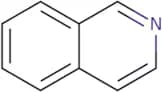
CAS:<p>5-Chloroindole-2-carboxylic acid is a fatty acid that is synthesized from glucose. It has been shown to have inhibitory properties against the enzyme cyclooxygenase-2 (COX-2), which may be due to its ability to suppress prostaglandin synthesis. 5-Chloroindole-2-carboxylic acid also has been shown to have anticancer properties and can inhibit cancer cell growth in vitro. The drug may also play a role in the central nervous system, as it has been shown to cause neuronal death. 5-Chloroindole-2-carboxylic acid is not water soluble, so it must be dissolved in organic solvents such as cyclohexane or chloroform before being used for chemical reactions. This drug can be used with other drugs that are coxib sensitive, such as aspirin, acetaminophen, and ibuprofen.</p>Formula:C9H6ClNO2Colore e forma:PowderPeso molecolare:195.6 g/molIsoquinoline
CAS:<p>Isoquinoline is a heterocyclic organic compound that can be synthesized by the asymmetric addition of hydrochloric acid to an isoquinol. It has been shown to inhibit the enzyme DPP-IV, which is involved in the degradation of glucagon-like peptide-1 (GLP-1). Isoquinoline is also a potent antagonist of the NMDA receptor, and has been shown to have anti-inflammatory properties in HLA-60 cells. This drug is soluble in organic solvents and forms crystalline polymorphs. Isoquinoline has been used in polymerase chain reactions as a hydrogen bond donor.</p>Formula:C9H7NPurezza:Min. 95%Colore e forma:PowderPeso molecolare:129.16 g/mol