


Building Blocks
Questa sezione contiene prodotti fondamentali per la sintesi di composti organici e biologici. Building blocks sono i materiali di partenza essenziali utilizzati per costruire molecole complesse attraverso varie reazioni chimiche. Svolgono un ruolo critico nella scoperta di farmaci, nella scienza dei materiali e nella ricerca chimica. Presso CymitQuimica, offriamo una gamma diversificata di building blocks di alta qualità per supportare le tue ricerche innovative e progetti industriali, assicurandoti di avere i componenti essenziali per una sintesi di successo.
Sottocategorie di "Building Blocks"
- Acidi boronici e derivati dell'acido boronico(5.756 prodotti)
- Building Blocks Chirali(1.242 prodotti)
- Building Blocks Idrocarburici(6.095 prodotti)
- Building Blocks organici(61.038 prodotti)
Trovati 196817 prodotti di "Building Blocks"
Ordinare per
Purezza (%)
0
100
|
0
|
50
|
90
|
95
|
100
7-Bromo-5-methoxyindole-3-carboxylic acid
CAS:<p>Please enquire for more information about 7-Bromo-5-methoxyindole-3-carboxylic acid including the price, delivery time and more detailed product information at the technical inquiry form on this page</p>Formula:C10H8BrNO3Purezza:Min. 95%Colore e forma:PowderPeso molecolare:270.09 g/mol1-Bromopentane
CAS:<p>1-Bromopentane is a colorless liquid that has an unpleasant odor. It is soluble in water and reacts with acids to form bromides. 1-Bromopentane has been used as an oxidation catalyst in the preparation of organic compounds under conditions of constant pressure and light exposure. It has also been used in the synthesis of polymers, such as poly(1-bromopentene). Its biological properties are not well known, but it has been shown to have CB2 receptor agonist activity and inhibitory effects on oxidative stress. The chemical kinetic data for 1-bromopentane are available at various temperatures and pressures. Chloride ions can act as catalysts for its decomposition reaction, which is a stepwise process involving the conversion of hydroxyl groups into chloride atoms. The reaction mechanism starts with the conversion of one bromine atom into a radical by abstraction of a hydrogen atom from the molecule followed by addition of another brom</p>Formula:C5H11BrPurezza:Min. 98 Area-%Colore e forma:Colorless Clear LiquidPeso molecolare:151.04 g/mol4-(Bromomethyl)-2-iodo-1-nitrobenzene
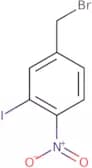
CAS:<p>4-(Bromomethyl)-2-iodo-1-nitrobenzene is a fine chemical that can be used as an intermediate for the synthesis of target molecules. It is a versatile building block with many different reactions and applications, such as research chemicals, reaction components, and speciality chemicals. This compound is also a useful building block for the synthesis of complex molecules. It has high quality and can be used as a reagent in lab experiments.</p>Formula:C7H5BrINO2Purezza:Min. 95%Colore e forma:PowderPeso molecolare:341.93 g/mol5-Benzyloxyindole-3-glyoxylamide
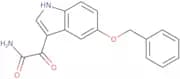
CAS:<p>5-Benzyloxyindole-3-glyoxylamide is a versatile building block that can be used in the synthesis of complex compounds. It has been shown to have a high quality and is useful as a reagent for research purposes. 5-Benzyloxyindole-3-glyoxylamide can be used as a reaction component and is useful as an intermediate in organic synthesis. 5BIGA has CAS number 22424-62-0 and is also known as 3-(benzyloxy)-5-(2,2,2-trifluoroethoxy)indole glyoxamide.</p>Formula:C17H14N2O3Purezza:Min. 95%Peso molecolare:294.3 g/mol4'-Butylacetophenone
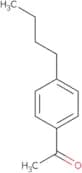
CAS:<p>4'-Butylacetophenone (BA) is a phenolic compound that has been shown to reduce the need for an acceptor in wastewater treatment. It can be used as a substitute for hexane, which is commonly used to extract hydrophobic compounds from water. 4'-Butylacetophenone has also been shown to have anti-inflammatory properties and has been used in the synthesis of nonsteroidal anti-inflammatory drugs such as diclofenac amide.</p>Formula:C12H16OPurezza:Min. 95%Colore e forma:PowderPeso molecolare:176.25 g/molN,O-Bis-acetyl-L-tyrosine
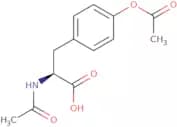
CAS:<p>N,O-Bis-acetyl-L-tyrosine is a bioreversible acetylated amino acid that is synthesized from L-tyrosine. It can be used in the preparation of creatine kinase. N,O-Bis-acetyl-L-tyrosine has been shown to bind to the aromatic residues on creatine kinase and inhibit its activity. The acetylation of lysine residues may be reversible, but this process requires the presence of a hydroxyl group on the tyrosine residue. This reaction is catalyzed by a lysine residue on creatine kinase. Studies have shown that the kinetic properties of N,O-Bis-acetyl-L-tyrosine are similar to those of L-tyrosine and therefore it can be used as an alternative substrate for creatine biosynthesis.</p>Formula:C13H15NO5Purezza:Min. 98 Area-%Colore e forma:White PowderPeso molecolare:265.26 g/mol1-Butanoic acid-2-(O-methyl-L-tyrosine)-1-carbaoxytocin
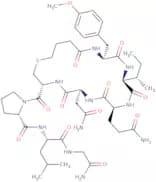
CAS:<p>1-Butanoic acid-2-(O-methyl-L-tyrosine)-1-carbaoxytocin (BMT) is a synthetic analog of oxytocin. Oxytocin is a hormone that is produced in the hypothalamus and released by the pituitary gland to stimulate uterine contractions and milk letdown in mammals. 1-Butanoic acid-2-(O-methyl-L-tyrosine)-1-carbaoxytocin has been shown to bind to the oxytocin receptor and stimulate the release of insulin, which may be useful for treating type 2 diabetes. BMT also stimulates epidermal growth factor (EGF) production and induces skin cell growth. It has been used as an animal health drug for stimulating appetite, increasing weight gain, reducing inflammation, and lowering blood pressure.</p>Formula:C45H69N11O12SPurezza:Min. 95%Colore e forma:White PowderPeso molecolare:988.16 g/mol2-(4-Benzyloxyphenyl)ethanol
CAS:<p>2-(4-Benzyloxyphenyl)ethanol is an organic compound that has a particle size of less than 10 μm and is soluble in water. It is used as a reaction system for the production of tannins, which are polyphenolic compounds that have antioxidant properties. 2-(4-Benzyloxyphenyl)ethanol also inhibits maltase activity and metal ion-induced allylic oxidation. This compound can be used to inhibit fatty acid synthesis, which is important for the prevention of atherosclerosis and other cardiovascular diseases.</p>Formula:C15H16O2Purezza:Min. 95%Colore e forma:PowderPeso molecolare:228.29 g/mol4-Benzyloxy-3-methoxybenzaldehyde
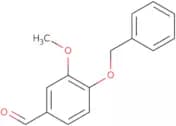
CAS:<p>4-Benzyloxy-3-methoxybenzaldehyde is a deuterium isotope analog of the natural compound benzaldehyde. This molecule has been shown to inhibit the growth of cancer cells in tissue culture by binding to DNA. The molecular mechanism of this inhibition is believed to involve an enzymatic process that results in the substitution of chloride for chlorine, thereby inhibiting DNA synthesis and preventing cell division. 4-Benzyloxy-3-methoxybenzaldehyde also inhibits the production of growth factors and thus has anticancer activity.</p>Formula:C15H14O3Purezza:Min. 95%Colore e forma:PowderPeso molecolare:242.27 g/mol(2S)-2-(4-Chloro-2-methylphenoxy)propanoic acid
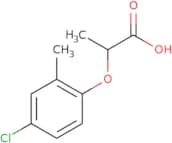
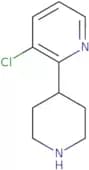
CAS:<p>(2S)-2-(4-Chloro-2-methylphenoxy)propanoic acid (MCPP) is a phenoxy herbicide that is used in the control of annual and perennial broadleaf weeds. It is often found in wastewater treatment plants because it binds to iron ions and can be removed by coagulation, adsorption, or chemical precipitation. MCPP has been shown to produce genotoxic effects in model systems and high values for enzyme activities. The long-term efficacy of MCPP was studied using a bacterial strain with high levels of resistance to this compound. Structural analysis showed that MCPP contains a chlorophenoxy radical, which may contribute to its carcinogenic potential.</p>Formula:C10H11ClO3Purezza:Min. 95%Colore e forma:PowderPeso molecolare:214.64 g/mol3-Chloro-2-(piperidin-4-yl)pyridine
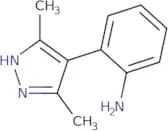
CAS:<p>Versatile small molecule scaffold</p>Formula:C10H13ClN2Purezza:Min. 95%Colore e forma:PowderPeso molecolare:196.67 g/mol2-(3,5-Dimethyl-1H-pyrazol-4-yl)aniline
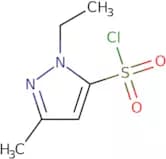
CAS:<p>Versatile small molecule scaffold</p>Formula:C11H13N3Purezza:Min. 95%Colore e forma:PowderPeso molecolare:187.24 g/mol2-Ethyl-5-methyl-pyrazole-3-sulfonyl chloride
CAS:<p>2-Ethyl-5-methyl-pyrazole-3-sulfonyl chloride (EMPS) is a fine chemical that has a useful scaffold and versatile building block. It is a useful intermediate for the synthesis of pharmaceuticals and other organic compounds. EMPS is used as a reaction component in the production of speciality chemicals and research chemicals, such as phenothiazines. This compound has been shown to be an effective reagent for the synthesis of complex compounds with high quality.</p>Formula:C6H9ClN2O2SPurezza:Min. 95%Peso molecolare:208.67 g/mol2,4-Dihydroxybenzoic acid
CAS:<p>2,4-Dihydroxybenzoic acid is a building block for the production of pharmaceuticals and other chemicals. It is a versatile chemical that can be used in the synthesis of complex compounds. 2,4-Dihydroxybenzoic acid is also a reaction component, reagent, and useful scaffold. This compound has been shown to have high quality and is a research chemical with speciality use.</p>Formula:C7H6O4Peso molecolare:154.12 g/molRef: 3D-W-100355
5kgPrezzo su richiesta10kgPrezzo su richiesta25kgPrezzo su richiesta2500gPrezzo su richiesta-Unit-kgkgPrezzo su richiesta2-Hydroxy-4-methoxybenzaldehyde
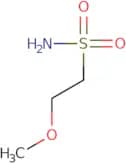
CAS:<p>2-Hydroxy-4-methoxybenzaldehyde is an organic chemical that is used as a versatile building block for complex compounds, research chemicals, and reagents. It is also used as a speciality chemical and as a useful intermediate in the synthesis of other chemicals. 2-Hydroxy-4-methoxybenzaldehyde has CAS No. 673-22-3 and can be used to make many different types of compounds. This compound is a useful scaffold for the synthesis of diverse compounds with biological activity such as pharmaceuticals, agrochemicals, dyes, perfumes, fragrances, flavors and fragrances.</p>Formula:C8H8O3Purezza:Min. 99.0 Area-%Peso molecolare:152.15 g/mol2-Methoxyethanesulfonamide
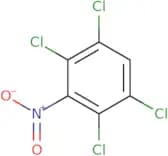
CAS:<p>Versatile small molecule scaffold</p>Formula:C3H9NO3SPurezza:Min. 95%Colore e forma:Clear LiquidPeso molecolare:139.17 g/mol1,2,4,5-Tetrachloro-3-nitrobenzene
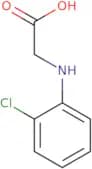
CAS:<p>1,2,4,5-Tetrachloro-3-nitrobenzene is a heterocyclic compound that has the chemical formula C6H2Cl4NO2. It is a yellow crystalline solid that is soluble in organic solvents. It has applications as a standard for quantitative analysis by nuclear magnetic resonance.</p>Formula:HC6Cl4NO2Purezza:Min. 95%Colore e forma:PowderPeso molecolare:260.89 g/molN-(2-Chlorophenyl)glycine
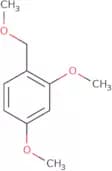
CAS:<p>N-(2-Chlorophenyl)glycine is an optical isomer of glycine that was synthesized by the photocyclization of 2-chlorobenzaldehyde using KI as a catalyst. It has been shown to be an active inhibitor of platelet aggregation and activation, with a potency comparable to clopidogrel. N-(2-Chlorophenyl)glycine may be used in pharmaceuticals for the prevention of thrombosis and stroke, particularly in patients who are at high risk for these complications. The synthesis of this compound requires the use of an organic solvent and chiral reagents.</p>Formula:C8H8ClNO2Purezza:Min. 95%Colore e forma:PowderPeso molecolare:185.61 g/mol2,4-Dimethoxy-1-(methoxymethyl)benzene
CAS:<p>Versatile small molecule scaffold</p>Formula:C10H14O3Purezza:Min. 95%Colore e forma:Clear LiquidPeso molecolare:182.22 g/molThieno[3,2-c]pyridine-7-carboxylic acid
CAS:<p>Thieno[3,2-c]pyridine-7-carboxylic acid is an anticancer drug that belongs to the class of acid derivatives. It has been shown to be active against solid tumors and has been found to be effective in inhibiting tumor growth and proliferation. Thieno[3,2-c]pyridine-7-carboxylic acid is a prodrug that is activated by hydrolysis of the ester group. The activation process occurs through an enzymatic mechanism that requires two enzymes: carboxylesterase and cytochrome P450.</p>Formula:C8H5NO2SPurezza:Min. 95%Colore e forma:PowderPeso molecolare:179.2 g/mol





![Thieno[3,2-c]pyridine-7-carboxylic acid](/_next/image/?url=https%3A%2Fstatic.cymitquimica.com%2Fproducts%2F3D%2Fthumb-webp%2FSEC97587.webp&w=3840&q=75)