Building Blocks
Questa sezione contiene prodotti fondamentali per la sintesi di composti organici e biologici. Building blocks sono i materiali di partenza essenziali utilizzati per costruire molecole complesse attraverso varie reazioni chimiche. Svolgono un ruolo critico nella scoperta di farmaci, nella scienza dei materiali e nella ricerca chimica. Presso CymitQuimica, offriamo una gamma diversificata di building blocks di alta qualità per supportare le tue ricerche innovative e progetti industriali, assicurandoti di avere i componenti essenziali per una sintesi di successo.
Sottocategorie di "Building Blocks"
- Acidi boronici e derivati dell'acido boronico(5.756 prodotti)
- Building Blocks Chirali(1.242 prodotti)
- Building Blocks Idrocarburici(6.095 prodotti)
- Building Blocks organici(61.038 prodotti)
Trovati 196817 prodotti di "Building Blocks"
Ordinare per
Purezza (%)
0
100
|
0
|
50
|
90
|
95
|
100
4-tert-Butoxyphenylacetic acid
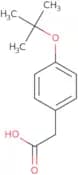
CAS:<p>Ruthenium complexes of 4-tert-butoxyphenylacetic acid are catalysts that have been shown to be effective in the asymmetric synthesis of alcohols and terpyridines. <br>This complex has been shown to be a ligand for ruthenium metal, which is often used as a catalyst in organic reactions. The use of this catalyst has led to advances in the field of organic chemistry, specifically the synthesis of new oligomers.</p>Formula:C12H16O3Purezza:Min. 95%Colore e forma:PowderPeso molecolare:208.25 g/mol1-(Bromomethyl)adamantane
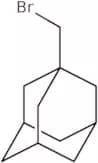
CAS:<p>1-(Bromomethyl)adamantane is a synthetic chemical that is used in the preparation of other chemicals. The active site of 1-(bromomethyl)adamantane can be found on its bromine atom, which has been shown to react with copper. The regioselectivity is determined by the 1-position on adamantane, and the thermodynamic constants are affected by the carbon-halogen bond, which is present in 1-(bromomethyl)adamantane. This compound has been shown to have chromatographic properties that make it useful for separating compounds that are similar in structure. It can also be used as a reagent to synthesize other chemicals or prepare them for use in experiments.</p>Formula:C11H17BrPurezza:Min. 95%Colore e forma:White PowderPeso molecolare:229.16 g/mol3-Hydroxy-3,4-dihydro-2H-1-benzopyran-4-one
CAS:<p>Versatile small molecule scaffold</p>Formula:C9H8O3Purezza:Min. 95%Colore e forma:PowderPeso molecolare:164.16 g/mol2-Bromo-4-nitrobenzonitrile
CAS:<p>2-Bromo-4-nitrobenzonitrile is a chemical compound that can be used to study the relationship between genetic polymorphism and chromosome structure. This compound has been found to induce polyploidy in Brassica plants, which may have implications for the evolution of these species. 2-Bromo-4-nitrobenzonitrile also has been shown to be a useful marker for phylogenetic and ecological studies of Lepidium species. The compound is diploid in nature, but can be used as a matrix in tetraploid plants.</p>Formula:C7H3BrN2O2Purezza:Min. 95%Colore e forma:PowderPeso molecolare:227.02 g/molIndole-3-butyric acid
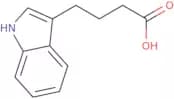
CAS:Indole-3-butyric acid is a chemical compound that has a wide range of applications. It is used in the synthesis of many organic compounds and can be used as a reagent or speciality chemical. Indole-3-butyric acid is also used as an intermediate in the synthesis of other compounds, such as indoles, indanones, and benzofuranones. The high quality of this compound makes it a useful scaffold for constructing complex molecules.Formula:C12H13NO2Peso molecolare:203.24 g/molRef: 3D-I-2005
1kgPrezzo su richiesta5kgPrezzo su richiesta100gPrezzo su richiesta10kgPrezzo su richiesta2500gPrezzo su richiesta-Unit-kgkgPrezzo su richiesta4-Hydroxy-3-methoxybenzylamine hydrochloride
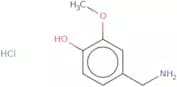
CAS:<p>4-Hydroxy-3-methoxybenzylamine hydrochloride is a reagent, complex compound and useful intermediate for the production of speciality chemicals. CAS No. 7149-10-2 is not a hazardous chemical and does not pose any significant risk to human health or the environment when used as intended. This chemical has many uses including being a useful scaffold in organic synthesis, a useful building block for the preparation of other compounds, and a versatile building block for the preparation of various compounds. It also has many applications in research such as being an intermediate for the synthesis of other compounds, or as a reactant in various reactions.</p>Formula:C8H12NO2ClPurezza:Min. 98 Area-%Colore e forma:White PowderPeso molecolare:189.64 g/mol2-(Hydroxymethyl)-3-methylfuran
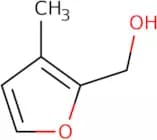
CAS:<p>2-(Hydroxymethyl)-3-methylfuran is a ketone with a ring system that contains one hydroxymethyl group and two methyl groups. It is also an adduct, which means that it is the product of a reaction between two substances. This compound can be used as a binder in pyrotechnics and polymers. 2-(Hydroxymethyl)-3-methylfuran has been proven to be stable under normal conditions, making it an excellent model compound for studying other compounds with similar structures.</p>Formula:C6H8O2Purezza:Min. 95 Area-%Colore e forma:Clear LiquidPeso molecolare:112.13 g/molEthyl 2-[(benzenesulfonyl)methyl]prop-2-enoate
CAS:<p>Ethyl 2-[(benzenesulfonyl)methyl]prop-2-enoate is a chemical compound that is commonly used as a building block in the synthesis of other compounds. It has shown to be effective in research, as it can be used as an intermediate or a reaction component. CAS No. 89295-32-9 is the Chemical Abstracts Service registry number for this chemical. This compound is also known by its synonym of ethyl propanoate benzenesulfonate, and it has been found to have useful properties such as being a versatile building block and being a fine chemical. This product is high quality and is a reagent that has been found to be useful in many chemical reactions.</p>Formula:C12H14O4SPurezza:Min. 95%Colore e forma:Clear LiquidPeso molecolare:254.3 g/mol2-Amino-4-methoxybutanoic acid
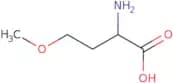
CAS:<p>2-Amino-4-methoxybutanoic acid (2AMBA) is a diagnostic agent that belongs to the class of hydroxyl group containing antimicrobial agents. It has been shown to have conformational properties, which are the spatial arrangement of atoms in a molecule. 2AMBA is a small molecule with neutral pH and has been used as a substrate for peptide synthesis by the yeast Pichia pastoris. 2AMBA has also been shown to have antimicrobial activity against infectious diseases such as Escherichia coli and Pseudomonas aeruginosa, among others. This compound is synthesized by reacting malonic acid with an amine or amide. The reaction forms a cyclic peptide that contains a disulfide bond and fatty acid, which are important for its structure and function.</p>Formula:C5H11NO3Purezza:Min. 95%Colore e forma:PowderPeso molecolare:133.15 g/mol[Hydroxy(propan-2-yl)carbamoyl]formic acid
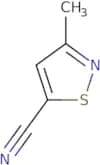
CAS:<p>Hydroxy(propan-2-yl)carbamoyl formic acid is a metabolite of formaldehyde. It is used to measure formaldehyde in biological samples such as blood, serum, and urine. It also acts as a precursor for the production of other metabolites which are related to bowel disease and cardiac function. Hydroxy(propan-2-yl)carbamoyl formic acid has been shown to be a good indicator of iron homeostasis in vivo and in vitro models. This compound can be detected by chemiluminescence methods and can be used with zirconium oxide to study the effects on axonal growth.</p>Formula:C5H9NO4Purezza:Min. 95%Peso molecolare:147.13 g/mol3-Methyl-1,2-thiazole-5-carbonitrile
CAS:<p>Versatile small molecule scaffold</p>Formula:C5H4N2SPurezza:Min. 95%Peso molecolare:124.17 g/molm-Hydroxybenzonitrile
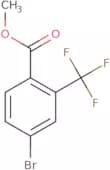
CAS:<p>m-Hydroxybenzonitrile is a cationic surfactant that has the ability to form hydrogen bonds with an intramolecular hydrogen. It is used in the production of detergents, textile processing aids, and inks. m-Hydroxybenzonitrile inhibits fatty acids by forming an inhibitory complex at the surface of the cell membrane. This complex disrupts lipid bilayers and inhibits protein synthesis. m-Hydroxybenzonitrile also has been shown to have vibrational properties that can be seen when it absorbs ultraviolet light.</p>Formula:C7H5NOPurezza:Min. 95%Colore e forma:Off-White PowderPeso molecolare:119.12 g/mol4-Bromo-2-(trifluoromethyl)benzoic acid methyl ester
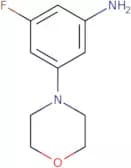
CAS:<p>4-Bromo-2-(trifluoromethyl)benzoic acid methyl ester is a versatile building block that can be used to produce complex compounds. It is also an intermediate and a useful scaffold in organic synthesis. This chemical has been used as a research chemical and as a reagent for the production of other chemicals. The compound has CAS number 957207-58-8 and can be obtained from our supplier in high quality, with purity of 99%.</p>Formula:C9H6BrF3O2Purezza:Min. 95%Colore e forma:Colorless PowderPeso molecolare:283.04 g/mol3-Fluoro-5-(morpholin-4-yl)aniline
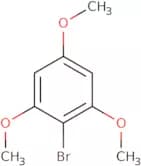
CAS:<p>3-Fluoro-5-(morpholin-4-yl)aniline is a synthetic compound that has been shown to inhibit the growth of bacteria by binding to the enzyme dihydropteroate synthase. This drug inhibits bacterial growth by preventing the formation of folic acid, which is essential for DNA synthesis. 3-Fluoro-5-(morpholin-4-yl)aniline has also been shown to be selective against other enzymes in the folate pathway, such as thymidylate synthase and glycinamide ribonucleotide formyltransferase. Theoretical studies suggest that 3-fluoro-5-(morpholin-4-yl)aniline binds to the substrate binding site on dihydropteroate synthase and sterically hinders access to substrates in this region of the enzyme. Density functional theory calculations show that this compound binds more tightly than a number of natural products. Intramolecular</p>Formula:C10H13FN2OPurezza:Min. 95%Colore e forma:PowderPeso molecolare:196.22 g/mol1-Bromo-2,4,6-trimethoxybenzene
CAS:<p>1-Bromo-2,4,6-trimethoxybenzene is a reactive chemical that has shown to have toxic properties in model studies. It reacts with metals such as Iridium and can be used to remove halogens from solutions. It is also able to react with a variety of other molecules, including peroxides, chlorine gas and bromine gas. 1-Bromo-2,4,6-trimethoxybenzene can form free radicals when exposed to UV radiation and may be used as a ligand for metal ions. 1-Bromo-2,4,6-trimethoxybenzene is also soluble in n-dimethylformamide and carbon tetrachloride.</p>Formula:C9H11BrO3Purezza:Min. 95%Colore e forma:White PowderPeso molecolare:247.09 g/mol4-Bromo-3-methylbenzaldehyde
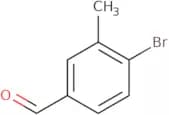
CAS:<p>4-Bromo-3-methylbenzaldehyde is a versatile building block that is used in the synthesis of many complex compounds. It can be used as a reactant, reagent, or speciality chemical. 4-Bromo-3-methylbenzaldehyde is an intermediate for the production of other chemicals and has been shown to be useful in the synthesis of various scaffolds. This product has been shown to have high purity and quality.</p>Formula:C8H7BrOPurezza:Min. 95%Colore e forma:Yellow PowderPeso molecolare:199.04 g/mol(E)-5-(-But-1-en-1-yl)benzene-1,3-diol
CAS:<p>(E)-5-(-But-1-en-1-yl)benzene-1,3-diol is a chemical building block that reacts readily with a variety of reagents. It is also a versatile intermediate and has been used as a building block in the synthesis of complex compounds. (E)-5-(-But-1-en-1-yl)benzene-1,3-diol has been shown to be an important component in the synthesis of peptides, amines, and other organic compounds. This compound is also useful for research purposes and as a speciality chemical or fine chemical.</p>Formula:C10H12O2Purezza:Min. 95%Colore e forma:PowderPeso molecolare:164.2 g/mol4-Hydroxybenzoic acid
CAS:<p>4-Hydroxybenzoic acid is a plant metabolite that is found in many plants and fruits. 4-Hydroxybenzoic acid has been shown to have anti-diabetic effects in vitro. This compound also has anti-inflammatory properties, which may be due to its ability to inhibit the production of effector proteins such as nitric oxide synthase and cyclooxygenase. The biological activity of 4-hydroxybenzoic acid is dependent on the concentration; at low concentrations it inhibits glucose uptake by cells, while at high concentrations it prevents cell growth.</p>Formula:C7H6O3Purezza:Min. 98 Area-%Colore e forma:White Off-White PowderPeso molecolare:138.12 g/moln-Heptyl 4-hydroxybenzoate
CAS:<p>n-Heptyl 4-hydroxybenzoate is a preservative and antimicrobial agent that is used in cosmetics, pharmaceuticals, and food. It is primarily used to inhibit the growth of bacteria and fungi. The mechanism by which heptyl 4-hydroxybenzoate inhibits the growth of microorganisms is not well understood. It has been shown to be an effective inhibitor of Gram-positive bacteria such as Bacillus subtilis, but not against Gram-negative bacteria such as Escherichia coli. Heptyl 4-hydroxybenzoate has been shown to have no effect on the growth of probiotic bacteria such as Lactobacillus acidophilus.<br>The chemical structure of n-heptyl 4-hydroxybenzoate includes a glycol ether moiety and two parabens that are linked by hydrogen bonds. These bonds can be broken by enzymes found in rat liver microsomes, leading to the release of n-</p>Formula:C14H20O3Purezza:Min. 95%Colore e forma:White Off-White PowderPeso molecolare:236.31 g/mol7-Bromo-5-methoxyindole-3-carboxylic acid
CAS:<p>Please enquire for more information about 7-Bromo-5-methoxyindole-3-carboxylic acid including the price, delivery time and more detailed product information at the technical inquiry form on this page</p>Formula:C10H8BrNO3Purezza:Min. 95%Colore e forma:PowderPeso molecolare:270.09 g/mol


![Ethyl 2-[(benzenesulfonyl)methyl]prop-2-enoate](/_next/image/?url=https%3A%2Fstatic.cymitquimica.com%2Fproducts%2F3D%2Fthumb-webp%2FPDA29532.webp&w=3840&q=75)
![[Hydroxy(propan-2-yl)carbamoyl]formic acid](/_next/image/?url=https%3A%2Fstatic.cymitquimica.com%2Fproducts%2F3D%2Fthumb-webp%2FHFA41803.webp&w=3840&q=75)