Building Blocks
Questa sezione contiene prodotti fondamentali per la sintesi di composti organici e biologici. Building blocks sono i materiali di partenza essenziali utilizzati per costruire molecole complesse attraverso varie reazioni chimiche. Svolgono un ruolo critico nella scoperta di farmaci, nella scienza dei materiali e nella ricerca chimica. Presso CymitQuimica, offriamo una gamma diversificata di building blocks di alta qualità per supportare le tue ricerche innovative e progetti industriali, assicurandoti di avere i componenti essenziali per una sintesi di successo.
Sottocategorie di "Building Blocks"
- Acidi boronici e derivati dell'acido boronico(5.756 prodotti)
- Building Blocks Chirali(1.242 prodotti)
- Building Blocks Idrocarburici(6.095 prodotti)
- Building Blocks organici(61.038 prodotti)
Trovati 196817 prodotti di "Building Blocks"
Ordinare per
Purezza (%)
0
100
|
0
|
50
|
90
|
95
|
100
Mono(2-ethylhexyl) terephthalate
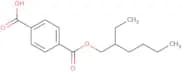
CAS:<p>Please enquire for more information about Mono(2-ethylhexyl) terephthalate including the price, delivery time and more detailed product information at the technical inquiry form on this page</p>Formula:C16H22O4Purezza:Min. 95%Colore e forma:PowderPeso molecolare:278.34 g/mol2-Methoxy-1-((2-(trimethylsilyl)ethoxy)methyl)-1H-imidazole-5-carbaldehyde
<p>Please enquire for more information about 2-Methoxy-1-((2-(trimethylsilyl)ethoxy)methyl)-1H-imidazole-5-carbaldehyde including the price, delivery time and more detailed product information at the technical inquiry form on this page</p>Formula:C11H20N2O3SiPurezza:Min. 95%Colore e forma:PowderPeso molecolare:256.37 g/mol5-Phenoxypyridin-2-amine
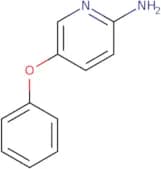
CAS:<p>5-Phenoxypyridin-2-amine is a useful scaffold that can be used as a reaction component, reagent, or intermediate. It is an aromatic compound with a benzene ring and pyridine group and has the CAS number 64064-68-2. 5-Phenoxypyridin-2-amine can be used as a building block for organic synthesis and as an intermediate for other compounds. This product can also be used to create complex compounds that are difficult to synthesize in other ways.</p>Formula:C11H10N2OPurezza:Min. 95%Colore e forma:PowderPeso molecolare:186.21 g/molN-Methyl-1-quinolin-2-ylmethanamine dihydrochloride
CAS:<p>Please enquire for more information about N-Methyl-1-quinolin-2-ylmethanamine dihydrochloride including the price, delivery time and more detailed product information at the technical inquiry form on this page</p>Formula:C11H12N2•(HCl)2Purezza:Min. 95%Colore e forma:PowderPeso molecolare:245.15 g/mol7-Methylindole technical grade
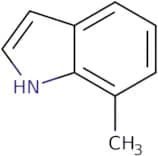
CAS:7-Methylidole is a heterocyclic chemical compound that is used as a precursor in the synthesis of many pharmaceuticals. It has been shown to have an inhibitory effect on the growth of cancer cells in tissue cultures and can be used as a marker for cancer cells. 7-Methylidole is also a virulence factor, which can be seen through assays on bacterial strains. This compound has been proven to be reactive with Polygonum cuspidatum. The reaction produces indirubin, which is a red pigment that is found in some species of Polygonum and other plants.Formula:C9H9NPurezza:Min. 95%Colore e forma:PowderPeso molecolare:131.17 g/mol1-(5-Propylpyridin-2-yl)ethan-1-one
CAS:<p>Versatile small molecule scaffold</p>Formula:C10H13NOPurezza:Min. 95%Colore e forma:Clear LiquidPeso molecolare:163.2 g/mol1-Methylindole
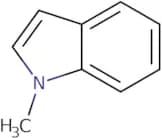
CAS:<p>1-Methylindole is a chemical compound that belongs to the group of pyrimidine compounds. It has been shown to have antibacterial activity against many types of bacteria, including methicillin-resistant Staphylococcus aureus and Clostridium perfringens. 1-Methylindole inhibits bacterial growth by binding to DNA and RNA, preventing the synthesis of proteins necessary for cell division. The high chemical stability and low redox potential make 1-methylindole an excellent candidate for use as an anticancer agent. This drug has been shown to be effective in killing cancer cells in vitro, but more research needs to be done before it can be used in vivo.</p>Formula:C9H9NPurezza:Min. 97 Area-%Colore e forma:Colorless Clear LiquidPeso molecolare:131.17 g/molMethanesulfinic acid sodium salt
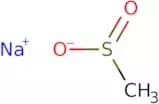
CAS:<p>Methanesulfinic acid sodium salt (MSAS) is a chemical compound that inhibits the growth of bacteria by inhibiting the synthesis of proteins. It is used as an antimicrobial agent in plant physiology and has been shown to be effective against infectious diseases including HIV infection. MSAS inhibits protein synthesis by binding to the hydroxyl group of a substrate molecule, which is required for amino acid formation. This inhibitory effect leads to a decrease in the production of proteins vital for cell division. Inhibiting protein synthesis also prevents the production of enzymes needed for metabolism, leading to metabolic disorders.</p>Formula:CH3O2S·NaPurezza:Min. 95%Colore e forma:PowderPeso molecolare:102.09 g/moltert-Butyl N-[2-(chlorosulfonyl)ethyl]carbamate
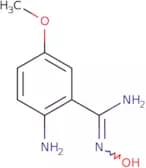
CAS:<p>Versatile small molecule scaffold</p>Formula:C7H14ClNO4SPurezza:Min. 95%Peso molecolare:243.71 g/mol2-Amino-N'-hydroxy-5-methoxybenzene-1-carboximidamide
CAS:<p>2-Amino-N'-hydroxy-5-methoxybenzene-1-carboximidamide (2HMB) is a high quality, versatile building block that can be used as a reagent, building block or scaffold. 2HMB is also a useful intermediate in the synthesis of pharmaceuticals, agrochemicals and fine chemicals. This compound has been shown to have antiviral and anti-inflammatory properties.</p>Formula:C8H11N3O2Purezza:Min. 95%Colore e forma:PowderPeso molecolare:181.19 g/molL-Histidine monohydrochloride monohydrate
CAS:<p>L-Histidine monohydrochloride monohydrate is a histidine derivative that is used in the treatment of chronic oral and bowel diseases. L-histidine has been shown to activate phospholipase A2, which releases arachidonic acid from phospholipids. Arachidonic acid then reacts with other molecules to form prostaglandins and leukotrienes. L-histidine also inhibits the release of tumor necrosis factor (TNF) by blocking the activity of lipoxygenase, or it can stimulate the production of prostaglandins and leukotrienes that suppress inflammation in animal models. L-histidine monohydrochloride monohydrate has been shown to have an anti-inflammatory effect in animals with inflammatory bowel disease due to its ability to inhibit the production of prostaglandin E2 (PGE2). This drug has also been shown to be capable of neutralizing acidic ph by forming a salt with</p>Formula:C6H9N3O2·HCl·H2OColore e forma:White PowderPeso molecolare:209.63 g/mol5-Hydroxyindole-2-carboxylic acid ethyl ester
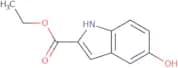
CAS:<p>5-Hydroxyindole-2-carboxylic acid ethyl ester is a fluorescent probe that is used in the detection of hepatitis C virus by micropet assay. The compound reacts with amines and undergoes fluorescence quenching, and can be used to quantitate their concentration. 5-Hydroxyindole-2-carboxylic acid ethyl ester is also used for the determination of the kinetics of amines and other compounds that are involved in the metabolism of drugs and biogenic amines. It can be applied to chromatographic analysis or sample preparation prior to analysis by analytical chemistry methods such as gas chromatography or liquid chromatography.</p>Formula:C11H11NO3Purezza:Min. 95%Colore e forma:PowderPeso molecolare:205.21 g/mol5-Hydroxyindole-3-acetic acid
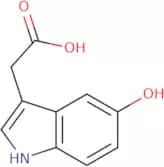
CAS:<p>Reduces brain amyloid plaques; induces neprilysin expression</p>Formula:C10H9NO3Purezza:Min. 95%Colore e forma:Off-White PowderPeso molecolare:191.18 g/moltrans-3-Hydroxy-L-proline
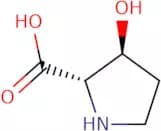
CAS:<p>Please enquire for more information about trans-3-Hydroxy-L-proline including the price, delivery time and more detailed product information at the technical inquiry form on this page</p>Formula:C5H9NO3Purezza:Min. 95%Colore e forma:White PowderPeso molecolare:131.13 g/mol4'-Hydroxy-2,2':6',2''-terpyridine
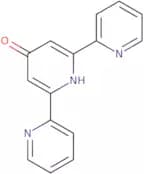
CAS:<p>4'-Hydroxy-2,2':6',2''-terpyridine is a molecule with the molecular formula C24H22N4O8. It is an organic compound that belongs to the group of heterocycles. It has been found to be a ligand for metal ions and has been shown to interact with particles at temperatures below 20°C. 4'-Hydroxy-2,2':6',2''-terpyridine crystallizes in two polymorphs: tetragonally (alpha) at room temperature and trigonally (beta) at temperatures below 20°C. The alpha form has been observed to undergo a photophysical reaction as it absorbs light and emits light in the ultraviolet region of the spectrum.</p>Formula:C15H11N3OPurezza:Min. 95%Colore e forma:PowderPeso molecolare:249.27 g/molIdebenone
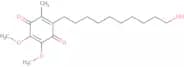
CAS:<p>Used for treatment of Alzheimer's disease and Friedreich's ataxia</p>Formula:C19H30O5Purezza:Min. 98 Area-%Colore e forma:PowderPeso molecolare:338.44 g/mol7-Hydroxyquinoline-(1H)-2-one
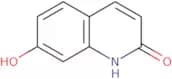
CAS:<p>7-Hydroxyquinoline-(1H)-2-one is a quinoline derivative that binds to epidermal growth factor (EGF) receptors. It has been shown to inhibit the chloride current in neurons, which may be due to its ability to bind to the dopamine receptors in these cells. 7-Hydroxyquinoline-(1H)-2-one also inhibits DNA and protein synthesis by binding to nucleophilic nitrogen atoms and protonated nitrogen atoms, respectively. It has been shown to have an inhibitory effect on cancer cell growth in control experiments. This drug is not active against normal cells because it does not bind well to them. 7-Hydroxyquinoline-(1H)-2-one binds with high affinity to piperazine and this interaction can be used as a fluorescent probe for the presence of quinoline derivatives.</p>Formula:C9H7NO2Purezza:Min. 95%Colore e forma:PowderPeso molecolare:161.16 g/mol3-Hydroxyphenylacetic acid
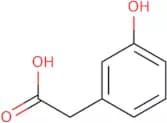
CAS:<p>3-Hydroxyphenylacetic acid is an organic compound with the formula CH(OH)(CH)COOH. It is a quinoid, meaning that it contains a benzene ring with one of the hydrogens replaced by a hydroxyl group. 3-Hydroxybenzoic acid is an important intermediate in the synthesis of several pharmaceuticals, including antipyrine and salicylic acid. It can be synthesized from phenol or benzoic acid. 3-Hydroxybenzoic acid has been shown to have antimicrobial properties against various bacteria and fungi, as well as hypoglycemic effects in rats. This compound was also shown to inhibit 4-hydroxyphenylacetate (4-HPAA) reductase activity and dopamine oxidation, two key enzymes involved in energy metabolism.</p>Formula:C8H8O3Purezza:Min. 95%Colore e forma:PowderPeso molecolare:152.15 g/mol2-Hydroxyphenylacetic acid
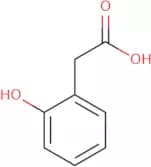
CAS:<p>2-Hydroxyphenylacetic acid is a hydroxylated phenolic acid that is structurally similar to other phenolic acids. It is present in many plants, including tea leaves and coffee beans, where it acts as an antioxidant. 2-Hydroxyphenylacetic acid has been found in the urine of humans and animals following ingestion of excessive amounts of these plants. It is also found in urine samples from patients with certain types of kidney disease. The synthesis of 2-hydroxyphenylacetic acid can be achieved by reacting ethylene diamine with sodium hydroxide solution or hydrochloric acid.</p>Formula:C8H8O3Purezza:Min. 95%Colore e forma:Off-White Slightly Brown PowderPeso molecolare:152.15 g/mol3-(4-Hydroxyphenyl)propionic acid
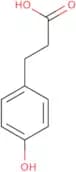
CAS:<p>Potential antioxidant; pharmaceutical intermediate</p>Formula:C9H10O3Purezza:Min. 99 Area-%Colore e forma:PowderPeso molecolare:166.17 g/mol


![tert-Butyl N-[2-(chlorosulfonyl)ethyl]carbamate](/_next/image/?url=https%3A%2Fstatic.cymitquimica.com%2Fproducts%2F3D%2Fthumb-webp%2FJFA01973.webp&w=3840&q=75)