Building Blocks
Questa sezione contiene prodotti fondamentali per la sintesi di composti organici e biologici. Building blocks sono i materiali di partenza essenziali utilizzati per costruire molecole complesse attraverso varie reazioni chimiche. Svolgono un ruolo critico nella scoperta di farmaci, nella scienza dei materiali e nella ricerca chimica. Presso CymitQuimica, offriamo una gamma diversificata di building blocks di alta qualità per supportare le tue ricerche innovative e progetti industriali, assicurandoti di avere i componenti essenziali per una sintesi di successo.
Sottocategorie di "Building Blocks"
- Acidi boronici e derivati dell'acido boronico(5.756 prodotti)
- Building Blocks Chirali(1.242 prodotti)
- Building Blocks Idrocarburici(6.095 prodotti)
- Building Blocks organici(61.038 prodotti)
Trovati 196817 prodotti di "Building Blocks"
Ordinare per
Purezza (%)
0
100
|
0
|
50
|
90
|
95
|
100
Tricaine methanesulfonate
CAS:<p>Tricaine methanesulfonate is a chemical that belongs to the group of anesthetics. It is used as a general anesthetic and to induce surgical anesthesia. Tricaine methanesulfonate has been shown to be effective in the treatment of pain, inflammation, and neurological disorders. Tricaine methanesulfonate also has a long half-life and does not cause histamine release or cardiovascular effects.</p>Formula:C9H11NO2·CH4O3SPurezza:Min. 98 Area-%Colore e forma:White PowderPeso molecolare:261.3 g/mol2,5-Dimethylbenzoic acid
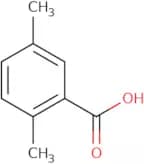
CAS:<p>2,5-Dimethylbenzoic acid is a compound that is found in urine samples. It is the product of the metabolism of 2,5-dihydroxybenzoic acid. 2,5-Dimethylbenzoic acid has a functional group which consists of a carboxylic acid group and two methyl groups. The acidic nature of this compound can be seen through its reaction with camphora, as well as its hydrolysis by hydrochloric acid. This compound also has protease activity when it comes into contact with human urine. 2,5-Dimethylbenzoic acid can be synthesized using solid-phase chemistry and chemical biology techniques. It has been shown to have a functional role in the production of proteins that are involved in cellular signaling pathways such as chemotaxis and apoptosis.</p>Formula:C9H10O2Purezza:Min. 95%Colore e forma:PowderPeso molecolare:150.17 g/mol2,4,6-Trinitrobenzenesulfonic acid - 5% Aqueous solution
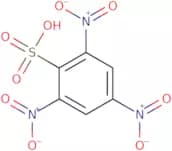
CAS:<p>2,4,6-Trinitrobenzenesulfonic acid (also known as TNBS, TNSBA or picrylsulfonic acid) is a strongly oxidising organic acid that has long been used as a reagent to determine the presence of free primary amine groups. TNBS reacts rapidly with primary amines to form highly coloured N-trinitrophenyl acid products which can then be analysed by colorimetry. The amine can be regenerated by treatment with hydrazine. This analytical technique can also be applied to thiols and hydrazides.<br>As is common with nitrated aromatic compounds, there is a risk of explosion and TNBS is typically commercially available as a solution. We also supply the 1% solution in DMF.</p>Formula:C6H3N3O9SColore e forma:Colorless Yellow Clear LiquidPeso molecolare:293.17 g/molRef: 3D-FT73268
2g334,00€5g453,00€10g607,00€25g955,00€50g1.642,00€200g5.345,00€250g4.404,00€38.69g1.412,00€BCN-PNP carbonate
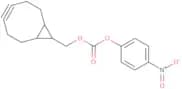
CAS:<p>BCN-PNP carbonate is a versatile building block that can be used as an intermediate in the synthesis of complex compounds. It has a variety of uses in research and as a reagent for fine chemicals. BCN-PNP carbonate is an effective reaction component for the synthesis of speciality chemicals, which are used for research purposes or as intermediates for pharmaceuticals. BCN-PNP carbonate is also useful scaffold for the synthesis of highly pure, high quality building blocks.</p>Formula:C17H17NO5Purezza:Min. 95%Colore e forma:PowderPeso molecolare:315.32 g/mol4-Nitroindole
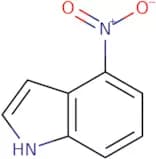
CAS:<p>4-Nitroindole is a chemical compound that is used to synthesize 5-hydroxytryptamine (5-HT) and also has been used as a substitute for tryptophan in the synthesis of serotonin. It can be prepared by reacting sodium nitrite with an organic acid such as acetic acid or propionic acid. The reaction proceeds through a diazonium salt intermediate, which is hydrolyzed with hydrochloric acid to give 4-nitroindole. 4-Nitroindole can also be prepared by the Friedel-Crafts reaction between an aromatic nitro compound and an alkyl halide. The hydrogen bond between the hydroxyl group and nitrogen atom in the molecule makes it soluble in organic solvents. In addition, the constant boiling point of the compound allows it to be analyzed using gas chromatography.</p>Formula:C8H6N2O2Purezza:Min. 95%Colore e forma:PowderPeso molecolare:162.15 g/mol4-Nitroimidazole
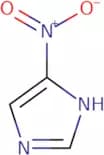
CAS:<p>4-Nitroimidazole has a redox potential that is well suited to the reduction of nitro groups. It is an antimicrobial agent that inhibits the growth of microorganisms by inhibiting DNA synthesis. 4-Nitroimidazole can be used for the treatment of infectious diseases such as tuberculosis, leprosy, and brucellosis. In rat liver microsomes, 4-nitroimidazole reacts with NADPH to produce a nitro group and an imidazole ring with a new configuration. The reaction mechanism is based on electron transfer from NADPH to the nitro group in 4-nitroimidazole via a series of reactions that involve cytochrome P450 enzymes. This reaction has kinetic energy and matrix effects that affect its pharmacokinetics and pharmacodynamics.</p>Formula:C3H3N3O2Purezza:Min. 95%Colore e forma:White PowderPeso molecolare:113.07 g/mol2-Naphthoic acid
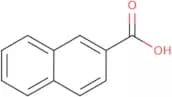
CAS:<p>2-Naphthoic acid is a chemical compound that belongs to the group of aromatic compounds. It can be found in many natural products, such as plants and animals. 2-Naphthoic acid has been shown to inhibit the activity of G protein-coupled receptors, which are involved in signal transduction. The crystal structure of 2-naphthoic acid is polymorphic and there are two possible structures: p1 and p2. Each form has different chemical properties, including reactivity with hydrogen bonds, which may lead to different biological effects.</p>Formula:C11H8O2Purezza:Min. 95%Colore e forma:PowderPeso molecolare:172.18 g/mol2-Naphthalenemethanol
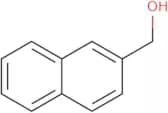
CAS:<p>2-Naphthalenemethanol is a chemical compound that belongs to the group of organic compounds. It is one of the simplest aromatic alcohols and has been used as a model for the study of other more complex molecules. 2-Naphthalenemethanol is synthesized by reacting sodium salts with borane-tetrahydrofuran complex in dry diethyl ether. The reaction mechanism involves the formation of an ester linkage between the two naphthalenes, which can then undergo hydrolysis to form an alcohol. 2-Naphthalenemethanol can be converted into its structural analog, naphthalene, via condensation reactions with formaldehyde or ethylene glycol. The chemical properties of 2-naphthalenemethanol have been studied using nuclear magnetic resonance spectroscopy (NMR) and x-ray crystallography, which revealed that it exists as a zwitterion consisting of two covalently</p>Formula:C11H10OPurezza:Min. 98 Area-%Colore e forma:PowderPeso molecolare:158.2 g/molUDP-3-O[R-3-hydroxymyristoyl]-N-acetylglucosamine tris, 90%
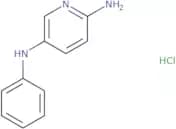
CAS:<p>Please enquire for more information about UDP-3-O[R-3-hydroxymyristoyl]-N-acetylglucosamine tris, 90% including the price, delivery time and more detailed product information at the technical inquiry form on this page</p>Formula:C31H53N3O19P2•C4H11NO3Purezza:Min. 95%Colore e forma:PowderPeso molecolare:954.85 g/molN5-Phenylpyridine-2,5-diamine hydrochloride
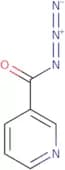
CAS:<p>N5-Phenylpyridine-2,5-diamine hydrochloride is a fine chemical that can be used as a versatile building block in the synthesis of more complex compounds. This compound has been shown to react with anilines and form N-substituted pyridinium salts. It can also be used as a reaction component or reagent in research chemical reactions involving amines, phenols, and carboxylic acids. N5-Phenylpyridine-2,5-diamine hydrochloride is a high quality reagent that is useful for the synthesis of complex organic compounds.</p>Formula:C11H11N3•HClPurezza:Min. 95%Colore e forma:PowderPeso molecolare:221.68 g/molNicotinoylazide
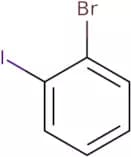
CAS:<p>Nicotinoylazide is a skin condition medication that has nitrogen atoms in its structure. It is an inhibitor of the enzyme protease, which breaks down proteins and helps regulate inflammation. Nicotinoylazide also inhibits the activity of other enzymes, such as those involved in fatty acid metabolism. <br>Nicotinoylazide has been shown to be effective in the treatment of diabetic neuropathy and bladder dysfunction caused by interstitial cystitis, although it has not been approved for use in children. The drug may be used for other conditions where protease inhibitors are beneficial, such as pediatric inflammatory bowel disease.</p>Formula:C6H4N4OPurezza:Min. 95%Colore e forma:PowderPeso molecolare:148.12 g/mol1-Bromo-2-iodobenzene
CAS:<p>1-Bromo-2-iodobenzene is an aryl halide that is used in analytical chemistry as a model system for copper chloride. It is also used to study the interaction of 5-HT1A receptors with aromatic hydrocarbons and has been shown to be effective in treating cervical cancer. The light emission from 1-Bromo-2-iodobenzene can be used as a probe for asymmetric synthesis, and it can also be used in metathesis reactions to isolate yield. 1-Bromo-2-iodobenzene binds to lysine residues on proteins and blocks the activity of enzymes by forming covalent bonds with amino acid residues in the active site.</p>Formula:C6H4BrIPurezza:Min. 98%Colore e forma:Yellow Clear LiquidPeso molecolare:282.9 g/mol3-Bromo-4-methoxybenzoic acid
CAS:<p>3-Bromo-4-methoxybenzoic acid is a methyl ester of 3-bromo-4-methoxybenzoic acid. It is used as a reagent in organic synthesis, including the hydrolysis of esters and nitriles to acids and amines respectively. The compound is also used in the synthesis of 3-bromo-4-methoxybenzamide and other bromomethyl benzoates. The trifluoroacetic acid reacts with cuprous cyanide to form ethyl formate and methoxybenzoate, which reacts with thionyl chloride to form the chloride 3-bromo-4-methoxybenzoic acid. This compound can be demethylated by acetaldehyde or alkali metal hydroxides to give methyl formate and methanol. It can also react with acetonitrile to produce 3,3′,3″</p>Formula:C8H7BrO3Purezza:Min. 95%Colore e forma:PowderPeso molecolare:231.04 g/mol10-Undecen-1-ol
CAS:<p>10-Undecen-1-ol is a fatty acid with a hydroxyl group at the 10th position. It has strong intermolecular hydrogen bonding and reacts to form esters and ethers. 10-Undecen-1-ol is used as a multi-walled carbon for wastewater treatment, which removes organic contaminants. This compound also has a high degree of chemical stability, which makes it suitable for use in anhydrous sodium synthesis methods.</p>Formula:C11H22OPurezza:Min. 98%Colore e forma:Colorless Clear LiquidPeso molecolare:170.29 g/mol1-Naphthoic acid
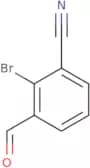
CAS:<p>1-Naphthoic acid is a phenolic antioxidant that is used in the treatment of inflammatory bowel disease. It has been shown to reduce the production of inflammatory cytokines and improve symptoms of bowel disease. 1-Naphthoic acid, as a fluorescence probe, can be used to detect and quantify hydroxycinnamic acids in biological fluids such as serum and urine. 1-Naphthoic acid also inhibits serine protease activity, which is involved in autoimmune diseases such as lupus erythematosus. It also inhibits the activity of hydrolytic enzymes that are associated with metabolic disorders such as diabetes mellitus. In addition, 1-naphthoic acid can act as an agonist at certain receptors including muscarinic receptors and α2A receptors. It has also been shown to increase levels of retinoic acid and inhibit the formation of hydrogen peroxide by bacteria like H. pylori due to its ability</p>Formula:C11H8O2Purezza:Min. 95%Colore e forma:Clear LiquidPeso molecolare:172.18 g/mol2-Bromo-3-formylbenzonitrile
CAS:<p>2-Bromo-3-formylbenzonitrile is a high quality chemical that is used as a reagent, a complex compound, and an intermediate in the synthesis of other fine chemicals. It can be used as a useful building block to form other compounds with speciality chemicals. 2-Bromo-3-formylbenzonitrile is versatile and can be used as a reaction component for many different reactions.<br>2-Bromo-3-formylbenzonitrile has been classified by the Chemical Abstracts Service (CAS) number 446864-55-7 and is also known by its synonyms: 2-(bromomethyl)-benzonitrile; 3-(cyanomethyl)-benzonitrile; bromobenzonitrile; bromobenzene nitrile; 3-(cyanomethyl)benzonitrile.</p>Formula:C8H4BrNOPurezza:Min. 95%Colore e forma:PowderPeso molecolare:210.03 g/mol2-Naphthylacetic acid
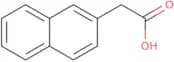
CAS:2-Naphthylacetic acid is a molecule that has been shown to inhibit serine proteases in humans and other mammals. It has been tested as a growth regulator for plants and has shown promising results in the prevention of root formation. 2-Naphthylacetic acid can be used to inhibit the activity of hydrogen bonding, which is required for chromatographic methods. The compound's chemical structure includes a naphthalene ring with two acetic acid groups on either side of it.Formula:C12H10O2Purezza:Min. 95%Colore e forma:PowderPeso molecolare:186.21 g/mol2-Naphthalenesulfonic acid
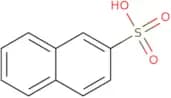
CAS:<p>2-Naphthalenesulfonic acid is an activated sodium salt that is used to treat wastewater. It has been shown to react with malonic acid, a major component of wastewater, by forming a kinetic and thermodynamic acid complex. The reaction solution then reacts with epidermal growth factor to form benzalkonium chloride. 2-Naphthalenesulfonic acid has been shown to be effective in the treatment of wastewater due to its ability to remove organic materials and inhibit the growth of bacteria.</p>Formula:C10H8SO3Purezza:Min. 98 Area-%Colore e forma:PowderPeso molecolare:208.23 g/molN-Nitrosodibenzylamine
CAS:<p>N-Nitrosodibenzylamine is a chemical compound that has genotoxic effects. It is used as an analytical method to identify the presence of amines and to measure their concentration, as well as in the preparation of sodium salts. N-Nitrosodibenzylamine was found to cause damage to DNA in animals and cells in culture. The matrix effect, which is the difference in response between a sample contained in an organic solvent and one contained in water, was investigated using multi-walled carbon nanotubes (MWCNTs). The results showed that MWCNTs produce a significant matrix effect when compared with other solvents. This study also showed that MWNTs have a higher capacity for nitrosamine adsorption than do other solvents.</p>Formula:C14H14N2OPurezza:Min. 96 Area-%Colore e forma:Off-White PowderPeso molecolare:226.27 g/mol3-Nitro-4-carbomethoxybenzoic acid
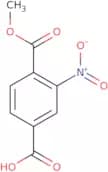
CAS:<p>3-Nitro-4-carbomethoxybenzoic acid is a thiophene that has been found to be an inhibitor of protein tyrosine phosphatase 1B (PTP1B). PTP1B is a key enzyme involved in the regulation of insulin secretion and blood sugar levels. 3-Nitro-4-carbomethoxybenzoic acid has been shown to inhibit PTP1B by mimicking the natural substrate of this enzyme, phosphotyrosine, and thereby preventing its dephosphorylation. It has also been shown to have anti-inflammatory properties.</p>Formula:C9H7NO6Purezza:Min. 97 Area-%Colore e forma:PowderPeso molecolare:225.16 g/mol


![UDP-3-O[R-3-hydroxymyristoyl]-N-acetylglucosamine tris, 90%](/_next/image/?url=https%3A%2Fstatic.cymitquimica.com%2Fproducts%2F3D%2Fthumb-webp%2FFU183491.webp&w=3840&q=75)