Building Blocks
Questa sezione contiene prodotti fondamentali per la sintesi di composti organici e biologici. Building blocks sono i materiali di partenza essenziali utilizzati per costruire molecole complesse attraverso varie reazioni chimiche. Svolgono un ruolo critico nella scoperta di farmaci, nella scienza dei materiali e nella ricerca chimica. Presso CymitQuimica, offriamo una gamma diversificata di building blocks di alta qualità per supportare le tue ricerche innovative e progetti industriali, assicurandoti di avere i componenti essenziali per una sintesi di successo.
Sottocategorie di "Building Blocks"
- Acidi boronici e derivati dell'acido boronico(5.756 prodotti)
- Building Blocks Chirali(1.242 prodotti)
- Building Blocks Idrocarburici(6.095 prodotti)
- Building Blocks organici(61.038 prodotti)
Trovati 196817 prodotti di "Building Blocks"
Ordinare per
Purezza (%)
0
100
|
0
|
50
|
90
|
95
|
100
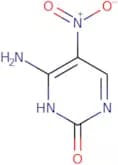
6-Amino-5-nitro-1,2-dihydropyrimidin-2-one
CAS:<p>6-Amino-5-nitro-1,2-dihydropyrimidin-2-one (6ANPD) is a neutral molecule that can form self-assembled monolayers at the air/water interface. 6ANPD adsorbs to the interface by hydrogen bonding and van der Waals interactions. This molecule has been shown to stabilize the monolayer against electrolytes, which are molecules that disrupt the bonding between molecules in a solution. The self-assembled monolayers formed by 6ANPD are two dimensional in nature and have been shown to be stable for more than three months at room temperature.</p>Formula:C4H4N4O3Purezza:Min. 95%Colore e forma:PowderPeso molecolare:156.1 g/molTrifluoromethanesulfonic anhydride
CAS:<p>Trifluoromethanesulfonic anhydride is more frequently known as triflic anhydride, since it derives from triflic acid. It is a versatile and strong electrophile used to insert the triflyl group (represented as Tf-) into chemical molecules (Ouyang, 2018). For example, trifluoromethane sulfonic anhydride interacts with some alkylsulfides to form stable salts that are used in the oxidation of alcohols. Moreover, trifluoromethane sulfonic anhydride has successfully shown high activity as a promoter in glycosylation reactions to obtain disaccharides (Tatai, 2007).</p>Formula:C2F6O5S2Purezza:Min. 95%Colore e forma:Colorless Slightly Brown Clear LiquidPeso molecolare:282.14 g/mol1,1,3,3-Tetramethylbutyl isocyanide
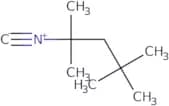
CAS:<p>1,1,3,3-Tetramethylbutyl isocyanide (TMBC) is a palladium complex that has been used in palladium-catalyzed coupling reactions. TMBC is also a ligand for the synthesis of β-amino acid and can be used to form hydrogen bonds with nucleophiles. It has been used in biological studies as well as clinical diagnostics. The solid-phase synthesis of TMBC has been shown to be an efficient method for producing this compound. In addition, TMBC shows stereoselective reactivity with amines and methoxy groups. The nmr spectra of TMBC are characteristic of a carbonyl group at δ 3.20 ppm and two methyl groups at δ 1.36 and 1.37 ppm respectively.</p>Formula:C9H17NPurezza:Min. 98%Colore e forma:Clear LiquidPeso molecolare:139.24 g/mol4-Toluenesulfonyl chloride
CAS:<p>4-Toluenesulfonyl chloride is a tosylate that reacts with amines and n-oxide groups to form sulfonamides. It is used as an antimicrobial agent and as an irreversible enzyme inhibitor. 4-Toluenesulfonyl chloride inhibits enzymes in the bowel, which may be due to its ability to form a disulfide bond with cysteine residues. This compound has been shown to have anti-cancer properties in vitro, where it inhibited the growth of carcinoma cells by inhibiting DNA synthesis. 4-Toluenesulfonyl chloride also has inhibitory properties against nitrogen atoms, which are found in the active site of many enzymes.</p>Formula:C7H7ClO2SPurezza:Min. 95%Colore e forma:White Clear LiquidPeso molecolare:190.65 g/mol2-{[(9H-Fluoren-9-yl)methoxy]carbonyl}-1,2,3,4-tetrahydroisoquinoline-6-carboxylic acid
CAS:<p>2-{[(9H-Fluoren-9-yl)methoxy]carbonyl}-1,2,3,4-tetrahydroisoquinoline-6-carboxylic acid is a high quality reagent. It is a useful intermediate for the synthesis of various complex compounds. This compound is also a useful scaffold and building block for research chemicals. 2-{[(9H-Fluoren-9-yl)methoxy]carbonyl}-1,2,3,4-tetrahydroisoquinoline-6-carboxylic acid is versatile in that it can be used as a reaction component in different reactions.</p>Formula:C25H21NO4Purezza:Min. 95%Colore e forma:PowderPeso molecolare:399.4 g/molVal-Cit-PAB-MMAE
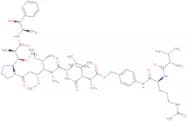
CAS:<p>Val-Cit-PAB-MMAE is a linker that has been conjugated to a monoclonal antibody (Val-Cit) and a cytotoxic agent (MMAE). This linker is designed to provide predictable strategies for site-specific conjugation of therapeutic agents to antibodies. The Val-Cit sequence facilitates the attachment of the linker to the antibody, while MMAE targets cancer cells through its chemotherapeutic effect. The linker provides an anti-cancer drug with an increased halflife in vivo, which may be due to its physicochemical properties. Val-Cit-PAB-MMAE also has the potential for use in other applications such as diagnostics and biosensors.</p>Formula:C58H94N10O12Purezza:Min. 95 Area-%Colore e forma:PowderPeso molecolare:1,123.43 g/mol4-Vinylbenzoic acid
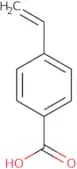
CAS:<p>4-Vinylbenzoic acid is a water-insoluble polymer that has been shown to have bacteriostatic and fungistatic properties. 4-Vinylbenzoic acid inhibits bacterial growth by binding to the enzyme diphenolase, which is involved in the synthesis of cell wall precursors. This polymer also binds to cationic surfactants and is soluble in organic solvents such as ethanol and acetone. The mechanism of inhibition of fungal growth is not known, but it may be due to hydrogen bonding interactions with the cell membrane.<br>4-Vinylbenzoic acid has been shown to be effective against human serum, although it does not inhibit bacterial growth in this medium.</p>Formula:C9H8O2Purezza:Min. 95%Colore e forma:White PowderPeso molecolare:148.16 g/molD-Valinol
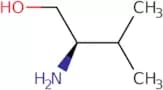
CAS:<p>D-Valinol is a synthetic compound that contains a chiral alcohol group. It is an ester hydrochloride salt of D-valinol and has been shown to be clinically effective in treating chronic lymphocytic leukemia (CLL). This drug is a potent inhibitor of the bcr-abl kinase, which is involved in the regulation of protein synthesis. D-Valinol binds to the kinase domain of this enzyme and inhibits its activity by preventing it from transferring phosphate groups from ATP to tyrosine residues on proteins. D-Valinol also inhibits chloride channels, which are required for cell survival.</p>Formula:C5H13NOPurezza:Min. 95%Colore e forma:PowderPeso molecolare:103.16 g/mol2-{[1-(2,4-Difluorophenyl)ethyl]amino}-N-ethylacetamide
CAS:<p>Versatile small molecule scaffold</p>Formula:C12H16F2N2OPurezza:Min. 95%Colore e forma:PowderPeso molecolare:242.26 g/mol4-Bromo-1H-pyrrolo[2,3-b]pyridine-3-carboxylic acid
CAS:<p>4-Bromo-1H-pyrrolo[2,3-b]pyridine-3-carboxylic acid is a high quality reagent that is used as an intermediate in the synthesis of other compounds. It has a CAS No. of 1000340-36-2 and can be purchased at a very competitive price. This chemical is useful for the synthesis of complex compounds, such as fine chemicals and speciality chemicals. It can also be used as a building block for versatile chemical reactions, or as a building block for the synthesis of valuable research chemicals.</p>Formula:C8H5BrN2O2Purezza:Min. 95%Colore e forma:PowderPeso molecolare:241.04 g/mol3-{[(Benzylsulfanyl)methanethioyl]sulfanyl}propanoic acid
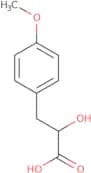
CAS:<p>3-{[(Benzylsulfanyl)methanethioyl]sulfanyl}propanoic acid are essential mediators for reversible addition-fragmentation chain transfer (RAFT) polymerization, common type of controlled radical polymerization.</p>Formula:C11H12O2S3Purezza:Min. 95%Colore e forma:PowderPeso molecolare:272.4 g/mol2-Hydroxy-3-(4-methoxyphenyl)propanoic acid
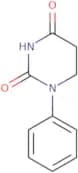
CAS:<p>2-Hydroxy-3-(4-methoxyphenyl)propanoic acid is a monocarboxylic acid that has been used in the synthesis of other compounds. It is an organic compound that is a colorless liquid with a fruity odor. 2-Hydroxy-3-(4-methoxyphenyl)propanoic acid is soluble in water, ethanol and ether. It is a weak acid with pKa values of 3.7 and 4.6. The chemical formula for this compound is C8H10O3P.</p>Formula:C10H12O4Purezza:Min. 95%Peso molecolare:196.2 g/mol1-Phenyl-1,3-diazinane-2,4-dione
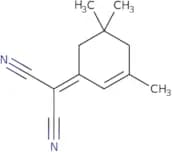
CAS:<p>1-Phenyl-1,3-diazinane-2,4-dione is a synthetic molecule that has been found to be active against influenza virus. It inhibits the replication of influenza A and B viruses by inhibiting the enzyme dihydropyrimidinase. This compound also has an effect on parasitic worms and animal health. 1-Phenyl-1,3-diazinane-2,4-dione is used in research for the development of new drugs. The chemical properties of this drug are similar to β-amino acids that are known to inhibit the synthesis of proteins such as rna polymerase and transporter proteins.</p>Formula:C10H10N2O2Purezza:Min. 95%Colore e forma:PowderPeso molecolare:190.2 g/mol(3,5,5-Trimethylcyclohex-2-enylidene)malononitrile
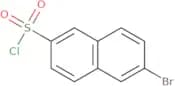
CAS:<p>(3,5,5-Trimethylcyclohex-2-enylidene)malononitrile is a versatile compound that has various applications in different fields. It is commonly used as a research chemical and has shown promising results in the development of new medicaments. Its unique structure and properties make it an ideal candidate for further exploration.</p>Formula:C12H14N2Purezza:Min. 95%Peso molecolare:186.25 g/mol6-Bromonaphthalene-2-sulfonyl chloride
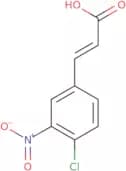
CAS:<p>Versatile small molecule scaffold</p>Formula:C10H6BrClO2SPurezza:Min. 95%Colore e forma:PowderPeso molecolare:305.58 g/mol4-Chloro-3-nitrocinnamic acid
CAS:<p>4-Chloro-3-nitrocinnamic acid is a thionyl chloride derivative of cinnamic acid. It is used as an intermediate in the preparation of pharmaceuticals and dyestuffs. 4-Chloro-3-nitrocinnamic acid inhibits the activity of amides, dimethylformamide, alkaline hydrolysis, xylene, carboxyphenyl, cinnamic, refluxing, nitrophenyl and carboxylic acids. 4-Chloro-3-nitrocinnamic acid reacts with chloride to form the corresponding chloride salt. This compound can also react with formamide to form an amide salt. The ester group of 4-chloro-3-nitrocinnamic acid can be cleaved by nitro compounds to produce nitro derivatives.</p>Formula:C9H6ClNO4Purezza:Min. 95%Colore e forma:Off-White PowderPeso molecolare:227.6 g/mol4-Cyanopyridine
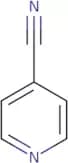
CAS:<p>4-Cyanopyridine is an organic compound with the chemical formula (CN)N. It is a white solid that is soluble in water and polar solvents. When exposed to hydrochloric acid, 4-cyanopyridine undergoes a reaction that converts it to picolinic acid. This reaction proceeds through a mechanism in which the nucleophilic hydroxyl group of 4-cyanopyridine attacks the protonated nitrogen atom of hydrochloric acid. The resulting intermediate then loses a proton and becomes picolinic acid. Kinetic data on this reaction has been obtained from UV-vis spectroscopy, X-ray diffraction, and mass spectrometry experiments. The crystal structures of the bound form of 4-cyanopyridine and its quinoline derivatives have also been determined by x-ray crystallography.</p>Formula:C6H4N2Purezza:Min. 95%Colore e forma:PowderPeso molecolare:104.11 g/mol1,4-Cyclohexanedione monoethlylene acetal
CAS:<p>1,4-Cyclohexanedione monoethlylene acetal is a hydrochloric acid analog of pyrazole. It has been shown to bind selectively to serotonin receptors in the central nervous system and is used as an anti-inflammatory drug. 1,4-Cyclohexanedione monoethlylene acetal has a stereoselective profile that can be used for the treatment of inflammatory diseases. It has also been shown to have immunosuppressant properties, which may be due to its ability to inhibit T-cell proliferation and cytokine production.</p>Formula:C8H12O3Purezza:Min. 95%Colore e forma:White PowderPeso molecolare:156.18 g/mol2-Carboxy-3,4-dimethoxybenzaldehyde
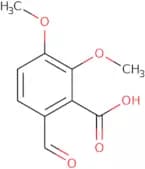
CAS:<p>2-Carboxy-3,4-dimethoxybenzaldehyde is a chemical that belongs to the class of compounds known as butyric acid derivatives. It is a colorless liquid with a pungent odor and can be used in pharmaceutical preparations as an antispasmodic or a sedative. 2-Carboxy-3,4-dimethoxybenzaldehyde has been shown to have radical scavenging activities in tissue culture systems and dry weight reaction products in the presence of hydrochloric acid and chloride ion. This compound can also act as an acid complexing agent for hydrogen chloride and depressant activity on animal behavior.</p>Formula:C10H10O5Purezza:Min. 95%Colore e forma:White Yellow PowderPeso molecolare:210.18 g/mol5-Chloroindole-3-acetic acid
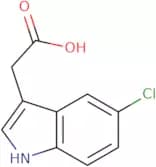
CAS:<p>5-Chloroindole-3-acetic acid (5CI3A) is a compound that belongs to the indole class of compounds. It is structurally similar to the amino acid tryptophan, which makes it a good template molecule for the synthesis of other indoles. 5CI3A is mainly found in plants and bacteria, where it acts as an auxin. In plants, 5CI3A stimulates cell elongation and leaf growth by interacting with plant hormones such as auxins and gibberellins. This compound also binds to serum albumin, which may be responsible for its low toxicity in humans. 5CI3A has been shown to inhibit the activity of human serum albumin by forming hydrogen bonds with it. This inhibition reduces the binding affinity of 5CI3A for other proteins in serum, making it less likely to interact with them than if there were no binding competition.</p>Formula:C10H8ClNO2Colore e forma:PowderPeso molecolare:209.63 g/mol



![2-{[(9H-Fluoren-9-yl)methoxy]carbonyl}-1,2,3,4-tetrahydroisoquinoline-6-carboxylic acid](/_next/image/?url=https%3A%2Fstatic.cymitquimica.com%2Fproducts%2F3D%2Fthumb-webp%2FNKD22621.webp&w=3840&q=75)
![2-{[1-(2,4-Difluorophenyl)ethyl]amino}-N-ethylacetamide](/_next/image/?url=https%3A%2Fstatic.cymitquimica.com%2Fproducts%2F3D%2Fthumb-webp%2FFWB46460.webp&w=3840&q=75)
![4-Bromo-1H-pyrrolo[2,3-b]pyridine-3-carboxylic acid](/_next/image/?url=https%3A%2Fstatic.cymitquimica.com%2Fproducts%2F3D%2Fthumb-webp%2FAQB34036.webp&w=3840&q=75)
![3-{[(Benzylsulfanyl)methanethioyl]sulfanyl}propanoic acid](/_next/image/?url=https%3A%2Fstatic.cymitquimica.com%2Fproducts%2F3D%2Fthumb-webp%2FXUA93176.webp&w=3840&q=75)