Building Blocks
Questa sezione contiene prodotti fondamentali per la sintesi di composti organici e biologici. Building blocks sono i materiali di partenza essenziali utilizzati per costruire molecole complesse attraverso varie reazioni chimiche. Svolgono un ruolo critico nella scoperta di farmaci, nella scienza dei materiali e nella ricerca chimica. Presso CymitQuimica, offriamo una gamma diversificata di building blocks di alta qualità per supportare le tue ricerche innovative e progetti industriali, assicurandoti di avere i componenti essenziali per una sintesi di successo.
Sottocategorie di "Building Blocks"
- Acidi boronici e derivati dell'acido boronico(5.756 prodotti)
- Building Blocks Chirali(1.242 prodotti)
- Building Blocks Idrocarburici(6.095 prodotti)
- Building Blocks organici(61.038 prodotti)
Trovati 196817 prodotti di "Building Blocks"
Ordinare per
Purezza (%)
0
100
|
0
|
50
|
90
|
95
|
100
Iodobenzene 1,1-diacetate
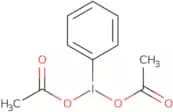
CAS:<p>Iodobenzene 1,1-diacetate (PIDA) is a compound containing a hypervalent iodine. This unusual valence of the iodine makes iodobenzene 1,1-diacetate an ideal oxidizing agent in organic synthesis. Furthermore, it is common practice to use iodobenzene 1,1-diacetate to prepare similar reagents by substituting the acetate groups for the desired functional group (Yusubov, 2019). Due to its low toxicity compared to other iodine derivatives, iodobenzene 1,1-diacetate (PIDA) is a common reagent used in total synthesis in the pharmaceutical and agrochemical industry, to produce sugars, alkaloids, antibiotics, etc (Tohma, 2002).</p>Formula:C10H11IO4Purezza:Min. 98 Area-%Colore e forma:White PowderPeso molecolare:322.1 g/molAzobenzene
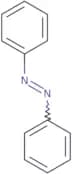
CAS:<p>Azobenzene is an azobenzene that binds to the actin filaments and inhibits their polymerization. It has been shown to inhibit the polymerization of actin filaments in human serum, which may be due to its ability to react with the nitrogen atoms in actin. Azobenzene has also been shown to have a thermal expansion coefficient of 0.015x10⁻⁵/°C, which is much larger than that of most other compounds. The molecular geometry of azobenzene is planar and symmetrical, with two hydrogen atoms on each nitrogen atom on both sides of the molecule. This symmetry leads to a low intramolecular hydrogen bonding energy. The molecule’s photochemical properties are also interesting because it has a long lifetime and can be excited by wavelengths between 400-500 nm.</p>Formula:C12H10N2Purezza:Min. 97.5 Area-%Colore e forma:PowderPeso molecolare:182.22 g/mol5-Aminopyrimidine
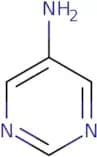
CAS:5-Aminopyrimidine is a synthetic compound that has been shown to have inhibitory effects on the nervous system. The structural formula of 5-aminopyrimidine is C6H4N3O2. It is a structural analogue of pyrimidine and can be used as an anticancer drug. 5-Aminopyrimidine can also be used in the treatment of diseases such as diabetes and Parkinson’s disease. The reaction mechanism of 5-aminopyrimidine begins with the formation of an unstable diazonium salt, which then reacts with a chloride ion to form an alloxan intermediate. This intermediate then reacts with phosphate group to form a product that is soluble in water.Formula:C4H5N3Purezza:Min. 95%Colore e forma:White PowderPeso molecolare:95.1 g/mol2-Methoxy-4-propylcyclohexan-1-ol
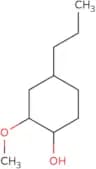
CAS:<p>2-Methoxy-4-propylcyclohexan-1-ol is a versatile compound with various applications. It is commonly used as an anesthetic and can be found in research chemicals. This compound has been shown to have colloidal properties, making it suitable for use in the formulation of various products. Additionally, 2-Methoxy-4-propylcyclohexan-1-ol has been studied for its potential therapeutic effects on conditions such as casein-related disorders and fatty acid metabolism. Its unique structure allows it to interact with different biological pathways, including protein kinase signaling and carotenoid synthesis. Overall, this compound offers a wide range of possibilities for scientific research and product development.</p>Formula:C10H20O2Purezza:Min. 95%Colore e forma:Clear LiquidPeso molecolare:172.26 g/mol4-Methylbenzamide
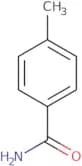
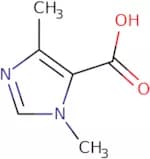
CAS:<p>4-Methylbenzamide is a palladium complex that has been used in the synthesis of imatinib, a drug used to treat chronic myeloid leukemia. 4-Methylbenzamide has been shown to form a hydrogen bond with water molecules and also exhibits cavity effects. The cavity effect can be explained by intermolecular hydrogen bonding and the deuterium isotope effect. The deuterium isotope effect is observed when an atom of deuterium replaces an atom of hydrogen in a molecule. This substitution leads to reduced boiling point and increased solubility for the compound. 4-Methylbenzamide is also known for its inhibitory effects on p38 kinase, which are seen through titration calorimetry.</p>Formula:C8H9NOPurezza:Min. 95%Colore e forma:PowderPeso molecolare:135.16 g/mol1,4-Dimethyl-1H-imidazole-5-carboxylic acid
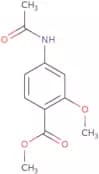
CAS:<p>Versatile small molecule scaffold</p>Formula:C6H8N2O2Purezza:Min. 90%Peso molecolare:140.14 g/molMethyl 4-acetamido-2-methoxybenzoate
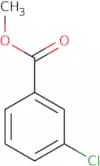
CAS:<p>Methyl 4-acetamido-2-methoxybenzoate is a chemical compound that belongs to the group of heterocycles. It is a precursor to the imidazopyridine, imidazopyrazine and thiazolopyridine classes of drugs. The protonation of methyl 4-acetamido-2-methoxybenzoate has been shown experimentally to be an important factor in its biological activity, especially for its binding affinity for DNA. Methyl 4-acetamido-2-methoxybenzoate has been used as an inotropic agent and as an atypical antipsychotic drug.</p>Formula:C11H13NO4Purezza:Min. 95%Colore e forma:PowderPeso molecolare:223.23 g/molMethyl 3-chlorobenzoate
CAS:<p>Methyl 3-chlorobenzoate is a carbonyl compound that is used in the synthesis of salicylhydroxamic acid. This product has been shown to be an effective inhibitor of soil microorganisms, with the greatest inhibitory effect occurring at concentrations of 0.5 mg/L. The methyl 3-chlorobenzoate molecule contains aryl chlorides and a functional group, which can be identified using nmr spectra. Methyl 3-chlorobenzoate also has control experiments that show it does not interfere with the production of ethyl esters or benzoates from acetaldehyde and propionaldehyde respectively.<br>Methyl 3-chlorobenzoate is synthesized by heating copper salt with an isopropyl group and ethyl esters in benzene solvent at refluxing temperature for two hours.</p>Formula:C8H7ClO2Purezza:Min. 95%Colore e forma:PowderPeso molecolare:170.59 g/mol2-Methyl-6-(phenylethynyl)pyridine HCl
CAS:<p>2-Methyl-6-(phenylethynyl)pyridine (MPEP) is a drug that is used in the treatment of Parkinson's disease. This drug inhibits the synthesis of proteins, including glutamate and dopamine, which are involved in Parkinson's disease. MPEP has been shown to be effective against Parkinson's disease by blocking protein synthesis in the caudate putamen and other brain regions. It also lowers locomotor activity and improves motor skills in rats. MPEP binds to response element-binding protein (RBP), which is involved in the regulation of gene expression. The binding of MPEP to RBP leads to an increase in levels of endogenous adenosine, which blocks the effects of dopamine and serotonin on postsynaptic neurons.</p>Formula:C14H11N·HClPurezza:Min. 98 Area-%Colore e forma:White PowderPeso molecolare:229.7 g/mol2-Amino-4-methoxy-benzoic acid methyl ester
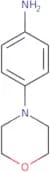
CAS:<p>2-Amino-4-methoxy-benzoic acid methyl ester is a high quality, versatile building block for the synthesis of complex compounds. It is an intermediate in the synthesis of a number of biologically active compounds and has been used as a reagent for the determination of amino acids. 2-Amino-4-methoxy-benzoic acid methyl ester is soluble in water and polar organic solvents.</p>Formula:C9H11NO3Purezza:Min. 95%Colore e forma:Off-White PowderPeso molecolare:181.19 g/mol4-Morpholinoaniline
CAS:<p>4-Morpholinoaniline is a synthetic substrate that reacts with hydrochloric acid and sodium nitrite to form the reactive intermediate 4-morpholinonitrosobenzene. The reaction mechanism is proposed to proceed through an initial electron transfer from the substrate to the nitrosobenzene intermediate, followed by protonation of the nitrosobenzene nitrogen atom. The resulting 4-nitrophenyl radical abstracts hydrogen from the substrate to give 4-hydroxyphenyl radical. This radical undergoes a nucleophilic attack on the aromatic ring of the substrate molecule, and cleavage of the disulfide bond in the aromatic ring leads to formation of a cyanohydrin product. Studies have been conducted on rat liver microsomes and hepatitis C virus (HCV) to investigate this reaction mechanism.</p>Formula:C10H14N2OPurezza:Min. 98.5 Area-%Colore e forma:Red PowderPeso molecolare:178.23 g/mol2-Methyl-6-nitrobenzoic acid
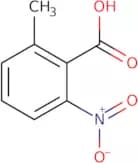
CAS:<p>2-Methyl-6-nitrobenzoic acid is a yellow needle solid that is soluble in organic solvents. It is used as a reagent to prepare other chemicals and has been shown to react with sodium hydrogen sulfate, chloride, and sulfuric acid to form 2-methyl-6-nitrobenzenesulfonic acid. The mixture of 2-methyl-6-nitrobenzoic acid and sodium hydrogen sulfate reacts violently with chlorine gas or argon. This reaction solution can be evaporated by heating at atmospheric pressure or under vacuum, leaving 2-methyl-6-nitrobenzenesulfonic acid behind. 2MBA can also be purified by filtration or recrystallization from a suitable solvent such as chloroform or ether.</p>Formula:C8H7NO4Purezza:Min. 95%Colore e forma:Slightly Yellow PowderPeso molecolare:181.15 g/mol5-[(4-Chlorophenyl)sulfanyl]furan-2-carboxylic acid
CAS:<p>Versatile small molecule scaffold</p>Formula:C11H7ClO3SPurezza:Min. 95%Colore e forma:PowderPeso molecolare:254.69 g/mol2-Methyl-1,2,3-propanetriol
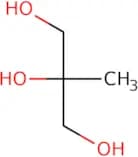
CAS:<p>2-Methyl-1,2,3-propanetriol is a monomer that is used in the production of polymers. It has been shown to be an efficient cross-linking agent for metal surfaces and is used as a polymerization catalyst. 2-Methyl-1,2,3-propanetriol also plays a role in the synthesis of amino acids by acting as a substrate for kinesin and aliphatic hydrocarbon. It can be used as a feedstock for producing plastics with deionized water or aromatic hydrocarbons such as phenol. This chemical has been shown to be pluripotent in mammalian cells and can act as a cationic surfactant.</p>Formula:C4H10O3Purezza:Min. 95 Area-%Colore e forma:Clear LiquidPeso molecolare:106.12 g/mol3-(3-Methoxyphenyl)propionic acid
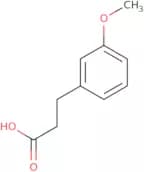
CAS:<p>3-(3-Methoxyphenyl)propionic acid is a phenylpropionic acid with the chemical formula C9H11O2. It is a competitive antagonist of the h3 receptors, and has been shown to inhibit acetylcholinesterase activity in vitro. 3-(3-Methoxyphenyl)propionic acid also has antioxidant properties, which may be due to its ability to inhibit lipase activity. This compound also has anti-inflammatory effects, which may be due to its ability to inhibit tryptophan metabolism. 3-(3-Methoxyphenyl)propionic acid has been shown to have therapeutic potential for Alzheimer's disease, as it can cross the blood brain barrier and inhibits amyloid beta (Aβ) aggregation.</p>Formula:C10H12O3Purezza:Min. 95%Colore e forma:PowderPeso molecolare:180.2 g/mol2-[3-(4-Methylphenyl)-1,2,4-oxadiazol-5-yl]acetonitrile
CAS:<p>Heterocycle with nitrile functional handle</p>Formula:C11H9N3OPurezza:Min. 95%Colore e forma:PowderPeso molecolare:199.21 g/mol3-Methoxy-2,4,5-trifluorobenzoic acid
CAS:<p>3-Methoxy-2,4,5-trifluorobenzoic acid (3MTBF) is a ligand that binds to the active site of bacterial dehydrogenases. It is used to inhibit the growth of bacteria in the environment and food products. 3MTBF inhibits the production of fluoroquinolones by methylating their chlorides with methoxy groups. This compound also has bifunctional properties, as it can act as both a methylating agent and an inhibitor of dehydrogenase enzymes. 3MTBF inhibits the production of cancer cells by inhibiting transcription and translation, preventing cell division and proliferation. 3MTBF is thermostable, meaning it does not break down in high temperatures or at pH extremes.</p>Formula:C8H5F3O3Purezza:Min. 95%Colore e forma:White to off-white solid.Peso molecolare:206.12 g/mol2-Mercaptopyridine N-oxide
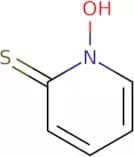
CAS:<p>2-Mercaptopyridine N-oxide is a radical that has been shown to have antifungal activity in vitro. It also inhibits the synthesis of peptide hormones by binding to copper ions, which are required for this process. 2-Mercaptopyridine N-oxide has been shown to chelate metal ions such as iron, which can lead to oxidative injury. This compound has been shown to be toxic in vivo, but it is not currently known if it is toxic in vitro.</p>Formula:C5H5NOSPurezza:Min 97%Colore e forma:Off-White PowderPeso molecolare:127.17 g/mol2-Amino-4-methoxybenzoic acid
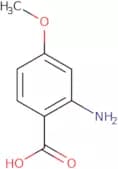
CAS:<p>2-Amino-4-methoxybenzoic acid is a monophenolic compound that has been shown to have antioxidant properties. It is a redox potential with a pK of 7.8 and can be protonated at the phenolic hydroxyl group. 2-Amino-4-methoxybenzoic acid has been shown to inhibit the enzyme activities of histone proteins, which are enzymes that catalyze the formation of DNA from RNA. This compound also inhibits enzymes involved in amino acid synthesis such as anthranilate synthase and malic enzyme, as well as other enzymes such as phosphotransferase (PTS) and pyruvate kinase. 2-Amino-4-methoxybenzoic acid also causes inhibition of growth in phytophthora megasperma, an oomycete plant pathogen, by altering the redox potentials inside the cell membrane. The mechanism for</p>Formula:C8H9NO3Purezza:Min. 95%Colore e forma:PowderPeso molecolare:167.16 g/mol4-(Methylamino)pyridine
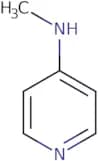
CAS:<p>4-(Methylamino)pyridine (4-MAP) is an anticancer drug that belongs to the class of aromatic heterocyclic compounds. It has been shown to have a broad spectrum of anticancer activity with no toxic effects on normal cells. 4-MAP is immobilized on the surface of nanotubes and has demonstrated a high degree of stability in acidic and alkaline solutions. 4-MAP can be used as a carrier for transfection experiments and for the immobilization of enzymes, proteins, or other biomolecules. The most significant limitation with this material is its relatively low solubility in water.</p>Formula:C6H8N2Purezza:Min. 95%Colore e forma:PowderPeso molecolare:108.14 g/mol



![5-[(4-Chlorophenyl)sulfanyl]furan-2-carboxylic acid](/_next/image/?url=https%3A%2Fstatic.cymitquimica.com%2Fproducts%2F3D%2Fthumb-webp%2FLCA94222.webp&w=3840&q=75)
![2-[3-(4-Methylphenyl)-1,2,4-oxadiazol-5-yl]acetonitrile](/_next/image/?url=https%3A%2Fstatic.cymitquimica.com%2Fproducts%2F3D%2Fthumb-webp%2FICA59900.webp&w=3840&q=75)