Building Blocks
Questa sezione contiene prodotti fondamentali per la sintesi di composti organici e biologici. Building blocks sono i materiali di partenza essenziali utilizzati per costruire molecole complesse attraverso varie reazioni chimiche. Svolgono un ruolo critico nella scoperta di farmaci, nella scienza dei materiali e nella ricerca chimica. Presso CymitQuimica, offriamo una gamma diversificata di building blocks di alta qualità per supportare le tue ricerche innovative e progetti industriali, assicurandoti di avere i componenti essenziali per una sintesi di successo.
Sottocategorie di "Building Blocks"
- Acidi boronici e derivati dell'acido boronico(5.756 prodotti)
- Building Blocks Chirali(1.242 prodotti)
- Building Blocks Idrocarburici(6.095 prodotti)
- Building Blocks organici(61.038 prodotti)
Trovati 196817 prodotti di "Building Blocks"
Ordinare per
Purezza (%)
0
100
|
0
|
50
|
90
|
95
|
100
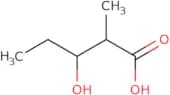
3-Hydroxy-2-methylpentanoic acid
CAS:<p>2-Hydroxy-3-methylpentanoic acid (HMVA) is an organic acid generated by L-isoleucine metabolism. There are 4 stereoisomers of HMVA (2S,3S-HMVA, 2R,3R-HMVA, 2S,3R-HMVA and 2R,3S-HMVA). HMVA is found in the urine and blood of normal individuals but in very elevated levels in patients with maple syrup urine disease (MSUD). Maple syrup urine disease (MSUD) is an inherited metabolic disease predominantly characterized by neurological dysfunction including psychomotor/delay/mental retardation.</p>Formula:C6H12O3Purezza:Min. 95%Colore e forma:Clear LiquidPeso molecolare:132.16 g/molMethyl 4-(2-chloroethyl)benzoate
CAS:<p>Versatile small molecule scaffold</p>Formula:C10H11ClO2Purezza:Min. 95%Peso molecolare:198.65 g/molN-(3-Phenylpropionyl)glycine
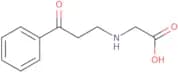
CAS:<p>N-(3-Phenylpropionyl)glycine is a metabolite of the amino acid glycine that is produced by plants. It has been used in diagnostic tests to measure the activity of enzymes involved in fatty acid metabolism and as a marker for metabolic disorders. N-(3-Phenylpropionyl)glycine can be detected in urine samples and has been used to diagnose different types of orotic aciduria, including infantile orotic aciduria. This metabolite inhibits the activity of the enzyme hexanoylglycerol O-acyltransferase, which catalyzes the conversion of hexanoylglycine to p-hydroxybenzoic acid. Hexanoylglycine is an intermediate product of human liver metabolism and it can be found in high concentrations in body tissues such as heart tissue.</p>Formula:C11H13NO3Purezza:Min. 95%Colore e forma:PowderPeso molecolare:207.23 g/mol7-Bromo-5-fluoro-1H-indole-3-carboxylic acid
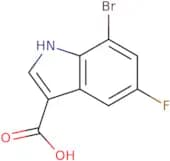
CAS:<p>Please enquire for more information about 7-Bromo-5-fluoro-1H-indole-3-carboxylic acid including the price, delivery time and more detailed product information at the technical inquiry form on this page</p>Formula:C9H5BrFNO2Purezza:Min. 95%Colore e forma:PowderPeso molecolare:258.04 g/mol7-Bromo-4-fluoro-1H-indole-3-carboxylic acid
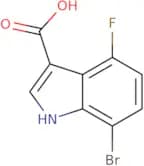
CAS:<p>Please enquire for more information about 7-Bromo-4-fluoro-1H-indole-3-carboxylic acid including the price, delivery time and more detailed product information at the technical inquiry form on this page</p>Formula:C9H5BrFNO2Purezza:Min. 95%Colore e forma:PowderPeso molecolare:258.04 g/mol2-(4-Iodo-1H-1,2,3-triazol-1-yl)acetic acid
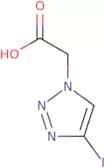
CAS:<p>2-(4-Iodo-1H-1,2,3-triazol-1-yl)acetic acid is a versatile building block that can be used as a reagent or research chemical. It is an intermediate in the synthesis of substituted 2-(4-iodo-1H-1,2,3-triazol-1-yl)acetamides with diverse substituents. This compound has been shown to have antiplatelet activity and is a potential drug candidate for treatment of cardiovascular diseases.</p>Formula:C4H4IN3O2Purezza:Min. 95%Peso molecolare:253 g/molMethyl 2-[1-(3-hydroxyphenyl)-N-methylformamido]acetate
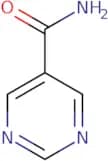
CAS:<p>Versatile small molecule scaffold</p>Formula:C11H13NO4Purezza:Min. 95%Colore e forma:Clear LiquidPeso molecolare:223.22 g/molPyrimidine-5-carboxamide
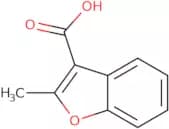
CAS:<p>Pyrimidine-5-carboxamide is a heterocyclic compound that is used as an inhibitor of the pan-PI3K. This drug binds to the CB2 receptor, which has been found in inflammatory cells in the gastrointestinal tract. Pyrimidine-5-carboxamide inhibits inflammatory bowel disease by inhibiting the activity of p38 MAP kinase and JNK, which are key mediators of inflammation. It also inhibits insulin resistance and liver fibrosis by targeting PI3K/Akt signaling pathways. Pyrimidine-5-carboxamide has been shown to have anti-inflammatory effects on the skin, hair follicles, and intestines; it may be used for treating alopecia areata, bowel disease, or hepatic cancer.</p>Formula:C5H5N3OPurezza:Min. 95%Colore e forma:PowderPeso molecolare:123.11 g/mol2-Methyl-1-benzofuran-3-carboxylic acid
CAS:<p>2-Methyl-1-benzofuran-3-carboxylic acid is a type of carboxylic acid that is cytotoxic to cancer cells. It is a major metabolite of the anticancer drug 2,4,5-trimethoxybenzaldehyde and has been shown to be effective against human breast cancer cells. The ester hydrochloride salt form of this compound has been shown to be an effective inhibitor of esterase activity in vitro. This inhibition leads to increased accumulation of 2-methyl-1-benzofuran-3-carboxylic acid in tumor tissue, which may be due to its ability to inhibit the synthesis of proteins required for the transport and metabolism of other drugs. The x-ray structure analysis revealed that this compound binds to the active site of beta lactamases in an orientation that overlaps with substrate binding sites. This binding prevents the formation of a covalent bond between penicillin G</p>Formula:C10H8O3Purezza:Min. 95%Colore e forma:PowderPeso molecolare:176.17 g/mol2,3-Dimethoxybenzeneethanamine
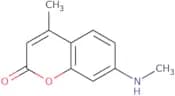
CAS:Prodotto controllato<p>2,3-Dimethoxybenzeneethanamine is a drug substance that belongs to the class of amines. It has been shown to have proarrhythmic effects in animal studies, and has also shown hypotensive properties. 2,3-Dimethoxybenzeneethanamine inhibits the binding of phenylephrine to adrenoceptors in rat heart tissue. This compound can be used as a chromatographic standard for dimethoxyphenethylamines and isomers due to its spectrometric properties.</p>Formula:C10H15NO2Purezza:Min. 98%Colore e forma:Clear LiquidPeso molecolare:181.23 g/mol4-Methyl-7-(methylamino)-2H-chromen-2-one
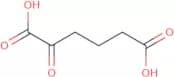
CAS:<p>4-Methyl-7-(methylamino)-2H-chromen-2-one is a fine chemical that is used as a building block in the synthesis of other compounds. It has been used in research as a reagent and in the production of pharmaceuticals. 4-Methyl-7-(methylamino)-2H-chromen-2-one can be used to produce a variety of complex compounds, including those with versatile scaffolds. This compound has been shown to react with many different groups, such as alcohols, amines and thiols, which makes it an excellent intermediate for organic synthesis.</p>Formula:C11H11NO2Purezza:Min. 95%Colore e forma:PowderPeso molecolare:189.21 g/mol2-Oxoadipic acid
CAS:<p>2-Oxoadipic acid is an intermediate in the metabolism of lysine, which is an essential amino acid that cannot be synthesized by humans and must be obtained from diet. It can be converted to picolinic acid by oxidation of the methyl group on the 2-position. The enzyme activities of 2-oxoadipic acid are similar to those of picolinic acid, but it has a longer half-life and does not cause toxicity in cells. 2-Oxoadipic acid has been used as a fluorescent derivative for biological samples and as a model system for studying cell signaling pathways and physiological functions. Chemical biology studies have shown that 2-oxoadipic acid is involved in energy metabolism and may serve as a precursor for synthesis of other compounds such as riboflavin.</p>Formula:C6H8O5Purezza:Min. 95%Colore e forma:PowderPeso molecolare:160.12 g/mol4-Cyclopentylbenzaldehyde
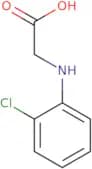
CAS:<p>4-Cyclopentylbenzaldehyde is a homologous compound that is used in the synthesis of other compounds. It is an organic compound with a monoxide group and a cyclohexenyl group. 4-Cyclopentylbenzaldehyde can be prepared by the oxidation of benzene or by the formylation of cyclohexene. This compound can be used in acylation reactions. The yields of this chemical are high, which makes it useful for laboratory purposes. 4-Cyclopentylbenzaldehyde has been shown to undergo carbonylation reactions and catalysis at higher temperatures and pressures. It also reacts with mesitylene, although not toluene, under these conditions.</p>Formula:C12H14OPurezza:Min. 95%Colore e forma:PowderPeso molecolare:174.24 g/molN-(2-Chlorophenyl)glycine
CAS:<p>N-(2-Chlorophenyl)glycine is an optical isomer of glycine that was synthesized by the photocyclization of 2-chlorobenzaldehyde using KI as a catalyst. It has been shown to be an active inhibitor of platelet aggregation and activation, with a potency comparable to clopidogrel. N-(2-Chlorophenyl)glycine may be used in pharmaceuticals for the prevention of thrombosis and stroke, particularly in patients who are at high risk for these complications. The synthesis of this compound requires the use of an organic solvent and chiral reagents.</p>Formula:C8H8ClNO2Purezza:Min. 95%Colore e forma:PowderPeso molecolare:185.61 g/mol[2-Amino-1-(1-methyl-1H-pyrazol-4-yl)ethyl]dimethylamine
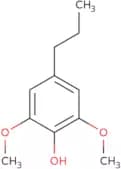
CAS:<p>Versatile small molecule scaffold</p>Formula:C8H16N4Purezza:Min. 95%Colore e forma:PowderPeso molecolare:168.24 g/mol2,6-Dimethoxy-4-propylphenol
CAS:<p>2,6-Dimethoxy-4-propylphenol is an organic solvent that is used in the synthesis of pharmaceuticals and agricultural chemicals. It is also a precursor for lignin, a natural polymer found in plants. 2,6-Dimethoxy-4-propylphenol can be converted to 2,6-dimethoxyphenol by hydrolysis with water vapor or an acid catalyst. The skeleton of 2,6-dimethoxy-4-propylphenol is a carbon chain with ether linkages that are susceptible to hydrolysis reactions. These reactions produce monomers and fatty acids.</p>Formula:C11H16O3Purezza:Min. 95%Colore e forma:Clear LiquidPeso molecolare:196.24 g/mol3-[(1H-1,2,3,4-Tetrazol-5-yl)methyl]-1H-indole
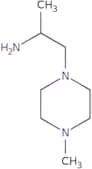
CAS:<p>Versatile small molecule scaffold</p>Formula:C10H9N5Purezza:Min. 95%Colore e forma:PowderPeso molecolare:199.21 g/mol(S)-1-(2-Amino-propan-1-yl)-4-methyl-piperazine
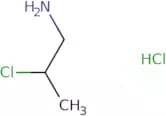
CAS:<p>(S)-1-(2-Amino-propan-1-yl)-4-methyl-piperazine is a reagent, reaction component and building block for speciality chemicals. It is a versatile intermediate that has been used in the synthesis of complex compounds. (S)-1-(2-Amino-propan-1-yl)-4-methyl-piperazine is an important building block for the synthesis of a variety of pharmaceuticals and other organic compounds. This compound can be used as an intermediate or reagent to produce high quality research chemicals.</p>Formula:C8H19N3Purezza:Min. 95%Peso molecolare:157.26 g/mol2-Chloropropan-1-amine hydrochloride
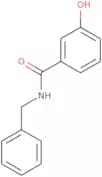
CAS:<p>2-Chloropropan-1-amine hydrochloride is a chlorinating agent that is used to produce 1-naphthaldehyde. It is used in the production of acrylamides, polyacrylamides, and other chemicals. 2-Chloropropan-1-amine hydrochloride has been shown to react with 1-naphthaldehyde in an aerobic reaction at room temperature to produce aziridine, which can be cyclized to form a cyclic compound. This compound can then be alkylated to form a fluxional compound with potentiation properties.</p>Formula:C3H8ClN•HClPurezza:Min. 95%Colore e forma:PowderPeso molecolare:130.01 g/molN-Benzyl-3-hydroxybenzamide
CAS:<p>Versatile small molecule scaffold</p>Formula:C14H13NO2Purezza:Min. 95%Colore e forma:PowderPeso molecolare:227.26 g/mol


![Methyl 2-[1-(3-hydroxyphenyl)-N-methylformamido]acetate](/_next/image/?url=https%3A%2Fstatic.cymitquimica.com%2Fproducts%2F3D%2Fthumb-webp%2FVQB93340.webp&w=3840&q=75)


![[2-Amino-1-(1-methyl-1H-pyrazol-4-yl)ethyl]dimethylamine](/_next/image/?url=https%3A%2Fstatic.cymitquimica.com%2Fproducts%2F3D%2Fthumb-webp%2FCWB66676.webp&w=3840&q=75)
![3-[(1H-1,2,3,4-Tetrazol-5-yl)methyl]-1H-indole](/_next/image/?url=https%3A%2Fstatic.cymitquimica.com%2Fproducts%2F3D%2Fthumb-webp%2FQAA99212.webp&w=3840&q=75)