Building Blocks
Questa sezione contiene prodotti fondamentali per la sintesi di composti organici e biologici. Building blocks sono i materiali di partenza essenziali utilizzati per costruire molecole complesse attraverso varie reazioni chimiche. Svolgono un ruolo critico nella scoperta di farmaci, nella scienza dei materiali e nella ricerca chimica. Presso CymitQuimica, offriamo una gamma diversificata di building blocks di alta qualità per supportare le tue ricerche innovative e progetti industriali, assicurandoti di avere i componenti essenziali per una sintesi di successo.
Sottocategorie di "Building Blocks"
- Acidi boronici e derivati dell'acido boronico(5.756 prodotti)
- Building Blocks Chirali(1.242 prodotti)
- Building Blocks Idrocarburici(6.095 prodotti)
- Building Blocks organici(61.038 prodotti)
Trovati 196817 prodotti di "Building Blocks"
Ordinare per
Purezza (%)
0
100
|
0
|
50
|
90
|
95
|
100
5-(Trifluoromethyl)thiophene-3-carboxylic acid
CAS:<p>Versatile small molecule scaffold</p>Formula:C6H3F3O2SPurezza:Min. 95%Peso molecolare:196.15 g/mol3'-Bromoacetophenone
CAS:<p>3'-Bromoacetophenone is a synthetic chemical that has been synthesized for the purpose of studying molecular orbitals and vibrational spectra. It is an enantiopure compound with a formyl group and an ethyl bromoacetate. The molecule has four nitrogen atoms and two methyl ketones, which are bonded to each other in the form of a ring. 3'-Bromoacetophenone can be used as a starting material in the synthesis of other compounds. It can also be used as a reagent to make carbon-carbon bonds in organic molecules. 3'-Bromoacetophenone has been shown to have optical properties that can be used for detection of light and fluorescence microscopy.</p>Formula:C8H7BrOPurezza:Min. 98.5 Area-%Colore e forma:Slightly Yellow Clear LiquidPeso molecolare:199.04 g/molN2-Isobutyryl-5'-O-(4,4'-dimethoxytrityl)-2'-deoxyguanosine-3'-O-succinate triethylamine
CAS:<p>Please enquire for more information about N2-Isobutyryl-5'-O-(4,4'-dimethoxytrityl)-2'-deoxyguanosine-3'-O-succinate triethylamine including the price, delivery time and more detailed product information at the technical inquiry form on this page</p>Formula:C39H41N5O10•C6H15NPurezza:Min. 95%Peso molecolare:840.96 g/molBetonicine
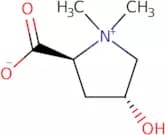
CAS:<p>Betonicine is a natural compound that has been shown to have therapeutic effects in autoimmune diseases. It has been used as a model system for studying plant physiology and to determine the transport properties of hydroxyl groups. Betonicine has also been shown to have receptor activity, which is responsible for its disease-modifying effects in autoimmune diseases. Betonicine is an inorganic acid that can be synthesized from the reaction between ammonia and nitric acid. It can also be extracted from plants such as cress seeds, which are rich in nitrogen atoms. The titration calorimetry method was used to measure the concentration of betonicine in coli K-12 cells.</p>Formula:C7H13NO3Purezza:Min. 95%Colore e forma:PowderPeso molecolare:159.18 g/mol5-Methoxy-2-nitrobenzoic acid
CAS:<p>5-Methoxy-2-nitrobenzoic acid is a compound that has been shown to have antiinflammatory properties. It has been found to inhibit the production of inflammatory mediators such as leukotrienes and prostaglandins. 5-Methoxy-2-nitrobenzoic acid also inhibits certain enzymes, such as cyclooxygenase and lipoxygenase, which are involved in the biosynthesis of these mediators. 5-Methoxy-2-nitrobenzoic acid may be useful in the treatment of inflammatory diseases such as arthritis or asthma. This drug can also be used for chemoprevention against cancer. The drug has been shown to inhibit the growth of tumor cells in vivo by oral administration. This is due to its ability to inhibit DNA synthesis and protein synthesis in cells by binding with DNA and inhibiting RNA synthesis through inhibition of ribonucleotide reductase.</p>Formula:C8H7NO5Purezza:90%Colore e forma:PowderPeso molecolare:197.14 g/mol2-Pyridinepropanol
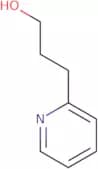
CAS:<p>2-Pyridinepropanol is a tetranuclear compound that contains two nitrogen atoms and two silver ions. It has been shown to be an inhibitor of arthropoda development in the laboratory. 2-Pyridinepropanol also has potent inhibitory activity against the growth of bacteria, including Staphylococcus aureus and Pseudomonas aeruginosa. This compound was synthesized from 2-benzoylbenzoic acid, which is a product of the plant metabolism. The structure of this molecule was determined by X-ray crystallography and electrochemical studies.<br>2-Pyridinepropanol binds to the bacterial enzyme hydrogenase, which catalyzes the production of hydrogen gas, thereby inhibiting its activity (hydrogenase is an enzyme that catalyses the reduction of protons to hydrogen gas).</p>Formula:C8H11NOPurezza:Min. 95%Colore e forma:Colorless PowderPeso molecolare:137.18 g/mol2-Bromo-5-iodopyridine
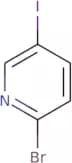
CAS:<p>2-Bromo-5-iodopyridine is a compound that has been studied for its potential use in the treatment of neurodegenerative diseases. It inhibits nicotinic acetylcholine receptors, which are involved in the transmission of nerve impulses to the muscles. 2-Bromo-5-iodopyridine binds to acetylcholine receptors, blocking the uptake of acetylcholine and preventing it from binding with the receptor. This leads to an increase in acetylcholine levels, which increases muscle contraction and improves brain function. The crystal structure of 2-bromo-5-iodopyridine has been determined by x-ray diffraction studies. The molecule contains two bromine atoms and five iodine atoms, which are arranged such that they form a square planar geometry around a central metal ion (hydrochloric acid). Nitrogen atoms are found on opposite corners of this square plane. These nitrogen atoms can be substituted with chloride</p>Formula:C5H3BrINPurezza:Min. 95%Colore e forma:Off-White PowderPeso molecolare:283.89 g/mol4-tert-Butylaniline
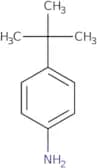
CAS:<p>4-tert-Butylaniline is a chemical compound with the molecular formula C6H7N. It is an organic base that has acidic properties and can be used as an amine. 4-tert-Butylaniline is used in the manufacture of other chemicals, such as herbicides, pesticides, and pharmaceuticals. 4-tert-Butylaniline binds to metal ions such as palladium by hydrogen bonding. This binding increases the reactivity of the metal ion and allows it to catalyze reactions that would otherwise not occur. 4-tert-Butylaniline also has transport properties and binds to replicon cells through adsorption mechanisms.</p>Formula:C10H15NPurezza:Min. 95%Colore e forma:Colorless Clear LiquidPeso molecolare:149.23 g/mol4-(Bromomethyl)benzylamine HBr
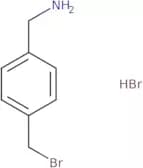
CAS:<p>4-(Bromomethyl)benzylamine HBr is a fine chemical that can be used as a building block for organic synthesis. This compound is also a useful research chemical, reagent, and specialty chemical. 4-(Bromomethyl)benzylamine HBr has been used as a reaction component in the synthesis of various pharmaceuticals, such as theophylline and ampicillin. It has also been used as an intermediate in the production of other compounds, such as 4-hydroxybutyric acid and 3-methylthiopropionic acid. This complex compound can be purchased at high quality and is versatile enough to act as a scaffold for many reactions.</p>Formula:C8H11Br2NPurezza:Min. 95%Colore e forma:PowderPeso molecolare:280.99 g/molBoc-L-serine benzyl ester
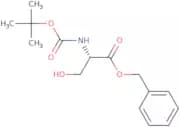
CAS:<p>Boc-L-serine benzyl ester is a potent inhibitor of bacterial enzymes that has been shown to inhibit the binding of galactose to liposomes, an important step in bacterial cell wall synthesis. Boc-L-serine benzyl ester also inhibits several bacterial enzymes including β-galactosidase, β-glucuronidase, and α-chymotrypsin. This drug is a synthetic compound that can be used as a diagnostic tool for the identification of commensal bacteria. It has been shown to inhibit the growth of oral streptococci, E. coli and clostridia species such as C. perfringens. In addition, Boc-L-serine benzyl ester inhibits the production of amyloidogenic protein fragments from peptide substrates and has been shown to have potent inhibitory activities against these enzyme substrates identified by mass spectrometry analysis.</p>Formula:C15H21NO5Purezza:Min. 95%Colore e forma:White PowderPeso molecolare:295.33 g/mol1-Boc-4-bromomethylpiperidine
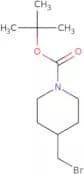
CAS:<p>1-Boc-4-bromomethylpiperidine is a versatile building block for the synthesis of complex compounds with diverse biological activity. It is an excellent reagent for the synthesis of 1,2,3-triazoles, which are useful scaffolds in the synthesis of high quality pharmaceuticals. This compound can be used as a reaction component and as a useful intermediate in various chemical reactions.</p>Formula:C11H20BrNO2Purezza:Min. 97 Area-%Colore e forma:PowderPeso molecolare:278.19 g/mol(3S)-3-Amino-1-hydroxy-1,2,3,4-tetrahydroquinolin-2-one
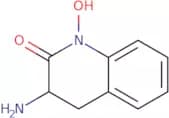
CAS:<p>(3S)-3-Amino-1-hydroxy-1,2,3,4-tetrahydroquinolin-2-one is a fine chemical with versatile building block properties. This compound has been used as a reagent and in the synthesis of complex compounds. It has also been used as a speciality chemical in research and can be used as a useful intermediate for organic reactions. (3S)-3-Amino-1-hydroxy-1,2,3,4-tetrahydroquinolin-2-one is an intermediate that can be used to synthesize other compounds or scaffolds with different functional groups. CAS No.: 34783-48-7</p>Formula:C9H10N2O2Purezza:Min. 95%Colore e forma:PowderPeso molecolare:178.19 g/mol1-Bromo-2-(trifluoromethoxy)ethane
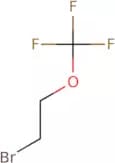
CAS:<p>1-Bromo-2-(trifluoromethoxy)ethane is a chemical compound with the formula CBrFO. It is a colorless liquid that reacts violently with water and alkali metals. 1-Bromo-2-(trifluoromethoxy)ethane has been used as a precursor to 2-chloroethyl peroxide, which can be used in organic synthesis as an oxidant or in solvents to produce chloroprene. The bromine atom in this molecule can be replaced by fluorine or chlorine atoms, forming 1-fluoro-2-(trifluoromethoxy)ethane and 1,1,1-trichloroethylene.</p>Formula:C3H4BrF3OPurezza:Min. 95%Colore e forma:PowderPeso molecolare:192.96 g/mol2-Bromo-5-methoxytoluene
CAS:<p>2-Bromo-5-methoxytoluene is a synthetic organic compound that is used as a chemical intermediate for cellulose derivatives. It is generated by the Friedel-Crafts reaction of bromine with toluene in the presence of aluminum chloride. 2-Bromo-5-methoxytoluene has been shown to react with cellulose derivatives and other hydrogen bond acceptors. This reaction is followed by protonation, which yields a chromophore that changes color from yellow to orange. The mechanism of this reaction can be explained by an acid catalysis mechanism, which begins with protonation of the carbonyl group (C=O) and formyl group (HC=O) groups. This causes the formation of an enolate ion, which reacts with a protonated carbonyl group to yield a formyl cation and an enolate ion. The formyl cation then reacts with another proton</p>Formula:C8H9OBrPurezza:Min. 95%Colore e forma:PowderPeso molecolare:201.06 g/mol4-Biphenylmethanol
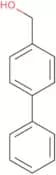
CAS:<p>4-Biphenylmethanol is a low potency naphthalene derivative that has been shown to be carcinogenic in animal studies. It is also an inhibitor of protein synthesis, which may play a role in its carcinogenic potential. 4-Biphenylmethanol has been shown to inhibit the growth of Salmonella typhimurium and Saccharomyces cerevisiae strain when used at concentrations of 50 μg/mL or higher. This compound can react with hydrochloric acid to form hydrogen bonding interactions, which may account for its observed antibacterial activity.</p>Formula:C13H12OPurezza:Min. 95%Colore e forma:PowderPeso molecolare:184.23 g/mol2-tert-Butoxybenzoic acid
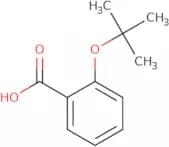
CAS:<p>2-tert-Butoxybenzoic acid is a versatile chemical that can be used as a reagent, a speciality chemical, or as an intermediate in the synthesis of other compounds. It is typically used in organic chemistry for the preparation of esters, amides, and nitriles. 2-tert-Butoxybenzoic acid is also useful as a building block for complex molecules. This compound has been shown to react with alcohols to form esters, with amines to form amides, and with nitro groups to form nitriles.</p>Formula:C11H14O3Purezza:Min. 95%Colore e forma:PowderPeso molecolare:194.23 g/mol1-Bromopentane
CAS:<p>1-Bromopentane is a colorless liquid that has an unpleasant odor. It is soluble in water and reacts with acids to form bromides. 1-Bromopentane has been used as an oxidation catalyst in the preparation of organic compounds under conditions of constant pressure and light exposure. It has also been used in the synthesis of polymers, such as poly(1-bromopentene). Its biological properties are not well known, but it has been shown to have CB2 receptor agonist activity and inhibitory effects on oxidative stress. The chemical kinetic data for 1-bromopentane are available at various temperatures and pressures. Chloride ions can act as catalysts for its decomposition reaction, which is a stepwise process involving the conversion of hydroxyl groups into chloride atoms. The reaction mechanism starts with the conversion of one bromine atom into a radical by abstraction of a hydrogen atom from the molecule followed by addition of another brom</p>Formula:C5H11BrPurezza:Min. 98 Area-%Colore e forma:Colorless Clear LiquidPeso molecolare:151.04 g/molIndole-3-acetyl-DL-tryptophan
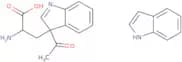
CAS:<p>Please enquire for more information about Indole-3-acetyl-DL-tryptophan including the price, delivery time and more detailed product information at the technical inquiry form on this page</p>Formula:C21H19N3O3Purezza:Min. 95%Colore e forma:PowderPeso molecolare:361.4 g/mol4-Cyclohexylbenzaldehyde
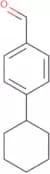
CAS:<p>4-Cyclohexylbenzaldehyde is a molecule that has been disrupted and formylated. It binds to the signal transducer, which activates the transcription of genes. 4-Cyclohexylbenzaldehyde has also been shown to bind to DNA and inhibit the synthesis of RNA in bacteria cells. In addition, this molecule can bind with formylating agents such as hydrogen fluoride or trifluoride, which are used in agrochemicals. This compound is an isomerizing agent that can isomerize cyclohexenyl compounds into cyclohexyltrifluoride. 4-Cyclohexylbenzaldehyde has cytosolic activity and can bind to binder molecules in the cytosol.</p>Formula:C13H16OPurezza:Min. 95%Colore e forma:PowderPeso molecolare:188.27 g/molIndole-3-acryloylglycine
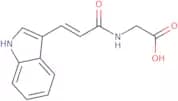
CAS:<p>Indole-3-acryloylglycine is a metabolite of tryptophan, which is an essential amino acid for humans. It has been shown to be a potential biomarker for inflammatory bowel disease (IBD). Indole-3-acryloylglycine can be detected in urine samples and can be used as a diagnostic tool to identify IBD patients. This method has also been validated using chromatographic and mass spectrometry methods. Dietary intake of 3-hydroxyanthranilic acid or kynurenine may affect the concentration of indole-3-acryloylglycine in the body.</p>Formula:C13H12N2O3Purezza:Min. 98 Area-%Colore e forma:White Off-White PowderPeso molecolare:244.25 g/mol