


Building Blocks
Questa sezione contiene prodotti fondamentali per la sintesi di composti organici e biologici. Building blocks sono i materiali di partenza essenziali utilizzati per costruire molecole complesse attraverso varie reazioni chimiche. Svolgono un ruolo critico nella scoperta di farmaci, nella scienza dei materiali e nella ricerca chimica. Presso CymitQuimica, offriamo una gamma diversificata di building blocks di alta qualità per supportare le tue ricerche innovative e progetti industriali, assicurandoti di avere i componenti essenziali per una sintesi di successo.
Sottocategorie di "Building Blocks"
- Acidi boronici e derivati dell'acido boronico(5.756 prodotti)
- Building Blocks Chirali(1.242 prodotti)
- Building Blocks Idrocarburici(6.095 prodotti)
- Building Blocks organici(61.038 prodotti)
Trovati 196817 prodotti di "Building Blocks"
Ordinare per
Purezza (%)
0
100
|
0
|
50
|
90
|
95
|
100
2-[4-(Methylsulfanyl)phenyl]-2-oxoacetaldehyde
CAS:<p>Versatile small molecule scaffold</p>Formula:C9H8O2SPurezza:90%Colore e forma:PowderPeso molecolare:180 g/mol4-(Trimethylsilyl)benzaldehyde
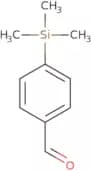
CAS:<p>4-(Trimethylsilyl)benzaldehyde is an undescribed monomer that has been synthesized in the laboratory. It is a centrosymmetric molecule with three phenyl groups and a silicon atom, which are connected by sulfonation. 4-(Trimethylsilyl)benzaldehyde can be used as a precursor to produce amines and covid-19 pandemic. The synthesis of 4-(trimethylsilyl)benzaldehyde can be regiospecifically achieved through chlorination, although this method is not efficient. The carbonyl group in this molecule can be used as part of a catalytic process for the synthesis of carbazones.</p>Formula:C10H14OSiPurezza:90%Colore e forma:Clear LiquidPeso molecolare:178.3 g/molp-Naphtholbenzein
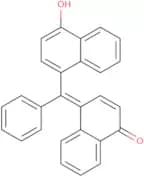
CAS:<p>p-Naphtholbenzein is a fluorescent dye that is used in the diagnosis of human pathogens. It can be used to detect the presence of fatty acids, which are found on the surface of bacteria and in the cell wall. p-Naphtholbenzein elutes from an agar plate at pH 6.0 and can be detected using a spectrophotometer. The fluorescence of p-naphtholbenzein is absorbed by fatty acids, which emit light when excited by ultraviolet light. This makes it useful for detecting fatty acid content in cells, organisms, and surfaces. It is also used as an excipient in subclinical mastitis treatments to help reduce inflammation and improve milk production. In biodiesel reactions, p-naphtholbenzein acts as an optimal reaction catalyst because it stabilizes hydroxybenzoic acid (HBA) with benzalkonium chloride (BZK).</p>Formula:C27H18O2Colore e forma:PowderPeso molecolare:374.43 g/mol5-Chlorosulfonyl-2-hydroxybenzoic acid
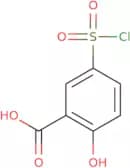
CAS:<p>5-Chlorosulfonyl-2-hydroxybenzoic acid is a convergent, clean, and efficient synthesis of the pharmaceutical drug sildenafil. It has been shown to be a reagent for the preparation of sildenafil. 5-Chlorosulfonyl-2-hydroxybenzoic acid is an organic compound that belongs to the class of compounds called sulfonamides. This compound has been shown to be an efficient and effective synthetic intermediate in the preparation of sildenafil.</p>Formula:C7H5ClO5SPurezza:Min. 95%Colore e forma:PowderPeso molecolare:236.63 g/moltert-Butyl N-[(2S)-1-(methylamino)propan-2-yl]carbamate
CAS:<p>Versatile small molecule scaffold</p>Formula:C9H20N2O2Purezza:Min. 95%Colore e forma:PowderPeso molecolare:188.27 g/molNaphthalene-1,4,5,8-tetracarboxylic dianhydride
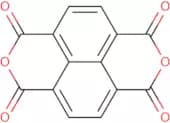
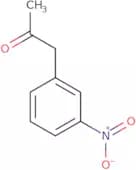
CAS:<p>Naphthalene-1,4,5,8-tetracarboxylic dianhydride is a molecule that contains two carboxylic acid groups and one tetracarboxylic acid group. It is an adsorbent material that is used to remove water vapor from the atmosphere. Naphthalene-1,4,5,8-tetracarboxylic dianhydride is also used in wastewater treatment processes because it has high chemical stability and can be regenerated with anhydrous sodium. The transport properties of naphthalene-1,4,5,8-tetracarboxylic dianhydride are well suited for use as a model system for studying the kinetics of proton exchange membrane fuel cells (PEMFC). This compound has been studied using electrochemical impedance spectroscopy to determine its kinetic data.</p>Formula:C14H4O6Purezza:Min. 95 Area-%Colore e forma:Off-White PowderPeso molecolare:268.18 g/mol(3-Nitrophenyl)acetone
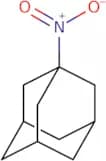
CAS:<p>3-Nitrophenylacetone is a white solid that is soluble in water and polar organic solvents. 3-Nitrophenylacetone can be used as a building block for the synthesis of other compounds, such as pharmaceuticals and dyes. This compound has been researched for its ability to inhibit protein glycosylation. 3-Nitrophenylacetone is also used as an intermediate in the synthesis of polyurethanes and polycarbonates.</p>Formula:C9H9NO3Purezza:Min. 95%Colore e forma:White PowderPeso molecolare:179.17 g/mol1-Nitroadamantane
CAS:<p>1-Nitroadamantane is a metal-free catalyst that oxidizes organic compounds in the presence of water. It is synthesized using the following method: 1) The reaction of carbon monoxide with nitric acid produces nitrous acid, which reacts with a fatty acid to yield 1-nitroadamantane. 2) This product can be obtained from trifluoroacetic acid and hydrogen fluoride. 3) This product can also be prepared by reacting diphenyl ether with an acylurea.</p>Formula:C10H15NO2Purezza:Min. 95%Colore e forma:White PowderPeso molecolare:181.23 g/mol4',6'-Dihydrospiro[cyclopropane-1,5'-pyrrolo[1,2-b]pyrazole]-2'-carboxylic acid
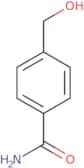
CAS:<p>4,6-Dihydrospiro[cyclopropane-1,5'-pyrrolo[1,2-b]pyrazole]-2'-carboxylic acid is a fine chemical that can be used as a versatile building block in the manufacture of complex compounds. CAS No. 2287271-02-5 is a high quality research chemical and reagent that can be used to synthesize speciality chemicals and useful intermediates. It is also an important reaction component in the synthesis of useful scaffolds.</p>Formula:C9H10N2O2Purezza:Min. 95%Colore e forma:PowderPeso molecolare:178.19 g/mol4-(Hydroxymethyl)benzamide
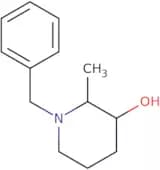
CAS:<p>4-(Hydroxymethyl)benzamide is a heterocyclic compound that is activated with sodium borohydride. It can be used in the synthesis of peptides, which are chains of amino acids. 4-(Hydroxymethyl)benzamide has been shown to have a high efficiency for the synthesis of peptides and has been shown to be an excellent reactant for manual peptide synthesis. Kinetics studies have also shown that this reagent is more effective than other deprotecting agents such as hydrochloric acid. This compound has been found to be useful in the analysis of amino acids and can be used in the ligation reaction during peptide synthesis. The deprotection reactions catalyzed by 4-(Hydroxymethyl)benzamide are typically carried out at room temperature, although solvents such as dichloromethane or chloroform can be used instead if necessary.</p>Formula:C8H9NO2Purezza:Min. 95%Peso molecolare:151.16 g/mol1-Benzyl-2-methylpiperidin-3-ol
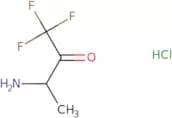
CAS:<p>Versatile small molecule scaffold</p>Formula:C13H19NOPurezza:Min. 95%Colore e forma:PowderPeso molecolare:205.3 g/mol3-Amino-1,1,1-trifluorobutan-2-one hydrochloride
CAS:<p>3-Amino-1,1,1-trifluorobutan-2-one hydrochloride is a fine chemical that is used as a versatile building block in organic synthesis. This compound has been shown to be an effective intermediate for the synthesis of complex compounds. 3-Amino-1,1,1-trifluorobutan-2-one hydrochloride is also useful as a reactant for research and speciality chemicals with high quality and purity.</p>Formula:C4H7ClF3NOPurezza:Min. 95%Peso molecolare:177.55 g/mol4-Amino-1-butanol
CAS:<p>4-Amino-1-butanol is a natural compound that is not toxic to humans. It is amide with a hydrophilic interaction chromatography property, and has been shown to have hemolytic activity against human erythrocytes. 4-Amino-1-butanol has been shown to be an inhibitor of the HIV virus, with minimal toxicity. It has also been shown to inhibit the replication of the wild type virus in cells in vitro and in vivo, which is due to its ability to bind with the enzyme ethylene diamine. The inhibition of this enzyme leads to a reduction in biological activity of amines.</p>Formula:C4H11NOPurezza:Min. 95%Colore e forma:Slightly Yellow Clear LiquidPeso molecolare:89.14 g/mol2-Nitro-4-(trifluoromethyl)cinnamic acid
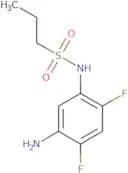
CAS:<p>2-Nitro-4-(trifluoromethyl)cinnamic acid is a versatile building block that can be used in the synthesis of complex compounds. It is a useful reagent, speciality chemical, and reaction component. 2-Nitro-4-(trifluoromethyl)cinnamic acid has been shown to be an intermediate for the synthesis of other compounds such as anti-tuberculosis drugs, antibiotics, and pharmaceuticals. This compound also has high quality and can be used as a scaffold for the synthesis of other compounds.</p>Formula:C10H6F3NO4Purezza:Min. 95%Peso molecolare:261.15 g/molN-(5-Amino-2,4-difluorophenyl)propane-1-sulfonamide
CAS:<p>Versatile small molecule scaffold</p>Formula:C9H12F2N2O2SPurezza:Min. 95%Colore e forma:PowderPeso molecolare:250.27 g/mol(Propan-2-yl)[1-(thiophen-3-yl)ethyl]amine
CAS:<p>Versatile small molecule scaffold</p>Formula:C9H15NSPurezza:Min. 95%Colore e forma:Clear LiquidPeso molecolare:169.29 g/mol4-{2-[2-(2-Methoxyethoxy)ethoxy]ethoxy}aniline
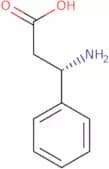
CAS:<p>Versatile small molecule scaffold</p>Formula:C13H21NO4Purezza:Min. 95%Colore e forma:Clear LiquidPeso molecolare:255.31 g/mol(S)-3-Amino-3-phenylpropionic acid
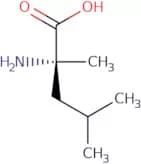
CAS:<p>3-Amino-3-phenylpropionic acid is a β-amino acid that is used in the industrial production of acrylate esters. The acylation reaction of the carboxylic acid group with an alcohol, usually naphthalene or phenol, yields an ester hydrochloride. This is then hydrolyzed to the corresponding amide, which can be further reacted to produce a variety of other compounds. 3-Amino-3-phenylpropionic acid has pharmacokinetic properties that are similar to those of glycine and alanine, but it does not undergo transamination. It also has a very high chloride content and is often used as a reagent for the synthesis of organic chloride salts.</p>Formula:C9H11NO2Purezza:Min. 95%Colore e forma:White PowderPeso molecolare:165.19 g/molα-Me-D-Leu-OH
CAS:<p>a-Me-D-Leu-OH is a versatile building block that is used as a reagent in the synthesis of complex compounds, research chemicals, and speciality chemicals. It is also a useful scaffold for drug design. This chemical is also widely used as an intermediate in organic syntheses.</p>Formula:C7H15NO2Purezza:Min. 95%Colore e forma:PowderPeso molecolare:145.2 g/mol4-[(3-Aminopropyl)amino]butanoic acid dihydrochloride
CAS:<p>Versatile small molecule scaffold</p>Formula:C7H16N2O2•2HClPurezza:Min. 95%Colore e forma:PowderPeso molecolare:233.13 g/mol
![2-[4-(Methylsulfanyl)phenyl]-2-oxoacetaldehyde](/_next/image/?url=https%3A%2Fstatic.cymitquimica.com%2Fproducts%2F3D%2Fthumb-webp%2FICA95088.webp&w=3840&q=75)

![tert-Butyl N-[(2S)-1-(methylamino)propan-2-yl]carbamate](/_next/image/?url=https%3A%2Fstatic.cymitquimica.com%2Fproducts%2F3D%2Fthumb-webp%2FYJB22170.webp&w=3840&q=75)
![4',6'-Dihydrospiro[cyclopropane-1,5'-pyrrolo[1,2-b]pyrazole]-2'-carboxylic acid](/_next/image/?url=https%3A%2Fstatic.cymitquimica.com%2Fproducts%2F3D%2Fthumb-webp%2FMRD27102.webp&w=3840&q=75)


![(Propan-2-yl)[1-(thiophen-3-yl)ethyl]amine](/_next/image/?url=https%3A%2Fstatic.cymitquimica.com%2Fproducts%2F3D%2Fthumb-webp%2FAAC59964.webp&w=3840&q=75)
![4-{2-[2-(2-Methoxyethoxy)ethoxy]ethoxy}aniline](/_next/image/?url=https%3A%2Fstatic.cymitquimica.com%2Fproducts%2F3D%2Fthumb-webp%2FFPA11694.webp&w=3840&q=75)
![4-[(3-Aminopropyl)amino]butanoic acid dihydrochloride](/_next/image/?url=https%3A%2Fstatic.cymitquimica.com%2Fproducts%2F3D%2Fthumb-webp%2FDCA18544.webp&w=3840&q=75)