Building Blocks
Questa sezione contiene prodotti fondamentali per la sintesi di composti organici e biologici. Building blocks sono i materiali di partenza essenziali utilizzati per costruire molecole complesse attraverso varie reazioni chimiche. Svolgono un ruolo critico nella scoperta di farmaci, nella scienza dei materiali e nella ricerca chimica. Presso CymitQuimica, offriamo una gamma diversificata di building blocks di alta qualità per supportare le tue ricerche innovative e progetti industriali, assicurandoti di avere i componenti essenziali per una sintesi di successo.
Sottocategorie di "Building Blocks"
- Acidi boronici e derivati dell'acido boronico(5.778 prodotti)
- Building Blocks Chirali(1.242 prodotti)
- Building Blocks Idrocarburici(6.098 prodotti)
- Building Blocks organici(61.034 prodotti)
Trovati 199601 prodotti di "Building Blocks"
Ordinare per
Purezza (%)
0
100
|
0
|
50
|
90
|
95
|
100
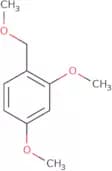
2,4-Dimethoxy-1-(methoxymethyl)benzene
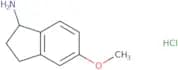
CAS:<p>Versatile small molecule scaffold</p>Formula:C10H14O3Purezza:Min. 95%Colore e forma:Clear LiquidPeso molecolare:182.22 g/mol(R)-5-Methoxy-2,3-dihydro-1H-inden-1-amine hydrochloride
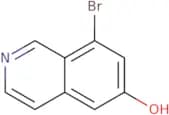
CAS:Prodotto controllato<p>Versatile small molecule scaffold</p>Formula:C10H14ClNOPurezza:Min. 95%Colore e forma:PowderPeso molecolare:199.68 g/mol8-Bromoisoquinolin-6-ol
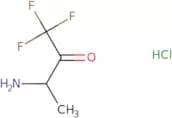
CAS:<p>Versatile small molecule scaffold</p>Formula:C9H6BrNOPurezza:Min. 95%Colore e forma:PowderPeso molecolare:224.05 g/mol3-Amino-1,1,1-trifluorobutan-2-one hydrochloride
CAS:<p>3-Amino-1,1,1-trifluorobutan-2-one hydrochloride is a fine chemical that is used as a versatile building block in organic synthesis. This compound has been shown to be an effective intermediate for the synthesis of complex compounds. 3-Amino-1,1,1-trifluorobutan-2-one hydrochloride is also useful as a reactant for research and speciality chemicals with high quality and purity.</p>Formula:C4H7ClF3NOPurezza:Min. 95%Peso molecolare:177.55 g/mol6-Formylpicolinic acid
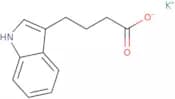
CAS:Versatile small molecule scaffoldFormula:C7H5NO3Purezza:Min. 95%Colore e forma:PowderPeso molecolare:151.12 g/molIndole-3-butyric acid, potassium salt
CAS:<p>Plant hormone; auxin; inducer of root development; used in plant rooting</p>Formula:C12H12KNO2Colore e forma:White Yellow PowderPeso molecolare:241.33 g/molIsopentyl 4-methoxycinnamate
CAS:Isopentyl 4-methoxycinnamate is a fluorescent molecule that is used to measure otoacoustic emissions in neonates. The viscosity of isopentyl 4-methoxycinnamate can be measured by using an analytical method for determining the melting point. Isopentyl 4-methoxycinnamate has been shown to inhibit the growth of bacteria such as Staphylococcus aureus, which is resistant to ciprofloxacin. Isopentyl 4-methoxycinnamate has also been shown to have potent inhibition activity against Escherichia coli and Pseudomonas aeruginosa, but not against Enterobacter cloacae. The fluorescence intensity of isopentyl 4-methoxycinnamate can be enhanced by adding glycerin or sodium citrate to the solution. It can also be prepared as a particle by adding sodium chloride or potassium chlorideFormula:C15H20O3Purezza:Min. 95%Colore e forma:PowderPeso molecolare:248.32 g/mol1-Iododecane - Stabilized with copper chip
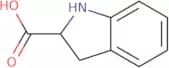
CAS:<p>Precursor to prepare 9-nonadecanone</p>Formula:C10H21IPurezza:Min. 98 Area-%Colore e forma:Colorless Clear LiquidPeso molecolare:268.18 g/molIndoline-2-carboxylic acid
CAS:<p>Indoline-2-carboxylic acid is a photophysical molecule with an absorption maximum at 518 nm. It has been shown to inhibit the activity of enzymes such as cyclooxygenase, lipoxygenase, and monoamine oxidases. This compound has been found to be effective in the treatment of cancer cells. Indoline-2-carboxylic acid is also used in pharmaceutical preparations, where it binds to enantiomers of other molecules and inhibits their biological activity. Indoline-2-carboxylic acid reacts with hydrochloric acid to form allyl carbonate and amide.</p>Formula:C9H9NO2Purezza:Min. 97 Area-%Colore e forma:PowderPeso molecolare:163.17 g/mol2,3-Dichloro-N-[2-({2-[(2,3-dichlorophenyl)amino]ethyl}amino)ethyl]aniline
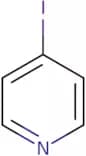
CAS:<p>2,3-Dichloro-N-[2-({2-[(2,3-dichlorophenyl)amino]ethyl}amino)ethyl]aniline is a chemical compound that is used as a building block in the synthesis of other chemicals. It is also used as a reagent, speciality chemical and research chemical. This product has many uses in the field of organic chemistry, such as use as an intermediate in organic reactions or as a scaffold for complex compounds. 2,3-Dichloro-N-[2-({2-[(2,3-dichlorophenyl)amino]ethyl}amino)ethyl]aniline has high quality and can be used to synthesize many different products.</p>Formula:C16H17Cl4N3Purezza:Min. 95%Colore e forma:PowderPeso molecolare:393.1 g/mol4-Iodopyridine
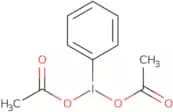
CAS:<p>4-Iodopyridine is a synthetic compound that can be used as an intermediate in organic synthesis. It can be used in cross-coupling reactions to form amides by converting the chloride to the corresponding sulfoxide, which can then undergo nucleophilic substitution with ethyl bromoacetate. 4-Iodopyridine is also used for analytical methods such as mass spectrometry and gas chromatography. The reaction solution of 4-iodopyridine has been shown to have a hydrogen bond with aryl boronic acids. This compound is also able to react with asymmetric reagents such as phenylboronic acid and 3,5-dimethylpyrazole.</p>Formula:C5H4INPurezza:Min. 95%Colore e forma:PowderPeso molecolare:205 g/molIodobenzene 1,1-diacetate
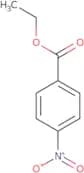
CAS:<p>Iodobenzene 1,1-diacetate (PIDA) is a compound containing a hypervalent iodine. This unusual valence of the iodine makes iodobenzene 1,1-diacetate an ideal oxidizing agent in organic synthesis. Furthermore, it is common practice to use iodobenzene 1,1-diacetate to prepare similar reagents by substituting the acetate groups for the desired functional group (Yusubov, 2019). Due to its low toxicity compared to other iodine derivatives, iodobenzene 1,1-diacetate (PIDA) is a common reagent used in total synthesis in the pharmaceutical and agrochemical industry, to produce sugars, alkaloids, antibiotics, etc (Tohma, 2002).</p>Formula:C10H11IO4Purezza:Min. 98 Area-%Colore e forma:White PowderPeso molecolare:322.1 g/molEthyl 4-nitrobenzoate
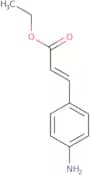
CAS:<p>Ethyl 4-nitrobenzoate is a compound that is used to synthesize other drugs, such as erythromycin. It is also an intermediate in the synthesis of some pesticides and dyes. The second-order rate constant for the reaction of ethyl 4-nitrobenzoate with phosphotungstic acid has been measured at 0.058/min at 25°C. This reaction is catalyzed by recombinant cytochrome P450 (P450) enzymes from human liver preparations and cationic surfactants such as nitrobenzene or sodium carbonate, which are known to form hydrogen bonds with the protonated nitrogen atom on the aromatic ring of ethyl 4-nitrobenzoate. Ethyl 4-nitrobenzoate is also used clinically to treat gastric ulcers, although it can be toxic if taken in large doses or over a long period of time.</p>Formula:C9H9NO4Purezza:Min. 95%Colore e forma:PowderPeso molecolare:195.17 g/molEthyl 4-aminocinnamate
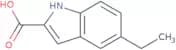
CAS:<p>Ethyl 4-aminocinnamate is a supramolecular, homologous, activated, linear polymer. It is used as an amine and phosphazene ligand in mesomorphic solid-state chemistry. It has a reversible covalent bond that can be thermally broken and re-formed. This property allows for the synthesis of polymers with functional groups on both ends of the molecule. The nitro group on this compound can be reduced to amine to give another functional group. Ethyl 4-aminocinnamate has been shown to have pharmacokinetic properties that are similar to those of ethyl 4-aminobenzoate (EB). EB is an inhibitor of NS5B polymerase that blocks RNA synthesis and leads to inhibition of viral replication. EB also inhibits ring opening reactions in the presence of nitro groups, which may explain its inhibitory effect on HIV RNA synthesis.</p>Formula:C11H13NO2Purezza:Min. 95%Colore e forma:PowderPeso molecolare:191.23 g/mol5-Ethylindole-2-carboxylic acid
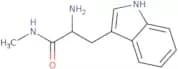
CAS:<p>5-Ethylindole-2-carboxylic acid is an organic compound that is a decarboxylation product of indole. It can be obtained by catalytic dehydrogenation of ethyl ester or 5-ethylindole-2-carboxylic acid. It has been shown to inhibit the growth of bacteria and fungi, as well as to have anti-inflammatory properties.</p>Formula:C11H11NO2Purezza:Min. 95%Peso molecolare:189.21 g/mol(2S)-2-Amino-3-(1H-indol-3-yl)-N-methylpropanamide
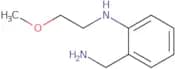
CAS:<p>Acetaminophen is a non-opioid analgesic and antipyretic drug. It is a common medication used to treat pain, fever, and inflammation. Acetaminophen inhibits matrix metalloproteinase (MMPs) by binding to the active site of the enzyme, thus preventing it from breaking down collagen in the extracellular matrix. This inhibition has been shown to be effective against cancer cells. Acetaminophen also has an antioxidative activity that may be due to its ability to inhibit lipid peroxidation, which is important for cell membrane integrity. Acetaminophen has been shown to reduce ulceration in animal models.</p>Formula:C12H15N3OPurezza:Min. 95%Colore e forma:PowderPeso molecolare:217.27 g/mol2-(Aminomethyl)-N-(2-methoxyethyl)aniline
CAS:<p>Versatile small molecule scaffold</p>Formula:C10H16N2OPurezza:Min. 90%Colore e forma:Clear LiquidPeso molecolare:180.25 g/mol2-[4-(Trifluoromethyl)phenyl]propanal
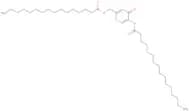
CAS:<p>Versatile small molecule scaffold</p>Formula:C10H9F3OPurezza:Min. 95%Colore e forma:Clear LiquidPeso molecolare:202.17 g/molKojic acid dipalmitate
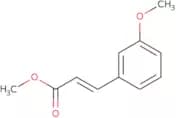
CAS:<p>Tyrosinase inhibitor; skin whitener</p>Formula:C38H66O6Purezza:(Hplc) Min. 98.5%Colore e forma:White Off-White PowderPeso molecolare:618.93 g/mol3-Methoxycinnamic acid methyl ester
CAS:<p>3-Methoxycinnamic acid methyl ester is a high quality, versatile building block for the synthesis of complex compounds. It is an intermediate in the synthesis of reagents and fine chemicals. 3-Methoxycinnamic acid methyl ester has been used in research as a scaffold to create new chemical entities. This compound has been used as a reaction component in multistep syntheses and as a precursor to speciality chemicals.</p>Formula:C11H12O3Purezza:Min. 95%Colore e forma:Colorless PowderPeso molecolare:192.21 g/mol



![2,3-Dichloro-N-[2-({2-[(2,3-dichlorophenyl)amino]ethyl}amino)ethyl]aniline](/_next/image/?url=https%3A%2Fstatic.cymitquimica.com%2Fproducts%2F3D%2Fthumb-webp%2FZGC85789.webp&w=3840&q=75)
![2-[4-(Trifluoromethyl)phenyl]propanal](/_next/image/?url=https%3A%2Fstatic.cymitquimica.com%2Fproducts%2F3D%2Fthumb-webp%2FDEA10804.webp&w=3840&q=75)