Building Blocks
Sottocategorie di "Building Blocks"
- Acidi boronici e derivati dell'acido boronico(5.783 prodotti)
- Building Blocks Chirali(1.242 prodotti)
- Building Blocks Idrocarburici(6.105 prodotti)
- Building Blocks organici(61.055 prodotti)
Trovati 205383 prodotti di "Building Blocks"
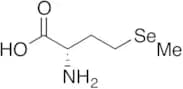
L-Selenomethionine
CAS:Applications L-Selenomethionine promotes cell cycle progression and is known to elevate the expression of the antioxidant enzymes thioredoxin reductase, glutathione reductase, and glutathione peroxidase. It has also been shown to selectively induce apoptosis in LNCaP prostate cancer cells without affecting non-cancerous cells.
Not a dangerous good if item is equal to or less than 1g/ml and there is less than 100g/ml in the package
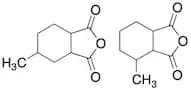
References Zeng, H., et al.: J. Nutr., 132, 674 (2002); Sayed, W., et al.: Toxicol. In Vitro, 21, 157 (2007); Jornot, L., et al.: Biochem. J., 306, 581 (1995); Stewart, J., et al.: Nutr. Cancer, 60, 826 (2008)Formula:C5H11NO2SeColore e forma:NeatPeso molecolare:196.11Methylhexahydroisobenzofuran-1,3-Dione
CAS:Prodotto controllatoStability Moisture Sensitive
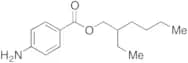
Applications 3A-METHYLHEXAHYDROISOBENZOFURAN-1,3-DIONE (cas# 25550-51-0) is a useful research chemical.Formula:C9H12O3Colore e forma:NeatPeso molecolare:168.182-Ethylhexyl-4-aminobenzoate
CAS:Prodotto controllatoStability Air Sensitive, Hygroscopic
Applications 2-Ethylhexyl-4-aminobenzoate is an impurity in the synthesis of Ethylhexyl Triazone (E918810), used in sunscreen formulations as a UV filter to block out harmful ultraviolet light.
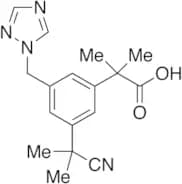
References Potard, G. et al.: Int. J. Pharm., 189, 249 (1999); Couteau, C. et al.: J. Pharm. Biomed. Anal., 44, 270 (2007);Formula:C15H23NO2Colore e forma:Orange Solid With A Low Melting PointPeso molecolare:249.35Anastrozole Mono Acid
CAS:Impurity Anastrozole Monoacid Impurity
Applications Anastrozole Mono Acid is an impurity of Anastrozole (A637435), an aromatase enzyme inhibitor and antineoplastic agent. Anastrozole Monoacid Impurity
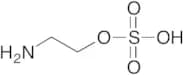
References Plourde, P.V., et al.: Breast Cancer Res. Treat., 30, 103 (1994), Buzdar, A.U., et al.: Cancer, 79, 730 (1997)Formula:C17H20N4O2Colore e forma:Off-WhitePeso molecolare:312.372-Aminoethyl Sulfate
CAS:Prodotto controllatoApplications 2-Aminoethyl Sulfate, is a building block used for the synthesis of various pharmaceutical and biologically active compounds, including inhibitors and therapeutic compounds. It can be used in the preparation of Taurine (T007850).
References Wen-ru, Ch., et al.: Zhejiang Huagong, 42 (2011);Formula:C2H7NO4SColore e forma:NeatPeso molecolare:141.15Amlodipine Maleate
CAS:Prodotto controllatoApplications Amlodipine maleate (cas# 88150-47-4) is a useful research chemical.
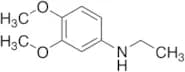
Formula:C20H25ClN2O5·C4H4O4Colore e forma:Off-WhitePeso molecolare:524.95N-ethyl-3,4-dimethoxyaniline
CAS:Prodotto controllatoApplications N-ethyl-3,4-dimethoxyaniline (cas# 32953-13-2) is a useful research chemical.
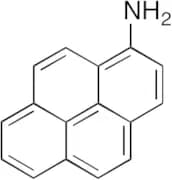
Formula:C10H15NO2Colore e forma:NeatPeso molecolare:181.231-Aminopyrene
CAS:Prodotto controllatoApplications 1-Aminopyrene is used in the synthesis of novel fluorescent nanoscale ionic silicate platelets for use in bacterial detection and other biosensor applications.
References Lin, H.. et al.: ACS App. Mater. Inter., 7, 10771 (2015);Formula:C16H11NColore e forma:NeatPeso molecolare:217.26Tetraethylenepentamine Pentahydrochloride
CAS:Prodotto controllatoApplications Tetraethylenepentamine Pentahydrochloride, is used as a copper chelator, for the treatment of copper mobilization in copper-overloaded rats, and eventually for the as a therapy for disorders of copper transport, such as Wilson's disease.
References Domingo, J., et al.: Bio. trace Element Res., 74, 127 (2000);Formula:C8H28Cl5N5Colore e forma:NeatPeso molecolare:371.61[(2-Bromoethyloxy)methyl]benzene
CAS:Prodotto controllatoApplications [(2-Bromoethyloxy)methyl]benzene is a reactant used in the preparation of muscarinic antagonist.
References Bream, R. et al.: Org. Process. Res. Dev., 17, 641 (2013); Mete, A. et al.: Bioorg. Med. Chem. Lett., 21, 7440 (2011)Formula:C9H11BrOColore e forma:NeatPeso molecolare:215.09N-Methyl-2-phenylethylamine
CAS:Prodotto controllatoApplications N-Methyl-2-phenylethylamine is an amine stimulant that inhibits metabolic enzymes in the liver like cytochrome CYP2D6 and CYP3A4 in vitro.
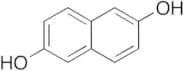
References Liu, Y., et al.: Drug Test. and Anal., 8, 307 (2016)Formula:C9H13NColore e forma:NeatPeso molecolare:135.212,6-Dihydroxynaphthalene
CAS:Prodotto controllatoApplications 2,6-Dihydroxynaphthalene can produce convulsions in mice. Monooxylosylated 2,6-Dihydroxynaphthalene exhibits antiproliferative activity towards certain cells.
References Angel, A., et al.: Toxicol. Appl. Pharm., 21, 14 (1972); Jacobsson, M., et al.: J. Med. Chem., 49, 1932 (2006)Formula:C10H8O2Colore e forma:NeatPeso molecolare:160.17N-Methylformanilide
CAS:Prodotto controllatoApplications N-Methylformanilide is an aromatic reagent used in the synthesis of dye-sensitized solar cells. Also used in the synthesis of potent tyrosinase inhibitors.
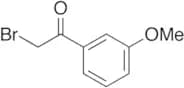
References Meyer, T et al.: J. Org. Chem., 77, 3704 (2012); Nihei, K. et al.: Bioorg. Med. Chem. Lett., 14, 681 (2004);Formula:C8H9NOColore e forma:NeatPeso molecolare:135.162-Bromo-3'-methoxyacetophenone
CAS:Prodotto controllatoApplications Derivatizing reagent.
Not a dangerous good if item is equal to or less than 1g/ml and there is less than 100g/ml in the package
References Webster, S., et al.: Bioorg. Med. Chem. Lett., 20, 3265 (2010), Chezal, J., et al.: Eur. J. Med. Chem., 45, 2044 (2010),Formula:C9H9BrO2Colore e forma:NeatPeso molecolare:229.074-(1-Methylethyl)benzoic Acid
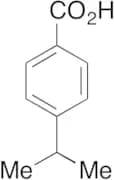
CAS:Applications 4-(1-Methylethyl)benzoic Acid is used in the synthesis of quinuclidine benzamides as agonists for nicotinic acetylcholine receptors. Also used in the synthesis of nifuroxazide analogues showing antimicrobial activity against methicillin-resistant Staphylococcus.
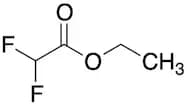
References Bodnar, A. et al.: J. Med. Chem., 48, 905 (2005); Masunari, A. et al.: Bioorg. Med. Chem. Lett., 15, 4229 (2007);Formula:C10H12O2Colore e forma:NeatPeso molecolare:164.2Ethyl Difluoroacetate
CAS:Prodotto controllatoApplications Ethyl difluoroacetate
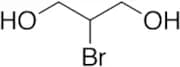
Formula:C4H6F2O2Colore e forma:NeatPeso molecolare:124.092-Bromo-1,3-propanediol
CAS:Stability Temperature sensitive - closes readily. Store at -80°C
Applications Used for isolating bases by means of Reinecke's salt.
Not a dangerous good if item is equal to or less than 1g/ml and there is less than 100g/ml in the package
References Dudley, H., et al.: Biochem. J., 27, 157 (1933),Formula:C3H7BrO2Colore e forma:NeatPeso molecolare:154.99



![[(2-Bromoethyloxy)methyl]benzene](/_next/image/?url=https%3A%2Fstatic.cymitquimica.com%2Fproducts%2FTR%2Fthumb-webp%2FB684680.webp&w=3840&q=75)