Building Blocks
Questa sezione contiene prodotti fondamentali per la sintesi di composti organici e biologici. Building blocks sono i materiali di partenza essenziali utilizzati per costruire molecole complesse attraverso varie reazioni chimiche. Svolgono un ruolo critico nella scoperta di farmaci, nella scienza dei materiali e nella ricerca chimica. Presso CymitQuimica, offriamo una gamma diversificata di building blocks di alta qualità per supportare le tue ricerche innovative e progetti industriali, assicurandoti di avere i componenti essenziali per una sintesi di successo.
Sottocategorie di "Building Blocks"
- Acidi boronici e derivati dell'acido boronico(5.756 prodotti)
- Building Blocks Chirali(1.242 prodotti)
- Building Blocks Idrocarburici(6.095 prodotti)
- Building Blocks organici(61.037 prodotti)
Trovati 196200 prodotti di "Building Blocks"
Ordinare per
Purezza (%)
0
100
|
0
|
50
|
90
|
95
|
100
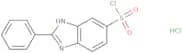
2-Phenyl-1H-1,3-benzodiazole-5-sulfonyl chloride hydrochloride
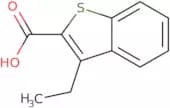
CAS:<p>Versatile small molecule scaffold</p>Formula:C13H10Cl2N2O2SPurezza:Min. 95%Peso molecolare:329.2 g/mol3-Ethyl-1-benzothiophene-2-carboxylic acid
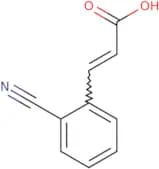
CAS:<p>Versatile small molecule scaffold</p>Formula:C11H10O2SPurezza:Min. 95%Peso molecolare:206.26 g/mol(2Z)-3-(2-Cyanophenyl)prop-2-enoic acid
CAS:<p>(2Z)-3-(2-Cyanophenyl)prop-2-enoic acid is an organic compound that is used as a reagent in the analysis of amino acids. It can be prepared by reacting 2-cyanobenzaldehyde with propionic acid in the presence of a base. This reaction can be carried out on a preparative scale, or on a small scale for laboratory use. The compound can be analyzed by spectrometry and chromatography to determine its purity and sequence. This compound has been shown to have different stereoisomers that are distinguished by their mass spectra.</p>Formula:C10H7NO2Purezza:Min. 95%Peso molecolare:173.17 g/molN-Ethyl-4-hydroxybenzamide
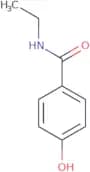
CAS:<p>Versatile small molecule scaffold</p>Formula:C9H11NO2Purezza:Min. 95%Peso molecolare:165.19 g/mol3-Oxocycloheptane-1-carboxylic acid
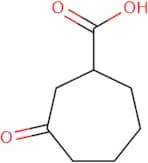
CAS:<p>Versatile small molecule scaffold</p>Formula:C8H12O3Purezza:Min. 95%Peso molecolare:156.18 g/mol3-Oxocyclooctane-1-carboxylic acid
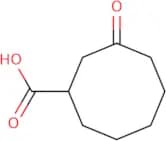
CAS:<p>Versatile small molecule scaffold</p>Formula:C9H14O3Purezza:Min. 95%Peso molecolare:170.21 g/mol3-Aminonaphthalene-2-carbonitrile
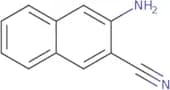
CAS:<p>Versatile small molecule scaffold</p>Formula:C11H8N2Purezza:Min. 95%Peso molecolare:168.19 g/mol1,7,7-Trimethyl-2-methylidenebicyclo[2.2.1]heptane
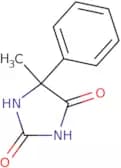
CAS:<p>1,7,7-Trimethyl-2-methylidenebicyclo[2.2.1]heptane is a cyclic terpene that is found in the essential oils of plants such as camphor and turpentine. In bacteria, 1,7,7-trimethyl-2-methylenebicyclo[2.2.1]heptane binds to the divalent metal ions and prevents them from being used by the enzymes responsible for phosphodiester bond formation during DNA replication or transcription. This results in an inhibition of bacterial growth. 1,7,7-trimethyl-2-methylenebicyclo[2.2.1]heptane is a synthetic compound that has been sequenced and synthesized with gram negative bacterium olivasterospora as a model organism. The kinetic parameters of 1,7,7-trimethyl-2-methylenebicyclo</p>Formula:C11H18Purezza:Min. 95%Peso molecolare:150.26 g/mol(5S)-5-Methyl-5-phenylimidazolidine-2,4-dione
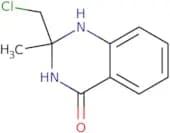
CAS:<p>Versatile small molecule scaffold</p>Formula:C10H10N2O2Purezza:Min. 95%Peso molecolare:190.2 g/mol2-(Chloromethyl)-2-methyl-1,2,3,4-tetrahydroquinazolin-4-one
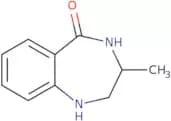
CAS:<p>Versatile small molecule scaffold</p>Formula:C10H11ClN2OPurezza:Min. 95%Peso molecolare:210.66 g/mol3-Methyl-2,3,4,5-tetrahydro-1H-1,4-benzodiazepin-5-one
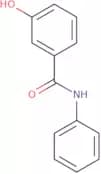
CAS:<p>Versatile small molecule scaffold</p>Formula:C10H12N2OPurezza:Min. 95%Peso molecolare:176.21 g/mol3-Hydroxy-N-phenylbenzamide
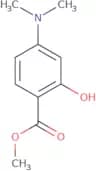
CAS:<p>Versatile small molecule scaffold</p>Formula:C13H11NO2Purezza:Min. 95%Peso molecolare:213.23 g/molMethyl 4-(dimethylamino)-2-hydroxybenzoate
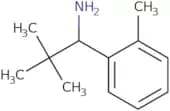
CAS:<p>Methyl 4-(dimethylamino)-2-hydroxybenzoate (DMAHB) is an organic compound that is used to detect the presence of aldehydes in air. It can be used as a shift reagent for the analysis of anthracene and other aromatic hydrocarbons. The fluorescence emission spectrum of DMAHB shifts from 380 nm to 430 nm when it interacts with aldehydes, which provides an easy way to identify the presence of these substances. DMAHB is also sensitive to amines, chlorides, and amide groups. An interesting property of this molecule is that it has two chromophores, which makes it useful for monitoring solvents during chemical reactions.</p>Formula:C10H13NO3Purezza:Min. 95%Peso molecolare:195.21 g/mol2,2-Dimethyl-1-(2-methylphenyl)propan-1-amine
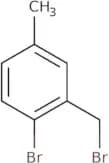
CAS:<p>Versatile small molecule scaffold</p>Formula:C12H19NPurezza:Min. 95%Peso molecolare:177.29 g/mol1-bromo-2-(bromomethyl)-4-methylbenzene
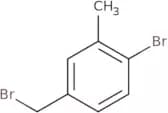
CAS:<p>Versatile small molecule scaffold</p>Formula:C8H8Br2Purezza:Min. 95%Peso molecolare:263.96 g/mol1-Bromo-4-(bromomethyl)-2-methylbenzene
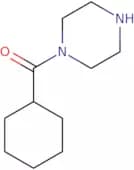
CAS:<p>Versatile small molecule scaffold</p>Formula:C8H8Br2Purezza:Min. 95%Peso molecolare:263.96 g/mol1-(Cyclohexylcarbonyl)piperazine
CAS:<p>Versatile small molecule scaffold</p>Formula:C11H20N2OPurezza:Min. 95%Peso molecolare:196.29 g/molTricyclo[4.3.1.0,3,8]decan-4-one
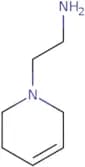
CAS:<p>Tricyclo[4.3.1.0,3,8]decan-4-one is a heterocyclic compound that has been used as an intermediate in pharmaceutical formulations. It is synthesized by the reaction of cyclopentadiene with oxirane and reacts with trimethylsilyl chloride to produce the corresponding sulfonium salt. Tricyclo[4.3.1.0,3,8]decan-4-one is also a synthetic precursor to hypoxia-targeted prodrugs that act via c1-4 alkyl and 1-4 alkyl intermediates to inhibit the growth of cancer cells.</p>Formula:C10H14OPurezza:Min. 95%Peso molecolare:150.22 g/mol2-(1,2,3,6-Tetrahydropyridin-1-yl)ethan-1-amine
CAS:<p>Versatile small molecule scaffold</p>Formula:C7H14N2Purezza:Min. 95%Peso molecolare:126.2 g/mol

![1,7,7-Trimethyl-2-methylidenebicyclo[2.2.1]heptane](/_next/image/?url=https%3A%2Fstatic.cymitquimica.com%2Fproducts%2F3D%2Fthumb-webp%2FCBA53847.webp&w=3840&q=75)

![Tricyclo[4.3.1.0,3,8]decan-4-one](/_next/image/?url=https%3A%2Fstatic.cymitquimica.com%2Fproducts%2F3D%2Fthumb-webp%2FCBA56785.webp&w=3840&q=75)