Building Blocks
Sottocategorie di "Building Blocks"
- Acidi boronici e derivati dell'acido boronico(5.783 prodotti)
- Building Blocks Chirali(1.242 prodotti)
- Building Blocks Idrocarburici(6.105 prodotti)
- Building Blocks organici(61.055 prodotti)
Trovati 205383 prodotti di "Building Blocks"
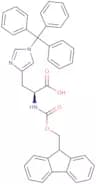
Fmoc-His(Trt)-OH
CAS:Fmoc-His(Trt)-OH is an amino acid with the chemical formula HOOC-CH2-CH2-N(CH3)2. It has broad-spectrum antimicrobial activity and can be used as a chemosensor for trifluoroacetic acid. Fmoc-His(Trt)-OH also showed anticancer activity, which may be due to its ability to inhibit protein synthesis in cancer cells by inhibiting histidine decarboxylase. Fmoc-His(Trt)-OH is synthesized through a chemical reaction using trifluoroacetic acid, which reacts with His and Trt residues on the surface of the resin.
Formula:C40H33N3O4Purezza:Min. 98 Area-%Colore e forma:White PowderPeso molecolare:619.71 g/mol5-Bromo-2-nitrobenzoic acid
CAS:5-Bromo-2-nitrobenzoic acid is a chemical compound that belongs to the group of bromonitrobenzenes. It is an important intermediate in organic chemistry and has been used as a reagent for the synthesis of various heterocyclic compounds. 5-Bromo-2-nitrobenzoic acid can be used as a building block for pharmaceuticals, agrochemicals, dyes, and other chemicals. This versatile chemical has been widely used in research and development as a reaction component for synthesizing pharmaceuticals or speciality chemicals or as a building block to produce useful scaffolds.
Formula:C7H4BrNO4Purezza:Min. 95%Colore e forma:Slightly Yellow PowderPeso molecolare:246.02 g/mol5-Bromo-2,4-dichloropyrimidine
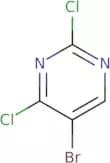
CAS:5-Bromo-2,4-dichloropyrimidine is an aryl halide compound that is synthesized from 2,4-dichloropyrimidine and bromine. It has been shown to have inhibitory activities against cancer cells in vitro. 5-Bromo-2,4-dichloropyrimidine is used in the synthesis of the drug palbociclib (also known as PLX4720), which prevents mitotic progression by binding to the mitotic checkpoint protein (e.g., cyclin B). The reaction yield for this compound is low and its absorption enhancer properties are not well understood. 5-Bromo-2,4-dichloropyrimidine has also been used in conjunction with crotonic acid as a potential anticancer agent.
Formula:C4HBrCl2N2Purezza:Min. 95%Colore e forma:Off-White Clear LiquidPeso molecolare:227.87 g/mol5-Bromo-7-azaindole
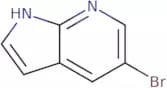
CAS:5-Bromo-7-azaindole is a nitrogen heterocycle that has shown promising anti-cancer properties. This compound is synthesized by the reaction of sodium azide and 5-bromo-2,4,6-trinitrobenzene in anhydrous conditions. 5-Bromo-7-azaindole displays significant cytotoxicity against human ovarian carcinoma cells in vivo and inhibits the proliferation of cancer cells by binding to ATP synthase. The anticancer activity of this compound is due to its ability to inhibit the synthesis of DNA and RNA, which are vital for cell division. 5-Bromo-7-azaindole also shows an increase in hydrogen bonding, which can be used to explain its structural analysis.
Formula:C7H5BrN2Purezza:Min. 98 Area-%Colore e forma:PowderPeso molecolare:197.03 g/mol2-Iodo-5-nitrobenzoic acid
CAS:2-Iodo-5-nitrobenzoic acid is a reactive molecule that reacts with terminal alkynes to form a fluorescent compound. It was immobilized on an electrode and used as a probe in voltammetry studies. 2-Iodo-5-nitrobenzoic acid is also used as a reagent in the synthesis of amides, which are important in many biochemical reactions. The use of this compound may be limited by the toxicity to cells, which can be increased through the presence of cisplatin or 3-aminobenzoic acid. The microenvironment around cancer cells may also alter the reactivity of 2-iodo-5-nitrobenzoic acid.Formula:C7H4INO4Purezza:Min. 95%Colore e forma:Beige PowderPeso molecolare:293.02 g/mol1-(3-Sulfopropyl)pyridinium inner salt
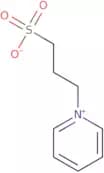
CAS:1-(3-Sulfopropyl)pyridinium inner salt (1SP) is a molecule that has been shown to bind to DNA. It is a potential drug target for the treatment of cancer, as it can cause cell lysis. 1SP binds to dsDNA and prevents the formation of stable base pairs, which leads to the lysis of cells. 1SP also has an effector protein activity that stimulates colony-stimulating factor production and induces apoptosis in human cells. This molecule has been shown to be effective against antimicrobial resistance bacteria such as methicillin resistant Staphylococcus aureus (MRSA). 1SP is capable of lysing bacterial cells in a process identical to that seen with mammalian cells. The mechanism by which this occurs is not yet clear but may involve surface methodology or sample preparation, both factors that have yet to be determined.Formula:C8H11NO3SPurezza:(Hplc) Min. 99%Colore e forma:White Off-White PowderPeso molecolare:201.24 g/mol3-Chloro-5-hydroxybenzoic acid ethyl ester
Please enquire for more information about 3-Chloro-5-hydroxybenzoic acid ethyl ester including the price, delivery time and more detailed product information at the technical inquiry form on this page
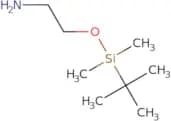
Formula:C9H9ClO3Purezza:Min. 98 Area-%Colore e forma:PowderPeso molecolare:200.62 g/mol2-(tert-Butyldimethylsilyloxy)ethanamine
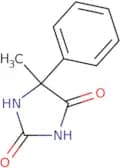
CAS:Versatile small molecule scaffoldFormula:C8H21NOSiPurezza:Min. 95%Peso molecolare:175.35 g/mol(5R)-5-Methyl-5-phenylimidazolidine-2,4-dione
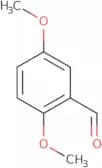
CAS:Versatile small molecule scaffoldFormula:C10H10N2O2Purezza:Min. 95%Colore e forma:PowderPeso molecolare:190.2 g/mol2,5-Dimethoxybenzaldehyde
CAS:Intermediate in organic synthesis
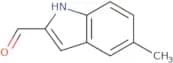
Formula:C9H10O3Purezza:Min. 98 Area-%Colore e forma:Off-White PowderPeso molecolare:166.17 g/mol5-Methyl-1H-indole-2-carbaldehyde
CAS:Versatile small molecule scaffold
Formula:C10H9NOPurezza:Min. 95%Peso molecolare:159.18 g/mol4-{5H,6H,7H,8H-Pyrido[4,3-c]pyridazin-3-yl}-1,4-oxazepane
CAS:Versatile small molecule scaffoldFormula:C12H18N4OPurezza:Min. 95%Colore e forma:PowderPeso molecolare:234.3 g/mol5-Azetidin-3-yl-3-methyl-[1,2,4]oxadiazole hydrochloride
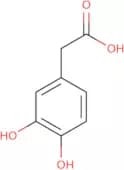
CAS:5-Azetidin-3-yl-3-methyl-[1,2,4]oxadiazole hydrochloride is a solid that is used as a reagent in the preparation of other chemicals. This chemical has been shown to be useful in the synthesis of complex compounds, such as pharmaceuticals and pesticides.Formula:C6H9N3O•HClPurezza:Min. 95%Colore e forma:PowderPeso molecolare:175.62 g/mol3,4-Dihydroxyphenylacetic acid
CAS:3,4-Dihydroxyphenylacetic acid (DOPAC) is a metabolite of dopamine and is found in the central nervous system. Dopamine is an important neurotransmitter that is involved in the regulation of movement, emotional responses, and hormone release. Dopamine is synthesized from tyrosine by tyrosine hydroxylase and then converted to L-3,4-dihydroxyphenylalanine by L-aromatic amino acid decarboxylase. DOPAC can be formed from dopamine by monoamine oxidases or catechol O-methyltransferases. The level of DOPAC in the brain has been shown to be increased following exposure to neurotoxins such as 6-hydroxy dopamine or 1-methyl 4-phenyl 1,2,3,6 tetrahydropyridine (MPTP). This increase may be due to decreased activity of monoamine oxidases. The levelFormula:C8H8O4Purezza:Min. 95%Colore e forma:Beige PowderPeso molecolare:168.15 g/mol2,6-Dinitro-4-methylaniline
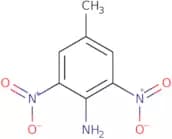
CAS:2,6-Dinitro-4-methylaniline is an amide that has been shown to induce cancer in animals. It has a high affinity for nucleic acids and forms covalent bonds with DNA. 2,6-Dinitro-4-methylaniline is metabolized by the liver and excreted by the kidneys into urine, where it can be detected in urine samples. This compound has been shown to bioconcentrate in organisms and accumulate in tissues as well as activate radiation. The activation of this compound is dose dependent and may be due to its ability to form covalent bonds with DNA.
Formula:C7H7N3O4Purezza:Min. 95%Colore e forma:PowderPeso molecolare:197.15 g/mol2-Chloro-4-nitroimidazole
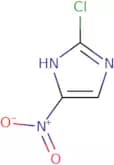
CAS:Radiosensitiser in hypoxic tumoursFormula:C3H2ClN3O2Purezza:Min. 95%Colore e forma:PowderPeso molecolare:147.52 g/mol3,4-Dimethoxybenzylamine
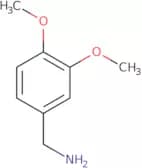
CAS:3,4-Dimethoxybenzylamine is an amine that is used in the synthesis of pharmaceuticals. It can be polymerized by heating with aqueous formaldehyde and hydrochloric acid to form a resin. 3,4-Dimethoxybenzylamine inhibits serotonin receptors, exhibiting inhibitory properties at concentrations of 10-5 M. 3,4-Dimethoxybenzylamine also has pharmacokinetic properties that are similar to vitamin B1. This compound has been shown to inhibit homogeneous catalysts and is used for coatings for ganglion cells.
Formula:C9H13NO2Purezza:Min. 95%Colore e forma:Clear LiquidPeso molecolare:167.21 g/mol3-(3,4-Dihydroxyphenyl)-2-methyl-L-alanine sesquihydrate
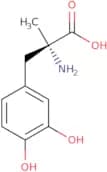
CAS:3-(3,4-Dihydroxyphenyl)-2-methyl-L-alanine sesquihydrate is a biological sample that is an active inhibitor of the enzyme methyldopa. This compound has been shown to reduce blood pressure in rats and humans by blocking the α7 nicotinic acetylcholine receptor. 3-(3,4-Dihydroxyphenyl)-2-methyl-L-alanine sesquihydrate is also a polymer composition that has been shown to be toxic in animal studies. The toxicity of 3-(3,4-dihydroxyphenyl)-2-methyl-L-alanine sesquihydrate can be attributed to its structural similarity to methyldopa or its ability to act as a receptor agonist.Formula:C10H13NO4•(H2O)1Purezza:Min. 95%Peso molecolare:238.24 g/mol2,4-Dimethoxybenzylamine
CAS:Tak-659 is an amide compound that inhibits the serine protease activity of a number of enzymes, including cathepsin B and L. Tak-659 has been shown to have inhibitory effects on inflammation in animal models by inhibiting the production of inflammatory cytokines. Tak-659 has also been shown to impair protein synthesis in gram-negative bacteria, such as Escherichia coli and Pseudomonas aeruginosa. The mechanism for this inhibition is not entirely clear but may be due to tak-659 binding to the ribosomal RNA near the peptidyl transferase center, blocking the entry of amino acids into the ribosome. Tak-659 binds with high affinity to adenosine receptors and has been shown to reduce levels of inflammatory cytokines in mouse tumor cells.
Formula:C9H13NO2Purezza:Min. 95%Colore e forma:Colorless Clear LiquidPeso molecolare:167.21 g/molOrcinol monohydrate
CAS:Orcinol monohydrate is a high quality chemical that can be used as a reagent, complex compound, or useful intermediate in the synthesis of fine chemicals. It is also an important building block in the synthesis of other compounds. This product has CAS No. 6153-39-5 and is classified as a speciality chemical. It is also a versatile building block that can be used as a reaction component in organic syntheses.Formula:C7H10O3Peso molecolare:142.16 g/mol




![4-{5H,6H,7H,8H-Pyrido[4,3-c]pyridazin-3-yl}-1,4-oxazepane](/_next/image/?url=https%3A%2Fstatic.cymitquimica.com%2Fproducts%2F3D%2Fthumb-webp%2FJHD95611.webp&w=3840&q=75)
![5-Azetidin-3-yl-3-methyl-[1,2,4]oxadiazole hydrochloride](/_next/image/?url=https%3A%2Fstatic.cymitquimica.com%2Fproducts%2F3D%2Fthumb-webp%2FKXB30398.webp&w=3840&q=75)